Cale Fisher of The Floating Bridges: “Our music has a very positive vibe”

floating bridges

SUNSHINE COAST roots quintet The Floating Bridges are aiming to bring their tropical vibe to as many sets of ears as possible with a new single and upcoming tour, says bass player and vocalist, Cale Fisher.

“Our music has a very positive vibe in our lyrics,” he says. “It’s about day-to-day living stuff; how you treat other people, what you do when you go out and setting examples for others. That vibe comes across in the music and people latch onto it. It’s a really positive, uplifting sort of vibe.”

After coming together following high school, the band got into roots music and found their sound. A line-up change earlier this year saw Fisher move from rhythm guitar to bass, and the acquisition of Johnny Curran – brother of Jeff Curran of Dallas Frasca – to play additional guitar. It’s this line-up which wrote the as-yet unreleased single.

“He came and had a jam with us and it’s going really well,” Fisher says. “He had some neat little licks and just kind of fitted in. We’re just putting the final touches to [the single]; it’s called ‘Dreamcatcher’. We’ve got a heap of songs written, and it’s basically just a matter of narrowing them down at the moment. We’ve always had a bit of a rule that if a song is written we don’t disregard anything. Even if it sort of gets shelved for a little while before we come up with something new to make it better, we’ve always had this rule not to write anything off. We go from there and work on it all as a group. We’re group writers and everyone has their input into the band.”

The band hails from Yandina, in an area which Fisher says has helped shaped the band’s sound.

“We believe that where we live is one of the most beautiful places in Australia from what we’ve seen,” he says. “So we’re pretty lucky like that. There is a really strong roots music scene up here, especially over the last three years, and definitely a lot of our influences that we draw locally come from other bands here and Brisbane bands that are similar to us. We’ve never had any issues or blues at our gigs. People just enjoy the vibe.”

Refreshingly in touch with social and racial issues, Fisher says a part of the band’s approach is to raise awareness of cultural respect and fairness.

“We’re really passionate about Indigenous culture in Australia,” he says. “We’ve got a very big connection to our local elders in our area; the Gubbi Gubbi people. We’re very well connected with those guys, and we think it’s really good as a young person these days to be culturally aware of what’s going on and what’s happened in the past. We don’t want to cause any arguments or anything like that, but we just want people to be aware of what’s happened here before and everything, so when you make your decision on cultural awareness [issues], you’re well educated, you know? A lot of people make uneducated comments about different things, but we believe it’s really important to know where you’re from and to know what happens.”

With a new single and EP in the works, the rest of the year is set to be a busy one for the group.

“We’ll get a heap of shows under our belts around the country first,” Fisher says. “Then we’ll be looking to release the single, probably some time in the next three or four months. We’ve got our single release, then an EP release later in year and we want to lock in as many festival dates as we can. Basically, we want to enjoy the journey.”

For Beat and The Brag

Interview: Jon Davison of Yes

yes band

HAVING been in existence since 1968, English prog-rockers Yes are true mainstays of the music world, with more than thirty studio and live albums under their belts. Founding vocalist Jon Anderson left the band in 2008, paving the way for newest recruit, Californian Jon Davison, to become a part of a group who had already released three records by the time he was born. The newly rejuvenated line-up of Davison, Chris Squire, Steve Howe, Alan White and Geoff Downes will tour Australia in November, playing their classic ’70s Fragile and Close To The Edge albums in full, as well as releasing a new LP entitled Heaven & Earth.

You’re the new boy in Yes, having joined in 2012. How did you come to be in the band?

It was kind of by simultaneous means, which was interesting. My friend Taylor Hawkins, the drummer for the Foo Fighters, with whom I grew up, was always – during the last few years prior to my joining – suggesting to Chris [Squire, founding bassist] that should he need a replacement, I might be a suitable option. So Chris was aware of me, and at the same time the Australian tour in 2012 was booked and the band didn’t want to back out of it, so they were willing to take me on immediately. The manager called me first, saying there wasn’t even going to be an audition and that I would have to jump right in, so the band could continue looking forward to the tour.

How much notice did you have before the tour?

I think we were off maybe a month later, or six weeks at most.

Were you aware of all of the band’s material before you joined?

Yes, I was. Having been in a Yes tribute band, I knew most of the main tracks, but they were doing a lot of emphasis at the time on Fly From Here, so I had to learn the big bulk of that album, and there were a few others; a couple from Drama I hadn’t performed before. So there was a bit of a learning curve, but I had a lot of the material in my mind.

Have you had to change much to fit in, or are you more or less free to be yourself?

That’s a good question. It’s really a balance, you know? You want to do complete justice to the music, but you don’t want anyone to feel that something is missing, so you really pay homage as accurately as you can. To do that, you have to really incorporate your own style into it as well; you can’t be a clone. You have to incorporate what is uniquely you, so it’s a fine balance between those two aspects.

How long have you been planning to tour Fragile and Close To The Edge?

It’s been in the works for probably about a year now, because we’ve doing three classic albums for a couple of years now. We were thinking ahead a couple of years ago, wondering what we should do next and it felt like Fragile needed to be fitted into the occasion or formula somehow, and we’re doing Close To The Edge again, but we really wanted to do those two albums together, back to back. In most respects they’re the greatest, ground-breaking albums for the band.

So it’s purely a nostalgic thing.

Yeah, it’s a nostalgic thing, and I think it means so much to the fans to have that nostalgic experience; at least what I’ve heard that they’ve shared. Also, it’s never been done before. It’s an new move for the band. They’re always looking to do something new and fresh, and I think this is the answer to that.

It sounds like there are some fairly complex arrangements in those two albums. Are they relatively easy to translate to the live setting?

I would say for the most part. Really, at the heart of a band, that’s what makes them successful; being good players who feed off each other and work together. In essence they are a live band, and they’ve always taken that as far as they can. Although they’ve had some ground-breaking studio albums, ultimately they are a live band. So, yeah, it has been quite straightforward. Having said that, Fragile has a lot of over-dubbing, so there will be some re-interpretation and we’ll be doing whatever we can to make it as accurate as possible.

Could Heaven & Earth be called a classic Yes album, in terms of how it sounds?

I don’t know if it will end up being called that [laughs]. It’s very different and fresh, and it’s moving the band in a bit of a different direction, and that’s natural for every new line-up. Even though the other four have been involved a lot longer than I have, every time a new member comes in it changes things up. So, it’s a unique album in that sense and has to be translated not with words, but with music.

How has the song-writing been shared?

Steve [Howe, guitar] and I did the majority of the song-writing, but the band all very much collaborated as a unit, and I think that’s the final product that’s reflected and when the music is fully realised and comes to life. It’s definitely a group effort. For the most part, [listener reaction] has been quite encouraging so far.

What was it like working with Roy Thomas Baker?

He’s a character, and I mean that in an affectionate way. He’s a lot of fun and he’s very old-school, and that’s what I love about him. I’m a huge fan of his work and ’70s material in general, so it’s been great to pick his mind and analyse him at work. I think he ultimately brought out the best in the band; an organic quality to the material. We have him to thank for that.

Does he get involved in everything or let you get on with it in the studio?

Creatively speaking, he just lets us get on with it, but he has his own creative element in the technical aspect and getting the right sound. He’s big on sounds and the engineering aspect of the project.

Why do you think Yes have survived and stuck together this long?

There have never been more than two consecutive albums with the same line-up in the history of Yes, and it’s because of this I think they always had a new ingredient that helped to propel them forward in a spontaneous way. It’s also that they’ve always tried to break new ground; they’re very open-minded. When I was contributing music they never wanted to throw anything out; they would always fully explore something and really vibe with it before they make a decision about it, and I respect that so much. I know that that’s always been the formula. There have been times in their history when the music hasn’t come easily, but their tenacity and hunger has kept them going.

Do you think prog-rock is in good shape globally?

I would say yes; it’s a healthy, thriving thing. I wouldn’t say that by any means it’s a mainstream type of music, but that’s a traditional thing. That’s what a lot of people love about it; it’s their music and it’s unique. The fans feel like it’s their niche, and that makes it special for them.

How are you dealing with the heavy schedule the band has right now?

It’s just more experience. While I feel that I’m doing a pretty good job, there’s so much more I want to accomplish as a vocalist. I feel that I still have a long way to go to perfect my craft. So, the more I’m playing the better.

YES TOUR DATES:

Wednesday November 12 – PERTH Crown Casino
Friday November 14 – GOLD COAST Jupiters Casino
Saturday November 15 – SYDNEY State Theatre
Tuesday November 18 – MELBOURNE Palais Theatre

HEAVEN & EARTH BY YES IS OUT JULY 22.

For The AU Review

Interview: Chris Jericho of Fozzy

fozzy band

AS a former professional wrestler, Fozzy frontman Chris Jericho is used to talking big, but this time he really means it when he says new album Do You Wanna Start A War is the best of his band’s 15-year career. The metallers’ sixth album is due for release on July 25th, and Jericho has high hopes.

Your album’s about to come out. How are you feeling?

It’s always a cool time for you guys or for fans, but when you’re in the band and recording it, you hear the songs over and over and over again. From the writing stage to demo stage to tracking stage to editing stage to re-tracking to listening to putting the track list together and everything, we’ve heard the record hundreds of times. We think it’s the best record we’ve ever done. Now, a lot of bands say that and this is the way you should feel, but it’s always, shall we say, intimidating to wait and see what does everybody else thinks, and that’s kind of where we’re at right now. It’s a cool time to be at, because you make records for yourself and we did the best record that we think feels best for us. Hopefully people agree.

Why was ‘Lights Go Out’ chosen as the first single?

It’s one of the best songs on the record, has a great hook and is a little bit different. It has a little bit of a dance vibe to it. If Fall Out Boy and Black Sabbath had a bastard child, it would sound like ‘Lights Go Out’. You could hear it at a strip club and you could hear it at a Slayer concert and anywhere in between. The reason why it fits perfectly for us is that it’s still dark, but it’s got a groove that’s sexy and sleek. It’s a really cool song that we thought was one of the stand-outs. We wanted to start this record – even though it’s an old-school record like [Def Leppard’s]Hysteria or Appetite For Destruction, where there’s five or six singles on it, we wanted to start off with something a bit different, so when people hear it they go ‘wow, I never expected that from Fozzy’ or ‘we never knew Fozzy sounded like that’. It’s a song that opens doors, because it’s going to appeal to long-term fans and it’s going to make a whole lot of new fans, and that’s kind of what it’s all about.

How has the new material been going down live?

We’ve been playing ‘Do You Wanna Start A War’ and ‘Lights Go Out’. ‘Lights’ is making tracks on radio and we’ve been opening our sets with ‘Do You Wanna Start A War’; a song that people have never heard before. That’s always an interesting concept, but we can see people slowly getting into it because it’s such a hooky, catchy song and by the second or third chorus they’re singing it and they know it. I’m really excited to hear what people think when they hear the song for real; not just on a grainy, scratchy YouTube clip or just from experiencing it in the moment live. People might like it even better than ‘Lights Go Out’.

In a recent interview you said Fozzy have been playing both big arenas and small club shows. Do you have a preference?

It’s always been the way for us. Our motto is “10 or 10,000”; we play the exact same show whether there’s ten people there or whether there’s 10,000 people there. Any band will tell you this; it doesn’t matter if it’s Avenged Sevenfold or the local pub band playing across the street from you right now. Sometimes crowds are loud and crazy and sometimes they’re not, and it doesn’t matter. You have to be able to go with the flow, work that crowd and get them into it as much as you possibly can. Some nights you play in front of bigger crowds and some nights it’s smaller crowds; it doesn’t matter. You should never punish the people who’ve showed up. They’ve paid their money no matter if there were thousands or dozens of others with them. You can’t phone in a show, because every show matters, and we’re in the big leagues now.

Are you keen to throw your hat into the ring for Soundwave next year?

We’d love to play Soundwave. We played Soundwave in 2013 and it was one of the best tours of our career. We had great crowds; we were one of destination go-to bands every day. It was funny, because I always pay attention to what the crowd is like before you played and what the crowd is like after you played. It was very interesting, because although we were on early, you could tell people were coming to check us out because the band before had not a lot of people, then we played and there was six, seven, eight thousand people. In Sydney, eight thousand people came to see us and then I’d go out 20 or 30 minutes later, and the next band was playing in front of dozens of people. That’s when I started to realise we’re a destination band; people would come to see Fozzy and then go on to the next band. When you get that sort of reputation and response, you know you’re making headway. We’d love to do Soundwave again; hopefully it works out. If it doesn’t, we’ll come back in another capacity, because Australia has always been a great country for us. We’ve been touring there since 2005, and you can just see how the band has been growing and evolving every single tour, to the point where we toured Australia twice last year. I’d say that’s a pretty rare thing, to be able to do that. I love Australia; it’s a great rock and roll country, it has great fans, beautiful girls, awesome food. What more could you want? Book me now man; I’ll come play at your house.

You’ve had a few line-up changes over the years, but what makes the relationship between you and Rich Ward work so well?

It’s just chemistry and understanding. We’re lifers, man. We understand what it takes to make it. In all fairness, there were three of us who started; me, Rich and Frank Fontsere. Being in a partnership with two other guys for fifteen years is a pretty cool thing. Obviously everybody wishes they could be U2 or ZZ Top or Rush and have the same line-up their entire career, but everybody’s line-up changes. There was a time in the early ’90s where Iron Maiden had only two original members as well; Steve Harris and Dave Murray. And to this day they only have two. For us, the core unit is Ward, Jericho and Fontsere and it’s just one of those things. It’s like being in a marriage. If you’re going to make it in a long-term relationship you have to compromise and weather the good and the bad, and it’s the same as being in a band. It’s just that instead of being with one guy, you’re with two or three or four, and you don’t get to have sex with them, so there’s not even any fun in that respect either.

Will you be pretty much be touring for the rest of the year?

Yeah, just getting ready to release the record, getting ready to release the video and playing a bunch of radio festivals here in the States. Then we’ll start hitting the road in earnest, starting with the States and then heading overseas early next year. We did 17 countries last time, and I expect to beat that easily with this record.

DO YOU WANNA START A WAR BY FOZZY IS OUT JULY 25.

For The AU Review

Record review: 360 – Utopia (2014, LP)

360 utopia

If you believe everything you read on the Internet and most music press, then you either love or hate Matthew James Colwell, a.k.a. 360. The likely truth, to which this reviewer can relate, is that you’re probably one of the silent majority of music fans who simply couldn’t give a fiddler’s fart about the 27 year-old Melbourne rapper’s music or persona, and the only reaction the constant “is he or isn’t he a sell-out/scumbag/self-obsessive” questions bring about is a jaw-cracking yawn. On his third album’s opener ‘Still Rap’, he tries to address the common criticism that his music is too “pop” and that he can’t rap… on a track that is ironically one of the most “pop” here. Lyrically, there’s no real direction throughout; the bulk of the subject matter involving sulky reflections on the price of fame (literally, on ‘Price Of Fame’, featuring Gossling) and getting sober, as on ‘Must Come Down’, ‘Early Warning’ and ‘You And I’; the latter coming off like a bad Temper Trap B-side. Ultimately, there’s very little that stands out, and each song plods along at a similar pace with no real zip or zeal. ‘Uncle 60’ may be the biggest rapper to come out of the Australian scene, barring Iggy Azalea (if she’s still being considered an Aussie), but this latest pop-heavy, rap-light stab at hip hop utopia shows that he could really do with a bit more musical meat if he wants to continue to be a heavyweight contender. (Inertia)

For mX

Live review: Band of Skulls + Apes – The Hi-Fi, Brisbane – 21/6/14

band of skulls

“IT’S the last night of our world tour,” says Band of Skulls frontman Russell Marsden, a couple of songs into his band’s set at The Hi-Fi. “And we’ve got nothing to lose”.

Tonight is the kind of night that breeds those similar feelings in band and punter alike. It’s Saturday, it’s Brisbane’s West End, it’s raining and the night is young. The need to be responsible is more than 36 hours away, and with a little help from this English rock trio, we’re aiming to fit a hell of a lot in.

Ballarat’s Apes are up first as the venue fills with anticipation and beer farts. Kicking into gear mid-set, the quartet make their mark with an excellent finishing brace of new single ‘Pull The Trigger’ and ‘Helluva Time’.

Marsden, bassist Emma Richardson and drummer Matt Hayward look and sound like they mean business from the off. Lean, mean and tour-tight, the Band of Skulls trio appear up for it and then some; opening with ‘Asleep At The Wheel’ from new album Himalayan, and following on with the title track and ‘You’re Not Pretty But You Got It Going On’ from Sweet Sour. ‘I Know What I Am’ gets the first big sing-along moment, and arms flail and flap in efforts to grab plectrums tossed audience-ways by Marsden. “Don’t worry, we have plenty,” he assures the most frantic, which makes no difference whatsoever.

A stripped-back ‘Nightmares’ threatens to explode into life but never does, providing a poised mid-set highlight and a final ‘Hollywood Bowl’ leaves an audience beaten and bruised yet baying for more, as stomping feet threaten to knock the smell of stale beer out of the Hi-Fi’s carpet once and for all.

A final trio of ‘Sweet Sour’, which Marsden dedicates to the crew, ‘Light Of The Morning’ and ‘Death By Diamonds And Pearls’ is a strong finish and the perfect way to mark the conclusion of one of the best rock performances to grace Brisbane this reviewer has experienced in recent months.

For The AU Review

Record review: Tape/Off – Chipper (2014, LP)

tape-off-chipper

They say life is a little bit more laid back in Queensland, but the length of time it has taken Brisbane’s Tape/Off to record and release their debut album is surely taking the piss. After years of putting out singles and EPs, the quartet of Nathan Pickels (vocals/guitar), Ben Green (guitar), Cameron Smith (bass) and Branko Cosic (drums) have finally gone and done it, and thankfully it has been worth the wait. While first single ‘Pedestal Fan’ is a typically brutal piece of Tape/Off alt-rock, it isn’t necessarily an all-encompassing indication of what’s to be found on this 11-song effort, as there’s more than a healthy dollop of shoegaze messily slopped all over. Opener ‘Australia’s Most Liveable City’ eases us gently into proceedings with a dazed, meandering stroll through the beauty and banality of living in Brisbane in 2014, before ‘Peggy’s Lookout’ opens up into the heavy sound we know and love Tape/Off for. There’s still a debt owed to Pavement through tracks like ‘Different Order’ and ‘Believe In You’, while fractured New York Dolls-esque highlight ‘Climates’ exemplifies their ramshackle charm. Trying to guess whether each upcoming song will be a cruncher or a softie is like trying to predict whether the school bully will focus his meaty aggression on you on a particular day, but somewhat surprisingly it’s the less brutal tracks that are most memorable, like ‘Escalator’ and downbeat closer ‘Another Year’. It’s this fantastic mix of aggression and restraint that make you want to grab the band by the lapels and – in true school bully fashion – tell them not to leave it so damn long next time. (Sonic Masala)

For Beat Magazine

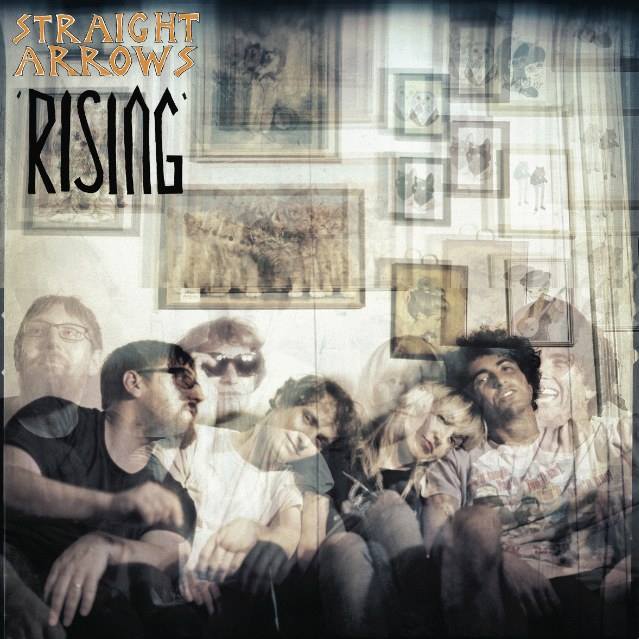
Record review: Straight Arrows – Rising (2014, LP)

straight arrows rising

Even on record, Sydney’s Straight Arrows sound like a band you want to party with. Semi-strict devotees of the original wave of ’60s garage-rock they may be, but they’ve also got more than enough primal middle-fingers-to-the-air punk attitude to make sure their second album smells more like beer and sweat than it does of nostalgia.

Not that nostalgia is necessarily a bad thing; it just sounds better when it’s run through the musical meat grinder that is Straight Arrows’ perfectly primitive guitar thrashing, barely discernible vocals and so-lo-fi-they’re-almost-non-existent bass lines.

The breakneck ‘Can’t Stand It’ immediately harks back to the classic garage bands of the ’60s, while the 90-second ‘Rotten Teeth’ is appropriately titled to be the most ‘punk’ song here. Single ‘Petrified’ catches singer and Arrows mainman Owen Penglis in a more measured mood, before the song grinds to a halt, broken and battered by the waves of messy surf guitar spattered all over the final minute.

‘Without Ya’ is an anomaly in that a prominent, driving bass-line features for the first time, with the end result benefiting hugely in what could almost be called a groovy fashion, recalling much more of a West Coast garage vibe than anything else here, but the most pleasant surprise is that there isn’t only reverb-laden garage-rock on Rising, as might be expected. At times the path trails off on tangents with strange or dark undertones, as on the introductory track and ‘Fruit of the Forest’.

This aside, be happy in the knowledge that bands like Straight Arrows – on the whole – don’t exist to take us on long-winded musical journeys into the unknown. They’re here to make us want to jump around like idiots; and thankfully this album more than does the job.

For FasterLouder

Record review: Remi – Raw x Infinity (2014, LP)

remi album cover

Last year, Melbourne rapper Remi Kolawole dropped the single ‘Sangria’; a blissed-out scorcher of a tune that spoke of the joys of summer, sun and getting sh#tfaced. There’s always a time and a place for songs like that, but the 22 year-old’s lyrics have moved on from those hazy days in the bars of Brunswick, to somewhere where the present isn’t looking quite as rosy. Like a rabid greyhound out of the traps, Remi – backed by Sensible J on drums, production and DJ duties, and Dutch on beats and production – sets off at speed from the start and doesn’t let up, with many a sacrificial rabbit in his sights along the way. He has insisted in interviews he’s not a particularly political rapper, but lines on the title track like “Tony Abbott and the Government / Need to get on the boat to Iraq and sh#t / Take a walk down the Gaza Strip / They’ll either wake up or get blasted then” say something different and show something Australian music needs a lot more of in 2014: guts. There are party tracks too (never fear), and ‘Livin’ might be the best one here; a controlled diatribe against workin’ 9 to 5, while ‘Tyson’ is brutal braggadocio at its best. While this is only Remi’s second album, after 2012’s Regular People Sh#t, it feels like the work of a seasoned pro. This guy is going to do big things. (House of Beige)

For mX

Remi: “I was trying to write stuff that was a bit deeper”

remi

REMI Kolawole began collaborating with Sensible J and Dutch in 2011, and the rapper’s lyrics have continued to evolve without looking back. The Melbourne trio’s new album Raw x Infinity takes a new, edgier direction, as on singles ‘Livin’ and ‘Tyson’.

“We’re just trying to show to anybody who had only heard ‘Sangria’ last year the direction we’re going in,” Remi says. “Our last album, Regular People S#%t, was quite an eclectic listen. A lot of people who have heard that album would probably be ready for our current album, but for a lot of people who hadn’t – as triple j opened us up to a much wider audience than before – this was a good way to let them know what they were in for when they were getting this album. We have beats that are heavily driven by strong drums, live musicianship and there are no samples on ‘Livin’. I guess it’s also a bit deeper than ‘Sangria’; we’re talking about how we’re all being told how to live, as opposed to getting pissed in Brunswick [laughs]. I guess that it’s more of a move to show people our range and what we’re going to do. We just really like the song as well.”

The 22 year-old is keen on embracing a wider range of subject matter, and tackles topics like racism and politics in his songs. But does he consider himself a political rapper?

“Quite the opposite [laughs]. I just write from the average person’s point of view. I can’t pretend to be anything more than I am. [Tony Abbott] doesn’t really speak to me or the people who are around me. Obviously that’s just my opinion, and that’s what rap is. If anyone agrees, that’s cool, and if anyone disagrees, that’s cool as well. It’s all quite progressive; we’re always trying to do something new. On this album, I was trying to write stuff that was a bit deeper. This was all stuff that I just kind of picked up, but by no means do I want to be considered a political or super-conscious rapper. I just write about what I see or what I experience, and I guess some of the political issues came out.”

New single ‘Tyson’ is a no-holds-barred blast of Remi flaunting his lyrical talents over a brutal beat.

“Obviously you should be sending a message,” he says. “That should be a part of what you’re trying to do. But at the same time, you can also rap just to rap and get it out of your system. You can write some shit that hopefully sounds cool, you know what I mean? That’s ultimately what ‘Tyson’ is; just straight rap braggadocio bullshit that I’ve tried to construct to be as entertaining as possible. All the stuff that I write is basically made up of my experiences, or stuff Sensible J, Dutch and I talk about. I could be anywhere; I could be on the bus and see something happen and write about that. On the flip side, with Sensible J; he’s making beats in his head while he’s at his computer at his day job, so you just got to let the music take you whenever, in the most un-corny and unclichéd way [laughs].”

The new material has earned the trio plenty of national radio play, which Remi happily embraces, albeit with a touch of caution.

“Up until about three or four months ago we didn’t actually have any management or anything like that,” he says. “So we always operate like nobody’s got our back, if that makes sense. We’re thankful for anyone who plays our shit, because the stuff we’re doing at the moment is lyrically and sonically different to what’s going at the moment. It’s strange to us if anyone picks up on that and we’re thankful for it. By no means are we banking our career on anyone, because I don’t think you should be writing your music for a station or a magazine or anyone. Those avenues should allow the artist to do what they do, then spread their music, not the other way around. I’m totally thankful for what triple j has done for us, as well as any other media coverage that we’ve received. At the same time, I’m not going to bank on the stuff we do being picked up or written about because that would stifle my creativity and the creativity of Sensible J and Dutch.”

The group’s upcoming calendar is a busy one, with plenty of chances to air the new material.

“We’ve got our national tour coming up; the Raw x Infinity tour,” Remi says. “Then after that, we go to Splendour in the Grass, which will be great. Then we’re doing a few other – perhaps two or three – nationwide tours before November. Then we’re going to Germany in November, and back in December to hopefully do a bunch of festivals. We’ll be doing a couple of showcases in Germany, and we’ll definitely be going over there just to kick it [laughs]. I’ve been told only good things about Berlin, so I’m pretty excited.”

RAW X INFINITY BY REMI IS OUT NOW.

For Beat Magazine.

The White Album Tour: Prefab Four

white album

IF YOU’RE GOING TO CHOOSE a single album to base your 21-musician show around, it had better be a good one.

Four of Australia’s top rock singers; Chris Cheney of The Living End, Tim Rogers of You Am I, Phil Jamieson of Grinspoon and ARIA Award-winning singer-songwriter Josh Pyke have chosen to do exactly that. Thankfully for everyone concerned, they have chosen wisely.

Their upcoming White Album Concert tour will see the four musicians backed by a 17-piece orchestra to run through the 1968 classic Beatles album on a national tour, including such numbers as ‘Back in the USSR’, ‘Dear Prudence’, ‘Helter Skelter’ and ‘Happiness Is A Warm Gun’ in a repeat of the widely successful 2009 tour that brought a slice of the swinging sixties into the modern day. High demand for the show at QPAC’s Lyric Theatre on 13th July has led to the addition of a matinee show on the same day.

Speaking to news.com.au, Jamieson and Rogers explained that it was an easy decision to reconvene and get into a Fab Four frame of mind once more.

“The timing worked,” Jamieson said. “We weren’t in a cycle trying to sell our own rubbish so we could do these amazing concerts again. It was a blast for the audience and you could not disguise the absolute joy we all had up on stage.”

Despite having commitments with You Am I and his solo work, Rogers was also quick to jump at the opportunity.

“We were completely surprised by the reaction to it,” he said. “I don’t think I’ve been in anything that’s been so complimented. Anything I’m involved in there always seems to be a certain percentage of dissenting voices questioning as to whether I’m a complete hack or not! The four of us are quite different personality-wise and quite complimentary. Doing anything that’s other people’s material is not my automatic go-to thing. I prefer writing what I perform. But it’s like stepping into a character, it’s almost like sweet relief at times. You can go and be a performer. There’s less Rogers angst, more Lennon angst.”

In terms of musical releases, 1968 was a teeny bit special. Maybe it was the influence of the Summer of Love the year before, the rise of the counter-culture movement in America and elsewhere or the sudden widespread availability of a range of mind-altering new drugs, but one twelve-month period saw the release of some of the most influential and era-defining music of possibly any other year in musical history, and to say the charts of the day hosted an embarrassment of riches is an understatement. Hendrix’s Electric Ladyland, Johnny Cash’s At Folsom Prison, The Band’s Music from Big Pink, The Rolling Stones’ Beggar’s Banquet and Van Morrison’s Astral Weeks featured alongside albums by The Doors, The Byrds, Big Brother and the Holding Company and Aretha Franklin.

At the top of the pile, though, has to be the White Album, so called for its blank, nameless cover. Written at a time when the Beatles had long since quit touring and the distance between main song-writers John Lennon and Paul McCartney was growing ever wider, exacerbated by musical differences, ego and supposedly meddling spouses, the album still sounds fresh today. It also contains one of George Harrison’s finest compositions in ‘While My Guitar Gently Weeps’; a song only taken seriously by Lennon and McCartney after Harrison enlisted the help of Eric Clapton to play lead guitar on the track. Josh Pyke explained in an interview with the AU Review why the song and album will always be considered a classic.

“It’s just a genuine phenomenon,” he said. “There is never going to be another band like the Beatles. And even if there are bands that are technically as popular or sell as many records, I think it’s fair to say they will never have the lasting impact upon culture as the Beatles have; because the Beatles came at a time when nothing was like what they were creating and they kept on pushing the limits of records, and they peaked and kind of disappeared under tragic circumstances when they were still massive; there was no slow decline.”

“With the White Album, you’ve got your raw, Hamburg rock’n’roll,” Cheney told Time Out Melbourne. “Then you’ve got stuff like ‘While My Guitar Gently Weeps’ and ‘Rocky Raccoon’. It was pretty fractured at that point, so they were all in different studios doing their own stuff. I think every band needs that friction or it’s going to result in bland music. I know from personal experience, the hardest times with The Living End have produced the best results, because you’re fighting for something, and you’re pushing each other towards a greater result.”

The show will see the double album’s thirty songs played in full and in order, starting with ‘Back in the USSR’ and finishing with ‘Good Night’, and will include guitars, strings, horns, two drummers and musical direction by former Air Supply guitarist Rex Goh.

THE WHITE ALBUM SHOW APPEARS AT QPAC’S LYRIC THEATRE 13 JULY AT 3PM AND 7PM.

For Scene Magazine/Scenestr

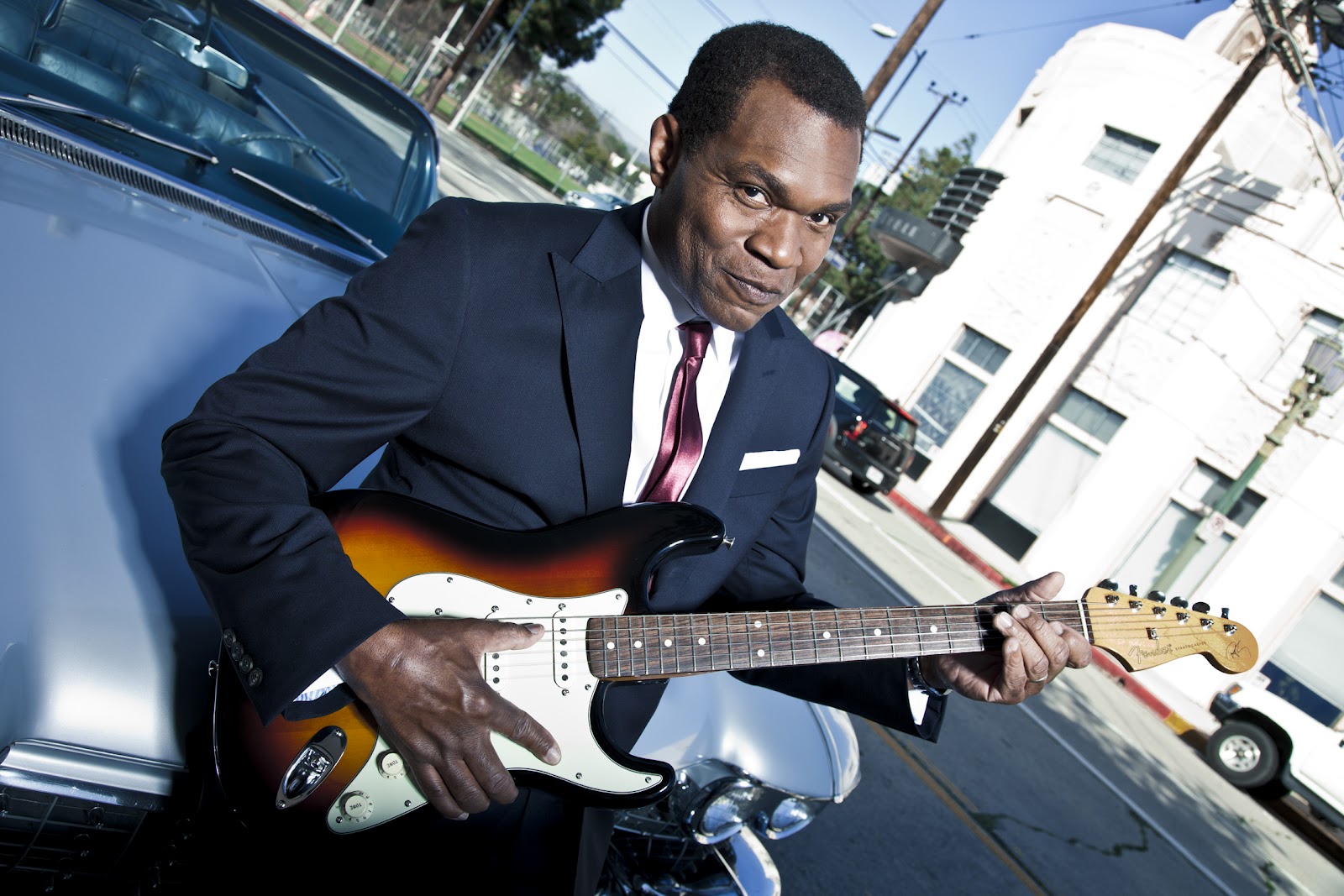
Interview: Robert Cray

robert cray

WHERE do you start with a musician as accomplished as Robert Cray? He’s been playing the blues since the seventies, has over twenty albums in his catalogue, has bagged five Grammy Awards and played with the biggest names in the business, from John Lee Hooker, Albert Collins and B.B. King. Oh, and he also appeared in Animal House with John Belushi AND is still releasing top-notch blues records. On top of all this, he’s only one of the nicest guys around. Have I missed anything? Probably.

Hi Robert, let’s talk about your new album, In My Soul, first of all. How do you feel when you have a new record being released?

Happiness. It’s great because it’s a new record that gives us an opportunity to add to our repertoire and more to play to the fans. It’s a lot of fun.

You made some changes to the line-up just before recording. Why did you feel that was necessary?

Change is good; it’s necessary sometimes. We had two changes for this record. The first of which was having Les Falconer join as drummer. I’ve watched Les from afar, but not too far away; he’s been in the Keb’ Mo’ band for years. It just so happened that three or four years ago Les asked me if I ever wanted to make a change to consider him, and I did so about 16 or 18 months ago, so that was the reason for that change. We changed keyboard players, and we have Dover Weinberg on board, who also used to be in the band in the late ’70s. We made the change because I remember Dover having a great sound and a great feel, and I thought it would be great to have him work on the new record before we went into the studio.

Will this version of the band be set in stone for the foreseeable future?

For the foreseeable future, yes. We have a good time and we have a new album to present with this band. But we also play a lot of the older songs and we have a really good time with those, thank you.

Was the soulful feel to the album a deliberate step or more of a natural progression?

It was just by osmosis, actually. We had Steve Jordan come in to do the production. Steve’s a great musician as well. He made a couple of suggestions before we came into the studio; one was the Otis Redding cover, ‘Nobody’s Fault But Mine’, and the other was a Mable John song, ‘Your Good Thing (Is About To End)’. He suggested those two songs, but I thought it was going to be that maybe we’d record them in case the band and myself didn’t have enough original material. Well, the band had original material which were rhythm and blues, and I had songs which were rhythm and blues as well, so we just wound up with soulful songs.

How did you react when he suggested covering ‘Nobody’s Fault But Mine’?

I dug it, because it’s a song by Otis that I’ve admired for years. I’ve never had the opportunity to play it, but lots of friends of mine have covered the tune and I always thought it was cool.

What else does Steve Jordan bring to the table?

Steve’s a great communicator and organiser. He gets everybody into the studio, makes them participate and feel like they’re part of the project. That’s really important and how he conducts all operations in the studio. For example, we have this one song that’s a bonus track called ‘Pillow’; it’s got this really ’70s funky feel to it. Before we tackled the song we went into the control room where Steve had a copy of Curtis Mayfield’s Super Fly record. We played a couple of tracks and started reminiscing about all the ’70s music, then we took a lunch break and let the music digest itself, you know? We came back into the studio, the electric sitar came out, different drums came out, and he had set the mood for the song. He’s in there conducting us, he’s in there dancing or he’s playing along, you know?

One of my favourites is ‘What Would You Say’, which contains a bit of social commentary. Would you call it a political song?

It’s not political in the way other songs we’ve done before covered deeper subjects like the wars in Iraq and Afghanistan. This is commentary and trying to be a bit more positive about what’s going on today with homelessness, the cancer that’s everywhere today and the war in Syria. But not in a big way, if you know what I mean. I wouldn’t call myself a political singer, but we do touch on it.

How was your experience of Bluesfest last year?

It was fantastic. We should come every year as far as I’m concerned [laughs]. It’s always a blast to be a part of it, but also to witness it. It’s a great event.

So you’re putting your name firmly in the hat for any future Bluesfests?

My name is in there every year. It’s just a matter of getting the opportunity to do it. There are so many acts who want to do it, and we have to wait our turn.

You’ve played with most of the blues greats in your time; which one made you the most starstruck?

That’s hard to say. I think all of them did, you know? I’m starstruck by all of them. But the thing is, all the people I’ve had the opportunity to meet have always been really nice and comforting, in the sense that they see how nervous you are and see that you’re awestruck and all that. But they reassure you and make you feel cool.

Could you pick one blues player who has had the biggest influence on you?

Probably Eric Clapton. I play that style of electric guitar, you know? John Lee Hooker is huge, Muddy Waters the same, but my style is more akin to Eric Clapton and the electric players he admires.

When you were in Animal House in 1977, was there any indication that it would be a cult classic movie?

As far as I knew, nobody knew what would happen with the film. We had just bit parts in it; we weren’t even credited as the musicians in the band. We just lip-synched to the music. We never saw a script, so we didn’t even know what the working title was. It was just a bunch of local guys doing a movie, then all of a sudden it’s what it is today. Now it’s history.

How much contact did you have with John Belushi?

He befriended a good friend of mine, Curtis Salgado. We lived in Eugene, Oregon at the time. Curtis was fronting a band called the Nighthawks from Eugene; it was where the movie was filmed and also where I lived at the time. On Monday nights we had a splinter group called the Crayhawks; a combination of the two bands. Belushi would come in and people would ask us if we knew Belushi was in the audience, and we’d go ‘who’s John Belushi?’ because we were always working on Saturday nights and never had seen the programme. But eventually we let him on the stage to do his Joe Cocker impersonation, and all the while the movie was being filmed in Eugene, Curtis was taking John Belushi back to his house and schooling him on blues. To cut a long story short, he got educated through Curtis and that whole thing begat The Blues Brothers. The prescription sunglasses Curtis wore became part of The Blues Brothers model and they dedicated the first record to Curtis Salgado.

What are your plans for the rest of the year and beyond?

Well, we just came back from a six-week tour of the UK and Europe. This coming week we’re about to start another six-week leg in the States, followed by another European leg in the fall. If things go right, maybe we’ll see you at Bluesfest next year. Like I said, my name is in the hat [laughs].

IN MY SOUL BY THE ROBERT CRAY BAND IS OUT NOW.

For the AU Review

Directors of Good Vibrations: “It felt like it channelled a bit of the original spirit of that gig”

richard dormer

TORN apart by the violent sectarian divide known as The Troubles, Belfast in the 1970s was the last place you would have expected to see a musical revolution.

Enter Terri Hooley: founder of the Good Vibrations record store and label, which helped kick-start the bomb-ravaged city’s punk scene. The film of the same name tells the story of Hooley’s life and the bands his determination inspired, as directors Lisa Barros D’Sa and Glenn Leyburn explain.

“We became involved in the film while there was just a brief outline written by Glenn [Patterson] and Colin [Carberry], the writers,” says D’Sa. “They had originally come up with the idea. We knew a bit about Terri Hooley through the music scene he was involved in, and we knew of him as an extraordinary man who had lived through extraordinary times. I think what really appealed to us about the story when we came across it, was that we realised that this was just not a story about a local legend, but a really universal story about someone who was a light in the darkness during the worst of times for a lot of people. It was a story about music and youth in general; just that spirit of youth that won’t be downtrodden. This was a time when young people wanted to be going out, meeting people and working out they were, but it wasn’t safe for them be to be out, meeting their friends in town and doing those kinds of things. It’s a story about that compulsion, that determination to go out and live your life, despite whatever dark forces are closing down the city you live in. That was something we felt that audiences all over the world might respond to. We also knew it was an opportunity to tell something that was celebratory with that distinctive dark comedy wit that is born of this place. I think we found that we had the opportunity to show all of that in the story and to create something of a celebratory spirit that was perhaps going to be a new way of looking at it.”

The Northern Irish conflict is not widely known about or understood internationally, but ‘Good Vibrations’ is a story with universal themes, says Leyburn.

“I think there were a lot of things about this story that we hoped would have a universal resonance,” he says. “Especially in the times we live in today. There’s conflict all over the world, and there are kids and teenagers facing the same challenges as those in Belfast at that time. Our story is a positive one; one that we hope has been told with humour. There have been films about The Troubles in Northern Ireland that tend to focus on soldiers or prisoners or whatever. That is the story we’re telling; it’s just about a different thing. It’s about that spirit of resistance and people who refuse to be defined by the dark forces around them. We’ve been lucky enough to travel around the world to film festivals. It’s been played in South Korea, the Czech Republic and the list goes on. A lot of those audiences have connected with it, and there’s a resonance to their own recent histories.”

At 65 and retired, Hooley no longer owns the store, but was an active influence in the making of the film.

“To tell the story, Terri had to be on board,” Leyburn says. “The fact that he was able to get to know us was important to him and to us. I knew of Terri and his legend; I’d seen him around Belfast and bought records from him, but I didn’t really get to know him. Through the process of developing the script and the film I got to know him really well. Terri has a very unique way at looking at the world. He’s a unique story-teller, and tells stories that are very vivid and interesting. I think for us to get to know him as well as we did helped us to bring a bit of his verve for life and telling stories to the screen. Also, just for the spirit of the thing; he came to the set and there was always an open door for him. You can’t make a story about somebody who’s still around and shut them out; I think that’d be the wrong way to approach it.”

While the story is one of inspiration and punk rock, the directors were keen to paint Hooley in as realistic a light as possible.

“He’s obviously a flawed human being, as we all are,” says D’Sa. “He’s a very generous person, and that comes across in the film, and once he was happy for us to make the film, he was particularly generous about it. He trusted us to go and make the film. It’s not going to connect with everyone if you make someone appear like a saint, and we had to tell the story to be true to what we were trying to say. The first screening we had when we finished the film was for Terri himself. We sort of hoped it would be just for Terri and his close friends and family. We wanted him to see what was a potentially difficult portrait of himself in a way, and we wanted to give him a chance to see it without anyone there. Typically for Terri, he wasn’t worried. He did bring a group of close friends, but for Terri that tends to mean about 200 people. We watched it in a room full of people who had been there at the time, and of course we were worried about what his reaction was going to be, but at the end Terri was in tears and made a lovely speech; he was very gracious and said how much he had been moved by the film. He has travelled with us a lot, and come to screenings all over the world. I think it’s just typical of the person that he is that he’s felt good about supporting it and sharing his story with the world.”

Game of Thrones actor Richard Dormer plays the title role, and was an easy pick for the job, says D’Sa.

“From the very first stages of developing this film, we knew Richard was the actor we wanted to cast,” she says. “Not only is he a phenomenal, subtle actor, we knew he was going to be brilliant at inhabiting the role and soul of this character. He also understands the DNA of the place and the time. We did a pilot, and Richard kindly agreed to come and play the role in a few early scenes. That was job done; once we had screened the pilot to the financiers, any of their concerns seemed to wash away at that time, because they could see what they believed, and that was that he was going to do an incredible job. It’s a very dynamic, charismatic performance, but one which also allows you access to the vulnerability to of that character. We’re really glad he’s been cast in things like Game of Thrones and big movie parts, and it’s incredibly well deserved.”

richard dormer

The story culminates with a huge punk gig, organised by Hooley to pay off the label’s debts. Luckily, the directors were able to call on another Belfast band to help out.

“We had a lot of support from Snow Patrol, who are executive producers and financiers of the film,” D’Sa says. “It was really down to them that we were able to get 2000 extras. On our budget we couldn’t afford to do that, but the Snow Patrol guys put out a call on their fan site asking people to show up at the Ulster Hall in Belfast, dressed in appropriate punk clothing for a couple of hours filming. Of course, within an hour, we had our 2000 extras for the scene, and the treat for them at the end was that the guys would play a two-hour acoustic gig after filming. So, we all these extras in punk clothing, the entire cast and crew was there, and it was a really joyous experience that felt like it channelled a bit of the original spirit of that gig.”

GOOD VIBRATIONS IS IN CINEMAS JUNE 12.

For Scene Magazine/Scenestr.

Record review: Lucy Hale – Road Between (2014, LP)

lucy hale road between

A quick web search tells you everything you don’t want to know about Lucy Hale. She’s a 24 year-old country-pop-singing reality TV ‘star’ and actress from Memphis, Tennessee, whose acting credits include such pinnacles of television and film as Jonas Brothers: Living the Dream and Scream 4. This is her debut album, and while Hale has a decent country voice with twangs in all the right places, there’s nothing else here but an 11-song collection of such sickly formulaic, Shania Twain-lite drivel that will make you want to violently hurl or throw a punch at the cat. The expected themes are all present and correct, from teen angst (‘Nervous Girl’) and useless boyfriends (the banjo-twangin’ ‘Goodbye Gone’) to pseudo-driving ditties aimed at boneheaded truckers (‘From The Backseat’). “There’s nothing wrong with an itty-bitty white lie,” she sings on ‘Love Tonight’, and that’s about as deep as it gets. At this point you realise how little input Hale must have had on her own album, such is the artificial vibe seeping from every note, and while her sole writing credit appears on final track ‘Just Another Song’, by that stage, that’s all it is. It’s a formula that has been proven to work, and it probably will for Hale, but having to listen to this guff is an excruciating experience from start to finish. Until a few days ago I had never heard of Lucy Hale; how I look back on that time with longing. (Universal)

Will Farquarson of Bastille: “Australian women are very attractive”

bastille band

THE synth-pop juggernaut that is English quartet Bastille returns to tour Australia after selling out venues here last year, and bassist Will Farquarson wastes no time explaining why the band is looking forward to it.

“The women,” he says. “Australian women are very attractive. Actually, you have all the same chocolate and chips and stuff as us; that’s really homely. When you’re travelling it’s really nice to be somewhere that has things from home, like a Twix or something. I know it’s ridiculous. And you have the Queen on your money, which is nice. Architecturally it’s more like America, but the people are closer to English people, so it’s kind of like being at home but in a cool American way. Everyone is so friendly as well, and the fact it’ll hopefully be sunny most of the time is going to be good. We’re just coming for the heat.”

The cheeky Farquarson, speaking from the band’s tour bus somewhere in Central Europe, goes on to dryly explain how the group’s live show has evolved.

“We’ve got more lights and a bigger screen now,” he says. “We’ll jump about more, maybe. We’ve got a couple of new songs. One is called ‘Blade’ and is a bit rock-y; I play guitar on it, and we did ‘Weapon’ with a rapper called Angel Haze. Our fans can be quite surprised when we come on stage with a rapper, although sadly he can’t come to all our shows, so we won’t be doing that at all of them. I can’t rap; I’d have a go but I don’t think anyone wants to hear it.”

Bastille have only existed since 2010 and have released only one album, but that didn’t stop them selling out venues in Sydney and Melbourne in August.

“We’ve been lucky with live stuff generally,” Farquarson says. “It’s surprising that happened somewhere so far away, and given we’d not been there at all beforehand. It’s amazing anyway when you sell a show out, but especially when it’s at the other side of the world. It’s better than nobody coming, which would be rubbish. We’ve [recorded] quite a bit of the new album. To break things up on tour we’ve been recording while we’re away. We’ve got maybe ten or so songs as demos ready to go. In the [northern hemisphere] summer we’ll be going into the studio to get the album done and then maybe early next year it’ll be coming out. We’re not worrying too much about it; I think we’ll be okay.”

The band’s debut, Bad Blood, was re-released as an extended version entitled All This Bad Blood, which means extended periods of touring.

“We wanted to do a double album,” Farquarson says. “It’s everything we’ve done live, mix-tape things and some of the B-sides from the past couple of years. Just because something is a B-side doesn’t necessarily mean we don’t like them, and we still wanted people to hear them. We thought it would be nice to put all the things that didn’t make it onto the main album together. We’re going to be doing a load of festivals – God knows how many – over the summer, which will be wicked fun. Then we’ll be trying to record this album, then it’s back to the grindstone after that. The main objective is to get the album done this year; that’s one thing we all really need to focus on. If we can do that we’ll be laughing. Maybe we’ll have time for a holiday at Christmas, I don’t know.”

BAD BLOOD AND ALL THIS BAD BLOOD ARE OUT NOW VIA VIRGIN.

Bastille tour dates:

Friday 13 June – Brisbane Convention Exhibition Centre
Saturday 14 June – Sydney Hordern Pavilion
Sunday 15 June – Melbourne Festival Hall
Wednesday 18 June – Perth Challenge

Ofa Fanaika of Chocolate Strings: “We’re kind of superstars in our own little way”

chocolate strings

BRISBANE funk/reggae/soul collective Chocolate Strings have just released a new single, and it’s a smooth and delicious taste of things to come, says singer-guitarist Ofa Fanaika.

“’Playing Pretend’ is a double A-side single with another track called ‘Polyamory’,” she says. “It’ll be part of an album that we’re looking to release in September or later in the year. We’ve recorded maybe eight tracks at this point, and we’re just working out what sort of journey we want to take our listeners on and what best represents where we’re at now. We’re going to try to capture that on the album.”

The song features the band’s trademark collision of genres and a soulful vocal by Nia Falekakala.

“It started with a guitar riff I’d been mucking around with, and the vocalist on that particular track wrote the lyrics for it,” Fanaika says. “The essence of the song is about being genuine and upfront, and saving yourself the drama of wishing you had done something right at the beginning, hence the name ‘Playing Pretend’. We were recording a bunch of tracks and it just seemed like the one that stuck out the most, and after other people had heard it, it ended up being a favourite.”

The band has eight members pitching in ideas, so when asked if everyone agrees on everything, Fanaika laughs.

“No comment! No, we’ve been doing this for a pretty long time and we’re pretty upfront with stuff. We don’t like to beat around the bush when it comes to things that are best for the songs, so we don’t actually have a lot of fights. A lot of the time we’re playing songs live before we’ve recorded them, so we can run through the process that way, and decide if it’s something we can put down.”

Firm roots in Brisbane’s creative community has helped the band develop and grow.

“I’m pretty proud to be a West End citizen,” Fanaika says. “It’s a lot different to most other suburbs in Brisbane. It’s a particularly creative community and inclusive of artists, and a real imaginarium of people that are thinking about expression. We can bounce ideas off other people who are doing a similar thing in whatever creative thing they’re promoting, and a lot of concepts cross over; the artistic, music and community worlds. In West End, our networks are shared amongst other like-minded people, so for every person who likes Chocolate Strings, they tell ten other people. In this neighbourhood, we’re kind of superstars in our own little way, and that’s kind of a nice thing.”

CHOCOLATE STRINGS PLAY THE MOTOR ROOM MAY 30. ‘PLAYING PRETEND’ IS OUT NOW.