Record review: Bob Mould – Beauty & Ruin (2014, LP)

bob mould beauty and ruin

Fans of Hüsker Dü tend to favour either the tracks on which guitarist Bob Mould or drummer Grant Hart sang; the former taking a more brutal approach at the mic and the latter being a more melodic soul. It’s been 26 years since the Hüskers broke up in acrimony and 25 since Mould’s debut solo record, but 2012’s Silver Age saw Mould triumphantly return to the rush of angry alt-rock riffage Hüsker fans loved him most for, and it’s in this vein Beauty & Ruin continues for the 53 year-old. Not that you’d think it after listening to sludgy opener ‘Low Season’; the longest track here at four minutes. With that out of his system, it’s straight into the two and three-minute blasts of rock ferocity, with ‘I Don’t Know You Anymore’ and ‘The War’ being particular stand-outs. ‘Forgiveness’ eases off enough for a mid-album catching of breath, and isn’t unlike some of REM’s earlier work, while ‘Tomorrow Morning’ is Candy Apple Grey-era Hüsker Dü rebooted for the 21st century. It’s refreshing to see and hear a rock musician still doing it better than many bands he inspired, and as Hüsker Dü’s classic Zen Arcade came out 30 years ago this month, maybe it’s time for a re-evaluation of Bob Mould’s standing in the annals of rock. On Beauty & Ruin, he’s a musical force of nature; just like he’s always been. Green Day et. al: this is how it’s done. (Merge)

Merrill Garbus of tUnE-yArDs: “Aren’t I supposed to know how to sing?”

tuneyards

SINGER and multi-instrumentalist Merrill Garbus is refreshingly honest about her need for musical reinvention on Tune-Yards’ new album Nikki Nack.

Her 2011 album Whokill received almost universal critical acclaim, and saw the New England native off on a gruelling world tour. After a period of reflection, the 35 year-old realised it was time to go back to basics for album number three.

“I didn’t want to use any of the old tricks I used to,” she says. “I didn’t want to use my older methods of writing and the looping pedal. The looping pedal has very specific limitations, and although it did me well for a long time, I think I had come to the end of the road with that. So it felt like if I wasn’t going to use the ukulele like on the first album and I wasn’t going to use the looping pedal, I was back to square one or ground zero with a big question mark saying ‘how do you write an album?’ without doing it the ways I have done it before.”

Ditching the looping pedal might seem like a bold move for a musician who has relied on it so heavily, but Garbus went a step further by literally going back to school.

“I started off by taking voice and drum lessons,” she says. “It was difficult. I love being good at things, and I don’t like not being good at things, so it was very humbling to learn that I don’t know everything and realise that I can improve and learn new techniques. I took a lot of Haitian drum lessons, and it was great to admit that I had no idea what I was doing and nothing to direct me, as I had just not heard that music before. It was really challenging, but that was easier than taking voice lessons. I mean, aren’t I supposed to know how to sing? I sing for my living, so you’d think I’d know how to sing, but it turns out I have a lot of improving to do there as well.”

After experiencing the intensive Whokill tour, Garbus admits it’s difficult to not get burnt out.

“I’m 35 years old,” she says. “My body can only endure so much partying and late nights. In other words, we hardly do that at all. To me, keeping my health up and having a regular routine is important. I have certain books that I read and I have yoga and I eat well; pretty simple things. This is me trying to pretend I have a healthy, stable life, even though we’re taking that stable life all across the world. It’s pretty fun.”

Tune-yards’ upcoming appearance at Splendour in the Grass will give the band a chance to test out its new skills on an Australian audience.

“We’ll be so excited to be in Australia,” Garbus says. “So we’ll have lots of energy I hope (laughs). I’m drumming a lot more this time around, and we have another drummer who plays a very unique setup. We’ve got two very amazing back-up singers. Nate Brenner is on bass as always, also with more synthesisers. Expect a lot of fully danceable music.”

NIKKI NACK BY TUNE-YARDS IS OUT NOW. TUNE-YARDS PLAY SPLENDOUR IN THE GRASS.

For mX

King Buzzo: “I’ll take the blame, no problem”

king buzzo

BECOMING involved in music as a high school friend and band-mate of Kurt Cobain, before forming grunge/metal legends the Melvins, Buzz ‘King Buzzo’ Osbourne has accomplished most things in music.

However, after a 31-year career involving over 30 albums of studio and live material, the singer-guitarist is still breaking new ground by going acoustic for the first time on new album This Machine Kills Artists.

“It just seemed like the right thing to do, you know?” he says. “I’ve done a lot of albums in the past and a lot of other types of work in the past, but there’s no real reason other than that. I worked on it for a few months and I realised pretty quickly that I can do things fast, because I didn’t have anybody else working on the songs. So once I had them written, I was able to go in and record them, and I had a great time doing it. It was just another challenge and I was up for a challenge. I’ll take the blame, no problem [laughs].”

The 50 year-old is equally self-effacing, engaging and blunt, and was just as driven by what he wanted the new album to sound like as how he wanted to avoid it sounding like. A quote on his website reads “I have no interest in sounding like a crappy version of James Taylor or a half-assed version of Woody Guthrie”.

“I just listened to most of what that stuff sounds like and just made sure I didn’t do it,” he says. “I think it’s mission accomplished in that department. I didn’t want to do some National Skyline type of thing at all. Lots of rock and rollers try to do that; they think it’s more legitimate or something, I don’t know. It’s weird. I could certainly do all acoustic covers of Hank Williams songs if I wanted to, but that just doesn’t sound very interesting to me, you know? As much as I love Hank Williams, it’s not for me to do it. If I could figure out some other angle on it, maybe, but I’m not going to worry about that. I’m trying to be kind of a heavy metal version of Captain Beefheart. I’ve been calling it ‘molk’, which is metal-folk. How does that sound? M-O-L-K; I don’t know anyone else who is doing that. It’s an original concept. For all intents and purposes that’s the kind of area I’m working in. So nothing’s too direct, but I think if you listen to it, it can mean a lot to a lot of different people. I’m never that direct, never I’m not going to lead you by the hand down the garden path. It’s a walk people have to take on their own, you know?”

With more than 2000 shows under his belt, it would be safe to assume Osbourne should take performing in his stride, even if the new format throws up some original challenges.

“I don’t have a band to hide behind on this,” he says. “I just have to go out there and make it work. I’m all on my own; there’s no drums or anything except me and my acoustic. It’s very stripped-down, very minimalistic and that’s kind of how I want it. I’m eight shows into this tour and I did about 17 or 18 shows before this. I’ve done the better part of 30 shows, but I’m still learning, you know? I’m figuring it all out as it’s brand new to me. By the time I get to Australia I’ll have more than 50 shows under my belt, so I’ll be feeling pretty secure that I’ve seen it all by that point, but there really is nothing like playing live to get that experience and feeling that anything and everything could go right or wrong. There’s no substitute for that; none. Things can still go wrong; even songs that I’ve played for years. You just never know. That’s all part of playing live.”

Osbourne will bring his solo show to Australia for a ten-date tour in August, and while he’s not generally known for being a chatty performer, expect at least a bit of banter between songs.

“For now, I have been telling stupid stories and stuff like that,” he says. “It’s not normal singer-songwriter type stuff, it’s more irregular. I want to present this as serious, but still vulnerable to some degree. I got to have some kind of communication with [the audience], but maybe as time goes on I won’t say a word. With most of the Melvins shows I don’t say a word; I just let the music do the talking and don’t worry about it too much. Sometimes at Melvins shows I’ll talk about whatever the fancy takes me, but not a tremendous amount. I’m doing 70 minutes with not a lot of talking; maybe five minutes talking out of 70 minutes. Sixty-five minutes of music is a enough for people to have to deal with [laughs]. Out of those 70 minutes, I’ll be doing about 50 percent old Melvins material and 50 percent new material, which is what I do normally anyway. It’s not a wild stretch, you know?”

The permanently-busy Osbourne confirms that despite his acoustic gigs taking centre stage for now, a return to blasting loud rock music isn’t far away.

“[The Melvins] have a new album coming out in early October and we’re going to do some new shows in the US in mid-October, roughly. Nothing’s on the back burner at all; it’s very much in the foreground. I leave nothing to chance, you know? I’m very much about plans; all kinds of plans. I’ve worked my ass off to get to this point.”

Despite swapping his electric guitar for acoustic, Osbourne laughs off the suggestion he might be mellowing with age.

“Listen to the album and you tell me,” he laughs. “It’s something else I can do, and that’s all it is. I’m a songwriter and that’s what I do; I make music. I do it for a living, I work on it as a craft. It’s all just part of the same thing, thank God.”

When & Where:

Thursday 14 August Geelong | Barwon Club (18+)
Friday 15 August Melbourne | Ding Dong Lounge (18+)

THIS MACHINE KILLS ARTISTS BY KING BUZZO IS OUT NOW.

For Forte

Dan Cavanagh of Anathema: “We’re not into lyrics about elves and we’re not into playing the fucking flute”

Anathema band

IT ONLY TAKES one four-letter word to get Anathema multi-instrumentalist and song-writer Dan Cavanagh fired up. Prog.

“I have no idea what it is, I don’t care about it and I don’t consider our band to be in it,” he says, when asked if the genre is in good shape globally. “It really is journalistic spiel to say we are a progressive band, you know what I mean? I do not consider us a progressive rock band; never have. In terms of where it is globally, I don’t care and I don’t even fucking know. If you’re talking about Pink Floyd, Kate Bush or Radiohead; that’s something I consider us to be closer to. If they’re a bit prog-rock, then I’ll take that, but we’re not into lyrics about elves and we’re not into playing the fucking flute. We’re not about time signatures and time changes and solos and what prog-rock seems to be known for; it’s got nothing to do with us. But I’m not knocking it! It’s just not for me. Pink Floyd, Radiohead and Kate Bush are for me.”

Luckily the 41 year-old Englishman is in more of a mood to talk about the (not prog) rockers’ tenth studio album Distant Satellites, and why it had the working title of Kid AC/DC.

“We’re all fans of Radiohead and AC/DC,” he says. “One thing I noticed was those bands strip back their music; it’s not over-layered, particularly on Kid A, which is a real difference from OK Computer. AC/DC do the same thing with rock and roll. Their music isn’t layered with strings and piano; it’s stripped-back, edgy rock and roll, which is great. We were tired of over-laying. Our previous albums are good, but we tended to just throw things on. This time we took a more mature and considered approach by not doing that. Both I and the producer independently came to that conclusion before we talked about it, but we were making an album that’s considerably more rock-edged than Kid A, so we called it Kid AC/DC.”

The album contains tracks called ‘The Lost Song’ in three parts; the result of a minor catastrophe that Cavanagh turned to his advantage.

“In about 2008, I recorded a riff which I considered to be a very good one for us,” he says. “I was very excited about it. A few weeks later it had actually disappeared off the recording and I couldn’t find it. I tried really hard to find other demos, and if it ever turns up I’ll be amazed and interested. Then I started trying and failing to remember that riff and these songs were written. So what I was doing was trying to write a song with a time signature and chord progression that may have been like the one that was lost. All three songs came from that. It drove me crazy, but John [Douglas, drums] said to tell myself the song was crap, and it’ll be okay.”

Along with Norwegian producer Christer-André Cederberg, the band were able to call on The Porcupine Tree’s Steven Wilson for additional duties.

“He was involved for just four days, but he made a difference,” Cavanagh says. “He mixed two songs on the album and two B-sides. All the production, writing and recording was already done before we asked him, and the reason we asked him was that Christer had taken ill and needed some time in the hospital for an operation. He couldn’t mix all the songs in time, so we asked Steven to help, and he did a great job as he always does.”

Almost unbelievably for a band that has existed since 1990, their three-date August tour will be the six-piece’s first trip to Australia. Does Cavanagh know why that’s been the case?

“Maybe because it’s so far away. It’s only just recently that we’ve got a really strong manager in place. We haven’t had a strong manager kind of ever, and it’s one of the reasons we’ve underachieved. We’re not going to underachieve any more, but maybe it’s just part of our story, I don’t know.”

ANATHEMA PLAY:
Thursday, August 21 – The HiFi Bar, Brisbane
Friday, August 22 – The Metro Theatre, Sydney
Saturday, August 23 – The Corner Hotel, Melbourne

DISTANT SATELLITES BY ANATHEMA IS OUT NOW.

For The Brag

Record review: George Ezra – Wanted On Voyage (2014, LP)

george ezra wanted on voyage

Let’s get straight to the point here, because there’s nothing else necessary than a simple, quick comparison to describe the debut album from British singer-songwriter George Ezra. If you’re a fan of Jake Bugg or Ed Sheeran you’re going to love Wanted On Voyage. You’re going to lap these twelve songs up, consider the 21 year-old to have a spiritual, if not a direct musical lineage to the likes of Woody Guthrie and Bob Dylan, and use terms like “old head on young shoulders” when describing his wondrous story-telling-by-guitar abilities. However, if you’re neither a fan of Bugg nor Sheeran; congratulations! Move right along, forget the name George Ezra and sleep soundly with the knowledge your music taste is probably slightly less rubbish than everyone else’s. Most aggravating is the fact that Ezra clearly has a decent voice; huskily in contrast to his baby-faced appearance, but if ever a musician’s song-writing style lets him down, it’s here. Breakthrough single ‘Budapest’ is about as sophisticated as a bowl of goulash (no offence intended, Hungary; goulash is fantastic), and painful low point ‘Stand By Your Gun’ comes off like a catastrophically-executed mix of Culture Club and Talking Heads. So, who’s buying this stuff? God only knows. One thing is for certain: this album sounds like it should be dished out as a give-away in a Sunday broadsheet alongside the “Which yacht?” supplement and the adverts for retirees’ rail holidays. In short, this is housewife guitar-rock at it’s blandest. (Columbia)

For mX

Ella Hooper: “It’s been going nuts live”

Ella Hooper

WITH her stint as team captain on Spicks and Specks at an end, former Killing Heidi lead singer Ella Hooper is getting back in touch with her first love; making music.

The 31 year-old’s new single from upcoming album In Tongues is ‘The Red Shoes’; a take on the classic Hans Christian Andersen fairytale.

“I think it’s so evocative,” she says. “It’s well-covered territory; everyone’s had a go at reinterpreting this tale. I think the biggest influence on me was actually the [1948] film; the beautiful adaptation that was done around the ballet, where the ballerina dances herself to death. It’s about obsession, but remains very delicate and classy with the way it handles it. I think with this whole album, I’m looking at lots of different ways that things can take you over and push you off your natural path, and sometimes that’s a bad thing and sometimes it’s a good thing. ‘The Red Shoes’ is a little bit of both, I think.”

Fans of Killing Heidi will find much to like about the new single, but Hooper says to expect a few new ingredients throughout the record.

“[‘The Red Shoes’] is actually the rockier side of the album,” she says. “It’s not all like this. My first single ‘Low High’ is probably a better indication of the meat of the record, but I really wanted to get ‘The Red Shoes’ out there too because it is my rockier, more anthemic song, and it’s been going nuts live. There’s probably two or three other tracks in this vein, and the rest is more ethereal and a bit more kooky.”

While these are the first tentative steps into a solo career for Hooper, she was able to count on an old friend for support and musical direction.

“There’s definitely a big influence from my producer Jan Skubiszewski,” she says. “He’s Way Of The Eagle; he’s been around for years and has done lots of great stuff. He comes from a more urban background, so that was another reason I wanted to put down the guitar for a bit. I write almost all my stuff on guitar, so I wanted to put that down and get into a studio with Jan to work with some beats and do a couple of things I haven’t done before. He’s my main collaborator on this album and probably the reason why it sounds so different to everything else I’ve ever done.”

With much changing in the day to day life of the radio and TV personality, it was inevitable that her song-writing would be affected, she says.

“It’s a bit of a break-up record; it’s a tough one. It’s about Saturn returning, which is that astrological phase when you reach your late twenties in which everything you’re not meant to take into adulthood is ripped away from you or falls away, and you have to redefine yourself. I ended a long-term relationship and changed my working situation. You know, I’ve always been in bands with my brother and this is the very first time I haven’t worked with him. There has been so much change, and a lot of it has been scary and a little bit painful, even though I know it’s right. So the album is about going through those things to come out better on the other side.”

Hooper will play release shows in Sydney and Melbourne to air the new solo material, but don’t be surprised if she pops up in other projects any time soon.

“I’m focussing on the future,” she says. “There will be the two singles we’ve put out already, ‘Low High’ and ‘Häxan’, and ‘The Red Shoes’. We also like to chuck in a couple of interesting covers, because I do know it’s hard for a crowd to sit through a whole set of brand new music. We like to throw in anything from Fleetwood Mac to strange country songs. I already do miss [being in a band]. I miss hiding in the band and being part of a whole thing. I have an amazing backing band now, who I feel very close to. They’re fantastic musicians, and will be touring with me for the Sydney and Melbourne shows. I sort of feel like I have created a bit of a band around me, but I definitely look forward to other side projects where it’s not under my name; where I can just be a character amongst other characters again.”

Her stint on the rebooted Spicks and Specks came to an abrupt finish with the recent announcement that ABC wouldn’t be recommissioning the show, but Hooper remains upbeat.

“I would definitely love to do more [TV work],” she says. “It was just the most amazing opportunity, and it was really sad that it didn’t last longer, but I’m hoping to keep looking at things in that arena. At the end of the day, it was just not up to us and we’ve all had to practice letting go, and I’ve had so many nice comments about the show. I’m a big one for trying to get more music on television; I just think it’s crazy there’s so little. We have the fantastic RocKwiz, which I’ve been really involved with, and Spicks was a another really great way to get more music on TV. I’m passionate about that, and hopefully in the future I’ll be able to be involved in something that gets more music on TV.”

Although the show is a big loss to Hooper and lovers of music on television, don’t expect to catch her putting her feet up and taking things easy.

“Music isn’t how I pay the rent any more,” she says. “I do a lot of other things as well. I’ve got my radio show on Sunday nights all over the country on Austereo. I also host a program called The Telstra Road To Discovery, which is a song-writing search for the next great generation of song-writers; that kicks off in a month’s time and goes through the second half of the year. I’m also doing a few other things that I can’t talk about yet; some more mentorship and song-writing projects. I’ll also be writing some music for an event in the countryside where I come from, so I’ll be quite busy. Oh yeah, and releasing my album [laughs].”

Ella Hooper plays:
Newtown Social, Sydney – July 17
Shebeen, Melbourne – July 18

For Beat and The Brag

Cale Fisher of The Floating Bridges: “Our music has a very positive vibe”

floating bridges

SUNSHINE COAST roots quintet The Floating Bridges are aiming to bring their tropical vibe to as many sets of ears as possible with a new single and upcoming tour, says bass player and vocalist, Cale Fisher.

“Our music has a very positive vibe in our lyrics,” he says. “It’s about day-to-day living stuff; how you treat other people, what you do when you go out and setting examples for others. That vibe comes across in the music and people latch onto it. It’s a really positive, uplifting sort of vibe.”

After coming together following high school, the band got into roots music and found their sound. A line-up change earlier this year saw Fisher move from rhythm guitar to bass, and the acquisition of Johnny Curran – brother of Jeff Curran of Dallas Frasca – to play additional guitar. It’s this line-up which wrote the as-yet unreleased single.

“He came and had a jam with us and it’s going really well,” Fisher says. “He had some neat little licks and just kind of fitted in. We’re just putting the final touches to [the single]; it’s called ‘Dreamcatcher’. We’ve got a heap of songs written, and it’s basically just a matter of narrowing them down at the moment. We’ve always had a bit of a rule that if a song is written we don’t disregard anything. Even if it sort of gets shelved for a little while before we come up with something new to make it better, we’ve always had this rule not to write anything off. We go from there and work on it all as a group. We’re group writers and everyone has their input into the band.”

The band hails from Yandina, in an area which Fisher says has helped shaped the band’s sound.

“We believe that where we live is one of the most beautiful places in Australia from what we’ve seen,” he says. “So we’re pretty lucky like that. There is a really strong roots music scene up here, especially over the last three years, and definitely a lot of our influences that we draw locally come from other bands here and Brisbane bands that are similar to us. We’ve never had any issues or blues at our gigs. People just enjoy the vibe.”

Refreshingly in touch with social and racial issues, Fisher says a part of the band’s approach is to raise awareness of cultural respect and fairness.

“We’re really passionate about Indigenous culture in Australia,” he says. “We’ve got a very big connection to our local elders in our area; the Gubbi Gubbi people. We’re very well connected with those guys, and we think it’s really good as a young person these days to be culturally aware of what’s going on and what’s happened in the past. We don’t want to cause any arguments or anything like that, but we just want people to be aware of what’s happened here before and everything, so when you make your decision on cultural awareness [issues], you’re well educated, you know? A lot of people make uneducated comments about different things, but we believe it’s really important to know where you’re from and to know what happens.”

With a new single and EP in the works, the rest of the year is set to be a busy one for the group.

“We’ll get a heap of shows under our belts around the country first,” Fisher says. “Then we’ll be looking to release the single, probably some time in the next three or four months. We’ve got our single release, then an EP release later in year and we want to lock in as many festival dates as we can. Basically, we want to enjoy the journey.”

For Beat and The Brag

Interview: Jon Davison of Yes

yes band

HAVING been in existence since 1968, English prog-rockers Yes are true mainstays of the music world, with more than thirty studio and live albums under their belts. Founding vocalist Jon Anderson left the band in 2008, paving the way for newest recruit, Californian Jon Davison, to become a part of a group who had already released three records by the time he was born. The newly rejuvenated line-up of Davison, Chris Squire, Steve Howe, Alan White and Geoff Downes will tour Australia in November, playing their classic ’70s Fragile and Close To The Edge albums in full, as well as releasing a new LP entitled Heaven & Earth.

You’re the new boy in Yes, having joined in 2012. How did you come to be in the band?

It was kind of by simultaneous means, which was interesting. My friend Taylor Hawkins, the drummer for the Foo Fighters, with whom I grew up, was always – during the last few years prior to my joining – suggesting to Chris [Squire, founding bassist] that should he need a replacement, I might be a suitable option. So Chris was aware of me, and at the same time the Australian tour in 2012 was booked and the band didn’t want to back out of it, so they were willing to take me on immediately. The manager called me first, saying there wasn’t even going to be an audition and that I would have to jump right in, so the band could continue looking forward to the tour.

How much notice did you have before the tour?

I think we were off maybe a month later, or six weeks at most.

Were you aware of all of the band’s material before you joined?

Yes, I was. Having been in a Yes tribute band, I knew most of the main tracks, but they were doing a lot of emphasis at the time on Fly From Here, so I had to learn the big bulk of that album, and there were a few others; a couple from Drama I hadn’t performed before. So there was a bit of a learning curve, but I had a lot of the material in my mind.

Have you had to change much to fit in, or are you more or less free to be yourself?

That’s a good question. It’s really a balance, you know? You want to do complete justice to the music, but you don’t want anyone to feel that something is missing, so you really pay homage as accurately as you can. To do that, you have to really incorporate your own style into it as well; you can’t be a clone. You have to incorporate what is uniquely you, so it’s a fine balance between those two aspects.

How long have you been planning to tour Fragile and Close To The Edge?

It’s been in the works for probably about a year now, because we’ve doing three classic albums for a couple of years now. We were thinking ahead a couple of years ago, wondering what we should do next and it felt like Fragile needed to be fitted into the occasion or formula somehow, and we’re doing Close To The Edge again, but we really wanted to do those two albums together, back to back. In most respects they’re the greatest, ground-breaking albums for the band.

So it’s purely a nostalgic thing.

Yeah, it’s a nostalgic thing, and I think it means so much to the fans to have that nostalgic experience; at least what I’ve heard that they’ve shared. Also, it’s never been done before. It’s an new move for the band. They’re always looking to do something new and fresh, and I think this is the answer to that.

It sounds like there are some fairly complex arrangements in those two albums. Are they relatively easy to translate to the live setting?

I would say for the most part. Really, at the heart of a band, that’s what makes them successful; being good players who feed off each other and work together. In essence they are a live band, and they’ve always taken that as far as they can. Although they’ve had some ground-breaking studio albums, ultimately they are a live band. So, yeah, it has been quite straightforward. Having said that, Fragile has a lot of over-dubbing, so there will be some re-interpretation and we’ll be doing whatever we can to make it as accurate as possible.

Could Heaven & Earth be called a classic Yes album, in terms of how it sounds?

I don’t know if it will end up being called that [laughs]. It’s very different and fresh, and it’s moving the band in a bit of a different direction, and that’s natural for every new line-up. Even though the other four have been involved a lot longer than I have, every time a new member comes in it changes things up. So, it’s a unique album in that sense and has to be translated not with words, but with music.

How has the song-writing been shared?

Steve [Howe, guitar] and I did the majority of the song-writing, but the band all very much collaborated as a unit, and I think that’s the final product that’s reflected and when the music is fully realised and comes to life. It’s definitely a group effort. For the most part, [listener reaction] has been quite encouraging so far.

What was it like working with Roy Thomas Baker?

He’s a character, and I mean that in an affectionate way. He’s a lot of fun and he’s very old-school, and that’s what I love about him. I’m a huge fan of his work and ’70s material in general, so it’s been great to pick his mind and analyse him at work. I think he ultimately brought out the best in the band; an organic quality to the material. We have him to thank for that.

Does he get involved in everything or let you get on with it in the studio?

Creatively speaking, he just lets us get on with it, but he has his own creative element in the technical aspect and getting the right sound. He’s big on sounds and the engineering aspect of the project.

Why do you think Yes have survived and stuck together this long?

There have never been more than two consecutive albums with the same line-up in the history of Yes, and it’s because of this I think they always had a new ingredient that helped to propel them forward in a spontaneous way. It’s also that they’ve always tried to break new ground; they’re very open-minded. When I was contributing music they never wanted to throw anything out; they would always fully explore something and really vibe with it before they make a decision about it, and I respect that so much. I know that that’s always been the formula. There have been times in their history when the music hasn’t come easily, but their tenacity and hunger has kept them going.

Do you think prog-rock is in good shape globally?

I would say yes; it’s a healthy, thriving thing. I wouldn’t say that by any means it’s a mainstream type of music, but that’s a traditional thing. That’s what a lot of people love about it; it’s their music and it’s unique. The fans feel like it’s their niche, and that makes it special for them.

How are you dealing with the heavy schedule the band has right now?

It’s just more experience. While I feel that I’m doing a pretty good job, there’s so much more I want to accomplish as a vocalist. I feel that I still have a long way to go to perfect my craft. So, the more I’m playing the better.

YES TOUR DATES:

Wednesday November 12 – PERTH Crown Casino
Friday November 14 – GOLD COAST Jupiters Casino
Saturday November 15 – SYDNEY State Theatre
Tuesday November 18 – MELBOURNE Palais Theatre

HEAVEN & EARTH BY YES IS OUT JULY 22.

For The AU Review

Record review: 360 – Utopia (2014, LP)

360 utopia

If you believe everything you read on the Internet and most music press, then you either love or hate Matthew James Colwell, a.k.a. 360. The likely truth, to which this reviewer can relate, is that you’re probably one of the silent majority of music fans who simply couldn’t give a fiddler’s fart about the 27 year-old Melbourne rapper’s music or persona, and the only reaction the constant “is he or isn’t he a sell-out/scumbag/self-obsessive” questions bring about is a jaw-cracking yawn. On his third album’s opener ‘Still Rap’, he tries to address the common criticism that his music is too “pop” and that he can’t rap… on a track that is ironically one of the most “pop” here. Lyrically, there’s no real direction throughout; the bulk of the subject matter involving sulky reflections on the price of fame (literally, on ‘Price Of Fame’, featuring Gossling) and getting sober, as on ‘Must Come Down’, ‘Early Warning’ and ‘You And I’; the latter coming off like a bad Temper Trap B-side. Ultimately, there’s very little that stands out, and each song plods along at a similar pace with no real zip or zeal. ‘Uncle 60’ may be the biggest rapper to come out of the Australian scene, barring Iggy Azalea (if she’s still being considered an Aussie), but this latest pop-heavy, rap-light stab at hip hop utopia shows that he could really do with a bit more musical meat if he wants to continue to be a heavyweight contender. (Inertia)

For mX

Record review: Tape/Off – Chipper (2014, LP)

tape-off-chipper

They say life is a little bit more laid back in Queensland, but the length of time it has taken Brisbane’s Tape/Off to record and release their debut album is surely taking the piss. After years of putting out singles and EPs, the quartet of Nathan Pickels (vocals/guitar), Ben Green (guitar), Cameron Smith (bass) and Branko Cosic (drums) have finally gone and done it, and thankfully it has been worth the wait. While first single ‘Pedestal Fan’ is a typically brutal piece of Tape/Off alt-rock, it isn’t necessarily an all-encompassing indication of what’s to be found on this 11-song effort, as there’s more than a healthy dollop of shoegaze messily slopped all over. Opener ‘Australia’s Most Liveable City’ eases us gently into proceedings with a dazed, meandering stroll through the beauty and banality of living in Brisbane in 2014, before ‘Peggy’s Lookout’ opens up into the heavy sound we know and love Tape/Off for. There’s still a debt owed to Pavement through tracks like ‘Different Order’ and ‘Believe In You’, while fractured New York Dolls-esque highlight ‘Climates’ exemplifies their ramshackle charm. Trying to guess whether each upcoming song will be a cruncher or a softie is like trying to predict whether the school bully will focus his meaty aggression on you on a particular day, but somewhat surprisingly it’s the less brutal tracks that are most memorable, like ‘Escalator’ and downbeat closer ‘Another Year’. It’s this fantastic mix of aggression and restraint that make you want to grab the band by the lapels and – in true school bully fashion – tell them not to leave it so damn long next time. (Sonic Masala)

For Beat Magazine

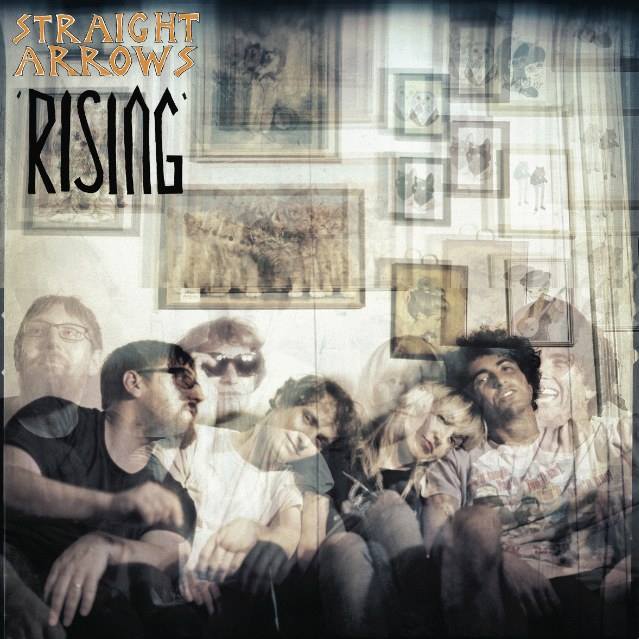
Record review: Straight Arrows – Rising (2014, LP)

straight arrows rising

Even on record, Sydney’s Straight Arrows sound like a band you want to party with. Semi-strict devotees of the original wave of ’60s garage-rock they may be, but they’ve also got more than enough primal middle-fingers-to-the-air punk attitude to make sure their second album smells more like beer and sweat than it does of nostalgia.

Not that nostalgia is necessarily a bad thing; it just sounds better when it’s run through the musical meat grinder that is Straight Arrows’ perfectly primitive guitar thrashing, barely discernible vocals and so-lo-fi-they’re-almost-non-existent bass lines.

The breakneck ‘Can’t Stand It’ immediately harks back to the classic garage bands of the ’60s, while the 90-second ‘Rotten Teeth’ is appropriately titled to be the most ‘punk’ song here. Single ‘Petrified’ catches singer and Arrows mainman Owen Penglis in a more measured mood, before the song grinds to a halt, broken and battered by the waves of messy surf guitar spattered all over the final minute.

‘Without Ya’ is an anomaly in that a prominent, driving bass-line features for the first time, with the end result benefiting hugely in what could almost be called a groovy fashion, recalling much more of a West Coast garage vibe than anything else here, but the most pleasant surprise is that there isn’t only reverb-laden garage-rock on Rising, as might be expected. At times the path trails off on tangents with strange or dark undertones, as on the introductory track and ‘Fruit of the Forest’.

This aside, be happy in the knowledge that bands like Straight Arrows – on the whole – don’t exist to take us on long-winded musical journeys into the unknown. They’re here to make us want to jump around like idiots; and thankfully this album more than does the job.

For FasterLouder

Remi: “I was trying to write stuff that was a bit deeper”

remi

REMI Kolawole began collaborating with Sensible J and Dutch in 2011, and the rapper’s lyrics have continued to evolve without looking back. The Melbourne trio’s new album Raw x Infinity takes a new, edgier direction, as on singles ‘Livin’ and ‘Tyson’.

“We’re just trying to show to anybody who had only heard ‘Sangria’ last year the direction we’re going in,” Remi says. “Our last album, Regular People S#%t, was quite an eclectic listen. A lot of people who have heard that album would probably be ready for our current album, but for a lot of people who hadn’t – as triple j opened us up to a much wider audience than before – this was a good way to let them know what they were in for when they were getting this album. We have beats that are heavily driven by strong drums, live musicianship and there are no samples on ‘Livin’. I guess it’s also a bit deeper than ‘Sangria’; we’re talking about how we’re all being told how to live, as opposed to getting pissed in Brunswick [laughs]. I guess that it’s more of a move to show people our range and what we’re going to do. We just really like the song as well.”

The 22 year-old is keen on embracing a wider range of subject matter, and tackles topics like racism and politics in his songs. But does he consider himself a political rapper?

“Quite the opposite [laughs]. I just write from the average person’s point of view. I can’t pretend to be anything more than I am. [Tony Abbott] doesn’t really speak to me or the people who are around me. Obviously that’s just my opinion, and that’s what rap is. If anyone agrees, that’s cool, and if anyone disagrees, that’s cool as well. It’s all quite progressive; we’re always trying to do something new. On this album, I was trying to write stuff that was a bit deeper. This was all stuff that I just kind of picked up, but by no means do I want to be considered a political or super-conscious rapper. I just write about what I see or what I experience, and I guess some of the political issues came out.”

New single ‘Tyson’ is a no-holds-barred blast of Remi flaunting his lyrical talents over a brutal beat.

“Obviously you should be sending a message,” he says. “That should be a part of what you’re trying to do. But at the same time, you can also rap just to rap and get it out of your system. You can write some shit that hopefully sounds cool, you know what I mean? That’s ultimately what ‘Tyson’ is; just straight rap braggadocio bullshit that I’ve tried to construct to be as entertaining as possible. All the stuff that I write is basically made up of my experiences, or stuff Sensible J, Dutch and I talk about. I could be anywhere; I could be on the bus and see something happen and write about that. On the flip side, with Sensible J; he’s making beats in his head while he’s at his computer at his day job, so you just got to let the music take you whenever, in the most un-corny and unclichéd way [laughs].”

The new material has earned the trio plenty of national radio play, which Remi happily embraces, albeit with a touch of caution.

“Up until about three or four months ago we didn’t actually have any management or anything like that,” he says. “So we always operate like nobody’s got our back, if that makes sense. We’re thankful for anyone who plays our shit, because the stuff we’re doing at the moment is lyrically and sonically different to what’s going at the moment. It’s strange to us if anyone picks up on that and we’re thankful for it. By no means are we banking our career on anyone, because I don’t think you should be writing your music for a station or a magazine or anyone. Those avenues should allow the artist to do what they do, then spread their music, not the other way around. I’m totally thankful for what triple j has done for us, as well as any other media coverage that we’ve received. At the same time, I’m not going to bank on the stuff we do being picked up or written about because that would stifle my creativity and the creativity of Sensible J and Dutch.”

The group’s upcoming calendar is a busy one, with plenty of chances to air the new material.

“We’ve got our national tour coming up; the Raw x Infinity tour,” Remi says. “Then after that, we go to Splendour in the Grass, which will be great. Then we’re doing a few other – perhaps two or three – nationwide tours before November. Then we’re going to Germany in November, and back in December to hopefully do a bunch of festivals. We’ll be doing a couple of showcases in Germany, and we’ll definitely be going over there just to kick it [laughs]. I’ve been told only good things about Berlin, so I’m pretty excited.”

RAW X INFINITY BY REMI IS OUT NOW.

For Beat Magazine.

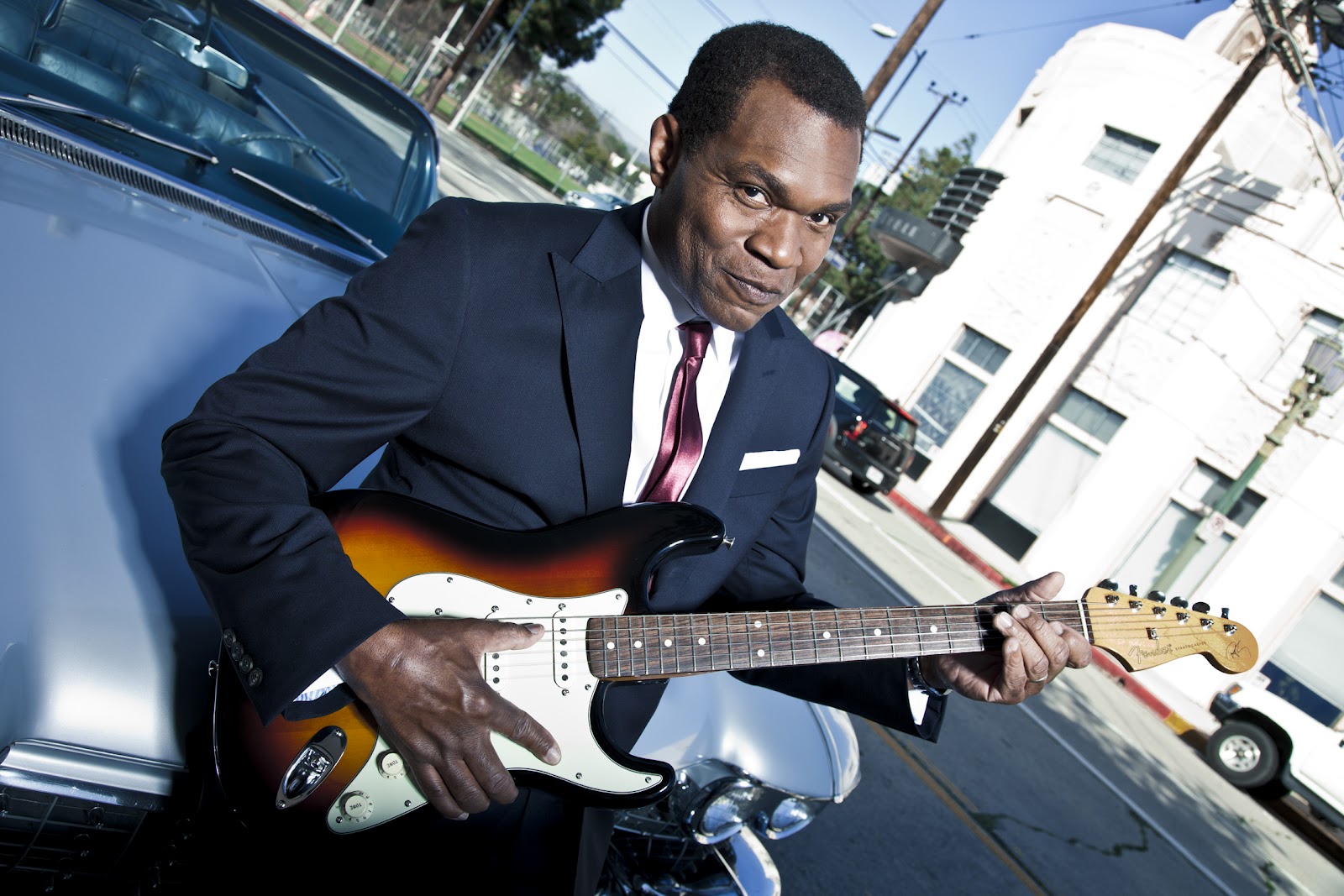
Interview: Robert Cray

robert cray

WHERE do you start with a musician as accomplished as Robert Cray? He’s been playing the blues since the seventies, has over twenty albums in his catalogue, has bagged five Grammy Awards and played with the biggest names in the business, from John Lee Hooker, Albert Collins and B.B. King. Oh, and he also appeared in Animal House with John Belushi AND is still releasing top-notch blues records. On top of all this, he’s only one of the nicest guys around. Have I missed anything? Probably.

Hi Robert, let’s talk about your new album, In My Soul, first of all. How do you feel when you have a new record being released?

Happiness. It’s great because it’s a new record that gives us an opportunity to add to our repertoire and more to play to the fans. It’s a lot of fun.

You made some changes to the line-up just before recording. Why did you feel that was necessary?

Change is good; it’s necessary sometimes. We had two changes for this record. The first of which was having Les Falconer join as drummer. I’ve watched Les from afar, but not too far away; he’s been in the Keb’ Mo’ band for years. It just so happened that three or four years ago Les asked me if I ever wanted to make a change to consider him, and I did so about 16 or 18 months ago, so that was the reason for that change. We changed keyboard players, and we have Dover Weinberg on board, who also used to be in the band in the late ’70s. We made the change because I remember Dover having a great sound and a great feel, and I thought it would be great to have him work on the new record before we went into the studio.

Will this version of the band be set in stone for the foreseeable future?

For the foreseeable future, yes. We have a good time and we have a new album to present with this band. But we also play a lot of the older songs and we have a really good time with those, thank you.

Was the soulful feel to the album a deliberate step or more of a natural progression?

It was just by osmosis, actually. We had Steve Jordan come in to do the production. Steve’s a great musician as well. He made a couple of suggestions before we came into the studio; one was the Otis Redding cover, ‘Nobody’s Fault But Mine’, and the other was a Mable John song, ‘Your Good Thing (Is About To End)’. He suggested those two songs, but I thought it was going to be that maybe we’d record them in case the band and myself didn’t have enough original material. Well, the band had original material which were rhythm and blues, and I had songs which were rhythm and blues as well, so we just wound up with soulful songs.

How did you react when he suggested covering ‘Nobody’s Fault But Mine’?

I dug it, because it’s a song by Otis that I’ve admired for years. I’ve never had the opportunity to play it, but lots of friends of mine have covered the tune and I always thought it was cool.

What else does Steve Jordan bring to the table?

Steve’s a great communicator and organiser. He gets everybody into the studio, makes them participate and feel like they’re part of the project. That’s really important and how he conducts all operations in the studio. For example, we have this one song that’s a bonus track called ‘Pillow’; it’s got this really ’70s funky feel to it. Before we tackled the song we went into the control room where Steve had a copy of Curtis Mayfield’s Super Fly record. We played a couple of tracks and started reminiscing about all the ’70s music, then we took a lunch break and let the music digest itself, you know? We came back into the studio, the electric sitar came out, different drums came out, and he had set the mood for the song. He’s in there conducting us, he’s in there dancing or he’s playing along, you know?

One of my favourites is ‘What Would You Say’, which contains a bit of social commentary. Would you call it a political song?

It’s not political in the way other songs we’ve done before covered deeper subjects like the wars in Iraq and Afghanistan. This is commentary and trying to be a bit more positive about what’s going on today with homelessness, the cancer that’s everywhere today and the war in Syria. But not in a big way, if you know what I mean. I wouldn’t call myself a political singer, but we do touch on it.

How was your experience of Bluesfest last year?

It was fantastic. We should come every year as far as I’m concerned [laughs]. It’s always a blast to be a part of it, but also to witness it. It’s a great event.

So you’re putting your name firmly in the hat for any future Bluesfests?

My name is in there every year. It’s just a matter of getting the opportunity to do it. There are so many acts who want to do it, and we have to wait our turn.

You’ve played with most of the blues greats in your time; which one made you the most starstruck?

That’s hard to say. I think all of them did, you know? I’m starstruck by all of them. But the thing is, all the people I’ve had the opportunity to meet have always been really nice and comforting, in the sense that they see how nervous you are and see that you’re awestruck and all that. But they reassure you and make you feel cool.

Could you pick one blues player who has had the biggest influence on you?

Probably Eric Clapton. I play that style of electric guitar, you know? John Lee Hooker is huge, Muddy Waters the same, but my style is more akin to Eric Clapton and the electric players he admires.

When you were in Animal House in 1977, was there any indication that it would be a cult classic movie?

As far as I knew, nobody knew what would happen with the film. We had just bit parts in it; we weren’t even credited as the musicians in the band. We just lip-synched to the music. We never saw a script, so we didn’t even know what the working title was. It was just a bunch of local guys doing a movie, then all of a sudden it’s what it is today. Now it’s history.

How much contact did you have with John Belushi?

He befriended a good friend of mine, Curtis Salgado. We lived in Eugene, Oregon at the time. Curtis was fronting a band called the Nighthawks from Eugene; it was where the movie was filmed and also where I lived at the time. On Monday nights we had a splinter group called the Crayhawks; a combination of the two bands. Belushi would come in and people would ask us if we knew Belushi was in the audience, and we’d go ‘who’s John Belushi?’ because we were always working on Saturday nights and never had seen the programme. But eventually we let him on the stage to do his Joe Cocker impersonation, and all the while the movie was being filmed in Eugene, Curtis was taking John Belushi back to his house and schooling him on blues. To cut a long story short, he got educated through Curtis and that whole thing begat The Blues Brothers. The prescription sunglasses Curtis wore became part of The Blues Brothers model and they dedicated the first record to Curtis Salgado.

What are your plans for the rest of the year and beyond?

Well, we just came back from a six-week tour of the UK and Europe. This coming week we’re about to start another six-week leg in the States, followed by another European leg in the fall. If things go right, maybe we’ll see you at Bluesfest next year. Like I said, my name is in the hat [laughs].

IN MY SOUL BY THE ROBERT CRAY BAND IS OUT NOW.

For the AU Review

Record review: Lucy Hale – Road Between (2014, LP)

lucy hale road between

A quick web search tells you everything you don’t want to know about Lucy Hale. She’s a 24 year-old country-pop-singing reality TV ‘star’ and actress from Memphis, Tennessee, whose acting credits include such pinnacles of television and film as Jonas Brothers: Living the Dream and Scream 4. This is her debut album, and while Hale has a decent country voice with twangs in all the right places, there’s nothing else here but an 11-song collection of such sickly formulaic, Shania Twain-lite drivel that will make you want to violently hurl or throw a punch at the cat. The expected themes are all present and correct, from teen angst (‘Nervous Girl’) and useless boyfriends (the banjo-twangin’ ‘Goodbye Gone’) to pseudo-driving ditties aimed at boneheaded truckers (‘From The Backseat’). “There’s nothing wrong with an itty-bitty white lie,” she sings on ‘Love Tonight’, and that’s about as deep as it gets. At this point you realise how little input Hale must have had on her own album, such is the artificial vibe seeping from every note, and while her sole writing credit appears on final track ‘Just Another Song’, by that stage, that’s all it is. It’s a formula that has been proven to work, and it probably will for Hale, but having to listen to this guff is an excruciating experience from start to finish. Until a few days ago I had never heard of Lucy Hale; how I look back on that time with longing. (Universal)

Ofa Fanaika of Chocolate Strings: “We’re kind of superstars in our own little way”

chocolate strings

BRISBANE funk/reggae/soul collective Chocolate Strings have just released a new single, and it’s a smooth and delicious taste of things to come, says singer-guitarist Ofa Fanaika.

“’Playing Pretend’ is a double A-side single with another track called ‘Polyamory’,” she says. “It’ll be part of an album that we’re looking to release in September or later in the year. We’ve recorded maybe eight tracks at this point, and we’re just working out what sort of journey we want to take our listeners on and what best represents where we’re at now. We’re going to try to capture that on the album.”

The song features the band’s trademark collision of genres and a soulful vocal by Nia Falekakala.

“It started with a guitar riff I’d been mucking around with, and the vocalist on that particular track wrote the lyrics for it,” Fanaika says. “The essence of the song is about being genuine and upfront, and saving yourself the drama of wishing you had done something right at the beginning, hence the name ‘Playing Pretend’. We were recording a bunch of tracks and it just seemed like the one that stuck out the most, and after other people had heard it, it ended up being a favourite.”

The band has eight members pitching in ideas, so when asked if everyone agrees on everything, Fanaika laughs.

“No comment! No, we’ve been doing this for a pretty long time and we’re pretty upfront with stuff. We don’t like to beat around the bush when it comes to things that are best for the songs, so we don’t actually have a lot of fights. A lot of the time we’re playing songs live before we’ve recorded them, so we can run through the process that way, and decide if it’s something we can put down.”

Firm roots in Brisbane’s creative community has helped the band develop and grow.

“I’m pretty proud to be a West End citizen,” Fanaika says. “It’s a lot different to most other suburbs in Brisbane. It’s a particularly creative community and inclusive of artists, and a real imaginarium of people that are thinking about expression. We can bounce ideas off other people who are doing a similar thing in whatever creative thing they’re promoting, and a lot of concepts cross over; the artistic, music and community worlds. In West End, our networks are shared amongst other like-minded people, so for every person who likes Chocolate Strings, they tell ten other people. In this neighbourhood, we’re kind of superstars in our own little way, and that’s kind of a nice thing.”

CHOCOLATE STRINGS PLAY THE MOTOR ROOM MAY 30. ‘PLAYING PRETEND’ IS OUT NOW.