Asylum Seekers, Migrants and Illegal Immigrants: How the British Media Reported the 2015 European Refugee Crisis

Asylum Seekers, Migrants and Illegal Immigrants:

How the British Media Reported the 2015 European Refugee Crisis

A Research Paper

By Paul McBride
30th November 2015

ABSTRACT

British mass media has represented refugees with a range of terms and labels; some fair and accurate, others not. Correct application of the words ‘refugee’ and ‘migrant’ is important, as a refugee is someone forced to flee conflict or persecution, whereas a migrant is someone who moves from one place to another for better work or living conditions. This paper examines British mass media’s representation of refugees during the European refugee crisis of 2015, to investigate whether news outlets potentially contributed to the demonization and marginalisation of refugees in the receiving country. Results showed a news outlet from the left of the political spectrum to be largely sympathetic to refugees, and news outlets from the centre and right to be largely unsympathetic to refugees. Each news outlet had clear and obvious agendas in how they framed their refugee stories. There is potential for audiences to view refugees in a negative light as a result of a majority of stories examined.

KEY WORDS: refugee, asylum seeker, migrant, refugee crisis, Syria, agenda-setting, media framing, mass media, media audiences

INTRODUCTION

In 2015, it is estimated that global refugee numbers exceeded 50 million people for the first time since World War II (UN Refugee Agency, online). While much of Western media seeks to portray refugees as an unstoppable human tidal wave bringing instability and cultural decline to overwhelmed receiving countries, refugees make up only a little more than half of one percent of the global population. Stories on refugees traditionally polarise public opinion, but a near-universal public outpouring of sympathy occurred when the story of Aylan Kurdi, a three year-old Syrian boy whose body washed up on a Turkish beach, broke on September 2nd.

It has been suggested by communications scholars that mass media only reinforces existing beliefs (Ross and Nightingale, 2003, p.100) without playing a part in creating them, and this paper will test that theory. By studying three British media outlets’ coverage of the Syrian refugee crisis during the month of September 2015, beginning at the time of Aylan Kurdi story, conclusions will be drawn concerning the extent to which the British media’s coverage was balanced and informative, whether were refugees represented fairly and accurately, and if any evidence of framing or agenda-setting existed.

AGENDA SETTING AND FRAMING IN THE REFUGEE SPHERE

More than five centuries after the printing press was introduced to Western audiences (Eisenstein, 1980, p.3), the first mass media agenda-setting theory was formally developed by McCombs and Shaw with their seminal 1972 work ‘The Agenda-Setting Function of Mass Media’ in Public Opinion Quarterly. By conducting a study on audiences in the 1968 American presidential election, they were able to show a strong correlation between the importance placed on an issue by mass media and the perception of the issue by the audience (1972, p.178). This ground-breaking work has since been expanded on, including by Rogers and Dearing (1988, p.555), who described the connection between the media’s, the public’s and public policy agendas as being tightly intertwined.

Media framing is a subject closely linked to agenda-setting. It was concisely described by Entman (1993, p.52) as “select[ing] some aspects of a perceived reality and mak[ing] them more salient in a communicating text, in such a way as to promote a particular problem definition, causal interpretation, moral evaluation, and/or treatment recommendation”. In 1999, American communications professor Dietram Scheufele wrote an extensive article on the subject entitled ‘Framing as a theory of media effects’ in Journal of Communication. In this work he clarified and defined the subject of media framing in terms of how it relates to agenda-setting, and went even further than many works on agenda-setting by analysing how a subject presented to an audience (‘the frame’) can influence the actions and choices they make using that information (1999, pp.114). Similar to McCombs & Shaw (1972), this text and Entman’s description provide appropriate definitions, rationale and examples of framing and agenda-setting, to be used in the research design and analysis of findings for this research paper.

Britain’s cultural makeup has constantly evolved for thousands of years, with incoming groups receiving varying degrees of welcome, depending on circumstances. A contemporary watershed moment was reached with the introduction of the Commonwealth Immigration Act in 1962, which dramatically provided opportunities to British subjects globally (Cesarani, 1996, p.65), although it also brought opposition in the form of the racist rhetoric of Powellism (Buettner, 2014, p.710). A range of terms for labelling immigrants and refugees followed, with status determination and labels “infusing the world of refugees” (Zetter, 1991, p.39). Quickly, the problem rose of immigrants and refugees viewing their identity in very different terms to those bestowing the labels (Harrell-Bond, 1986, p.15).

Much has been written about the wide variety of negative connotations of refugees used by mass media and the likely effects on audiences. Philo and Beattie (1999, p.171) described how coverage of refugees in British media uses disaster terminology, presenting the receiving nation as being victim to ‘floods’ and ‘tidal waves’. Van Dijk (2000, p.33) explained how Western media consistently described refugees as a threat, Lynn and Lea’s (2003, p.425) analysis of readers’ letters to newspapers showed that ‘asylum seeker’ is “more often taken to mean ‘bogus asylum seeker’”, whereas Goodman (2007, p.35) argued that there is a tendency in Western media to liken the movement of refugees to animals breeding. A study by Kaye (2001, p.53) showed that traditionally right-wing newspapers are more likely to label asylum-seekers as making bogus claims or as ‘economic migrants’. O’Doherty and Lecouteur (2007, p.1) analysed the social categorisations and marginalising practices applied to asylum seekers in the media, arguing that certain terms, when used by mass media, including ‘illegal immigrants’ and ‘boat people’, encouraged marginalising practices resulting in social isolation and fear. Leudar et al (2008, p.187) took an interesting approach to the subject, by using a collection of global refugee experiences to analyse hostility displayed towards asylum seekers in the British media and the social and psychological effects arising as a result. They found the majority of asylum seekers in Britain formed their new personal identity around the hostility they experienced in the media and many suffered psychological problems as a result. Innes (2010, p.456) explains how, in Britain, asylum seekers, despite being some of the most vulnerable people in the world, are constructed in the media as a “homogeneous collective that threatens the nation’s interests”, and how government policy has been complicit in supporting this approach, which links back to Rogers and Dearing’s (1988, p.555) view that the media and public policy have tightly-linked agendas. By looking at marginalising practices used by media and the real-life results, existing studies have described the harmful consequences for refugees already living in an environment of immense stress and fear.

Many studies on the British media’s treatment of refugees are either fairly general or lacking specificity (King and Wood, 2013, p.55). This work will fill that gap by concentrating on how refugees are portrayed in stories produced by a set number of publications across the left-right political spectrum during a time period of just the month of September 2015: a time when the 2015 European refugee crisis saturated mass media following widespread publication of pictures of drowned Syrian three year-old, Aylan Kurdi. The only similar work is that of Majid Khosravinik (2010, p.18), who conducted a critical discourse analysis on British newspapers’ strategies towards representing asylum seekers between 1996 and 2006, taking into account traditional ideological stances on the political spectrum, concluding that all newspapers represent asylum seekers similarly. This is a useful study for academic comparison, but this work narrows the focus and provides a more current analysis of the subject.

METHODOLOGY

While the subjects of agenda-setting, media framing and the representation of refugees in the media have studied in a general sense or in a particular nation, this work goes further by examining the approaches used by a selected group of publications over a designated time period, and bringing research in this area into the contemporary sphere while doing so. By doing so, it answers the question: to what extent has the British media’s coverage of the European refugee crisis in September 2015 been balanced and informative, and were refugees represented fairly and accurately as a result? It also examines the extent to which British media outlets’ traditional political alignments affected the way they covered the refugee crisis, did media outlets cover the refugee crisis and describe refugees more sympathetically than others, was there any evidence of framing or agenda-setting by British media in this period, and to what extent did the differing terminology used by media outlets in this period have the potential to contribute to the demonization of refugees.

From the 1st to 30th September 2015, stories on the European refugee crisis were collected from news sections of The Guardian, Daily Mail, and the BBC. These publications were chosen for review as they provide a range of political alignments on the left-right spectrum. The Guardian, since its inception in Manchester in 1821, has traditionally been a left-wing or centre-left publication, and has been known for refugee advocacy (Pupavac, 2008, p.270). The Daily Mail, since its 1896 creation, has been considered a conservative or right-wing publication, and has received criticism for portraying refugees in an unfair light (Khosravinik, 2009, p.477). The BBC, however, is bound by its charter to be impartial in all matters (BBC Editorial Guidelines, online), so theoretically should report news from a neutral position at all times.

Refugee stories were brought together in a Microsoft Excel spreadsheet, sorted by publication and date. Around thirty stories were collected from each news outlet, from a range of dates and editions over the month of September. The stories were compiled and the journalists’ use of language examined, with particular focus on the use and frequency of the terms ‘migrant’, ‘refugee’, ‘asylum seeker’ and ‘illegal immigrant’, and whether the use of any of these terms was consistent throughout each of the news outlets. The stories were also examined for use of other forms of language which may portray refugees in a negative light, and whether the use of language matched the traditional political stance on refugees of each news outlet. Suggested limitations of the research method include the small range of news outlets examined, and the restricted period of time in which to examine stories produced. As with any study, a larger sample may produce a more accurate mean result.

FINDINGS

On September 2nd, the story of Aylan Kurdi broke, and The Guardian dedicated more than ten stories to the subject over the next 24 hours. The first ran on September 2nd (The Guardian, World News, online) with the headline ‘Shocking images of drowned Syrian boy show tragic plight of refugees’ and follow-up stories included those with headlines ‘Family of Syrian boy washed up on beach were trying to reach Canada’, ‘Aylan Kurdi: friends and family fill in gaps behind harrowing images’, ‘Will the image of a lifeless boy on a beach change the refugee debate?’, ‘Refugee crisis: what can you do to help?’, ‘Aylan Kurdi: funeral held for Syrian boy who drowned off Turkey’, ‘Syrian refugee crisis: why has it become so bad?’ and ‘Refugee crisis: “Love the stranger because you were once strangers” calls us now’ (The Guardian, World News, online). These initial stories used language which was sympathetic to refugees, contained no derogatory words or phrases, and described the trials they faced with words like ‘harrowing’ and ‘brutal’, while also describing in detail the extreme dangers refugees face making the journey across the Mediterranean Sea. The word ‘migrants’ did not appear in any of these stories; instead, ‘refugee’ or ‘asylum seeker’ were used, or, in more than 50% of cases, simply ‘family’, ‘Syrians’ or ‘people’ (The Guardian, World News, online).

By September 10th, the Aylan Kurdi story was no longer being covered by The Guardian, but coverage switched to the refugee crisis in a broader sense. Over the following ten days, stories with the headlines ‘Refugee crisis: Juncker calls for radical overhaul of EU immigration policies’, ‘Refugee crisis: “Europe needs to take big numbers. Until then, chaos reigns”’, ‘Refugee crisis: we must act together, says Merkel ahead of emergency summit’ and ‘Refugee crisis: Giving Europe the chance to evolve’ appeared (The Guardian, World News, online). The words ‘refugee’ and ‘asylum seeker’ were still used to describe Syrians crossing the sea by boat in all cases (The Guardian, World News, online), and the news outlet’s editorial policy was still one of portraying the plight on asylum seekers in a sympathetic light, particularly in its scathing article on the Hungarian President’s, among others’, apathy regarding the situation (The Guardian, World News, online).

During the last ten days of September the word ‘migrant’ appeared in two stories: ‘Refugee crisis: EU splits exposed at emergency summit – as it happened’ and ‘EU refugee crisis “tip of the iceberg”, says UN agency’ (The Guardian, World News, online). However, during this time The Guardian published an article criticising the Daily Mail’s representation of refugees, entitled ‘Three problems with the Daily Mail’s story about Syrian refugees’, in which the Daily Mail’s claims about number of refugees, validity of asylum claims, and country of origin of the majority of refugees are strongly refuted (The Guardian, World News, online).

On September 2nd, as the Aylan Kurdi story broke, the Daily Mail’s initial response was to run a story with the headline ‘Migrant crisis shows the EU at its worst’ (Daily Mail, Debate Homepage, online). The story referred to ‘lifeless migrant children’ and placed blame for the lack of a solution to the situation away from British Prime Minister, David Cameron, to German Chancellor Angela Merkel. A series of stories followed with the headlines ‘The final journey of tragic little boys washed up on a Turkish beach’, ‘God be with you, little angel: The world shows its grief and anger over the death of tragic Syrian toddler Aylan’, ‘”Breathe, breathe, I don’t want you to die!”: Father of Aylan Kurdi relives the terrible moments he tried to save his two sons but they died in his arms’, and ‘Tragic Aylan’s final journey’ (Daily Mail, News Homepage, online). These stories referred to the tragedy using sympathetic language, and used the word ‘refugee’ or, quite simply, ‘families’ instead of ‘migrant’.

By September 6th, editorial policy changed, and in the vast majority of stories for the rest of the month, refugees were referred to as migrants. In a story with the headline ‘Britain wants to quit Europe: Shock new poll shows EU “no” camp ahead for the first time as Cameron prepares to face down Tory rebels’, the journalist referred to the ‘migrant crisis engulfing the continent’, using a synonym of inundate/flood/deluge to describe refugee movement (Daily Mail, News Homepage, online). Continuing use of the word ‘migrant’ in place of ‘refugee’ occurred on September 7th in a story with the headline ‘The image of Syrian toddler Aylan, three, washed up dead on a Turkish shoreline has shocked the world – but he is not the only child victim of the migrant crisis’, while on September 8th, a story with the headline ‘Aylan’s father just wanted better dental treatment: Liberal Senator Cory Bernardi’s brutal claim that drowned Syrian boy wasn’t a “real refugee”’ correctly labelled them as refugees despite the message of the story (Daily Mail, News Homepage, online). From September 10th, the Daily Mail exclusively used the word ‘migrant’ in place of ‘refugee’ or ‘asylum seeker’ without exception, and on September 11th, the validity of Aylan Kurdi’s father’s story was called into question in a story with the headline ‘Father of Aylan Kurdi angrily hits out at Iraqi mother who accused him of being a people smuggler’ (Daily Mail, News Homepage, online).

By September 23rd, all refugee stories were moved to a section of the website labelled ‘Immigration’ (Daily Mail, News Homepage, online). In stories with the headlines ‘Migrant crisis proves Britain’s case for EU reform’, ‘Rape and child abuse are rife in German refugee camps’ and ‘Police clear migrant camp between Italy and France and accuse them of using electricity and water without paying for it’, refugees are described as seeking ‘job opportunities and better social care’ as the authorities attempt to ‘stem the tide of migrants’ (Daily Mail, News Homepage, online).

From September 3rd, the BBC ran all stories on refugees under the banner ‘Migrant Crisis: _____’, such as ‘Migrant Crisis: Photo of drowned boy sparks outcry’ and ‘Migrant crisis: Drowned boy’s father speaks of heartbreak’ on September 3rd, and ‘Migrant crisis: Why the Gulf states are not letting Syrians in’ on the 7th (BBC, World News, online). In a September 3rd story with the headline ‘Migrant Crisis: Canada denies Alan Kurdi’s family applied for asylum’ (BBC, World News, online), refugees were consistently referred to as ‘migrants’ while it was simultaneously acknowledged military attacks forced them to flee.

On September 9th, an online petition was created under the banner ‘Request BBC use the correct term Refugee Crisis instead of Migrant Crisis’ (Change.org, online), which quickly gained 30,000 signatures (the figure had reached 73,000 at the time of writing). The same day, the BBC published a story with the headline ‘Migrant crisis: How Middle East wars fuel the problem’, in which the journalists included the words “”The new crisis is about refugees” and “Some Western politicians, and journalists, are taking proper notice for the first time of a refugee crisis” (BBC, World News, online).

On September 14th, the BBC published a story with the headline ‘Migrant crisis: What next for Germany’s asylum seekers?’ which used the words ‘asylum seekers’ in place of ‘migrants’ despite the ongoing use of the word ‘migrant’ in the headline (BBC, World News, online). For the rest of the month, the word ‘migrants’ only appeared sporadically, and was dropped from headlines. The word ‘refugee’ began to appear from September 16th, including in the stories ‘Middle East refugees who chose Brazil over Europe’ and ‘Portsmouth takes more asylum seekers than other cities’ (BBC, World News, online). By September 18th, refugee stories began with the words “Syria Refugee Crisis: _____”, such as ‘Syria refugee crisis: Yarmouk pianist’s perilous journey to Greece’ (BBC, World News, online).

DISCUSSION

On September 2nd, the story of Aylan Kurdi broke, and The Guardian published a series of articles which reported on the refugee crisis sympathetically and framed the situation in such a way to potentially provoke further thought and discussion. Matching Entman’s definition of a frame (1993, p.52) as “select[ing] some aspects of a reality and mak[ing] them more salient in a communicating text”, The Guardian deliberately reported on the situation with humanity and empathy, with little likelihood of demonization or marginalisation of refugees as a result.

This sympathetic framing continued throughout the time period studied. With stories with headlines such as ‘Shocking images of drowned Syrian boy show tragic plight of refugees’ and ‘‘Will the image of a lifeless boy on a beach change the refugee debate?’ (The Guardian, World News, online), The Guardian’s policy of reporting provided a wider frame of reference with which its audience could understand the situation, and show empathy and sympathy for refugees as a result. This is consistent with Hartmann and Husband’s (1974, p.479) description of mass media being “capable of providing frames of reference or perspective within which people become able to make sense of events” and McCombs and Shaw’s (1972, p.177) theory that mass media does not only set the public agenda on an issue, but influences “the salience of attitudes towards the issue”.

This approach is also consistent with the findings of Khosravinik’s (2010, p.488) study, which showed The Guardian, probably due to its traditionally liberal political alignment, “draws on topics of human rights, ethics, human values, usefulness and contribution in the positive representation of immigrants and refugees”. The Guardian’s policy on reporting refugees also counters King and Wood’s (2013, p.55) view that British media’s treatment of refugees is lacking specificity, with more in-depth stories like ‘Aylan Kurdi: friends and family fill in gaps behind harrowing images’ (The Guardian, World News, online). Overall, over the month of September 2015, The Guardian consistently reported on refugees fairly and accurately, displayed evidence of agenda-setting and framing which gave its audience a broader understanding of the situation, contributed only minimally to potential demonization of refugees by using almost consistently appropriate terms and categorisations, and was most likely influenced by its traditional political alignment in doing so.

The Daily Mail began September with balanced and informative reporting, before quickly changing its policy and pursuing an agenda of demonizing refugees for the rest of the month. For four days after the Aylan Kurdi story broke, the Daily Mail used language sympathetic to refugees while reporting on the crisis, resulting in a fair and accurate representation of the people involved, as well as the general situation. A shift occurred on September 6th, with the words ‘asylum seeker’ and ‘refugee’ being replaced with ‘migrant’ in all refugee stories (Daily Mail, News Homepage, online). This change had the potential to contribute to the marginalisation of refugees, as is consistent with O’Doherty and Lecouteur’s (2007, p.1) study on social categorisation. By applying the same terms in monotonous fashion every day in its stories, the Daily Mail did what Scheufele (1999, p.105) describes as “media fram[ing] images of reality in a predictable and patterned way” in order to achieve a particular result; in this case the potential alienation of refugees. By choosing to place all its refugee stories in a news section of their website with the title ‘Immigration’, the Daily Mail played an important part in shaping the reality of the crisis, and – as McCombs and Shaw (1972, p.176) describe any situation in which mass media determines what is important – setting the agenda of the situation.

Choice of wording with which to describe and categorise refugees was the Daily Mail’s biggest contribution to unbalanced and inaccurate reporting during the time period studied. By using phrases such as “migrant crisis engulfing the continent” in a September 6th story (Daily Mail, News Homepage, online), the Daily Mail used what Philo and Beattie (1999, p.171) describe as disaster terminology; words which have the potential to alienate and marginalise refugees. In the last week of the month, the Daily Mail turned to reporting stories about rape and child abuse in refugee camps, refugees allegedly stealing water and electricity, and refugees allegedly “seeking job opportunities and better social care” (Daily Mail, News Homepage, online). This is consistent with Van Dijk’s (2000, p.33) description of Western media consistently describing refugees as a threat and as being associated with crime, and is likely to bring about the type of result confirmed by Lynn and Lea’s (2003, p.425) analysis of readers’ letters to newspapers, which showed that ‘asylum seeker’ is more often taken to mean ‘bogus asylum seeker’. This also matches Kaye’s (2001, p.53) study which showed that traditionally right-wing newspapers are more likely to label asylum-seekers as ‘economic migrants’. Overall, over the month of September 2015, the Daily Mail consistently did not report on refugees fairly, displayed evidence of agenda-setting and framing, potentially demonized and marginalised refugees through poor choice of language and social categorisation, and was most likely influenced by its traditional political alignment in doing so.

In a mirror image of the Daily Mail’s reporting on the crisis, the BBC began September reporting on refugees inaccurately and with incorrect categorisation, before improving as the month progressed. By headlining all refugee stories with ‘Migrant Crisis: _____’ (BBC, World News, online), the BBC, despite its charter binding it to neutrality, showed evidence of agenda-setting to inaccurately represent refugees. This is consistent with McCombs and Shaw’s (1972, p.178) description of how the agenda of a news outlet is determined by its “pattern of coverage on issues over some period of time”. By framing the mass movement of people as economic migration instead of people fleeing conflict, the BBC not only potentially breached its charter, but also seemingly confirms Dearing’s (1988, p.555) view that the media and public policy have tightly-linked agendas (for the 12 months up to June 2015, the UK accepted only 166 Syrian refugees under the government’s ‘vulnerable persons’ initiative (Eurostat, online)). By framing refugees in this way, the BBC potentially contributed to its audience being more likely to consider refugees as economic migrants. This is consistent with Scheufele’s (1999, p.106) definition of a media frame as being “largely unspoken and unacknowledged” and something that “organize[s] the world for [those of] us who rely on their reports”.

The improvement in the BBC’s fairness and accuracy of reporting may have been affected by an online petition on September 9th challenging it to use more appropriate terminology (Change.org, online). Overall, over the month of September 2015, the BBC reported on refugees with inconsistent levels of fairness and accuracy, displayed evidence of agenda-setting and framing, potentially demonized refugees through poor choice of language and social categorisation, and potentially breached its charter in doing so.

Of the three publications studied, there was found to be unbalanced reporting, agenda-setting, framing, and the use of incorrect terminology in each, all of which had the potential to demonize refugees during September 2015. The extent to which this happened differed greatly, though. The Guardian, likely affected by its traditional political alignment, reported on the crisis with stories of which the vast majority were sympathetic, the BBC reported on the crisis with stories of which a slight majority were sympathetic, and the Daily Mail, likely influenced by its traditional political alignment, reported on the crisis with stories of which the overwhelming majority were unsympathetic.

CONCLUSION

Refugees were represented poorly by British media during the European refugee crisis of 2015, with no publication examined in this study completely blame-free. For the 30-day period examined, there was evidence of a determined agenda to dehumanise refugees and call into question their motives through incorrect social categorisation, poor choice of language and questionable framing. The likely impact of this is that refugees will face an increased number of social and psychological obstacles in their quest to make a safe and stress-free life for themselves and their families.

As refugee numbers reach an all-time high in 2015, it is vital that those who have had the good fortune and dumb luck to have been born in a war-free nation give refugees the greatest possible chance of a safe and happy life.

REFERENCES

British Broadcasting Corporation, Editorial Guidelines, BBC website, accessed 8th November 2015: http://www.bbc.co.uk/editorialguidelines/page/guidelines-impartiality-introduction

British Broadcasting Corporation, ‘Migrant Crisis: Photo of drowned boy sparks outcry’, World News, online, accessed 3rd September 2015: http://www.bbc.com/news/world-europe-34133210

British Broadcasting Corporation, ‘Migrant crisis: Drowned boy’s father speaks of heartbreak’, World News, online, accessed 3rd September 2015: http://www.bbc.com/news/world-europe-34143445

British Broadcasting Corporation, ‘Migrant Crisis: Canada denies Alan Kurdi’s family applied for asylum’, World News, online, accessed 3rd September 2015: http://www.bbc.com/news/world-us-canada-34142695

British Broadcasting Corporation, ‘Migrant crisis: Drowned boy buried’, World News, online, accessed 4th September 2015: http://www.bbc.com/news/world-europe-34143445

British Broadcasting Corporation, ‘Migrant Crisis: Why the Gulf States are not letting Syrians in’, World News, online, accessed 7th September 2015: http://www.bbc.com/news/world-middle-east-34173139

British Broadcasting Corporation, ‘Migrant crisis: How Middle East wars fuel the problem’, World News, online, accessed 9th September 2015: http://www.bbc.com/news/world-europe-34193762

British Broadcasting Corporation, ‘What happens when an asylum seeker arrives in Germany?’, World News, online, accessed 9th September 2015: http://www.bbc.com/news/world-europe-34202394

British Broadcasting Corporation, ‘Migrant crisis: What next for Germany’s asylum seekers?’, World News, online, accessed 14th September 2015: http://www.bbc.com/news/world-europe-34175795

British Broadcasting Corporation, ‘Middle East refugees who chose Brazil over Europe’, World News, online, accessed 16th September 2015: http://www.bbc.com/news/world-latin-america-34264937

British Broadcasting Corporation, ‘Portsmouth “takes more asylum seekers than other cities”’, World News, online, accessed 17th September 2015: http://www.bbc.com/news/uk-england-hampshire-34272532

British Broadcasting Corporation, ‘Syria refugee crisis: Yarmouk pianist’s perilous journey to Greece’, World News, online, accessed 18th September 2015: http://www.bbc.com/news/world-middle-east-34255104

British Broadcasting Corporation, ‘Thirteen die in ferry collision off Turkey’, World News, online, accessed 16th September 2015: http://www.bbc.com/news/world-europe-34307745

Buettner, E, 2014. ‘This is Staffordshire not Alabama: Racial Geographies of Commonwealth Immigration in Early 1960s Britain’, The Journal of Imperial and Commonwealth History, Vol. 42, No. 4, p.710.

Cesarani, D, 1996. ‘The changing character of citizenship and nationality in Britain’, Citizenship, Nationality and Migration in Europe, p.65.

Daily Mail, ‘Migrant crisis shows the EU at its worst’, Debate Homepage, accessed 5th November 2015: http://www.dailymail.co.uk/debate/

Daily Mail, ‘The final journey of tragic little boys washed up on a Turkish beach: Mother and sons who died in sea tragedy are taken from morgue after heartbroken father says goodbye to the family he couldn’t save’, Immigration News Homepage, online, accessed 2nd September 2015: http://www.dailymail.co.uk/news/article-3219553/Terrible-fate-tiny-boy-symbolises-desperation-thousands-Body-drowned-Syrian-refugee-washed-Turkish-beach-family-tried-reach-Europe.html

Daily Mail, ‘God be with you, little angel: The world shows its grief and anger over the death of tragic Syrian toddler Aylan’, Immigration News Homepage, online, accessed 3rd September 2015: http://www.dailymail.co.uk/news/article-3220746/God-little-angel-world-shows-grief-anger-death-tragic-Syrian-toddler-Aylan.html

Daily Mail, ‘Breathe, breathe, I don’t want you to die!’: Father of Aylan Kurdi relives the terrible moments he tried to save his two sons but they died in his arms’, Immigration News Homepage, online, accessed 4th September 2015: http://www.dailymail.co.uk/news/article-3221739/The-final-journey-tragic-little-boys-washed-Turkish-beach-Mother-sons-died-sea-tragedy-taken-morgue-heartbroken-father-says-goodbye-family-couldn-t-save.html

Daily Mail, ‘Just hours later Aylan Kurdi was dead: Last picture of toddler taking nap on Turkish beach before he drowned in his father’s arms’, Immigration News Homepage, online, accessed 4th September 2015: http://www.dailymail.co.uk/news/article-3222148/Six-hours-setting-tragic-journey-claim-life-leave-lifeless-Turkish-beach-little-Aylan-sleeps-photograph-boy-alive.html

Daily Mail, ‘Tragic Aylan’s final journey: Father of drowned boys returns home to bury his wife and two sons – in the war-torn city of Kobane in which ISIS murdered ELEVEN of their family just three months ago’, Immigration News Homepage, online, accessed 4th September 2015: http://www.dailymail.co.uk/news/article-3222135/Syrian-boys-Aylan-Galip-Kurdi-s-father-returns-Kobane-bury-sons-wife.html

Daily Mail, ‘Crying and accompanied by their mother, the four men accused of organising the fatal journey that claimed Aylan’s life arrive in court’, Immigration News Homepage, online, accessed 4th September 2015: http://www.dailymail.co.uk/news/article-3222281/Crying-accompanied-mother-four-men-accused-organising-fatal-journey-claimed-Aylan-s-life-arrive-court.html

Daily Mail, ‘Britain wants to quit Europe: Shock new poll shows EU ‘no’ camp ahead for the first time as Cameron prepares to face down Tory rebels’, Immigration News Homepage, online, accessed 4th September 2015: http://www.dailymail.co.uk/news/article-3223674/Britain-wants-quit-Europe-Shock-new-poll-shows-EU-no-camp-ahead-time-Cameron-prepares-face-Tory-rebels.html

Daily Mail, ‘The image of Syrian toddler Aylan, three, washed up dead on a Turkish shoreline has shocked the world – but he is not the only child victim of the migrant crisis’, Immigration News Homepage, online, accessed 7th September 2015: http://www.dailymail.co.uk/news/article-3224090/The-image-Syrian-toddler-Aylan-three-washed-dead-Turkish-shoreline-shocked-world-not-child-victim-migrant-crisis.html

Daily Mail, ‘”Aylan’s father just wanted better dental treatment”: Liberal Senator Cory Bernardi’s brutal claim that drowned Syrian boy wasn’t a “real refugee”’, Immigration News Homepage, online, accessed 8th September 2015: http://www.dailymail.co.uk/news/article-3225898/Liberal-senator-Cory-Bernardi-says-drowned-Syrian-boy-Aylan-Kurdi-wasn-t-real-refugee.html

Daily Mail, ‘Artistic tribute or tasteless stunt? Thirty people recreate death of Aylan Kurdi by laying in the sand on a Moroccan beach dressed in the same clothes as the drowned Syrian boy’, Immigration News Homepage, online, accessed 10th September 2015: http://www.dailymail.co.uk/news/article-3227703/Thirty-people-recreate-death-Alyan-Kurdi-laying-sand-Moroccan-beach-dressed-clothes-drowned-Syrian-boy.html

Daily Mail, ‘Father of Aylan Kurdi angrily hits out at Iraqi mother who accused him of being a ‘people smuggler’ after she lost two children on same doomed boat trip that killed his family’, Immigration News Homepage, online, accessed 11th September 2015: http://www.dailymail.co.uk/news/article-3230422/Abdullah-Kurdi-people-smuggler-migrant.html

Daily Mail, ‘Dalai Lama says ‘It’s impossible for everyone to come to Europe’ as he calls for ‘practical’ as well as ‘moral’ response to refugee crisis’, Immigration News Homepage, online, accessed 14th September 2015: http://www.dailymail.co.uk/news/article-3233906/Dalai-Lama-says-s-impossible-come-Europe-calls-practical-moral-response-refugee-crisis.html

Daily Mail, ‘Migrant crisis just proves Britain’s case for EU reform: Foreign secretary says Britain is winning over Europe’s leaders’, Immigration News Homepage, online, accessed 23rd September 2015: http://www.dailymail.co.uk/news/article-3245470/Migrant-crisis-just-proves-Britain-s-case-EU-reform-Foreign-secretary-says-Britain-winning-Europe-s-leaders.html

Daily Mail, ‘Rape and child abuse are rife in German refugee camps: Unsegregated conditions blamed as women are seen as fair game in overcrowded migrant centres’, Immigration News Homepage, online, accessed 25th September 2015: http://www.dailymail.co.uk/news/article-3247831/Rape-child-abuse-rife-overcrowded-asylum-centres-huge-surge-migrants-pushes-Germany-s-services-breaking-point-claim-womens-rights-groups-politicians.html

Daily Mail, ‘Give us an extra £385million! EU asks Britain for more money as it battles migrant crisis’, Immigration News Homepage, online, accessed 30th September 2015: http://www.dailymail.co.uk/news/article-3254188/EU-asks-Britain-money-battles-migrant-crisis.html

Daily Mail, ‘Police clear migrant camp between Italy and France and accuse them of using electricity and water without paying for it’, Immigration News Homepage, online, accessed 30th September 2015: http://www.dailymail.co.uk/news/article-3254778/Police-clear-migrant-camp-Italy-France-accuse-using-electricity-water-without-paying-it.html

Eisenstein, EL, 1980. The Printing Press as an Agent of Change, Volume 1, Cambridge University Press, p.3.

Entman, RM, 1993. ‘Framing: Towards clarification of a fractured paradigm’, Journal of Communication, Vol. 43, No. 4, p.52.

Eurostat: Statistics Explained, ‘Asylum Statistics’, Eurostat website, accessed 19th November 2015: http://ec.europa.eu/eurostat/statistics-explained/index.php/Asylum_statistics

Goodman, S, 2007. ‘Constructing Asylum Seeking Families’, Critical Approaches to

Discourse Analysis across Disciplines, Vol. 1, p.35.

The Guardian, ‘Shocking images of drowned Syrian boy show tragic plight of refugees’, World News, online, accessed 2nd September 2015: http://www.theguardian.com/world/2015/sep/02/shocking-image-of-drowned-syrian-boy-shows-tragic-plight-of-refugees

The Guardian, ‘Family of Syrian boy washed up on beach were trying to reach Canada’, World News, online, accessed 3rd September 2015: http://www.theguardian.com/world/2015/sep/03/refugee-crisis-syrian-boy-washed-up-on-beach-turkey-trying-to-reach-canada

The Guardian, ‘Aylan Kurdi: friends and family fill in gaps behind harrowing images’, World News, online, accessed 3rd September 2015: http://www.theguardian.com/world/2015/sep/03/refugee-crisis-friends-and-family-fill-in-gaps-behind-harrowing-images

The Guardian, ‘Will the image of a lifeless boy on a beach change the refugee debate?’, World News, online, accessed 3rd September 2015: http://www.theguardian.com/media/greenslade/2015/sep/03/will-the-image-of-a-lifeless-boy-on-a-beach-change-the-refugee-debate

The Guardian, ‘Refugee crisis: what can you do to help?’, World News, online, accessed 3rd September 2015: http://www.theguardian.com/world/2015/sep/03/refugee-crisis-what-can-you-do-to-help

The Guardian, ‘Britain should not take more Middle East refugees, says David Cameron’, World News, online, accessed 4th September 2015: http://www.theguardian.com/world/2015/sep/02/david-cameron-migration-crisis-will-not-be-solved-by-uk-taking-in-more-refugees

The Guardian, ‘Father of drowned boy Aylan Kurdi plans to return to Syria’, World News, online, accessed 4th September 2015: http://www.theguardian.com/world/2015/sep/03/father-drowned-boy-aylan-kurdi-return-syria

The Guardian, ‘Aylan Kurdi: funeral held for Syrian boy who drowned off Turkey’, World News, online, accessed 4th September 2015: http://www.theguardian.com/world/2015/sep/04/drowned-syrian-boy-aylan-kurdi-buried-in-kobani

The Guardian, ‘The Guardian view on the refugee crisis: much more must be done, and not just by the UK’, World News, online, accessed 4th September 2015: http://www.theguardian.com/commentisfree/2015/sep/03/the-guardian-view-on-the-refugee-crisis-much-more-must-be-done-and-not-just-by-the-uk

The Guardian, ‘Syrian refugee crisis: why has it become so bad?’, World News, online, accessed 4th September 2015: http://www.theguardian.com/world/2015/sep/04/syrian-refugee-crisis-why-has-it-become-so-bad

The Guardian, ‘Refugee crisis: “Love the stranger because you were once strangers” calls us now’, World News, online, accessed 5th September 2015: http://www.theguardian.com/commentisfree/2015/sep/06/refugee-crisis-jonathan-sacks-humanitarian-generosity

The Guardian, ‘The Guardian view on Hungary and the refugee crisis: Orbán the awful’, World News, online, accessed 6th September 2015: http://www.theguardian.com/commentisfree/2015/sep/06/the-guardian-view-on-hungaryand-the-refugee-crisis-orban-the-awful

The Guardian, ‘Refugee crisis: Juncker calls for radical overhaul of EU immigration policies’, World News, online, accessed 10th September 2015: http://www.theguardian.com/world/2015/sep/09/refugee-crisis-eu-executive-plans-overhaul-of-european-asylum-policies

The Guardian, ‘Refugee crisis: Europe needs to take big numbers. Until then, chaos reigns’, World News, online, accessed 20th September 2015: http://www.theguardian.com/world/2015/sep/19/refugee-crisis-europe-needs-to-take-big-numbers

The Guardian, ‘Refugee crisis: we must act together, says Merkel ahead of emergency summit’, World News, online, accessed 21st September 2015: http://www.theguardian.com/world/2015/sep/21/we-must-act-together-on-refugees-says-merkel-as-eu-prepares-for-crisis-summit

The Guardian, ‘The refugee crisis gives Europe the chance to evolve’, World News, online, accessed 25th September 2015: http://www.theguardian.com/commentisfree/2015/sep/25/refugee-crisis-european-union

The Guardian, ‘Refugee crisis: EU splits exposed at emergency summit – as it happened’, World News, online, accessed 25th September 2015: http://www.theguardian.com/world/live/2015/sep/24/refugee-crisis-eu-splits-exposed-at-emergency-summit-live-updates

The Guardian, ‘Europe’s refugee crisis – a visual guide’, World News, online, accessed 25th September 2015: http://www.theguardian.com/world/ng-interactive/2015/sep/18/latest-developments-in-europes-refugee-crisis-a-visual-guide

The Guardian, ‘EU refugee crisis “tip of the iceberg”, says UN agency’, World News, online, accessed 25th September 2015: http://www.theguardian.com/world/2015/sep/25/eu-refugee-crisis-tip-of-iceberg-unhcr

The Guardian, ‘Donald Tusk defends European response to “unprecedented” refugee crisis’, World News, online, accessed 30th September 2015: http://www.theguardian.com/world/2015/sep/29/donald-tusk-defends-european-values-united-nations

Harrell-Bond, BE, 1986. Imposing Aid: Emergency Assistance to Refugees, Oxford University Press, p.15.

Hartmann, P, & Husband, C, 1974. Racism and the Mass Media, London: DavisPoynter. p.479.

Innes, AJ, 2010. ‘When the threatened become the threat: The construction of asylum seekers in British media narratives’, International Relations, Vol. 24, No. 4, pp.456.

Kaye, R, 2001. ‘An analysis of press representation of refugees and asylum-seekers in the United Kingdom in the 1990s’, Media and Migration: Constructions of Mobility and Difference, p.53.

Khosravinik, M, 2009. ‘The representation of refugees, asylum seekers and immigrants in British newspapers during the Balkan conflict (1999) and the British general election (2005)’, Discourse & Society, Vol. 20, No. 4, p.477.

Khosravinik, M, 2010. ‘The representation of refugees, asylum seekers and immigrants in British newspapers: A critical discourse analysis’, Journal of Language and Politics, 9(1), pp.1-28.

King, R, & Wood, N, (Eds.), 2013. ‘Blaming the victim: an analysis of press representation of refugees and asylum-seekers in the United Kingdom’, Media and Migration: Constructions of Mobility and Difference, p.55.

Leudar, I, Hayes, J, Nekvapil, J, & Baker, JT, 2008. ‘Hostility themes in media, community and refugee narratives’, Discourse & Society, Vol. 19, No. 2, p.187.

Lynn, N & Lea, S, 2003. ‘A Phantom Menace and the New Apartheid: The Social

Construction of Asylum-seekers in the United Kingdom’, Discourse & Society, Vol. 14, p.425.

McCombs, ME, & Shaw, DL, 1972. ‘The agenda-setting function of mass media’, Public Opinion Quarterly, pp.176-187.

O’Doherty, K, & Lecouteur, A, 2007. ‘“Asylum seekers”,“boat people” and “illegal immigrants”: Social categorisation in the media’, Australian Journal of Psychology, pp.1-12: http://www.tandfonline.com/doi/abs/10.1080/00049530600941685

Philo, G & Beattie, L, 1999. ‘Race, Migration and Media’, in G. Philo (ed.) Message

Received: Glasgow Media Group Research 1993–1998, Harlow: Longman, p.171.

Pupavac, V, 2008. ‘Refugee advocacy, traumatic representations and political disenchantment’, Government and Opposition, Vol. 43, No. 2, p.270.

Rogers, EM, & Dearing, JW, 1988. ‘Agenda-Setting Research: Where Has It Been, Where Is It Going?’, Communication Yearbook, p.555.

Ross, K and Nightingale, V, 2003. ‘The Audience as Citizen: Media, Politics and Democracy’ in Media and Audiences: New Perspectives. London: Open University Press, p.100.

Scheufele, DA, 1999. ‘Framing as a theory of media effects’, Journal of Communication, edition 49, pp.103-122.

Scheufele, D, 2000, ‘Agenda-Setting, Priming, and Framing Revisited: Another Look at Cognitive Effects of Political Communication’, Mass Communication & Society, Vol. 3, No. 2-3, pp.297-316.

The UN Refugee Agency, ‘Global forced displacement tops 50 million for first time since World War II – UNHCR Report’, online, accessed 25th November 2015: http://unhcr.org.au/unhcr/index.php?option=com_content&view=article&id=426:global-forced-displacement-tops-50-million-for-first-time-since-world-war-ii-unhcr-report&catid=35:news-a-media&Itemid=63

Van Dijk, TA, 2000, ‘New(s) Racism: A Discourse Analytical Approach’, in S. Cottle (ed.),

Ethnic Minorities and the Media, Buckingham: Open University Press, p.33.

Zetter, R, 1991. ‘Labelling Refugees: Forming and Transforming a Bureaucratic Identity’, Journal of Refugee Studies, Vol. 4, p.39.

Zygkostiotis, Z, 2015. ‘Request BBC use the correct term Refugee Crisis instead of Migrant Crisis’, Change.org, accessed 12th November 2015: https://www.change.org/p/request-bbc-use-the-correct-term-refugee-crisis-instead-of-migrant-crisis

<END>
Feature: The Preatures Get Personal on Album Number Two

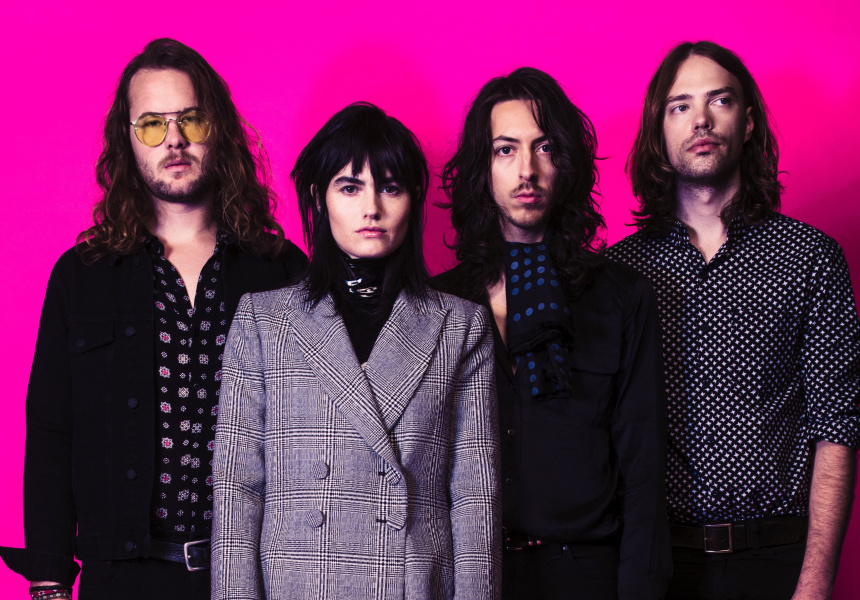
Three years. That’s how long The Preatures toured around their hit single ‘Is This How You Feel?’ and the subsequent album, Blue Planet Eyes. When the band finally returned home early last year, they were completely exhausted.

The Preatures 2017

“Stepping out of the slipstream of that whole touring life was really welcome,” guitarist, co-songwriter and producer Jack Moffitt says. “In a good sense, we had reached the peak of what we were probably capable of achieving during all the time we spent together.”

But getting back to Sydney was also about The Preatures getting back to their roots. They holed up in their inner-city Sydney Hibernian House recording studio and set about writing material for a new album. The result is Girlhood, released last month. It’s an intensely personal collection of songs.
Moffitt says after the roller-coaster ride of a seemingly never-ending touring cycle, getting back to basics simply felt “right”. But the extent to which the band would incorporate their hometown into their music would eventually break new ground for them, and at the same time help introduce a new audience to an Indigenous language.

“We recorded it [at Hibernian House] because we have roots in that place; roots that have a lot to do with us growing up as a unit,” Moffitt says. “We didn’t see ourselves making this record in any other way. Sometimes you just know these things, so we made that choice.”

Forming in 2011 as a country-rock-soul quintet (the now-departed Gideon Bensen was the fifth member), The Preatures steadily built a large and loyal Australian following before taking a more mainstream pop approach with ‘Is This How You Feel?’ in 2013. Blue Planet Eyes was released the following year.

The single, the album and the subsequent time on the road turned The Preatures into proper internationalists with fans all across the world, but Moffitt reckons there will always be something intrinsically “Sydney” about the band.

“Everything has something innate that you can’t escape, and when you start writing, you’re pulling on threads of things that you don’t know how to explain,” he says. “Having made the last record in another part of the world [Austin, Texas], even though it was really hospitable to us and felt good, it wasn’t our place. We wanted the opportunity to really explore what it would be like to be here and work on a record.”

“It was a real catharsis to put a lot of energy into exploring that. Now that I reflect upon it, I can hear everything I’ve grown up with in this city on this record.”

It was during this writing process that singer and co-songwriter Isabella Manfredi attended a production of The Secret River by Sydney Theatre Company. Based on a novel by Kate Grenville, it tells the story of first contact between European setters and the local Dharug people, who lived scattered around what is now much of modern Sydney. Inspired by the play and armed with a desire to include Indigenous language in a song, Manfredi and the band wrote the single Yanada.

“It really moved her to hear that language,” Moffitt says. “I think it stirred in her a longing to find a connection to this place after so many years spent abroad, speaking or learning Italian and German. Then, coming home and hearing that language … she wanted to use [that] when we started writing for the album.

“When we were writing Yanada, [Manfredi] gradually set out to speak with and learn from the Indigenous community about the language. She came across [Aboriginal elder, musician and educator] Jacinta Tobin, which was such a special thing. To have the song acknowledged by Jacinta and all the people we’ve encountered through that process was such an amazing education. It started our relationship with this great heritage we all share.”

Working out how to include Dharug in a pop song respectfully and appropriately took time, Moffitt says.

“It was a real experience to … be guided by members of the community like Jacinta Tobin and [actor and Indigenous campaigner] Richard Green. Everybody was so generous and supportive of what Izzi was trying to pull out of this song with respect to language. It was an eye-opening experience, and has had a profound impact on my life.”

Intertwining the Dharug and English languages in a modern-day track not only connected the band to their area’s history, but to a branch of Australian music stretching back to Yothu Yindi and Warumpi Band.

“Neil Murray from Warumpi Band worked and spent a lot of time in communities in the Northern Territory, and wrote My Island Home,” Moffit says. “We’ve grown up with that as an echo in our consciousness from what was around in popular music when we were kids. It seemed to disappear for a long time, but maybe it was because our awareness of it was only there because of our exposure to it in popular music.”

The Preatures have an enormous presence in Australian music and Moffitt recognises the potential for the band to start a conversation about shared history and language.

“Even if the discussion turns to the definition of “yanada”, which in Dharug means ‘moon’, you’ve got two terms that could be the start of someone’s path into learning about their communities,” he says. “For me, I’m not even qualified to really pass any comment on it other than what my experience is, which is that I feel like I’m at the start of a lifelong journey.”

A new album of course means another round of touring. There have already been performances at the Enmore Theatre in Sydney and the Forum in Melbourne. Next up is a performance at the Spiegeltent for Brisbane Festival, followed by shows in Adelaide, Perth and a clutch of regional dates. Moffitt reckons they’re ready.

“We’re at that point where we’re looking forward to being back in that vacuum,” he says. “That mode of touring.”

Girlhood is out now on Mercury Records.

For Broadsheet

Q&A: Hatchie

Hatchie

Anyone who’s been to more than a handful of gigs in Brisbane will be familiar with Harriette Pilbeam. As bassist, sometimes singer and songwriter for indie-rockers Babaganoüj since 2011, and previously as a member of sugary pop outfit Go Violets, she is an established figure on the local scene.

Now, barely three months since Pilbeam introduced her solo project Hatchie to the world via Triple J Unearthed, she has signed management and PR deals, seen her music charting on the Spotify Viral charts, been added to the Bigsound Live line-up, and gained the kind of attention many other young artists would sell their mother for.

The reason is debut single ‘Try’ – a shimmering pop gem unlike anything the 24-year-old has been involved in so far. Pilbeam explains how ‘Try’ came about and what the future holds for the burgeoning project.

Why is now the right time for a solo project?

I started writing these songs that didn’t suit Babaganoüj any more – they were a lot more pop and not as grunge or ’90s-sounding as Babaganoüj. They required much different production and I wanted to play around with more ’80s UK references more than [those of] ’90s US bands. I thought it was a good time to pursue that, and I really wanted to experiment with that kind of stuff by myself, rather than in a band. I recorded ‘Try’ 18 months ago and decided to put it out on my birthday in May to make myself do it.

Your bio mentions Cocteau Twins, Sky Ferreira and Wolf Alice as influences. What is it about those artists that works for you?

With the Cocteau Twins, it’s a lot about the vocals, and the ambience with the guitars. I really like the production of some Sky Ferreira songs because they’re pop songs but the production is more alternative, with the drums especially. She’s not just a straight pop singer. I wanted to do an amalgamation of all those things, and play around with vocals and harmonies, but with more pop writing.

Is ‘Try’ indicative of how the project will sound overall?

I think it’s maybe too early to tell. I have a lot of demos I haven’t produced yet, so they can go in any direction. I think that ‘Try’ sits in the middle of the kind of music I’ll probably be making. There are a few songs I’ve already got done which are a bit on the poppy side of ‘Try’, and a few songs which are a bit darker, ambient and shoegaze-y.

You’ve had so much attention in a short amount of time.

I’m very excited and it’s pretty overwhelming. I did not expect half of the things that have happened to happen so quickly. I thought I would be self-managed for at least six months or something, and I got a manager within a day of releasing Try. So many things have happened so quickly and it’s shocking to me. I’m very grateful that it’s even got this far.

How did the deal with Jacob Snell of Monster Management come about?

He just contacted me when ‘Try’ got played on Triple J. I put it up on Unearthed and he contacted me within a few hours of its release. We spoke on the phone two days later, got on really well, and it just made sense. I thought I’d maybe want to keep my options open a bit longer, but as soon as I had the phone call with him I wanted to just do it, and didn’t care about who else comes along. I don’t think I’ll regret it.

Brisbanites will recognise landmarks in the clip. Is where you’re from important to you as an artist?

Brisbane has a unique music scene in that it’s quite small and everybody knows each other. I don’t think I needed to incorporate my home town because of what it means to me, but it probably affects me without me realising.

What does being on the Bigsound Live line-up mean to you?

I’m excited to see a lot of the other people who are playing, but it’s also exciting for me as an artist to meet people I wouldn’t meet outside of Bigsound. It’s really cool because they get so many international people coming in. I’m really excited to meet people, not even in a business-y way, but just to talk to people about what it’s like to work in the music industry. I am really interested in that as I studied it at uni. I’m excited about all aspects of it, not just playing.

What makes up a Hatchie live set?

I’ve got about a set’s worth ready to go now, and I’m still in the process of teaching the other members the songs now. It’ll probably be about seven songs – mainly poppy and upbeat. I’ve got my friend Ritchie [Daniell] on drums – he’s in the Grates. I’ve got the two guitarists from the Creases and me on guitar and samples. It’s pretty fluid at the moment and depends on the touring schedule that is worked out for the next six months, which is all being decided at the moment.

How do you build on what you’ve already done?

I suspect a support tour with another Australian band, and then hopefully lots of shows overseas in the next six months to a year. There are a lot of things about to be locked in. I would love to go to the UK and play the Great Escape Festival next year. The UK would be my number-one priority.

For Broadsheet

Live review: London Grammar + Guests – Riverstage, Brisbane – 23/9/17

Billed as Brisbane Festival’s “marquee music event”, the five-act line-up of London Grammar, James Vincent McMorrow, The Kite String Tangle, Mansionair and Wafia provided perfect vibes for a chilled evening at Brisbane’s Riverstage on Saturday (23rd September).

London Grammar Brisbane Riverstage September 2017

With the tunes kicking off at 4pm in scorching sunshine, and running for close to six hours, the atmosphere was not unlike a mini festival, with the comforting aroma of Dagwood dogs and mid-strength beer reinforcing the feeling.

Wafia is a rare talent whose vocal power is more than enough to fill the amphitheatre, while Mansionair play a slick set and get a big response with ‘Hold Me Down’.

Hometown boy Danny Harley of The Kite String Tangle is delighted to be playing Riverstage for the first time, as he tells us twice. The sun aptly drops over the horizon as he plays ‘Illuminate’, but it’s his final track ‘Arcadia’ which is the perfect ending to the best set of the day thus far.

But hold on, the best set of the day is immediately bested, as things get international-class with James Vincent McMorrow. The Irishman’s soulful delivery is just about perfect on ‘Get Low’ and ‘National’, while the towering ‘Cavalier’ provides a goosebump-y moment or four.

London Grammar are all darkness and mystique as they take to a sparsely-lit stage and singer Hannah Reid begins proceedings with ‘Rooting For You’. It’s a controlled start, but one that grabs the audience’s attention and ensures it stays firmly on the band for the rest of the night.

‘Rooting For You’ perfectly rolls into ‘Flickers’, and while the trio’s sound is somehow both delicate and huge simultaneously, it is, of course, Reid’s ethereal, choral tones that are the highlight of the set.

‘Wasting My Young Years’ precedes a cheery rendition of ‘Happy Birthday’ for guitarist Dan Rothman, who is turning 28. A cake appears from somewhere and Reid asks the audience to confirm how young and handsome he is before pointing out how cake is bad for her vocal cords, “just like everything else delicious”. Boo hoo.

‘Hey Now’ receives perhaps the biggest response of the evening. It fills the amphitheatre from the river to the hot-dog stand and back again, as a captivated audience sings along. Conclusion: London Grammar’s music is built for big spaces.

The gig/mini festival vibes are over by the Brisbane City Council-approved 10pm, leaving plenty of time for reflecting on what was a pretty damn good day of music.

For Scenestr

Q&A: Glitter Veils

The Brisbane duo going international with the help of one of America’s most well-regarded record labels.

Glitter Veils

Glitter Veils wasn’t always Glitter Veils. Most recently plugging away on the Brisbane dream-pop scene under the moniker YOU, it was in July last year that Luke Zahnleiter and Michael Whitney (also of The Rational Academy and Nite Fields, respectively) were presented with a persuasive argument to change their band name.

Terrible Records got in touch. It was co-founded by Grizzly Bear’s Chris Taylor and is home to Solange, Twin Shadow, Blood Orange, Moses Sumney and Australia’s Kirin J. Callinan, among many others. Terrible suggested the switch to the more memorable and SEO-friendly moniker. It then went on to release Glitter Veils’ album, Figures in Sight, on its Flexible imprint, which focuses on unique debut releases.

After listening to the album it’s easy to see why. Raw, abrasive, deep and mesmeric, the layers of sound play out like an experiment that may or may not reach a conclusion but will be a hell of a ride either way.

Zahnleiter and Whitney, champions of the album format, explain their processes and how they ended up on Terrible.

Was putting Figures in Sight together a complex process?

Michael Whitney: It started off as a bedroom project for me, and then I wanted to play it live. Then Luke came along and we became really good friends. I guess from that initial period it was about two years of writing, recording, restructuring and going back and forth to the studio.

Luke Zahnleiter: We were pretty fastidious and got a bit obsessive in parts of it, but, overall, we’re happy with how it came out and happy that the overall sound has been getting a good response. We’re kind of relieved in a way.

Was it important the album had an overall sound or feel?

LZ: Michael and I listen to similar music and we have quite a varied taste. I think it’s about the feeling and mood we can create in the music. We could attempt to make a style of music, but [the album is] essentially what came out at that period in time. Whatever was impacting our life was funnelled through that.

MW: Luke and I come from pretty different spectrums of how we play instruments, and I think that is reflected in certain ways. The guitar has a similar sound over the whole album. I tend to like a lot of older pop music and stuff like [American composer] Angelo Badalamenti [best known for his work scoring David Lynch’s films].

David Lynch is often mentioned in your reviews. How does that sit with you?

LZ: I’m happy with that. When people say “David Lynch”, I think they mean the Twin Peaks [theme] song [Falling]. I think it’s more of a mood thing.

MW: That kind of tragic beauty.

Describe the moment you heard Terrible was interested.

LZ: When we finished the album we had no idea what we were going to do from that stage. It’s not like we had been playing live. We just got so involved in making the record that we didn’t have a plan of attack afterwards. We just sent it to a bunch of labels – mainly international labels – and kind of hoped for the best. I emailed quite a few with some early mixes. Then Ethan [Silverman] from Terrible emailed. It was very vague – I think it was a one-line response, something like: “This is cool, I’ll sit on this …”. Then three months later we heard from them again, and he got back to us with another vague message saying they wanted to put out two songs on the Flexible imprint, then we figured out a way to put everything out. We wanted to bypass plugging away at the local scene and getting on a local label.

Why bypass the local route?

LZ: We wanted as many people as possible to hear the album – that’s my main goal.

MW: We were sending it to labels that were probably above our heads, but we tried anyway. I just want to make really great albums. The live thing has almost been an afterthought with this last record.

LZ: We’ve both played in bands before and done local gigs and touring, and it’s exhausting to do that, and you’re not really getting much exposure. It’s usually the same people who come to shows locally, and we just wanted to get a broader audience.

How does it feel to have Solange, Twin Shadow and Blood Orange as labelmates?

MW: It’s a great roster and I love Blood Orange and Solange’s album. It’s something to aspire to – to make albums in a certain way and to push us even further.

LZ: We’re definitely in good company and it’s a great label. I remember that Twin Shadow album from 2010 or 2011 – their first full-length. I used to love that album. To think we’re now with the same company is a really good feeling. There are some great artists on Flexible, too.

Any international touring plans?

LZ: We’ve got a few Melbourne shows coming up, but internationally, we’ll see how it pans out. It’s definitely something we’d both like to do, especially in America. Having Terrible on our side to help is a good position to be in.

For Broadsheet

Record review: Jen Cloher – Jen Cloher (2017, LP)

jen cloher album cover

It’s been four long years since Jen Cloher’s last solo album, and while she’s been far from idle or out of our collective eyeline in that time, it’s bloody good to have her back putting out new material of her own. That’s because 2017, and everybody involved with it, needs a healthy dose of Jen Cloher’s fire, and if you don’t feel like you’ve had a savage, if eloquently-delivered, kick to the pants after a run-through of these excellent 11 songs, then you’re probably not wearing any pants and you should do something about that immediately. When she’s not using Rolling Stones lyrics to weave tales of missing her partner while she’s on tour on lead single ‘Forget Myself’ or meandering in perfectly off-kilter fashion while questioning the Australian dream on ‘Regional Echo’, she’s raining blows on the “feral right” on ‘Analysis Paralysis’, and the over-privileged and (gasp!) music critics on ‘Shoegazers’. It’s all well and truly called-for, and Cloher delivers on every track, while her other half is pretty damn handy on lead gee-tar, too. We should be happy Jen Cloher is on our side. What an outstanding album.

For The Brag

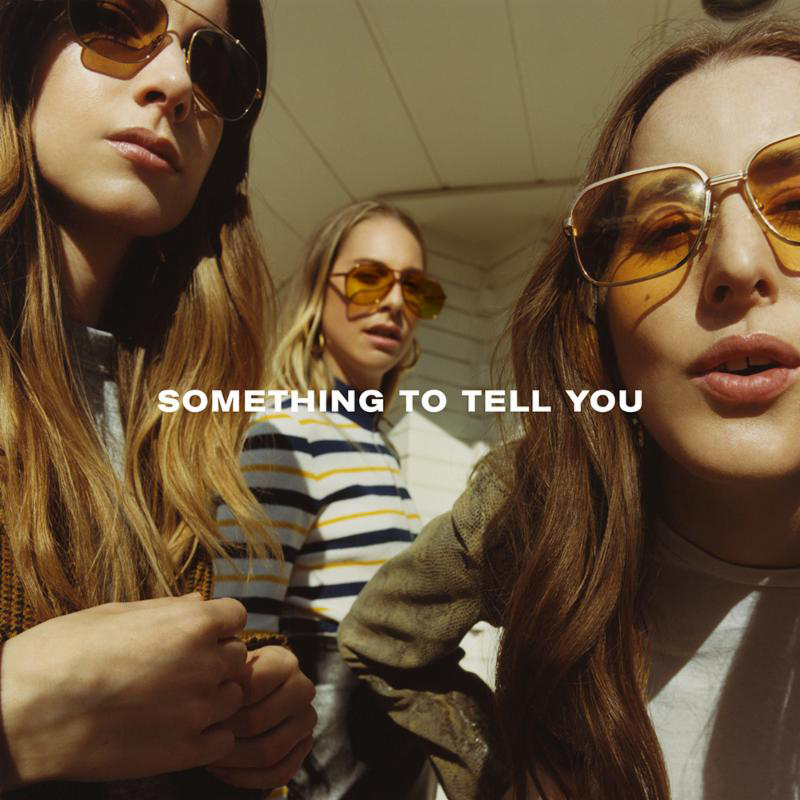
Record review: HAIM – Something to Tell You (2017, LP)

haim something to tell you 2017

The world’s a very different place to what it was when HAIM made an eager and innocent music world swoon with their debut album in 2013, so what can the Californian trio add to 2017? The answer, to put it plainly, is pretty much more of the same, so that’ll be welcome news if you loved Days are Gone, and not if, well… you didn’t. “With nowhere to live when they came off the road, they returned to familiar territory – setting up shop at their parents’ house,” reads the bumph accompanying the album, and it mostly shows. There’s plenty to like about the title track, the soaring ‘Nothing’s Wrong’, and lead single ‘Want You Back’, while value could be added by thrusting a foot instead of merely dipping a toe into points of difference on the funky and soulful ‘You Never Knew’ or the almost sludgy glam of ‘Kept Me Crying’. Andrew Innes of Primal Scream once told this reviewer of the sisters’ ability to harmonize and read each others’ movements as something that can only come from playing music together their entire lives, and he’s probably right. Knack with a melody: check. Respecting the lineage of ’70s and ’80s pop and soft-rock: check. Keeping it all relatively safe: check. The formula is clear and apparent, but there’s magic in HAIM’s particular formula, so, if it ain’t broke, why fix it?

For The Brag

A Critical Analysis of Blade Runner as a Resource for Speculation on the Possibilities of New Media and Cyberspace

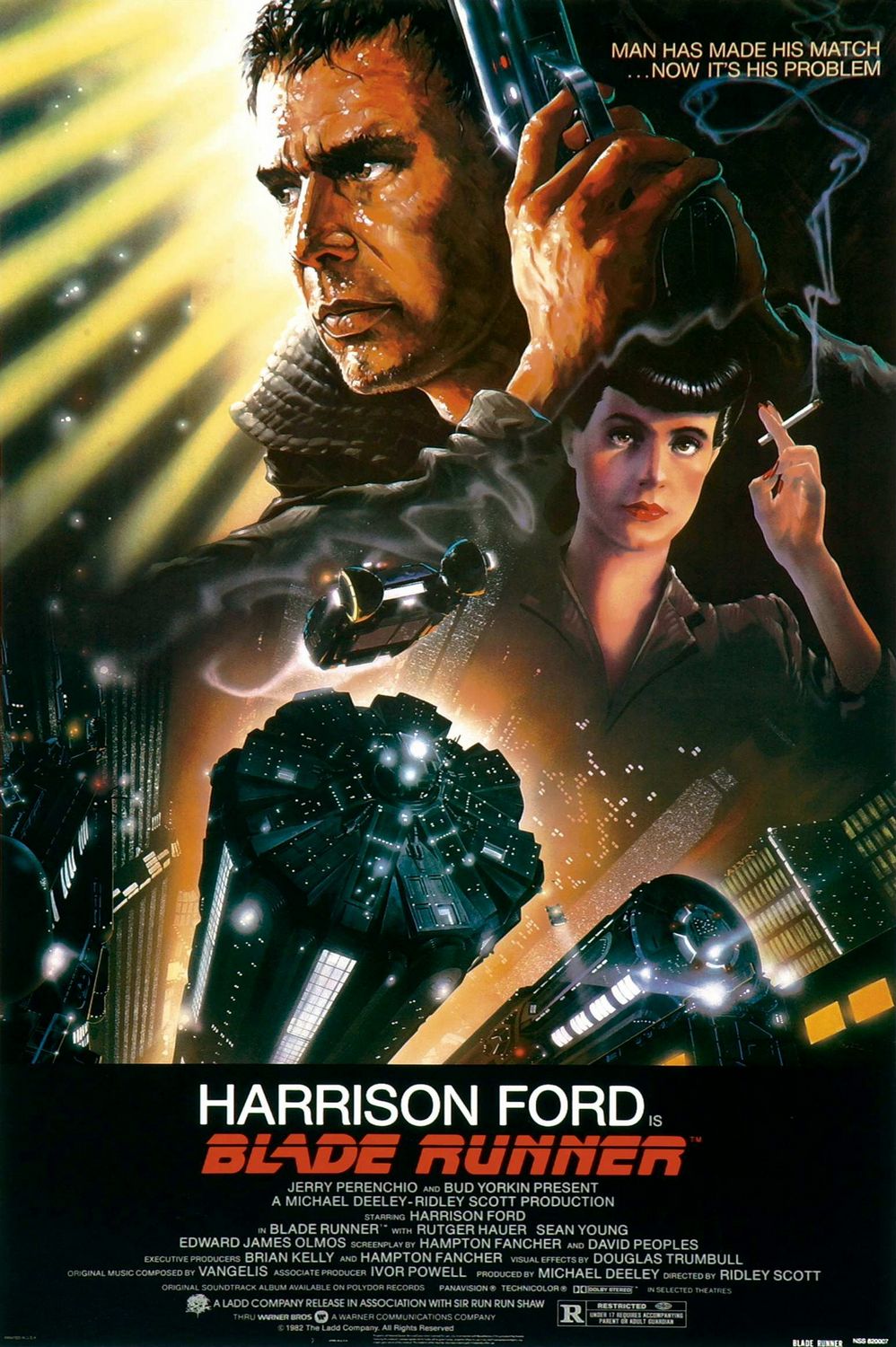
blade runner poster

Humanity has a complex and sometimes concerning relationship with technology and the roles it plays in our lives, and this relationship has been examined in an array of cultural forms and contexts over a long period of history. Technology not only provides us with new tools for communication and expression, but continually-evolving social contexts for our daily existence (Lunenfeld 2000, p.1). From the conception of human engagement with technology, there has been concern about the potential for the end of humanity (Hansen 2004, p.14), and while this may seem like an extreme way of viewing technological progress, these fears remain today. Some of the most powerful arguments for and against the use of technology in our lives have been made in utopian or dystopian texts. Film has, for many decades, been a vehicle for bringing these arguments to mass audiences; both in terms of their historical context and its possibilities for the future. Technology or new media has, at different times, been shown on film as being the saviour or the downfall of humanity, or sometimes both simultaneously. This essay will critically analyse the 1982 film Blade Runner in the realm of new media and technology as resources for speculation and possibility, and the science fiction genre of cyberpunk from which it was spawned, and show that it is a culturally-significant example of technology and humanity colliding in fiction.

Directed by Ridley Scott, Blade Runner is partly based on Philip K. Dick’s 1968 novel Do Androids Dream of Electric Sheep?. The plot follows ‘blade runner’ Rick Deckard, as he hunts four renegade human-like androids, or ‘replicants’, who are on the run from authorities in a dystopian Los Angeles. The clash between “creatures engineered in biomedical laboratories and those who create them to achieve colonial ends” (Lussier & Gowan 2012, p.165) form the basis of the dramatic narrative. Originally released in 1982 to a poor showing at the international box office and mixed reviews, the film gained a cult following in the following decades, and, today, is “consistently listed as one of the most important science fiction movies ever made” (Latham & Hicks 2015, p.1). Hailed for its production design, showing a retrofitted future, Blade Runner remains a leading example of the neo-noir genre, is heavily indebted to the femme fatale and cyberpunk genres, and has been the subject of much scholarly debate and examination since its release. It is a difficult film to examine as it exists in so many states, having been re-released in 1992 with a ‘director’s cut’ label, and again as a ‘final cut’ in 2007 (Dienstag 2015, p.107), and latter versions of the film make increasing suggestions that Deckard himself may be a replicant. Despite this, it is a prominent early depiction of the questions posed by combining high technology and humanity.

An obvious question posed by Blade Runner and similar texts is one which concerns the point at which technology moves from being beneficial to humanity to being a threat. The complex relationship between the two principal characters, Deckard and Rachael, could be seen as symbolising the relationship between humanity and technology. At first they are highly sceptical of each other: Deckard because Rachael is not human, and Rachael because Deckard is a murderer (Dienstag 2015, p.108). At the start of the film, Deckard remarks “replicants are like any other machine” (Locke 2009, p.115), and when he meets Rachael, asks her maker “how can it not know what it is?” (Locke 2009, p.115). Immediately, Rachael challenges Deckard’s ideas about the difference between human and machine by asking him “Have you ever retired a human by mistake?” (Locke 2009, p.115). Deckard breaks the news to her that she is a replicant and a single tear is shown to fall down her face. In this scene, it is the machine which is shown to have emotion, while Deckard remains cold and detached. As the story progresses, the pair come to respect and rely on each other, to the point at which their lives become irreversibly intertwined and they escape to be together. In a speech delivered four years after the publication of Do Androids Dream of Electric Sheep?, Dick suggested that: “In a very real sense our environment is becoming alive, or at least quasi-alive, and in ways specifically and fundamentally analogous to ourselves” (Galvan 1997, p.413). Suggesting that technology is infiltrating our lives and changing our characters in subtle ways, Dick said we risk being reduced to “humans of mere use – men made into machines” (Galvan 1997, p.414). The film tempts viewers to imagine themselves in Deckard’s position and wonder if they would succumb to the same temptations posed by technology. The answer, in most cases, is likely to be in the affirmative.

The film also explores the difference between what defines humanity and technology (Locke 2009, p.113). The most obvious answer is the ability to feel emotion, or most importantly, empathy. However, the suggestion that artificial intelligence has the potential to become ‘human-like’ while humans themselves become increasingly less so is perhaps one of the most interesting areas for speculation within the film. The predominantly human traits of community and togetherness are more apparent in the replicant world of Blade Runner than in Deckard’s lonely existence – they fight to survive together and mourn when one of their group is killed. Batty, leader of the replicants, is, at times, playful and amiable, despite the certainty of his impending doom. Batty exhibits a sense of high culture and “proves his humanity by demonstrating that he is physically, intellectually, and even morally, superior to everyone else in the film, humans as well as slave” (Locke 2009, p.120). At the film’s climax, the exemplary and human-like behaviour of Batty, as he dies on the rooftops fighting the blade runner (and also saving his life), sees him transferring his freedom to Deckard (Lussier & Gowan 2012, p.165), and Deckard, as a result, is free. Deckard realizes that similarities between men and replicants “run deeper than their differences and that they are in fact the same type of man, ‘brothers’, regardless of any distinction between human and android” (Locke, 2009, p.138). Deckard comes to grips with his own humanity by falling in love with a replicant and deciding that he wants to live his life with her.

Blade Runner Roy Batty

Writers have also, at different times, used an analysis of the themes in Blade Runner to explore issues affecting vast numbers of people in the world today. Workman likens themes in the film to issues of a medical nature, comparing the replicants’ desire to not die an early death to that of people with fatal diseases. “Almost all of us shall feel the pain and frustration that comes from living with the knowledge that we will in some sense die prematurely” (2006, p.95), he suggests. It has also been argued that Blade Runner uses the relationship between technology and humanity to make political statements. The film’s humanization of its replicants is a “compelling statement against exploitation and domination” (Dienstag 2015, p.101), although this could be tempered with the argument that it is necessary for humanity to control technology to prevent technology from controlling it. Dienstag (2015, p.108) argues that Blade Runner shows us that to “live freely in any regime, we must understand the dangers of representation, even if, in a large state, we must continue to make use of it”. If the success of democracy relies singularly on representation, it risks being dehumanized, much like the initial relationships in the film (Dienstag 2015, p.119). Furthermore, Brooker (2009, p.79) proposes that the ‘final cut’ of the film constructs it as “a fictional world with some parallels to contemporary transmedia franchises”, as it creates a narrative path with several possible routes.

Blade Runner is an early example of a film containing cyberpunk elements, as defined by Bukatman’s definition of cyberpunk as being particularly concerned with the “interface of technology and human subject” (1993, p.54). Mead (1991, p.350) describes cyberpunk as depicting the type of radical technological change seen in Blade Runner as an opportunity to positively change the “perceptual and psychic definitions of what it means to be human” (Mead 1991, p.350). Deckard fits the description of an archetypal cyberpunk character perfectly: he is a “marginalized, alienated loner who live[s] on the edge of society in [a] generally dystopic future, where daily life [is] impacted by rapid technological change, an ubiquitous datasphere of computerized information, and invasive modification of the human body” (Person 1998, online).

Despite its roots lying in the cyberpunk genre, Blade Runner offers so much more thematically. It considers political, moral and technological issues, has stood the test of time and is more popular today than when it was released, unlike many early cyberpunk works. Many of these set out to demythologise technology and failed, but, interestingly, Blade Runner found a greater number of fans as time passed and technology – especially the Internet and robotics – evolved and flourished. It also influenced films featuring similar android or human-like robot storylines which are still popular in cinema in the 21st century (such as The Terminator series of films). In this way, it could be argued Blade Runner contributed to expanding our ideas about the limits of technology, and how it interacts with humanity, in exciting and possibly concerning ways.

Blade Runner also sits thematically within the postmodernism movement, and adopts and puts creative spins on many of its assertions about society and technology, although it has also been argued that the differences between the 1982 and 1992 versions “thus establish a foundational tension that fuels both modern and postmodern interpretations” (Begley 2004, p.186). Jameson explains that “cyberpunk offers privileged insights into contemporary culture providing a cognitive space through which we can understand the postmodern condition” (1991, p.96). Harvey (1990, p.323) suggests that “Blade Runner hold[s] up to us, as in a mirror, many of the essential features of the condition of postmodernity”, while Clayton (1996, p.15) explains that “[s]ince its first release in 1982, Blade Runner has been taken by critics as a vision of a particular historical epoch, the period many people today are calling postmodernism” (1996, p.15). The film rejects the idea of social progress and promotes pluralism in the form of multiple, co-existing realities, while the human-replicant bond between Deckard and Rachael “manifests a form of hybridized love” (Lussier & Gowan 2012, p.165). This bond becomes a crucial plot device for the film, as well as contributing to the “continued relevance of Romanticism for postmodernism” (Lussier & Gowan 2012, p.165). The film’s depiction of Los Angeles is of an orientalised, post-modern, noir-ish city that is an archetypal cyberpunk landscape, offering the viewer at a glimpse at both a high level of technological advancement and increasing social breakdown. A dark, despoiled environment, dominated by the towering pyramid of the Tyrell Corporation headquarters – a metaphor for the class system depicted in the film – is the setting in which the story plays out. The postmodern cityscape depicted “shares the attributes of the globalised, transnational, borderless space” similar to the notion of cyberspace (Yu 2008, p.46).

In conclusion, it can be said that Blade Runner’s many narrative and thematic complexities offer ample opportunity to explore the world of new media and technology as resources for speculation and possibility. The relationship between technology and humanity is at the core of the film, and, in essence, the film tells the story of one individual’s gradual acceptance of the changing parameters of how technology and humanity interact and operate together. How this happens is a complex tale with many elements open to interpretation. The ability for artificial intelligence to show humanity, while humans simultaneously become increasingly dehumanized, is perhaps the most interesting subject presented by the film, and worthy of further examination. The system of master and slave is turned on its head by the very suggestion that machines may have the ability to show humanity. By being saved from death and set free by Batty, has Deckard been set free by technology, or set free by humanity? It’s an interesting question which leaves plenty of room for speculation and possibility.

References

Begley, V, 2004. ‘Blade Runner and the Postmodern: A Reconsideration’, Literature/Film Quarterly, Volume 32, pp.186-192

Bukatman, S, 1993. Terminal Identity: The Virtual Subject in Postmodern Science Fiction, Duke University Press, London, p.54

Clayton, J, 1996. Concealed Circuits: Frankenstein’s Monster, the Medusa, and the Cyborg, Raritan, p.15

Dienstag, JF, 2015. ‘Blade Runner’s Humanism: Cinema and Representation’, Contemporary Political Theory, Volume 14, pp.101-119

Galvan, J, 1997. ‘Entering the Posthuman Collective in Philip K. Dick’s “Do Androids Dream of Electric Sheep?”‘, Science Fiction Studies, Volume 24, pp.413-429

Hansen, MB, 2004. New Philosophy for New Media, MIT Press, p.14

Harvey, D, 1990. The Condition of Postmodernity: An Enquiry into the Origins of Cultural Change, Blackwell, p.323

Jameson, F, 1991. Postmodernism, or, The Logic of Late Capitalism, Duke University Press, Durham, p.96

Latham, R & Hicks, J, 2011. ‘Blade Runner’, Cinema and Media Studies, Oxford University Press, p.1

Locke, B, 2009. ‘White and Black Politics versus Yellow: Metaphor and Blade Runner’s Racial Politics’, The Arizona Quarterly, Volume 65, pp.113-138

Lunenfeld, P, 2000. The Digital Dialectic: New Essays on New Media, MIT Press, p.1

Lussier, M & Gowan, K, 2012. ‘The Romantic Roots of Blade Runner’, Wordsworth Circle, Volume 43, p.165

Mead, D, 1991. ‘Technological Transformation in William Gibson’s Sprawl Novels: Neuromancer, Count Zero, and Mono Lisa Overdrive’, Extrapolation, Volume 32, pp.350-60

Person, L, 1998. ‘Notes Toward a Post-Cyberpunk Manifesto’, Nova Express, online, accessed 22nd April 2017: https://slashdot.org/story/99/10/08/2123255/notes-toward-a-postcyberpunk-manifesto

Workman, S, 2006. ‘Blade Runner’, BMJ: British Medical Journal, Volume 332, p.695

Yu, T, 2008. ‘Oriental Cities, Postmodern Futures: “Naked Lunch, Blade Runner” and “Neuromancer”’, MELUS, Volume 33, p.46

Record review: Green Buzzard – Space Man Rodeo (2017, EP)

green-buzzard-space-man-rodeo-ep-cover-art

*Knock, knock*. Who’s there? It’s 2017 and it’s time to wake up, you lazy cretins. Hammering on the door of chez Green Buzzard with such platitudes would likely bring about at least two reactions. One: scrambling to hit the OFF switch on The Charlatans’ Greatest Hits playing on the CD player, and two: fear on such an unprecedented level that their already-significant desire to die and be reincarnated in the pop landscape of 1995 would be multiplied many times. You see, they are a band so scared of NOW that their brand of indie-pop, although masquerading under the guise of being faithful/respectful/reverent to the lineage, could be tossed into any or all of the piles of irredeemable turgidity floating aimlessly in the cesspools of the mainstream. Ten tracks pass by in a blur of guitar-pop lightness: ‘Tear My Heart Away’, ‘Space Control’ and ‘Hypnotized’ are perhaps the most tedious. While ‘Never Let Me Go’ and ‘IDWK’ have some redeemable moments, the jaw-aching yawns begin with lead single ‘Do You Ever Glow’ and the Buzzard quickly loses it buzz. If postponing the future by suckling at the festering teat of Britpop is your thing, get your sickly, bleeding gums around this.

For The Brag

The Banana Pancake Trail as a Cultural Tourism Route

the beach movie film

Recorded travel is as old as the earliest pilgrimages, and Buddhist routes existed in Asia before the establishment of Christianity. Much like for those who ventured on early pilgrimages and the wealthy young European men who popularised the Grand Tour in the seventeenth and eighteenth centuries, travel is still a vehicle for self-understanding and self-transforming. A prominent travel destination for many young backpackers and tourists of the past few decades is the so-called Banana Pancake Trail in South-East Asia, named for the cheap breakfast food to be found at many locations in the area. Existing roughly within the borders of Myanmar, Thailand, Cambodia, Laos, Vietnam, and Singapore, and often including Nepal, India, Indonesia and The Philippines, the trail is used heavily by backpackers and other travellers and tourists. It can broadly be defined as a circuit “linking backpacker urban enclaves, coastal and inland resorts, and the main attractions within a region” (Hampton & Hamzah 2016, p.556). Academic interest in backpackers’ motivations and experiences has grown in recent years (Wilson & Richards 2004, p.4), as the cultural and economic importance of South-East Asia is increasingly recognised. This essay will examine the Banana Pancake Trail as a cultural tourism destination, including its evolution from its early appearance as a destination in Western literature to its contemporary position as somewhat of a rite of passage for many young Western backpackers, the motivations for backpackers visiting the area, and the outcomes for both visitors and the region as a result.

In the 1950s, young Westerners began travelling through South-East Asia, following the route set out by Marco Polo 700 years earlier. The route became known in popular Western culture as the Hippie Trail, similar to its North American counterpart the Gringo Trail, and was closely linked to the transnational counter-culture movement of the time (Sobocinska 2014, p.1). As a result, ‘oriental’ lifestyles moved from being denigrated to romanticised in literature (Neville 1970, p.205), and the modes of travel developed on the Hippie Trail heavily influenced backpacking culture in the region from the 1980s onwards (Sobocinska 2014, p.1). Backpacking offers an “unlimited level of flexibility” (Smith et. al 2010, p.18) compared to types of travel used by the conventional tourist, but the mythification of backpackers as ‘anti-tourists’ is a concept both questionable and complex. Backpackers carry not only the physical baggage which gives them their name, but cultural baggage which helps form backpacker culture wherever they go (Wilson & Richards 2004, p.3), and ultimately change the places they visit as well as themselves. The concept of the Banana Pancake Trail evolved from the Hippie Trail as tens of thousands of young Westerners began to travel it, some “bent on experiencing the ‘real’ Asia, others pursuing their notion of an Eastern spiritual quest” (Rea 2006, p.50), and others “reacting to the alienation of modern society” (Wilson & Richards 2004, p.3). While an abundance of literature and technological options have placed a wealth of information on the trail at the fingertips of millions worldwide, research shows that many backpackers still view the countries on the trail as “exotic” (Hampton & Hamzah 2016, p.556). This is despite the fact that infrastructure for backpackers that began to grow in South East Asia from the 1970s is now firmly established (Noy 2006, p.39) and visitors to the region can find the same tourist amenities available as just about anywhere else on the planet, providing they can pay for them.

A useful way to examine the Banana Pancake Trail’s position as a cultural tourism destination is to consider backpackers’ motivations for going there. One such motivation is adventure tourism, or tourism involving activities that are physically challenging or unexpected. The culture of the early Hippie Trail was promoted as being the “final grasp of authentic adventure” in the face of the ensuing influx of mass tourism (Sobocinska 2014, p.1), but the Banana Pancake Trail has since become a much more commoditised version of the original trail. It has been argued that risk and adventure are constructs in South-East Asia, facilitated by backpacker-targeting tour companies which market themselves as alternative or adventure tourism (Wilson & Richards 2004, p.49). Many backpackers are willing to adopt the fantasy exploited by certain sections of the industry, as a way of constructing a new, temporary identity while visiting the Banana Pancake Trail, with the aim of becoming more independent and adventurous, and to revolt against the regulations of society (Maoz 2007, p.122).

The increase in numbers of young backpackers seeking adventurous or risky activities on the Banana Pancake Trail has resulted in significant changes to certain areas and the communities who live in them. A prominent example is the small Laotian town of Vang Vieng on the Mekong River. Laos has only officially welcomed international tourists since 1989 (Hitchcock 2009, p.168), and Vang Vieng quickly underwent a “sudden metamorphosis from hippy hangout to water-propelled club strip” (Little 2016, p.13), fuelled by a party industry centred on the many tourist bars and river ‘inner-tubing’ businesses which attract young thrill-seekers. A sleepy village was turned into a partying hotspot, but tourist deaths from drug overdoses and drowning led to government intervention and a clampdown on the number of bars and nightclubs in 2010-2012, although the town has since been partially returned to the state of its “good old days” in order to “convince hedonistic Western tourists to make the trip” (Little 2016, p.13). Incomes for much of the town’s poor have been increased as a result of the transformation (Hitchcock 2009, p.179), but the area has arguably been changed irreversibly for the worse, losing much of its original culture.

Vang Vieng, Laos

Vang Vieng, Laos

Another motivation for backpackers visiting the Banana Pancake Trail is for the purposes of dark tourism: tourism which provides “potential spiritual journeys for [those] who wish to gaze upon real and recreated death” (Stone 2006, p.54). Travel to sites of dark tourism “links representations of reality with deliberately cultivated forms of subjectivity” (Adler 1989, p.1384) and has long inspired debates about morality. It has been argued that motivations for visiting dark tourism sites currently exist alongside other motivations (Seaton 1996, p.243) or that dark tourism should be classified not as one homogeneous category, but as “an array of tourisms, each entailing different histories, geographies, tourist subjectivities and specific, embodied performances that continually (re)produce both ‘dark’ places and their visitors” (Hughes 2008, p.318). Since the numbers of backpackers visiting the trail increased rapidly from the 1990s, many dark tourism sites in South-East Asia went through a “process of commercialisation from that initial demand to becoming a formal destination” (Hiebert 2014, online). The commoditisation of death has “long been a theme of the morbid gaze” (Stone 2012, p.1565) and with consumption so inherent in post-modern culture, it is almost inevitable that dark tourism sites create opportunities to develop a tourism product (Smith et. al 2010, p.36). As a result of increased interest, sites in Cambodia, Vietnam, Laos, Thailand and Malaysia now appear often in registers of dangerous destinations. A major problem with the concept of dark tourism is the fact the framing of instances of death and suffering by victims and aggressors often clash (Gezgin 2009, p.49). Vietnam, for example, has numerous dark tourism sites and is still feeling the affects of both the French and American occupations and conflicts from 1945 to 1975, but, paradoxically, Americans contribute to the tourist economy of the country more than visitors from any other nation (Gezgin 2009, p.49). Masanti (2016, p.113) suggests that the exploitation of death as a tourist experience is much less acceptable to local communities than to visitors to the destination, with suffering seen as being turned into a leisure activity for contemporary tourists (Smith et. al 2010, p.38). Dissonance or discord is often evident at dark tourism sites in South-East Asia as a result, especially where the views of victims and perpetrators are “not given equal prominence” (Tunbridge & Ashworth 1996, p.120).

Killing Fields, Phnom Penh, Cambodia

Killing Fields, Cambodia

Further motivation for backpackers visiting the area is for the purposes of screen tourism: tourism that provides a link with locations where film or television productions were shot. Alex Garland’s best-selling book, The Beach, is about a very particular form of tourism, relating a story of a group of self-styled travellers who seek to distance themselves from more conventional tourists in Thailand’s isolated islands. The book and its subsequent film adaptation “provide a cultural critique of attempts to uncover the ‘authentic’, ‘real’ and ‘different’” (Law et. al 2007, p.142), and have likely shaped cultures of travel on the Banana Pancake Trail more than any other. It has been estimated the film has injected US$13 million into Thailand’s economy (Law et. al 2007, p.143), but increased film spectatorship as a form of tourism has also increased pollution and environmental destruction in the area of the island of Ko Phi Phi, where much of the film was shot. Additionally, the set was dramatically altered to appear more ‘tropical’, providing an unrealistic impression of the location. Film locations turned into tourism destinations can be problematic, as what visitors are seeing is the “front stage chosen and presented by the director of the film, and are using in effect a film goer’s gaze” (Butler 2011, p.93).

The effects of increased numbers of visitors to the trail over the last three decades have been remarkable in many ways. The growth of mass-produced travel literature from the early 1970s promoted South-East Asia as “one of the great travel adventures” (Wheeler 1979, p.27), although the continued success of Lonely Planet arguably has had negative effects on the region as a place for ‘off-the-track’ travel. While it has been said that early travellers to a region widen lifespaces by “exploring not only unknown geographic areas but also unknown/strange social situations” (Loker-Murphy & Pearce 1995, p.827), and as routes change due to constant seeking-out of new places, the seeds for later mass tourism are sewn (Hampton & Hamzah 2016, p.1). It has been argued that since a large number of backpackers have visited the Banana Pancake Trail since the 1970s, and despite increases in “heritage protection and management, conscientization and participatory planning, grassroots development and pro-poor tourism, co-management, and corporate social responsibility” (Hitchcock 2009, p.313), large swathes of the trail have succumbed to the inevitable commercialisation that follows tourism. The recent proliferation of institutionalised backpacker enclaves in cityscapes is a strong indicator of this. A prominent example is Bangkok’s Khao San Road, a small stretch of the inner city made up of cheap guesthouses, backpacker lodges, bars, budget restaurants and internet cafés (Muzaini 2005, p.144). From two guesthouses in the early 80s, there are now several hundred in the area (Cummings & Martin 2001, p.231).

khao san road, bangkok

Khao San Road, Bangkok

It is useful to examine the extent of any economic benefit to communities on the Banana Pancake Trail, as a measure of the cultural significance of backpackers in the region. Backpackers on the trail have been condemned for a number of reasons – their appearance, attitudes to drugs and sex, cultural insensitivity, stinginess and seclusion (Wilson & Richards, 2004, p.43) – but it has also been argued they contribute greatly to the economy of marginal communities (Scheyvens 2002, p.144). The manner in which backpackers travel on the Banana Pancake Trail – longer stays mean less economic leakage – benefits the economically weak members of the travel industry (Connell 2005, p.538). Looking at the national economy of Laos, as an example, evidence points to tourism benefiting the poor (Hitchcock 2009, p.179), although it has also been argued that members of communities through which backpackers pass “have frequently represented little more than pawns in a much larger game controlled by outsiders” (Westerhausen & Macbeth 2010, p.71). Interactions between communities and backpackers over small transactions can be viewed as a microcosm of the wider relationship and attitudes between backpackers and communities. Scheyvens (2002, p.147) explains that some backpackers “regard haggling as a game, to the extent that they may [so] exploit [traders] for a sale that they accept unreasonably low prices for their products”. So, while the practice of bartering or haggling over prices of goods can ingratiate a tourist to locals, it also has the potential to burn bridges. Sobocinska (2014, p.1) explains that power dynamics in such circumstances tend to replicate colonial practices, and can bring about mistrust or stronger feelings between the two parties. Studies have also concluded that many backpackers choose to travel on a budget as a lifestyle choice or philosophy rather than necessity, which can further evoke unfavourable reactions from members of communities who have no such choices (Wilson 1997, p.52; Murphy 2001, p.50).

The question of whether backpackers on the Banana Pancake Trail should be regarded as travellers or tourists has been studied in increasing detail over the past two to three decades. Culler (1990, p.2) explains that the traveller is someone who seeks authenticity off the ‘beaten track’, or is “working at something”, while the tourist is solely “a pleasure seeker”, although tourism as a leisure activity becomes “ever more complex as it shades into such other activities as ‘lifestyle migration’ and longer-term sojourns” (Hitchcock 2009, p.312). Historically, the characteristics of travel began to change in the mid-nineteenth century, with the success of Thomas Cook and Sons and mass transportations systems brought about the “the decline of the traveller and the rise of the tourist” (Boorstin 1992, p.146). As travel methods evolved, tourist attractions became more numerous, offering “an elaborately contrived indirect experience” (Culler 1990, p.1), and the discrepancy between the “intentions of tourists and their practice [became] endemic to tourism itself” (Scheuch 1981, p.1089). While it can be argued backpackers are the “antithesis of the modern-day tourists”, who avoid conventional elements of the tourism industry (Kontogeorgopoulos 2003, p.177), it can also be said that wanting to be less touristy than other tourists is, in itself, part of being a tourist (Culler 1990, p.4). A connecting element among backpackers on the Banana Pancake Trail is the “self-established and maintained contrast to mass tourism, which becomes apparent” (Spreitzhofer 1998, p.980), although it can be problematic to group all backpackers together into a group seen to be having the same motivations, goals and methods of immersion in the cultures in which they travel. Many strategies can be used to set backpackers apart from tourists or other, more inexperienced, backpackers, concerning how they construct their identity in relation to both locals and other travellers.

halong bay vietnam

Halong Bay, Vietnam

In theory, backpackers’ use of budget guest houses and bungalows is a way in which “encounters with the ‘other’ are made possible” (Muzaini 2005, p.148). The ‘other’, in this case, is a closer or more prolonged exposure to locals’ families, manners, and daily lives in general; the theory being that locals are more likely to own and run small establishments than they are big hotel chains, and domestic tourists are more likely to also stay at cheaper establishments, facilitating backpackers’ contact with them. The same philosophy often also applies to shops and restaurants, with the idea that roadside stalls offer a more authentic experience than a restaurant franchise with Europeanised or “visitor food” (Suvantola 2002, p.149), although it is not always easy to dispense with other factors, including safety and cleanliness (Muzaini 2005, p.149). Backpackers generally consume what is produced locally as a method of identifying and maintaining familiarity with locals (Hampton 1998, p.639). However, with some exceptions, backpackers on the Banana Pancake Trail have largely been criticised for not seeking the authentic in their destination, and the extent to which backpackers choose to be with each other, instead of locals, has been described as similar to that of the “’tourist bubble’, in that very few travellers encounter local people in non-commercial settings” (Fitzgerald 2000, online). Although friendly local staff are appreciated (Murphy 2001, p.50), relationships with other backpackers are often more important (Wilson & Richards 2004, p.47), and some studies suggest many backpackers have little or no interest in meeting, and learning from, local communities; rather they often show blatant disregard for social norms (Maoz 2007, p.122). Additionally, the greater role played by the Internet in tourism since the early 2000s has “allowed the individual backpacker to invoke a personal virtual community to supplement face-to-face interaction”, easing access to consumption of backpacker tourism (Sorenson 2003, p.847).

To measure its importance as a cultural tourism destination, it is useful to examine the history and evolution of the Banana Pancake Trail in terms of its commercialisation, from its position as “one of the great travel adventures” (Wheeler 1979, p.27), to a region where guest houses, restaurants and bars “proudly display signboards stating ‘as recommended in Lonely Planet‘” (Hampton & Hamzah 2016, p.556). Backpacker routes have undergone significant changes since the 1970s, due to the increased proliferation of budget travel options and the “interaction between the increasing commercialization and institutionalization of backpacker tourism” (Hampton & Hamzah 2016, p.556). Backpacker choices can be viewed as being heavily guided by growing commercialisation operating in conjunction with other variables such as low-cost air and rail networks and external factors such as terrorism and political instability (Hampton & Hamzah 2016, p.556). Indeed, the rise of corporate selection of backpacker routes since the 1990s and the advent of the Internet has meant less backpackers on the trail are making and following their own routes, meaning a greater supplier-driven system is in place in the region. This has contributed to the growth of the theory that, despite frequently describing themselves as independent travellers rather than institutionalised mass tourists (Hampton & Hamzah 2016, p.556), backpackers on the Banana Pancake Trail have ultimately largely become the “major affirmation of the modernity of tourism” (Wilson & Richards 2004, p.253) through their attempts, and failure, to avoid the modernisation of backpacker consumption.

In conclusion, it can be said that backpackers of the 1950s and 1960s blazed trails for those who followed, but the rapid commercialisation of the Banana Pancake Trail has meant fewer options for travelling in an ‘un-tourist-like’ fashion in the area. In recent years backpackers, and the culture which follows and manifests itself where they travel in numbers, often have negative effects on local communities and landscapes on the trail, including the destruction of natural features, creation of enclaves and inauthentic communities, and discord between locals and visitors. Backpackers’ motivations for visiting the trail are varied and complex, but have been described as misguided and fantastical, and it has been argued that they often avoid interacting with local communities, despite intending or professing to do the opposite. Countries through which the Banana Pancake Trail runs benefit financially from the presence of backpackers, but often at significant cost to their traditional cultures.

References

Adler, J, 1989. ‘Travel as Performed Art’, American Journal of Sociology, Volume 94, p.1384

Boorstin, D, 1992. The Image: A Guide to Pseudo-Events in America, Vintage Books, p.146

Butler, R, 2011. ‘It’s Only Make Believe: The Implications of Fictional and Authentic Locations in Films’, Worldwide Hospitality and Tourism Themes, Volume 3, pp.91-101

Connell, J, 2015. ‘Backpacker Tourism and Economic Development: Perspectives from the Less-Developed World’, Australian Geographer, Volume 46, p.538

Culler, J, 1990. ‘The Semiotics of Tourism’, Framing the Sign: Criticism and Its Institutions, University of Oklahoma Press, pp.1-2

Cummings, J & Martin, S, 2001. ‘Thailand’, Lonely Planet, Melbourne, p.231

Fitzgerald, M, 2000. ‘Fear, Loathing and Banana Pancakes on the Traveller Trail: Adventures in Backpacking’, online, accessed 21st January 2017: www.austinchronicle.com/issues/dispatch/2000-03-24/xtra_feature.html

Galani-Moutafi, V, 2000. ‘The Self and the Other: Traveller, Ethnographer, Tourist’, Annals of Tourism Research, Volume 27, pp.203–224

Gezgin, UB, 2009. Vietnam & Asia in Flux, 2008: Economy, Tourism, Corruption, Education and ASEAN Regional Integration in Vietnam and Asia, p.49

Hampton, M, 1998. ‘Backpacker Tourism and Economic Development’, Annals of Tourism Research, Volume 25, pp.639–660

Hampton, M & Hamzah, A, 2016. ‘Change, Choice and Commercialisation: Backpacker Routes in Southeast Asia’, Growth and Change: A Journal of Urban and Regional Policy, p.556

Hiebert, P, 2014. ‘The Growing Quandary of Dark Tourism’, Pacific Standard, 7th August 2014, accessed 23rd January 2017: http://www.psmag.com/books-and-culture/growing-quandary-dark-tourism-87608

Hitchcock, M, 2009. Tourism in Southeast Asia: Challenges and New Direction, p.168

Hughes, R, 2008. ‘Dutiful Tourism: Encountering the Cambodian Genocide’, Asia Pacific Viewpoint, Volume 49, p.318

Kontogeorgopoulos, N, 2003. ‘Keeping up with the Joneses: Tourists, Travellers, and the Quest for Cultural Authenticity in Southern Thailand’, Tourist Studies, Sage, pp.171–203

Law, L, Bunnell, T & One, C, 2007. ‘The Beach, The Gaze and Film Tourism’, Tourist Studies, Sage, pp.141-164

Little, HF, 2016. ‘No Longer a Trip to Die For’, The Independent: 27th February 2016, accessed 21st January 2017

Loker-Murphy, L & Pearce, P. 1995. ‘Young Budget Travellers: Backpackers in Australia’, Annals of Tourism Research, Volume 22, pp.819–843

Maoz, D, 2007. ‘Backpackers’ Motivations and the Role of Culture and Nationality’, Annals of Tourism Research, Volume 34, pp.122-140

Masanti, M, 2016. ‘Understanding Dark Tourism Acceptance in Southeast Asia: The Case of WWII Sandakan–Ranau Death March, Sabah, Malaysia’, Development of Tourism and the Hospitality Industry in Southeast Asia, pp.113-125

Murphy, L, 2001. ‘Exploring Social Interactions of Backpackers’, Annals of Tourism Research, Volume 28, pp.50-67

Muzaini, H, 2005. ‘Backpacking Southeast Asia: Strategies of “Looking Local”’, Annals of Tourism Research, Volume 33, Issue 1, p.144-161

Neville, R, 1970. Play Power, London: Jonathan Cape, p.205–209

Noy, C, 2006. ‘Israeli Backpacking Since the 1960s: Institutionalisation and its Effects’, Tourism Recreation Research, p.39–53

Rea, D, 2006. Live at the Forbidden City: Musical Encounters in China and Taiwan, p.50

Scheuch, EK, 1981. ‘Tourismus’, Die Psychologie des 20, Jahrhunderts, Zurich, p.1089

Scheyvens, R, 2002. ‘Backpacker Tourism and Third World Development’, Annals of Tourism Research, Volume 29, pp.144–164

Seaton, AV, 1996. ‘Guided by the Dark: From Thanatopsis to Thanatourism’, International Journal of Heritage Studies, pp.234-244

Smith, M, MacLeod, N & Robertson, MH, 2010. Key Concepts in Tourist Studies, Sage, pp.18,36-38

Spreitzhofer, G, 1998. ‘Backpacking Tourism in South-East Asia’, Annals of Tourism Research, Volume 25, pp.979–983

Sobocinska, A, 2014. ‘Colonial Cultures of Travel and the Hippie Trail’, Journal of Colonialism and Colonial History, Volume 15, p.1

Sorenson, A, 2003. ‘Backpacker Ethnography’, Annals of Tourism Research, Volume 30, pp.847-867

Stone, P, 2006. ‘A Dark Tourism Spectrum: Towards a Typology of Death and Macabre Related Tourist Sites, Attractions and Exhibitions’, Tourism: An Interdisciplinary International Journal, p.54

Stone, P, 2012. ‘Dark Tourism and Significant Other Death: Towards a Model of Mortality Mediation’, Annals of Tourism Research, Volume 39, pp.1565-1587

Suvantola, J, 2002. Tourist’s Experience of Place, Ashgate, Burlington, p.149

Throsby, D, 2012. ‘Why Should Economists Be Interested in Cultural Policy?’, Economic Record, Volume 88, pp.106-109

Tunbridge JE & Ashworth, JG, 1996. Dissonant Heritage: The Management of the Past as a Resource in Conflict, J. Wiley, p.120

Westerhausen, K & Macbeth, J, 2010. ‘Backpackers and Empowered Local Communities: Natural Allies in the Struggle for Sustainability and Local Control?’, Tourism Geographies, p.71

Wheeler, T, 1979. Across Asia on the Cheap, p.27

Wilson, D, 1997. ‘Paradoxes of Tourism in Goa’, Annals of Tourism Research, Volume 24, pp.52-75

Wilson, J & Richards, G, 2004. Global Nomad, Multilingual Matters, pp.3-298

Dark Tourism and Mass Media

killing fields cambodia

A large amount of tourism literature deals with the marketing and consumption of “pleasant diversions in pleasant places” (Strange & Kempa 2003, p.386), but a number of communications scholars have recently attempted to explore tourism sites of a darker nature. This has helped popularise the form of travel known as dark tourism: tourism which provides “potential spiritual journeys for [those] who wish to gaze upon real and recreated death” (Stone 2006, p.54). In modern Western societies, normal death is hidden from public consumption, yet “extraordinary death is recreated for popular consumption” (Stone 2012, p.1565). Marketing of dark tourism often overlaps with historical or heritage tourism (Mullins 2016, online), and can present promoters with challenges not present with the tourism of ‘pleasant diversion’. This essay will examine some of those challenges and the relationship between mass media and dark tourism in the context of this rapidly developing tourism form.

Dark tourism has a long history, having existed since the earliest pilgrimages and times when people would travel to witness public executions (Jahnke 2003, p.6). When academic research on the topic became significant in the 1990s, at the same time as growing numbers of tourists were seeking these new experiences, the complexities of dark tourism’s relationship with mass media became apparent. Just as all cultural production and consumption is complex and dynamic, the production and consumption of dark tourism has been described variously as “continuous and interrelated as demand appears to be supply‐driven and attraction‐based” (Farmaki 2013, p.281), fuelled by “an increasing supply of carnage and blood” online (Hiebert 2014), driven by factors “extend[ing] from an interest in history and heritage to education to remembrance” (Yuill 2004, p.1), and as a “source of private pleasure” (Seaton 1996, p.235).

The issue of how death is presented to mass audiences is particularly complex. In the realm of dark tourism, media can bring about a “neutralisation of death” (Jahnke 2003, p.8), helping tourists to become more aware of the mortality of others and themselves, or a mental state of being which Stone (2012, p.1565) describes as “a space to construct contemporary ontological meanings of mortality”. In many ways, mass media and dark tourism are “in the same business” (Walter 2009, p.41) in that they both mediate death to mass audiences. Many Western societies have relinquished their attachments to the dead, yet retain a vibrant interest in history (Walter 2009, p.40) and the people who inhabited familiar spaces, setting the stage for two key industries to bridge the gap between the dead and contemporary living: mass media and tourism.

Mass media plays a central role in marketing many dark tourism sites, using tourism literature, Hollywood films, television, newspapers, and comic strips in the role of public relations. Similarly, mass media can keep other sites from public view (Yuill 2004, p.125). By placing sites and events in the forefront of communications, mass media have the ability to attract visitors to dark tourism destinations. Media can provide the public with a general understanding of, and encourage an interest in, dark tourism sites, although Seaton and Lennon (2004, p.62) describe how many Western media outlets tend towards creating a moral panic around dark tourism sites through “sensational exposes of dubiously verified stories”: the result of moral debates about dark tourism within society.

At the same time as promoting and marketing dark tourism destinations, mass media has a distinct influence over public opinion and interpretation of many sites of dark tourism (Ntunda 2014, online). New media technologies can “deliver global events into situations that make them appear to be local” (Lennon & Foley 2000, p.46), embodying simulation and interpretation of historical experiences for a mass audience. Public perception of the importance or prominence of dark tourism sites may also be affected by mass media. Dachau concentration camp, for example, was not one of the largest Nazi extermination camps, yet is one of the most visited, due to its appearance in many films and books (Young 1993, p.10). However, while media is central to understanding and interpreting historical events, it can cause dissatisfaction brought about by constant exposure to simulation (Lennon & Foley 2000, p.47). This can often be countered by the reality of visiting a permanent ruin, monument or preserved space.

Motivations of visitors travelling to dark tourism destinations are varied, and often not directly related to mass media. The need to reconcile comparisons between imagined landscapes and topographical reality (Podoshen 2012, p.263), an interest in history and heritage, educational reasons, collective and personal remembrance (Dunkley & Morgan 2010, p.860), and emotional attachment to a place (Rasul & Mowatt 2011, p.1410), among others, can be important factors encouraging dark tourism. Biran and Hyde (2013, p.191) suggest the primary motivation for many dark tourism participants is to “contemplate life and one’s mortality through gazing upon the significant other dead”, fitting with Stone’s (2012, p.1565) description of dark tourism destinations as “space[s] to construct contemporary ontological meanings of mortality”. Additionally, in the past two decades, many tourists have sought to escape the “sanitised version of reality that tourism has traditionally offered” (Robb 2009, p.51); with many no longer content to lounge by the pool or hotel bar, or embark on guided tours. It could perhaps be argued that each of these motivations could be influenced by mass media to varying degrees, but media is unlikely to be the main driving force. It is also problematic to group all dark tourism destinations together under one category, making it just as difficult to group together motivations for visiting them. Representations of death are unique from site to site and often from visitor to visitor (Robb 2009, p.51). Indeed, many managers of dark tourism sites no longer wish their destinations to be viewed as dark, but as sites of sensitive heritage with a focus on social engagement (Magee & Gilmore 2014, p.898).

In conclusion, it can be said that, despite many challenges, mass media plays a part in encouraging tourists’ interest in dark tourism sites, although it is neither the only, nor arguably the major, driving factor in promoting dark tourism destinations. Dark tourism sites are cultural landscapes which can be interpreted in many ways, as can tourists’ motivations for visiting them. Visitors to dark tourism destinations seek a variety of meanings from their experience and their reasons for visiting sites of real or recreated death are numerous and varied. Dark tourism is a complex issue, in terms of consumption and supply, and its relationship with mass media.

References

Biran, A & Hyde, K, 2013. ‘New Perspectives on Dark Tourism’, International Journal of Culture, Tourism and Hospitality Research, pp.191-198

Dunkley, R & Morgan, N, 2010. ‘Visiting the Trenches: Exploring Meanings and Motivations in Battlefield Tourism’, Tourism Management, p.860-868

Farmaki, A, 2013. ‘Dark Tourism Revisited: A Supply/Demand Conceptualisation’, International Journal of Culture, Tourism and Hospitality Research, p.281

Hiebert, P, 2014. ‘The Growing Quandary of Dark Tourism’, Pacific Standard, online, accessed 9th January 2017: https://psmag.com/the-growing-quandary-of-dark-tourism-733629dd26c5#.xcwen7dal

Jahnke, D, 2013. ‘Dark Tourism and Destination Marketing’, Theseus.Fi, online, accessed 7th January 2016: https://www.theseus.fi/handle/10024/64693

Lennon, J & Foley, M, 2000. ‘Interpretation of the Unimaginable: The U.S. Holocaust Memorial Museum, Washington, D.C., and “Dark Tourism”‘, Dark Tourism, pp.46-50

Magee, R & Gilmore, A, 2014. ‘Heritage Site Management: From Dark Tourism to Transformative Service Experience’, The Services Industries Journal, p.898

Mullins, D, 2016. ‘What is Dark Tourism?’, Cultural Tourism, online, accessed 7th January 2016: http://culturaltourism.thegossagency.com/what-is-dark-tourism/

Ntunda, J, 2014. ‘Investigating the Challenges of Promoting Dark Tourism in Rwanda’, Anchor Academic Publishing, online, accessed 7th January 2016: http://www.anchor-publishing.com/e-book/277349/investigating-the-challenges-of-promoting-dark-tourism-in-rwanda

Podoshen, J, 2012. ‘Dark Tourism Motivations: Simulation, Emotional Contagion and Topographic Comparison’, Tourism Management, p.263-271

Rasul, A & Mowatt, C, 2011. ‘Visiting Death and Life: Dark Tourism and Slave Castles’, Annals of Tourism Research, p.1410

Robb, E, 2009. ‘Violence and Recreation: Vacationing in the Realm of Dark Tourism’, Anthropology and Humanism, p.51

Seaton, AV 1996. ‘Guided by the Dark: From Thanatopsis to Thanatourism’, International Journal of Heritage Studies, pp.234-244

Seaton, AV & Lennon, J, 2004. ‘Thanatourism in the Early 21st Century: Moral Panics, Ulterior Motives and Ulterior Desires’, in TV Singh (ed.) New Horizons in Tourism: Strange Experiences and Stranger Practices, pp.62–82

Stone, P, 2012. ‘Dark Tourism and Significant Other Death: Towards a Model of Mortality Meditation’, Annals of Tourism Research, Vol. 39, p. 1565

Stone, P, 2006. ‘A Dark Tourism Spectrum: Towards a Typology of Death and Macabre Related Tourist Sites, Attractions and Exhibitions’, Tourism: An Interdisciplinary International Journal, p.54

Strange, C & Kempa, M, 2003. ‘Shades of Dark Tourism: Alcatraz and Robben Island’, Annals of Tourism Research, pp.386–405

Walter, T, 2009. ‘Dark Tourism: Mediating Between the Dead and the Living’, The Darker Side of Travel: The Theory and Practice of Dark Tourism, pp. 39-55

Young, JE, 1993. The Texture of Memory: Holocaust Memorials and Meaning, New Haven: Yale University Press, p.10

Yuill, S, 2004. Dark Tourism: Understanding Visitor Motivation at Sites of Death and Disaster, Texas A&M University, pp.1-125


Twin Peaks as Complex Television: An Evaluative Critique

twin peaks sign television

Television in the 21st century is more complex than that of the late 1980s and prior (Hundley 2007, p.3). This is largely due to the increase in complex narratives, characterisations and interesting plots that require stricter viewer attention: elements which have become commonplace in television series since they were first seen in the early 1990s. Much of this new complexity was conceived in the science fiction genre, with programs such as Twin Peaks, The X-Files and Lost ushering in a new era of complex television. The popularity of these shows had ramifications across all areas of television, transforming the mainstream television arena and enabling the success of complex storylines by “weaning audiences onto them” (Hundley 2007, p.6). This influence is still evident in the production of quality television today. This essay will make an evaluative critique of the American television series Twin Peaks (1990-1991) in the realm of how it accords with the definition of complex television, including both its textual and contextual dimensions, and the various factors which played out in the series’ making.

Complex television is described by Mittell as an “alternative to the conventional episodic and serial forms that have typified most American television since its inception” (2015, p.17), and he explains that the viewer can derive pleasure from trying to figure out the kernels and satellites in plotlines of complex narratives (2015, p.24). Complex television texts are encoded with dense meaning and imagery, often including multiple characterisations and intricate plotlines. Narrative complexity can be considered a distinct narrational mode, or a “historically distinct set of norms of narrational construction and comprehension” (Bordwell 1985, p.1) that allows for “a range of potential storytelling possibilities” (Mittell 2015, p.22), and in which oscillation between long-term story arcs and stand-alone episodes is possible. A prominent example is the 1990s American television series The X-Files, which Sconce (2004, p.93) describes as having both an “ongoing, highly elaborate conspiracy plot” and “self-contained ‘monster-of-the-week’ stories”. Complex television rejects the need for plot closure within every episode, employs a range of serial techniques that build over time, is not as uniform as traditional serial norms, creates an elaborate network of characters, and is often highly unconventional in many ways (Mittell 2015, p.17; Booth 2011, p.371).

Twin Peaks was created jointly by David Lynch and Mark Frost, and premièred in the United States in April 1990. It was a ground-breaking series that “changed most norms about television at that time” (Hundley 2007, p.6), and despite consisting of only two series of 29 episodes in total, has inspired numerous complex debates about its interactions with its medium (Baderoon 1999, p.94). Nominated for fourteen Emmys and broadcast in 55 non-American markets (Muir 2001, p.250), Twin Peaks was described as “revolutionary” at the time of its release (Hundley 2007, p.24), and is still considered so today. The series primarily centred on an investigation by FBI Special Agent Dale Cooper (Kyle MacLachlan) into the murder of Laura Palmer (Sheryl Lee): a beloved high school student, homecoming queen, and native of the fictional small town of Twin Peaks, close to the Canadian border. Cooper’s investigations quickly lead him to discover that Palmer was not so innocent as she might have seemed. He learns that the teenager lived a precarious, multi-layered life, the town and its people are full of secrets and mystery, and the surrounding woods are home to something supernatural and possibly evil. The viewer quickly becomes aware that Twin Peaks is a series “full of secrets, variegated orders, ambiguous characters and [with a] supernatural overtone” (Loacker & Peters 2015, p.624). In the company of an array of complex characters who “cheat, steal, kill, rape, and deal drugs” (Hundley 2007, p.24), Cooper solves the murder at the end of the first series, consisting of eight episodes. The second, and much longer, series moves the narrative ever deeper into the realm of science fiction, as Cooper investigates the malevolent spirit, Bob, who possessed Laura’s father, and visits the Black Lodge in the woods. Ratings dropped in the second series, perhaps due to the increase in some of the more bizarre science-fiction-oriented elements of the show, and the fact the murder-mystery had been largely resolved, but it is the aforementioned ingredients and the quality of their presentation which made Twin Peaks such a highlight of modern television.

Twin Peaks presents an isolated community beset by evil forces, and its narrative is driven by a murder investigation: an event which reverberates through the close-knit community. It has been argued that the first series constituted little more than an “above-average, literarily-allusive, highly exploitative mini-series about an honours student cheerleader by day/prostitute-drug dealer by night” (Dolan 1995, p.43), but this description does not begin to scratch the surface of the series’ depth. Twin Peaks was partially marketed as a police procedural (Collins 1992, p.345) and has many elements of a classic detective story, in which the investigator is the “traditionally-expected centre of signification” (Carrion 1993, p.242). It is easy to suggest that Dale Cooper is the “literal hero” of Twin Peaks (Baderoon 1999, p.94) and that the series revisits the staples of traditional televisual story-telling by “inhabiting the genres of detective series and soap opera” (Fiske 1987, p.237). However, the way in which each episode feeds back onto itself as the narrative progresses towards a conclusion, moves the narrative away from the traditional detective story and into a space much more complex and interesting. The narrative is also constantly undermined by evil forces, and many other televisual devices introduced by Lynch, which remove ontological certainty in the text and add to viewing enjoyment. There is an ominous sense that anything could befall any of the characters at any time (Woodward 1990, p.50), and deciphering and understanding the intricacies of their fates “became a national pastime and a boon for TV and film critics alike” (Muir 2001, p.251). The presence of these elements in Twin Peaks again point to its accordance with the definition of complex television, in fitting with Mittell’s description of complexity as being when the “ongoing narrative pushes outward, spreading characters across an expanding story world” (2015, p.52). Its multiple complexities led to it being labelled a “genre-splicing work of film art, a parodic, convention-defying detective story” (Lavery 1996, p.16).

Thompson (2003, p.120) suggests that Twin Peaks can be described as “art television, or television which brings elements from art cinema to the small screen”, and for Lynch, film and television are “art medium[s] that subvert and play with well-known boundaries, meanings – and with our senses” (Loacker & Peters 2015, p.621). He seemed thoroughly determined to push these boundaries throughout the entirety of Twin Peaks, with the most obvious challenge to reason and convention being the development of the story of Laura Palmer (Telotte 1995, p.162). Her double or ‘phantom’ life obscures the viewer’s desire to see her lead a normal existence; instead, “drugs, illicit sex, sadomasochism, and hints of devil worship are or were the hidden, yet real, highlights of Laura’s after-school life” (Telotte 1995 p.162), and become inseparable from her identity. Additionally, eccentric characters with sometimes odd or silly mannerisms are deployed generously throughout the narrative to challenge convention and question normality. Even Agent Cooper, the “literal hero” (Baderoon 1999, p.94), uses peculiar methods to solve cases, including speaking to a tape recorder, the use of dreams and visions, and Tibetan meditation.

Multiple uses of complexity on concurrent levels means Twin Peaks‘ narration is extremely effective at “frustrat[ing] the resolution of the murder mystery by revealing ever more elaborate networks of connections” (Baderoon 1999, p.102). It offers a radical rereading of the detective story and, at its close, “disavows the implications of its own subversiveness” (Baderoon 1999, p.94). In combining elements of a police investigation with soap opera and strong surreal elements, the series “prominently alters and undermines ‘normal’ orders, established boundaries and the ‘grid’ of common meaning – in television narratives, but also far beyond” (Telotte 1995, p.165). In the closing scene of the final episode of series two, in which Cooper is possessed by Bob, the hero of the story occupies the position held by the female victim in the opening scene. The audience is faced with a narration “simultaneously subversive and ambivalent” (Baderoon 1999, p.105), as well as dramatic and gripping.

Since the series aired, Twin Peaks has increasingly been framed in the context of science fiction (Weinstock & Spooner 2015, p.161), and it is useful to examine this contextualisation to see how it confirms the series as being complex television. Agent Cooper faces evil forces from not only within the town, but the surrounding woods – a historical link could be drawn to many 1950s science fiction films which presented monsters as a displaced form of communism (The Invasion of the Body Snatchers, for example) as both an internal and external threat to the country. Lynch also includes many direct links to the decade throughout the series, from the inclusion of actors who rose to prominence in the 1950s in Piper Laurie, Russ Tamblyn and Richard Beymer, to the fashion, style and music taste of Audrey Horne (Sherilyn Fenn), and the pristine image of the 1950s diner. As the second series moves deeper into the realm of science-fiction, Major Briggs’ superiors further reference the era by warning Cooper that Brigg’s abduction “could make the Cold War seem like a case of the sniffles” (Hundley 2007, p.26).

Additionally, much of the ambiguity concerning the natural and supernatural elements of the murder of Laura can be seen as being influenced by 1980s science-fiction (Hundley 2007, pp.26-27). Lingering doubt over the extent to which Leland Palmer’s possession played in Laura’s murder, and the cliffhanger ending as Agent Cooper is himself possessed by Bob, leave the audience unsure of many elements of the story. It is uncommon for a traditional detective story to leave unresolved issues, further cementing the idea that Twin Peaks fits with Mittell’s (2015, p.17) definition of complex television, in that it is “highly unconventional in many ways”.

Another element of Twin Peaks‘ complexity, which can be seen throughout the history of horror and science fiction, is the inclusion of sites of deviance or different behaviour (Loacker & Peters 2015, p.622): places where otherworldly occurrences take place. These include The Great Northern Hotel, The Roadhouse and One-Eyed Jacks, and other sites which appear in an imaginary or dreamlike state: the Red Room, the Black and White Lodges, and the Ghostwood Country Club and Estate – a “space in the business imagination of Benjamin Horne” (Loacker & Peters 2015, p.622). Similar sites are used as spaces of deviance throughout television and film history, from the Overlook Hotel in Stanley Kubrick’s The Shining, Bates’s motel in Hitchcock’s Psycho and others, and in several screen adaptations of Stephen King’s work. The sites in Twin Peaks which exist between the real and the imaginary bring about many rapid changes in the narrative, add many layers of complexity to plotlines, and can leave the viewer puzzled or intrigued (Davis, 2010). There also exist sites which are presented as less deviant or evil, but are often just as affective in altering the course of the narrative: the Double R Diner or Twin Peaks Sheriff’s Department, for example (Loacker & Peters 2015, p.622). Agent Cooper’s meditative states and dreams are also arguably sites of deviance, although they are used for good in the solving of crime. Hence, it could be argued, the physical landscape of the town of Twin Peaks, and hence the series itself, is a “maze” (Blassmann 1999, p.49), made up of “multiple, seemingly contradicting and obscure formulas, codes and landmarks” (Westwood 2004, p.775): again adding to the complexity and overall quality of the viewing experience.

It is also useful to examine television’s history to see which factors may have influenced Twin Peaks‘ production and to contextualise it within the evolution of television in the United States over a number of decades. Beginning with visual and narrative style, it can be argued that Twin Peaks has been influenced by film noir; a genre of film which emerged in the 1940s and 1950s consisting of drama infused with fear, crime, shadows and violent death, or “films filled with trust and betrayal” (Duncan 2000, p.7). Lynch has drawn on many of the themes and styles from film noir throughout his career, most especially in his choice of settings in Mulholland Drive and Lost Highway. In Twin Peaks, the ‘otherness’ of the cold northern climate mirrors the psychological state of many of its characters. In his version of small-town America, a majority of characters feel and act like outsiders.

The town of Twin Peaks itself has multiple significances, and is the basis for much of the complexity throughout the narrative. Dienst (1994, p.95) explains that Lynch and Frost wrote the first storylines for the series based on an idea of the town, rather than any particular plotline. Small towns have a long tradition in the American narrative and are often mythologised in American television (Carroll 1993, p288), but this concept is quickly revealed to be a construct in Twin Peaks (Pollard 1993, p.303).

Much of Twin Peaks‘ style is deeply steeped in the Gothic genre of television: a genre generally including plot devices which “produce fear or dread, the central enigma of the family, and a difficult narrative structure or one that frustrates attempts at understanding” (Ledwon 1993, p.260). The Gothic is “a literature of nightmare” (MacAndrew 1979, p.3), where “fear is the motivating and sustaining emotion” (Gross 1989, p.1), and in Twin Peaks, the viewer is exposed to devices such as “incest, the grotesque, repetition, interpolated narration, haunted settings, mirrors, doubles, and supernatural occurrences” (Ledwon 1993 p.260). Its narrative breaks away from the uniformity of traditional television through transgression and uncertainty in a distinctly post-modern fashion. Lynch combines the mundane with the horrific repeatedly throughout the series; most especially when the evil Bob appears to Laura while she is performing simple tasks like writing in her diary or changing clothes. By “exploit[ing] the … potential of Gothic devices to the hilt” and “challeng[ing] the most deep-seated expectations of … television” (Ledwon 1993, p.269) Lynch blurs the distinction between the normal and abnormal, the everyday and the extraordinary, so that the Gothic becomes normal.

Additionally, the influence of many cultural factors are evident in Twin Peaks‘ narratives and its modes of production, and the combination of these lend further complexity to the series. A prominent cultural factor is that of gender and its treatment within the series. Following a decade in which concepts of masculinity and feminism had undergone significant public shifts and homosexuals had “moved from a position of outlaw to one of respectable citizen” (Rich 1986, p.532), Twin Peaks‘ writers were more free to challenge gender boundaries and “open up space for a wider range of acceptable masculinities” (Comfort 2009, p.44). This is done partly through giving value to a wide range of eccentric characters: many of the main male characters exhibit eccentric behaviours, and it can be argued that traditional gender roles are “freed up”(Comfort 2009, p.44) and the idea of what masculinity entails is opened up to greater scope as a result. This is most evident by the inclusion of the character of DEA Agent Denis/Denise (David Duchovny, future star of The X-Files), who alludes to Cooper that he is heterosexual despite dressing as a woman. In one short scene, the idea of masculinity is challenged and eccentricity is accepted at the same time.

However, another element of the culture which influenced Twin Peaks is of a more unsavoury nature. The series suggests that “the worst secrets of all … are the secret connections between culture and self that allow men to brutalise women” (Davenport 1993, p.258). Laura Palmer is first presented as a “stunning corpse wrapped in plastic” (Moore 2015, online), and while Lynch extended the narrative possibilities of television, he did so by telling a story of a girl whose downfall consisted of being abused – sexually and otherwise – by a variety of powerful men, although it has also been argued that Lynch is simply following a well-known formula of “exploiting our love affair with … sex and death” (George 1995, p.110). It is easy to ignore the reality of violence in Twin Peaks, as, when watching TV, people are “in their own homes and…well placed for entering into a dream” (Henry 1999 p.103), a mode of viewing that often overrides the opportunity television gives us to “critically and creatively reflect upon established, often idealizing images” (Weiskopf 2014, p.152). Upon release of the series, Lynch downplayed the violence, describing the plot as simply being “about a woman in trouble … and that’s all I want to say about it” (Blassman 1999, online).

Storey (2015, p.210) describes all television as “hopelessly commercial”: and Twin Peaks‘ displays commercial intertextuality, in the form of its follow-up feature film and The Secret Diary of Laura Palmer, to international sales of T-shirts featuring the words ‘I Killed Laura Palmer’. The series was produced to win back sections of a fragmented audience partially lost to cable, cinema and video (Storey 2015, p.210) and was marketed to different audiences in various ways, based on factors ranging from “Gothic horror, police procedural, science fiction and soap opera” (Collins 1992, p.345). Producers hoped the series would “appeal to fans of Hill Street Blues, St Elsewhere and Moonlighting, along with people who enjoyed nighttime soaps” (Allen 1992, p.342). This attempt to create new, post-modern productions is now well-established in complex television (Nelson 1996, p.677).

In conclusion, it can be said that if complex television texts can be defined as being encoded with dense meaning and imagery, employing a range of serial techniques that build over time, containing elaborate networks of characters, and being highly unconventional in many ways, it must be said that Twin Peaks qualifies as complex television. Its signs and codes are open to a range of interpretations, and its influences are as varied as the range of television shows it went on to influence in turn. A plethora of factors are played out in the making of the series: historical, institutional, economic and cultural, and it presents many different genre resonances to audiences. It can be considered a particularly high-quality example of complex television: the wealth of academic study it has attracted is evidence of this. Twin Peaks is an important example of everything television can be.

References

Allen, RC, 1992. Channels of Discourse Reassembled, London: Routledge, p.342

Baderoon, G, 1999. ‘Happy Endings: The Story of Twin Peaks’, Journal of Literary Studies, Volume 15, pp.94-107

Blassmann, A, 1999. ‘The Detective in Twin Peaks’, online, accessed 4th February 2017: http://www.thecityofabsurdity.com

Booker, MK, 2002. Strange TV: Innovative Television Series from the Twilight Zone to the X-Files, Westport, Connecticut: Greenwood Press, p.98

Booth, P, 2011. ‘Memories, Temporalities, Fictions: Temporal Displacement in Contemporary Television’, Television & New Media, Sage, p.371

Bordwell, D, 1985. Narration in the Fiction Film, Madison: University of Wisconsin Press, p.1

Carrion, MM, 1993. ‘Twin Peaks and the Circular Ruins of Fiction’, Literature/Film Quarterly, Volume 21, p.242

Carroll, M, 1993. ‘Agent Cooper’s Errand in the Wilderness: Twin Peaks and American Mythology’, Literature/Film Quarterly, Volume 24, p.288

Collins, J, 1992. ‘Television and Postmodernism’, The Politics of Postmodernism, p.345

Comfort, B, 2009. ‘Eccentricity and Masculinity in Twin Peaks’, Gender Forum, Volume 27, p.44

Davenport, R, 1993. ‘The Knowing Spectator of Twin Peaks: Culture, Feminism, and Family Violence’, Literature/Film Quarterly, Volume 21, pp.255-259

Dienst, R, 1994. Still Life in Real Time: Theory after Television, Durham & London: Duke University Press, pp.95,99

Dolan, M, 1995. ‘The Peaks and Valleys of Social Creativity: What Happened to/on Twin Peaks’, Full of Secrets: Critical Approaches to Twin Peaks, Detroit, Michigan: Wayne State University Press, pp.33-50

Duncan, P, 2000. Film Noir, Pocket Essentials, p.7

Fiske, J, 1987. Television Culture, London & New York: Routledge, p.237

George, DH, 1995. ‘Lynching Women: A Feminist Reading of Twin Peaks’, Full of Secrets: Critical Approaches to Twin Peaks, Wayne State University Press, p.110

Gross, LS, 1989. Redefining the American Gothic: From Wieland to Day of the Dead, Ann Arbor: UMI Research, p.1

Henry, M, 1999. ‘David Lynch: A 180-Degree Turnaround’, in Barney, RA (ed.), David Lynch: Interviews, Jackson: University Press of Mississippi, p.103

Hundley, K, 2007. ‘Narrative Complication through Science Fiction Television: From “Twin Peaks” to “The X-Files” and “Lost”’, Theater and Film, University of Kansas, pp.1-15

Jensen, PM & Waade, AM, 2013. ‘Nordic Noir Challenging “the Language of Advantage”: Setting, Light and Language as Production Valued in Danish Television Series’, Journal of Popular Television, Volume 1, pp.259-265

Lavery, D, 1996. ‘Introduction’, in Lavery, D, (ed.), Full of Secrets: Critical Approaches to Twin Peaks, Detroit: Wayne State University Press, p.16

Ledwon, L, 1993. ‘Twin Peaks and the Television Gothic’, Literature/Film Quarterly, Volume 21, pp.260-270

Loacker B & Peters, L, 2015. ‘Exploring Absurdity and Sites of Alternate Ordering in Twin Peaks’, Ephemera, Volume 15, pp.621-649

Lost, 2004-2010. Television series, Touchstone Television/ABC Studios, United States

MacAndrew, E, 1979. The Gothic Tradition in Fiction, New York: Columbia UP, p.3

Marc, D, 1987. ‘Beginning to Begin Again’, Television: The Critical View, New York: Oxford University Press, pp.323-60.

Mittell, J, 2015. Complex TV: The Poetics of Contemporary Television Storytelling, New York University Press, pp.17-25

Moore, S, 2015. ‘Never Mind How “Cool” Twin Peaks is, What About Taking it Seriously?’, The Guardian, online, accessed 6th February 2017: https://www.theguardian.com/commentisfree/2015/apr/06/cool-twin-peaks-david-lynch-abuse-sexual-murder-young-women

Muir, J, 2001. Terror Television: American Series, 1970-1999, Jefferson, North Carolina: McFarland & Co, p.250

Nelson, R, 1996. ‘From Twin Peaks, USA, to Lesser Peaks, UK: Building the Postmodern TV Audience’, Media, Culture and Society, Sage: London, p.677

Newman, M, 2006. ‘From Beats to Arcs: Toward a Poetics of Television Narrative’, Velvet Light Trap, pp.16-28

Pollard, S, 1993. ‘Cooper, Details, and the Patriotic Mission of Twin Peaks’, Literature/Film Quarterly, Volume 21, p.303

Rich, R, 1986. ‘Feminism and Sexuality in the 1980s’, Feminism Studies, University of Maryland Press, p.532

Storey, J, 2015. Cultural Theory and Popular Culture: An Introduction, Routledge, p.210

Telotte, JP, 1995. ‘The Disorder of things in Twin Peaks’, in Lavery, D, (ed.), Full of Secrets: Critical Approaches to Twin Peaks, Detroit: Wayne State University Press, p.165

Thompson, K, 2003. Storytelling in Film and Television, Cambridge: Harvard University Press, p.120

Twin Peaks, 1990-1991. Television series, Lynch/Frost Productions, United States

The X-Files, 1993-2002. Television series, 20th Century Fox Television, United States

Weinstock J & Spooner, C, 2015. Return to Twin Peaks: New Approaches to Materiality, Theory and Genre, Palgrave, p.161

Weiskopf, R, 2014. ‘Ethical-Aesthetic Critique of Moral Organization: Inspirations from Michael Haneke’s cinematic work’, Culture and Organization, Volume 20, pp.152-174

Westwood, R, 2004. ‘Comic Relief: Subversion and Catharsis in Organizational Comedic Theatre’, Organization Studies, Volume 25, pp.775-795

Woodward, RB, 1990. ‘A Dark Lens on America’, in Barney, RA, (ed.) David Lynch: Interviews, Jackson: University Press of Mississippi, p.50

Live review: Nick Cave and the Bad Seeds – Riverstage, Brisbane – 25/1/17

nick cave brisbane riverstage 25/1/17

“It’s always so f**king hot in Brisbane,” says Nick Cave, four songs into the set. “How do you even tolerate it?”

The answer to that question probably includes tonight’s audience being willing to endure the heat and a whole lot more for the chance to spend the night before a public holiday in the company of one of Australia’s finest artists (somehow the words ‘musician’, ‘singer’ or ‘songwriter’ fall pathetically short when applied to Cave).

It may be hot, hot, hot at Brisbane’s Riverstage, but such trivialities melt into the background when faced with the all-conquering qualities of Nick Cave and the Bad Seeds; whose latest album ‘Skeleton Tree’ is getting its first airing in these parts. For that reason, themes of loss and death are particularly heavy in the set, but nothing exists in a single dimension with Cave. Despite the darkness, frustration, and anger in much of his music, the show is a remarkably humorous affair. Cave urges the audience to write to the City Council over the “fucking absurd” 10pm curfew, playfully shouts “Sexual harassment!” when a female audience member gets a bit too hands-on, makes a subtle dig at that Trump guy, and gloriously messes up his vocal timing at a couple of points: all adding to the enjoyment of the spectacle.

nick cave brisbane riverstage 25/1/17

An opening trio of ‘Anthrocene’, ‘Jesus Alone’ and ‘Magneto’ confirm it is going to be a special night, before a slithering and emphatic ‘Higgs Boson Blues’ provides an early highlight, followed by the towering ‘From Her to Eternity’. Cave dominates the stage as he slides left and right, arms gesticulating wildly and face contorted with intensity. At almost 60 he is still as magnetic and charismatic a frontman as you are likely to encounter, adding to the near-ritualistic nature of the show.

‘Tupelo’, ‘Jubilee Street’, ‘The Ship Song’ and ‘Into My Arms’ are up next, with Cave describing the latter as the best version they have done in 15 years, and, with a cheeky smirk, asks the audience to “leave it to the professionals” when song requests are hollered. ‘Red Right Hand’ brings perhaps the biggest highlight of the second half of the show, and sees Cave once again getting among his worshippers at front-and-centre.

‘Skeleton Tree’ is the obvious closer, and with one eye on a clock showing 9:50pm, the band reappear quickly to run through ‘Mermaids’ and an apocalyptic ‘Stagger Lee’. There’s a lingering question over whether the “fucking absurd” curfew has robbed us of at least one or two more tracks, but if the feeling in the chests of several thousand people leaving the Riverstage isn’t 100% gig-going satisfaction, I don’t know what is.

For Scenestr

FEATURE: Kurt Vile

KURT VILE

KURT Vile is no mug.

The Philadelphian singer, songwriter, producer, and purveyor of delectably laid-back indie-folk tunes has been a guest in our country a smattering of times, but he’s got his audience pretty well sussed.

“I think Australians, in general, really feel music,” he says. “It’s a record nerd, gut-level or emotional thing; maybe an obsessive thing, which is very similar to the way I am. But there’s also a ball-busting, bullshit artist type of thing they can tap into, and [they] can have a good laugh. I feel they are really serious about music but also they can just bullshit and bust balls; they’re both equal. You know how to fuck with somebody to show that you love them. I feel a lot of Australians have those kinds of humour and emotions, you know?”

The 36 year-old will tour Australia solo for the first time in February and March, leaving his band The Violators at home. Successful previous sojourns and a recent surge in popularity here mean the idea of playing venues and shows the size of Queensland Performing Arts Centre, Taronga Zoo and Golden Plains Festival doesn’t faze him.

“I’ve been to Australia enough – this will be the fourth time coming up – to feel like it won’t make a difference,” he says. “I’ll be zoning out; kind of in my comfort zone. I’m sort of comfortable over there because, I don’t know, I’m just used to it over there. With The Violators we try to mix it up with keyboards and stuff like that, but [this time] I’ll just be by myself and my acoustic. I’m sure I’ll bring a banjo. Maybe one day I’ll have more of band with more instruments than a four-piece. I like to just go out, zone out, and not try to recreate the record.”

After leaving The War on Drugs, which he founded with long-term friend Adam Granduciel, and releasing his debut record in 2008, Vile has released six solo records and a collection of EPs of top-drawer folk, rock and psychedelia, with each record marking a musical and thematic progression from the last.

“I’m usually most proud of my newest album,” he says. “But that wears off once I start working on a new record. I look back and am proud of them all, but I would say maybe most of all ‘Smoke Ring for My Halo’; all those songs have a similar melancholia in the lyrics – there was a good theme going on there. The next few records obviously had themes going on too, but there is an interesting melancholic tone to ‘Smoke Ring for My Halo’; I can go back and listen to that one. There’s something about it. I wouldn’t say I’m most proud of it, but it’s some kind of statement.”

Not keen to rest on his laurels, and despite 2015’s ‘b’lieve I’m goin down’ not having been played in Australia yet, the hard-working Vile has already started on its follow-up.

“I’ve been in and out of the studio throughout this touring cycle because I feel like the last two records, in particular, took so long out of the touring cycle,” he says. “I don’t want to just get lost in this dark, black cocoon world in the studio. So I’ve been going in and out of the studio between touring for that reason. I probably have about half of the songs for the next record in some form. I think [fans] will recognise the sound; it’s not like it’s a drastically different record, but there’s always evolution. I think there’s a steady American roots thing going on in my music, and I don’t mean that it’s going to come out like ‘Sweetheart of the Rodeo’ or something too country, but it’ll be some kind of roots scenario. I’ve always been into country and have been getting more into it lately. I read Jerry Lee Lewis’s biography – ‘Hellfire’ by Nick Tosches and George Jones’ autobiography. Since then I’ve basically been out of control reading about nerdy music things; especially Nick Tosches. I guess I’ve been a bit obsessed since my record came out.”

With talk of music nerdiness and an obvious knowledge of music history and lineage, Vile could be assumed to be a hardcore musicologist and collector. The truth is more interesting, however.

“I prefer to not have too many obscure records,” he says. “I have old country, blues and soul records. The stuff I get into is usually popular at one time or another. These days, if I go to the record store the records I want only cost two dollars or something anyways; ‘Country’s Greatest Hits’ or something. I usually space out and don’t even know what comes out in a particular year, but my buddy Luke Roberts put out a record which was great. Heron Oblivion’s record was great. I’ve had my head in the clouds listening to a lot of old music.”

Despite constant touring and having critically-acclaimed albums on his resume, the amiable Vile keeps his feet on the ground. As recently as 2009 he was working in a brewery while recording his third album.

“The constants are my two little daughters and my wife,” he says. “We just moved to a bigger house. It’s not a mansion, although it feels like it because I’ve never had any room my whole life. We’re also keeping our little house so I can go back to my roots and record there. So my everyday life lately has been carting things between these two houses and driving around. I’m pretty comfortable driving around in general, listening to music and zoning out. I’ve also done some little side projects. I did some songs with Courtney Barnett when I was in Australia last time; I’m not sure when they’ll come out or anything. I recorded in Nashville with a bunch of legendary old dudes. I’ve been in the studio with the Violators and I’ve been getting my home studio together, so I’ve kind of got my hands on a lot of different things and it’s all coming along.”

With 2017 mere days away, February comes quickly for Kurt Vile fans.

“The Violators are playing New Year’s at the Fillmore in Philadelphia, and a couple more shows in New York and Boston,” he says. “We have one more tour around Florida late January, then that lines me up to go solo and see you guys.”

Kurt Vile plays Taronga Zoo on Friday 3rd March and QPAC on Thursday 9th March

For Scenestr

The Punk Movement in the Realms of Subculture, Fashion and Style

punk subculture

Style and fashion play important roles in distinguishing one social group from another and from the rest of society, and are vital in giving individuals and groups both a sense of belonging and of being unique. Through sartorial and behavioural choices group identification is produced, and just as fashion encodes style, members of a group bearing a particular fashion reinforce their tribalism. Simultaneously able to be both a whimsical pleasure or novelty and a bold social or political statement, fashion is, in modern society, a functional equivalent to good taste, although the idea of using dress to distinguish oneself is age-old. With their ability and track record of traversing class and social status, fashion and style can be discussed in relation to individuals and groups of people as diverse as monarchs and heads of state, to gatherings of fans of a particular band or genre of music. This essay will examine the punk fashion and youth movement of the late 1970s in Britain and America in the realm of the youth culture it was formed in and influenced, including how it was received by the wider Western society of the time, and its long-term impacts on Western society as a whole.

There is a strong argument for fashion not having existed in any major sense before the growth of capitalism and the formation of industrial cities in Western Europe, although there is some evidence of ancient Roman and Greek ideas of fashion remaining static (Wilson 1985, p.16). By the fourteenth century, trade expansion, the growth of urban life, and the increasing sophistication of aristocratic and royal courts led to an increase in tailoring (Wilson 1985, p.16). Communications technologies introduced at the end of the nineteenth century helped spread knowledge of the latest fashions worldwide, and fashion and style have been a part of Western societies ever since.

Although closely linked, fashion and style can be defined in different ways. A dictionary definition of fashion is “a popular or the latest style of clothing, hair, decoration or behaviour” (Oxford Dictionary, online), whereas style is defined as “a manner or way” (Oxford Dictionary, online). However, the terms have much deeper meanings when explored further and compared.

While Gronow (1993, p.89) describes fashion as a “socially acceptable and safe way to distinguish oneself from others and, at the same time, it satisfies the individual’s need for social adaptation and imitation”, Mauss (1973, p.70) went further by explaining how even the most mundane bodily activity is a cultural technique. Fashion and style can have effects on societies and cultures on a much grander scale than the individual; a person’s fashion choices do not merely represent their taste in clothes or hairstyle, but the attitude they adopt to the world and the people and objects with which they choose to surround themselves (Merleau-Ponty 2004, p.63). With the arrival of mass communications technologies in Western societies, it became possible for individuals or entire subcultures to become famous on national or international scales, and for individuals and groups to seek fame with the use of fashion and style.

Style, in a broad sense, has been defined as “the counter-hegemonic practices of youth subcultures” (Hebdige 1979, p.2) and, in Hebdige’s description of style in the realm of subcultures, style is a form of social refusal or “criminal art” (1979, p.2). Like fashion, the concept of style can be relevant when discussing both individuals and cultures.

As the idea of ‘youth’ appeared in post-war Britain as one of the most obvious social changes, the social landscape changed accordingly. The appearance of youth brought about new legislation, official interventions, and was signified as something “we ought to do something about” (Jefferson 1989, p.10). Youth was a metaphor for social change in ways which took many years to pinpoint, and an idea aided by media constructions and exaggerations about what was organic and what was forced (Gramsci 1971, p.177). Images of youth were self-destructive, misdirected, criminal, impressionable, apathetic, victimised, cool, and cutting edge (Wilson 2006, p.5). As cultural social groups within the arena of youth developed, identified by their distinct patterns of life, they formed ideas about the meanings and values embodied in institutions and traditional customs (Jefferson 1989, p.11). Youth subcultures formed as “crimes against the social order” (Hebdige 1979, p.3); perpetuated by a change of clothes, hairstyle or adoption of fandom of a particular type of music or band.

Subculturalists have been described in many different ways, as both “postmodern in their identification with fragmentation and heterogeneity” and “modern in their commitment to individual freedom and self-expression” (Brodie-Smith 2000, p.174). It has also been argued that subculturisation is the result of urbanism; cities having large heterogeneous populations and thus weaker interpersonal ties (Fischer 1972, p.187). These newly-formed groups engaged in a struggle over cultural ‘space’ and expressed themselves in new ways, but were not able to solve many of the problems associated with the peripheral social position of youth (Hall & Jefferson 1976, p.1).

The exact definition of a subculture is always in dispute and boundaries remain a problem, but the concept style is important as it is “the area in which the opposing definitions clash with the most dramatic force” (Hebdige 1979, p.3). Indeed, possibly the most important aspect of a subcultural group is its use of symbolic style (Brake 2013, p.12), with the dominant values of style being image, demeanour and ‘argot’, or a special vocabulary and how it is delivered (Brake 2013, p.13). The nature of subcultural groups’ clothes is very complex: they are the “system of signals by which [they] broadcast [their] intentions, projection of [their] fantasy selves, weapons, challenges, insults” (Carter 1967, p.10).

Historian Jon Savage said “Many of the people whose lives were touched by punk talk of being in a state of shock ever since” (1991, p.4). It is generally accepted that the punk movement began in America in the early 1970s, but it became to be perhaps most closely associated with Britain in the mid- and late-1970s: a time when an economic recession, with its high levels of unemployment and increase in poverty-line living conditions, provided a catalyst for a new youth movement. When John Lydon – then know as Johnny Rotten – wrote the lyrics to his band the Sex Pistols’ single ‘God Save the Queen’ in late 1976, at a time when young working class English people were facing grim economic prospects, little did he know of the cultural and social impact his band and songs would have. The social meanings created by English punk bands like The Sex Pistols, The Clash, The Slits and The Damned, their American counterparts the New York Dolls and the Ramones, and Australia’s The Saints, have been pored over in the ensuing decades, and for good reason: very few youth subcultures have had such an impact on Western society as punk.

“Punk” is a vague concept, but its origins can be traced to the 1960s as a reaction to the cultural landscape of the time. It was “a subculture that scornfully rejected the political idealism and Californian flower-power silliness of the hippy myth” (Christgau 1976). It also followed the lead of much of the mod youth movement; bands like the MC5 and The Stooges brought a stripped-down version of rock and roll into the arena of popular music. There is an intersection between youth and extreme fashion as a method of asserting an attitude of dissent in times of crisis (Fury 2016, p.230), and strong visual styles accompanied punk’s music, with the American bands sporting mainly black leather jackets and blue jeans, and the British bands tending towards ripped shirts, safety pins, Nazi imagery, and bondage wear in a self-mocking, shocking image (Isler & Robins 2007, p.23). ‘Porn chic’ was a style of punk clothing which can be viewed as a critique of patriarchal fashion codes, giving female punks a new basis of empowerment and authenticity (Langman 2008, p.1). The power of ‘otherness’ was deliberately harnessed as a tool of protest, as a way to provoke and agitate. A post-modern society, transformed by evolving fashions, music, and attitudes, emerged as a challenge to the status quo; the prevailing social and cultural positions of modern life (Chambers & Cohen 1990, p.143).

The British punk movement was a much more politicised version of the American movement, and arguably had a greater cultural impact in its own country. However, it could also be argued that the British movement would not have happened without the American movement occurring first (Henry 1984, p.30). As a social movement it was considered fresh and exciting by many young people, with the feeling that “it made one feel that maybe music had some sort of relevant part to play in one’s life” (Vermorel 2006, p.1) being common.

The subculture’s high point was reach between 1976 and 1979, but throughout this period it had no set ideology or agenda (Sabin 2002, p.2). However, certain attitudes were prevalent across this time-frame and were common across all geographical locations where the subculture was apparent; including an awareness of class politics, a belief in spontaneity or “do it yourself”, and a focus on negationism (Sabin 2002, p.2). It is generally accepted that the movement ended in 1979, when other youth subcultures became more prevalent as fashion and social culture evolved. The movement’s most prominent band, the Sex Pistols, broke up in acrimony in January 1978 after a chaotic and shambolic North American tour. It has been claimed that the movement died with the death of Sex Pistols bassist Sid Vicious, who overdosed on heroin in early 1979, shortly after the stabbing death of his girlfriend, Nancy Spungen, in unknown circumstances (Sabin 2002, p.2).

In the summer of 1976 the punk movement gathered speed as the number of participants swelled, reproducing the “entire sartorial history of post-war working class youth cultures in ‘cut-up’ form” (Hebdige 1979, p.27). The rhetoric of punk as a subculture was steeped in apocalyptic words, many of which were painted or stitched brazenly across garments in the style of the movement, yet the movement as a whole was obviously innocent of literature (Hebdige 1979, p.28).

Alienation and cosmetic rage were the manners of choice for all the major participants, in the same way that most youth cultures are a reaction to bourgeois values (Hall & Jefferson 1976, p.232). Langman (2008, p.1) describes how any form of fashion or lifestyle can be understood as a way of “claiming agency to resist domination, invert disciplinary codes and experience ‘utopian moments’”, although this theory has been disputed. The punk subculture was in many ways defined by the idea of its participants being ‘outsiders’, or opposed to bourgeois institutions, although it has been argued that the irony of this situation is that the punk movement’s reaction or resistance to bourgeois society takes place “as a result of their incorporation into bourgeois institutions” (Hall & Jefferson 1976, p.236). Foucault (1972, p.778) described how, when a human turns himself into a subject, the human subject is “placed in power relations which are very complex”. Describing the punk movement’s reaction to institutional power is not as simple as saying “it was against it”. In examining possible answers to the question “What legitimates power?” (1972, p.778), Foucault suggests that in examining the aspects of power relations between two entities, there is more to be learned from the subject of power than the holder of power.

The idea of punks being oppressed by the state is therefore open to debate; they were self-excluding and went to great lengths to keep it that way. Similarly, it has been suggested that the concept of a ‘generation gap’ is not an appropriate reason for the prevalence of many youth subcultures, including punk: it is inappropriate for youth’s reactions and attitudes to institutions to be blamed on institutions, as their responses to them are likely based on the same value systems used by the institutions themselves (Hall & Jefferson 1976, p.236). It is most likely that the combination of elements in their lives – including school, family, job, police, courts, youth clubs, social workers, mass media, and commerce – that decides a young person’s reaction to institutional power (Hall & Jefferson 1976, p.237). Foucault (1985, p.28) describes how all moral action involves both a relationship with the reality in which it is carried out and with the self. Self-formation as an “ethical subject” concerns a participant deciding on a certain method of being which will serve his moral aims (Foucault 1985, p.28).

In other ways, the punk movement has been described as “dole queue rock” (Marsh 1977, p.10), and it has been argued that level of education and income are unrelated to fashion leadership (Goldsmith et. al 1991, p.37). The punk movement was initially a reaction not to institutional power, but to the over-inflated ‘superstar’ stadium rock acts of the early- and mid-1970s. In an era when musical technical virtuosity pointed to commercial success and concert ticket prices were often too high for most working class youth to be able to afford, gaps emerged between millionaire musicians and unemployed fans (Brake 2013, p.77). The punk movement has also been described as a “condition of postmodernity” (Moore 2010, p.305), or a crisis of meaning caused by the commodification of everyday life, bringing about a reaction in the form of a “culture of destruction” (Moore 2010, p.305).

In saying this, there were more than one class of subculturalists within the movement itself, ranging from the art school students and cultural rebels who developed bohemian careers, to working class youth who refused to conform to anything and remained unemployed (Brake 2013, p.78). In some cases, the punk fashion movement saw the blurring of boundaries between art, fashion and everyday life; in others, art, fashion and everyday life were seemingly disparate objects and behaviours (Henry 1984, p.30). There also existed a hierarchy of members based on their perceived level of commitment to the scene (Fox 1987, p.344), and a paradox between the unaffordable fashion items sold by the primary trendsetting designer of the movement, Vivienne Westwood – partner of the Sex Pistols’ manager Malcolm McLaren – and the ‘garbage bag’ fashion she created.

Perhaps the best way to encapsulate how the fashion and music of the punk movement had an effect on Western society in the 1970s is to examine the wider public’s reaction to the Sex Pistols’ ‘Anarchy in the UK’ tour of December 1976. ‘Moral panic’, or a process by which “politicians, commercial promoters and media habitually attempt to incite” (McRobbie & Thornton 1995, p.559), surrounded the band’s concerts, and many were picketed by local residents, cancelled by venue owners, or overcrowded by hostile press. London councillor Bernard Brook Partridge infamously declared in a television interview: “Some of these groups would be vastly improved by sudden death” (Simpson, 2007, online). The response in the form of a moral panic to a youth culture shows the complexity of feeling towards subcultures, and while the response to the Sex Pistols’ ‘Anarchy in the UK’ tour was partially socially-constructed by media and politicians, “reactions by trade unionists, students, feminists and socialists show that concerns about British society in 1976 were not confined to religious pressure groups, conservative media commentators and political elites” (Gildart, 2015, online). The band played up to their supposed role as trouble-makers, deliberately provoking media and politicians alike, and the result was a general increase in intensity of the moral panic.

Although the intensity of, and participation in, the original punk movement was high for only a short time in the 1970s, it had a sizeable impact on fashion, music, and culture, and thus wider Western society as a whole. The fashion, music and attitudes of the Sex Pistols, in particular, facilitated a “reframing and a re-imagining of English culture” (Adams 2008, p.469), which has been drawn on by a number of subsequent fashion, art and music subcultures. The evolving punk subculture of the 1980s attempted to tackle many of the problems of inner-city life, most especially on the east coast of the United States, and soon after embraced much larger social and ethical issues (Parkes 2014, p.42). Although the original punk subculture failed to create the revolution in everyday British and American life that many of the bands involved called for in their lyrics, the punk fashion and music movement changed the way people thought about and discussed social stratification in Britain and America from the late 1970s onwards (Simonelli 2010, p.121). Unfortunately for the participants themselves, their efforts – using fashion and music – to protest and agitate against the bourgeois culture of their home countries was doomed to failure, as the main players involved could not resist becoming professionalised themselves (Simonelli 2010, p.121). A prime example of this happened in 2005, when the Sex Pistols’ logo and branding appeared on a Virgin credit card, with many news headlines containing words similar to the affect of “Punk Rock Dies a Little” (Tuttle 2015, online).

Towards the end of the 1980s and into the 1990s the punk movement “began to produce its members, as opposed to its members producing it” (Parkes 2014, p.80). The punk aesthetics of awareness of class politics, a belief in spontaneity or “doing it yourself”, and a focus on negationism (Sabin 2002, p.2) largely disappeared; an ironic turn typified by subcultural patterns. The musical, and accompanying fashion, form found a new audience in the 1990s, when mainly American bands like Green Day, The Offspring and Blink-182 brought a more pop-oriented version of the genre to the mainstream. The genre as a subcultural movement has since not been able to match its 1970s heyday for social and cultural impact (Brake, 2003, p.24). It is no longer the subculture ‘of the moment’ since going mainstream, but the after-effects are still present: it is studied in universities and art colleges across Britain, America and Australia, and its music press has long since made the move from the underground to the overground (Sabin 2002, p.2).

In conclusion, it can be said that the punk fashion and music movement had effects on the wider society of which it was part, albeit a lesser one than was intended by many of the participants of the subculture. If culture is defined as “all the characteristic activities and interests of a people” (Hebdige 1979, p.137), then the punk subculture took – however temporarily – a prominent position, and had an affect on, those cultures. While initially a subculture alienated from contemporary mainstream culture, the movement was absorbed into the mainstream within a few short years; completing what is considered by many to be an inevitable cycle (Hebdige 1979, p.137). This is perhaps best summed up by Barthes (1972, p.10), who wrote: “Everything nourishing is spoiled; every spontaneous event or emotion a potential prey to myth”.

References

Adams, R, 2008. ‘The Englishness of English Punk: Sex Pistols, Subcultures, and Nostalgia’, Popular Music and Society, p.469

Barthes, R, 1972. Mythologies, p.10

Brake, M, 2013. Comparative Youth Culture, Taylor and Francis: London, pp.12-25

Brodie-Smith, A, 2000. ‘Inside Subculture: The Postmodern Meaning of Style’, Library Journal, p.174

Carter, A, 1967. Notes for a Theory of Sixties Style, p.10

Chambers, D and Cohen, H, 1990. ‘New Colours: Post Modernism and the Visual’, Australian Cultural Studies Conference, 1990: Proceedings, University of Western Sydney, p.143

Christgau, R, 1976. ‘Yes, There is a Rock-Critic Establishment (but is That Bad for Rock?)’, Village Voice

Fischer, CS, 1972. ‘Urbanism as a Way of Life: A Review and an Agenda’, Sociological Methods and Research, p.187

Foucault, M, 1982. ‘The Subject and Power’, Critical Inquiry, pp.777-795

Foucault, M, 1985. The Use of Pleasure: The History of Sexuality, p.28

Fox, KJ, 1987. ‘Real Punks and Pretenders: The Social Organization of a Counterculture’, Journal of Contemporary Ethnography, pp.344-370

Fury, A, 2016. ‘Fashion as Protest’, The New York Times, August 21st 2016, p.230

Gildart, K, 2015. ‘The Antithesis of Humankind: Exploring Responses to the Sex Pistols’ Anarchy Tour 1976′, accessed 5th October 2016

Goldsmith, RE, Heitmeyer, JR and Freiden, JB, 1991. ‘Social Values and Fashion Leadership, Clothing and Textiles Research Journal, pp.37-45

Gramsci, A, 1971. Selections from the Prison Notebooks, Lawrence and Wishart, p.177

Gronow, J, 1993. ‘Taste and Fashion: the Social Function of Fashion and Style’, Acta Sociologica, pp.89-100

Hall, S and Jefferson, T, 1976. ‘Resistance Through Rituals’, Youth Cultures in Post-War Britain, p.1

Hebdige, D, 1979. Subculture: the Meaning of Style, London: Methuen

Henry, T, 1984. Punk and Avant-Garde Art, p.30

Isler, S and Robbins, I, 2007. Richard Hell and the Voidoids, p.23

Jefferson, T, 1989. Resistance Through Rituals, Taylor and Francis: London, pp.10-20

Langman, L, 2008. ‘Punk, Porn and Resistance: Carnivalization and The Body in Popular Culture’, Current Sociology, p.1

Marsh, P, 1977. ‘Dole Queue Rock’, New Society, p.10

Mauss, M, 1973. ‘Techniques of the Body’, Economy and Society, pp.70-88

McRobbie, A and Thornton, SL, 1995. ‘Rethinking “Moral Panic” for Multi-Mediated Social Worlds, British Journal of Sociology, pp.559-574

Merleau-Ponty, M, 2004. The World of Perception, Abingdon, Routledge, p.63

Moore, R, 2010. ‘Postmodernism and Punk Subculture: Cultures of Authenticity and Deconstruction’, The Communication Review, p.305

Oxford Dictionary, online, accessed 4th October 2016: https://en.oxforddictionaries.com/definition/fashion

Parkes, A, 2014. ‘This Small Word: The Legacy and Impact of New York City Hardcore Punk and Straight Edge in the 1980s’, Digital Commons, online, accessed 7th October 2016: http://digitalcommons.calpoly.edu/cgi/viewcontent.cgi?article=1100&context=forum

Sabin, R, 2002. Punk Rock: So What? The Cultural Legacy of Punk, p.4

Savage, J, 1991. England’s Dreaming, p.4

Simonelli, D, 2010. ‘Anarchy, Pop and Violence: Punk Rock Subculture and the Rhetoric of Class, 1976-78’, Contemporary British History, p.121

Simpson, D, 2007. ‘Memo to the Sex Pistols: Get off Your Arse and Out of London’, The Guardian, online, accessed 6th October 2016: https://www.theguardian.com/music/musicblog/2007/sep/18/memotothesexpistolsgetof

Solomon, MR, 1985. Psychology of Fashion, Lexington Books

Tuttle, B, 2015. ‘Sex Pistols Credit Cards Are Here and Punk Rock Dies a Little’, Time, online, accessed 7th October 2016: http://time.com/money/3914318/sex-pistols-credit-cards/

Vermorel, F, 2006. Sex Pistols: The Inside Story, p.1

Wilson, B, 2006. Fight, Flight, or Chill: Subcultures, Youth, and Rave into the Twenty-First Century, p.5

Wilson, E, 1985. Adorned in Dreams: Fashion and Modernity, IB Tauris Books, p.16

<END>