Questions young bands have to ask themselves number 1186: do we save up all our good songs for a debut album, risking losing momentum and fans, or strike when the iron is hot, put out an EP and potentially lessen the quality of said long-player? English indie-rock quartet Wolf Alice are a band leaning heavily towards the latter approach, this being their second EP of top quality indie-rock in the space of less than twelve months. As their moniker suggests, Wolf Alice’s music is half rough and half gentle, with elements of grunge, rock and shoegaze at the pointy end and subtle indie at the other. This four track effort starts off strongly with the colossal ‘Moaning Lisa Smile’; a mesh of heavily fuzzed guitars and big vocals, before kicking it up another gear with ‘Storms’, a song which isn’t unlike something fellow English rockers Band of Skulls might write. In frontwoman Ellie Rowsell, indie-rock kids might have a new Goddess to worship; her commitment and command of every song being particularly impressive. Third track ‘Heavenly Creatures’ comes as a surprise after two alt-rock numbers; Rowsell’s whispered vocals and ringing harmonies over a simple guitar and bass line provide a cosy cushion for your ears to sink into, and closer ‘We’re Not The Same’ begins in misery before exploding with angst and feedback. It remains to be seen whether Wolf Alice can move past being labelled a ‘hype’ band to something more substantial, but if they keep tunes of this standard coming, the world of rock is theirs for the taking. (Dirty Hit)
new music
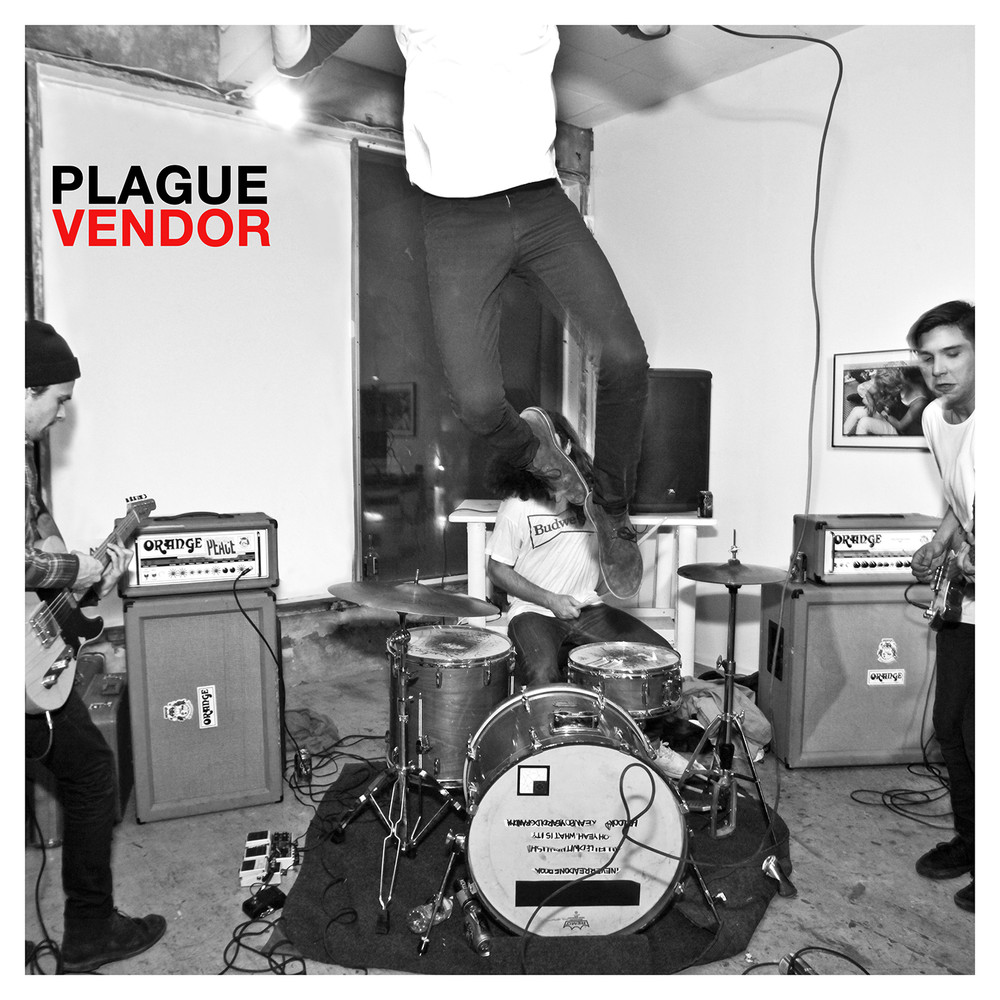
Record review: Plague Vendor – Free To Eat (2014, LP)
California quartet Plague Vendor may come from the same town as Richard Nixon, but they’re anything but conservative. A combination of punk energy and twisted and downbeat lyrics, the band’s debut album is simultaneously arresting and exhausting. Opener and highlight ‘Black Sap Scriptures’ is a dark tale with vaguely mystical pretensions set to a mighty and crunching guitar riff, while second track ‘Breakdance On Broken Glass’ doesn’t let the frenetic pace let off. There is so much of the Dead Kennedys in what is going on here, that fans of the seminal punks will want to check these guys out, if they’re not too busy being angry at the world to do so. It’s always interesting when an album has a song with the same name as the band on it; it’s tempting to wonder whether the track contains the entire group’s musical manifesto. If that’s the case here, then Plague Vendor’s is to beat their instruments to within an inch of their lives while shouting out the letters of their name to a bass-line that’s nasty enough to burn your record collection and blame it on the cat. Elsewhere, ‘Finical Fatalist’ tells the touching tale of frantic singer Brandon Blaine driving his car off a cliff. On ‘Garden Lanterns’, Blaine proclaims he’s “God damn, done it again, found something better than a one-night stand,” revealing himself to be an angry punk with a soft centre. This is high-octane, sweaty and shouty punk that makes you want to work off some calories in an angry, pogo-ing fashion. Not for the faint-hearted. (Epitaph)
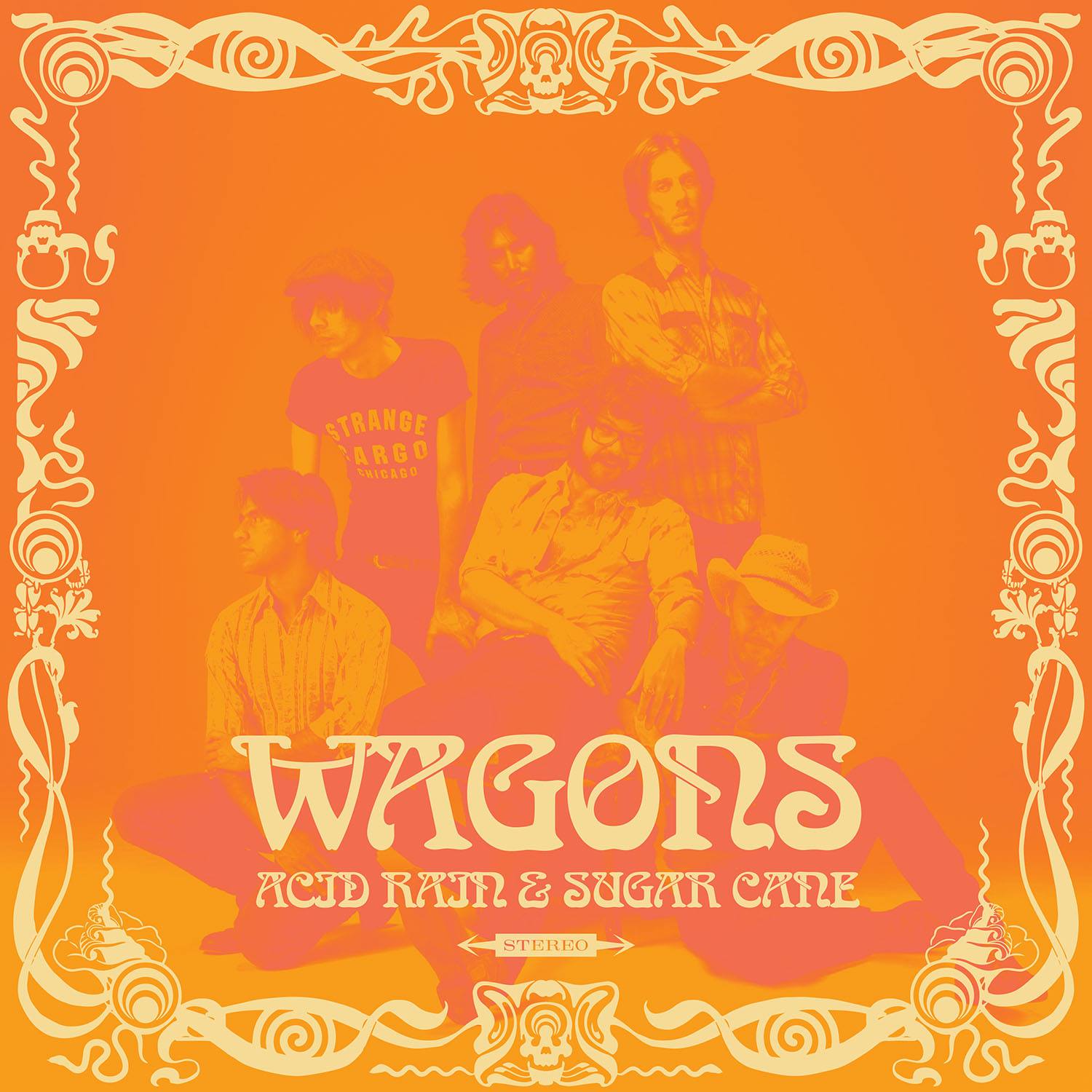
Record review: Wagons – Acid Rain and Sugar Cane (2014, LP)
It’s been three years since Wagon’s last album, Rumble, Shake and Tumble, but during what seems at first glance like an extended holiday, Wagons’ main man Henry Wagons became a father and made a solo album comprised entirely of duets.
Recorded in his Mornington Peninsula studio with a horde of vintage equipment and Mick Harvey on production and additional musical duties throughout, this 11-song collection – the band’s sixth – has everything long-term fans will expect to hear, and a few surprises to keep things more than interesting.
Ragged Americana, whisky-soaked lyrics and tales of heartbreak from the Victorian coast to the saloons of Nashville are the order of the day, carried off with the flamboyant gusto and cheeky humour that Wagons has earned a reputation for on the live circuit. Heart-wrenchers ‘Beer Barrel Bar’ and ‘Never Going To Leave’ sit smoothly next to galloping sex-and-booze anthems ‘Search The Streets’ and ‘Chase The Eclipse’, and Brisbane’s entertainment precinct is summed up perfectly on the brilliantly loose ‘Fortitude Valley’ with a slight twist on a classic line – ‘women to the left of me, jokers to the right’.
Recording took place with all six band members in the same room à la Bob Dylan and The Band’s The Basement Tapes, resulting in a live feel that makes sure there’s not a bad track or stale moment at any point. This is an album that is simply a pleasure to listen to, from start to finish.
James Vincent McMorrow: “It definitely took me by surprise in the most wonderful way possible”
JAMES Vincent McMorrow’s music is tailor-made to fill big spaces, metaphorically and literally. Luckily for him – and us – an upcoming show at QPAC and two nights at the Sydney Opera House will allow it to do just that.
“I want [the show] to be something that’s not just song, gap, song, gap,” he says. “I want it to be something that flows and gets bigger as the set goes along. We’ve got this really expansive lighting rig that we’re bringing; it’s kind of the fifth person on-stage. Hopefully we’ll bring a booming big set.”
The 31 year-old Irishman is no stranger to Australia, having been here as recently as five months ago, but he admits the sudden demand for tickets caught him off guard, in a good way.
“I don’t really pay attention to what’s going on in particular countries unless I’m there,” he says. “We were [in Australia] in January and the reaction was brilliant. When we talked about doing these shows, the idea was to do them way later, then all of a sudden I was told things are really good here. About a week after they put them on sale, I got a call saying that the Sydney Opera House was sold out and they were adding second dates. It definitely took me by surprise in the most wonderful way possible. I mean, I’m pretty ambitious and I want to play places like that, but I didn’t expect it to happen this quickly in somewhere as far away as Australia. But then, you can’t predict everything; sometimes things just work. We just finished the US tour, and it was very much big venue to small venue to big venue, depending on which city we were in. I don’t feel any different if we go from 1600 people one night to 600 people the following; I still feel the same. Obviously Sydney Opera House is a special place; it’s like the Royal Albert Hall or Carnegie Hall or somewhere like that. There’s a resonance that goes beyond it being just another show, perhaps. I’ve looked at all the other Australian venues and they are all stunning and look amazing, so I won’t think about them any differently, and they’re all equally important.”
Released in January, Post Tropical is McMorrow’s second album, and sees his sound moving further away from his folk roots in a more soulful direction.
“This record was made for people to live with for a while,” he says. “I didn’t expect it to give itself away to people incredibly quickly. It’s been interesting going from territory to territory and seeing people’s reactions. The first record did very well in Europe, and when we played shows there we could see people starting to wrap their heads around the new sounds and new ideas. By the end of the shows we could really see people understanding it. When we went to the US, people were really into it intensely, and we could hear people singing every word. It was very soon for that for me; with the first record I spent two years working away before people really heard anything. The response to the new record was really quite compelling and drove me onwards to play the songs better and better every night. The response has been how I hoped. I never expect it; I just hope for it when I do these things.”
The first single is ‘Cavalier’, which McMorrow explains is the most accurate representation of what Post Tropical has to offer.
“I chose it because I thought it was the best song on the record, in the sense of letting people know what’s coming,” he says. “I wanted it to be a song that draws a line in the sand, or plants my flag in the ground or whatever you want to call it. It’s a definitive sound; there could have been songs that show where the last record was and where the next one is going, before we deliver something like ‘Cavalier’ further down the line, but I didn’t want to do that. I think people are smart, and I’m not in the business of trying to convince people; you either like it or you don’t, and that’s totally fine. With ‘Cavalier’, I thought people will hear it and either be in or be out. If they hear it and understand what I’m doing and what I’m going for, musically and stylistically, then they’ll like it. I don’t want to waste people’s time putting out songs that might be a little bit like something they might’ve heard before, then when they go to the record it’s different.”
JAMES VINCENT McMORROW PLAYS QPAC FRI 23 MAY. POST TROPICAL IS OUT NOW.
Interview: Andrew Savage of Parquet Courts
BROOKLYN, New York-based indie-rock quartet Parquet Courts will return to Australia to play Splendour in the Grass, having been here as recently as January for St. Jerome’s Laneway Festival. With a new album – entitled Sunbathing Animal – about to be released, their show promises to be heavy on new material, with the band’s trademark energy and witty lyricisms being certain to feature. I talked to singer-guitarist Andrew Savage to find out the band’s plans and why the ‘slacker’ label needs to be taken out of circulation.
Congratulations on the new album. How do you feel knowing it’s about to be released?
Man, it feels great. It didn’t feel real until I held it in my hands. I just got my own copy last week. It’s the coolest looking album I’ve ever been on, that’s for sure; I love the way it looks. It’s my first gatefold, and it’s been my lifelong dream to have a gatefold record, as they were always the coolest ones when you were a kid. So yeah man, I’m feeling good about it. Throughout the whole time of making it, we were aware that we had a new audience, you know? We were very cognisant that we had a fanbase, whereas with Light Up Gold, nobody really knew us and we didn’t have to worry about it. I would hesitate to call what we feel worry, but it’s more of an awareness that kind of resulted in more of a realised album.
Did the realisation you have a fanbase change your approach to songwriting?
Not explicitly, because it was one of those things we knew in the back of our heads and slowly started to realise, but I think it did make me aware of not wanting to give people the same thing they got on the album before, you know what I mean?
Do you think about how the songs will sound live when you write them?
The songs in Parquet Courts are really fully written live, or half-and-half at least. A lot of times we’ll come up with stuff in the studio, and that’s really fun, but a lot of the songs on Sunbathing Animal are a year and a half old, so we’ve been playing them for a long time.
How have they been going down live?
We’ve had songs like ‘She’s Rolling’ that have been in the set since before Light Up Gold was re-released on What’s Your Rupture? Those have become kind of set standards by now. We’ve gotten mostly positive feedback from all the new stuff live.
Sunbathing Animal has come quite quickly after Light Up Gold – do you feel like you’re under pressure to release new material quickly, or do you prefer to do it that way?
It’s not that quickly, because Light Up Gold came out in August 2012, so in August it’s two years old. Even still, when it came out, we had already recorded it about six months before that, so that’s pretty well-worn territory. Honestly, we have been dying for this to come out as we want to give people something new. I don’t feel a pressure though, as there’s nobody who will even give it to me. We don’t go into the studio unless we have at least enough stuff to start; we only record when we’re inspired to.
How was your experience at the Australian legs of Laneway Festival earlier in the year?
It was great – I loved Australia. I had already accrued a few friends down there, so we got to see some people we hadn’t seen in a while. I liked the festival, although we played some club shows too in Sydney and Melbourne, and I think that was probably the highlight for me.
What can fans expect from your show at Splendour?
I hope they give us at least an hour (laughs). It’ll definitely be mostly stuff off Sunbathing. That’s what we’ve been waiting to do for a long time. We’ve held back on doing all new stuff because we realise not everybody knows all that stuff yet, and it might be a bummer for somebody to have a band come and play a bunch of songs nobody knows. We’ll be in Japan the day before Splendour in the Grass, and then two days after we have to be in Chicago, so we’ll only be in the country for about 48 hours.
You so often have the ‘slacker’ label pinned on you. How do you feel about that?
I think that calling someone a slacker is kind of slacker, because it’s lazy. If anyone takes just a little bit of time to investigate who we are as a band, you’ll realise that it’s not applicable. At the same time, I understand half of rock and roll is lore, so if someone says these guys are slackers, then people believe it because that’s kind of an archetype that exists in rock and roll; the slacker guy, or the guy who’s a deadbeat and doesn’t have to work hard for it. It’s a fantasy, you know? People like that are pretty rare. People who get called slackers or slacker artists would surprise people with how non-fitting that term is to them. You can’t keep making art if you’re a slacker; part of being an artist is staying hungry and continuing to do what you do. It’s one of those things that once someone says it, people don’t question it, and it becomes part of the language. Once upon a time someone called us that, and most people just say ‘that’s good enough for me’.
Do you read or care about reviews of your albums or shows?
To me, a bad review is when someone doesn’t really think about what they’re doing. Even if a review is heavily critical and against what we’re doing, if it was done intelligently I would still consider it a good review. To me, the bad reviews are the ones where obviously the person hasn’t listened to the whole record or maybe even made a blind endorsement. To me, that’s a bad review. When you work so hard on something, you want to hear what people think about it. I could pretend to be one of those aloof guys that doesn’t read reviews and don’t care what people think. I’m interested in reading or hearing about how someone analyses what I’ve done; that’s mostly what it is.
Another thing you’re often called is a ‘buzz’ band. Does that have any meaning to you whatsoever?
I think that’s kind of silly. I don’t even know what that means. I guess it’s just a band that’s popular at the moment, which we kind of are. That’s not something I care about. We’re not trying to maintain ‘buzz’ status; it’s kind of a dispensable term. There’s always a new buzz band, but I’d kind of like to be one of the bands that moves past that and becomes just a regular band.
Parquet Courts hasn’t embraced social media as much as most bands tend to do. Is there a particular reason for that?
I don’t have any social media personally, and I’m the only one in the band likely to maintain it if we did. I don’t have Facebook, Twitter or any of that stuff. I’ve got Gmail; I talk to people on that, but it’s really that nobody in the band wants to maintain it. It’s not so much of a statement, and I have certain convictions in that world, but with Parquet Courts it’s a if-it-ain’t-broke-don’t-fix-it kind of thing. None of us have ever done [social media] with a band, and I was playing music long before the advent of social media and I remember it being just fine for me. In other words, it hasn’t presented itself as a necessity to me. In some ways, it makes creativity harder and is kind of a big distraction. It’s kind of like white noise to me, and I’ve got enough white noise in my life to worry about; I don’t need more.
What are your plans for the rest of the year?
We’ll be touring all summer. I’m not sure what’s going to go on in the fall, as my brother – the drummer – is finishing up school and has to take five different math classes. Sean and his wife are expecting a child in September, so naturally he’s going to take time off to be a dad. I can’t exactly say what the future holds after the summer, but definitely this summer we’ll be hitting it hard and going everywhere we can go.
SUNBATHING ANIMAL BY PARQUET COURTS IS OUT JUNE 2nd. PARQUET COURTS PLAY SPLENDOUR IN THE GRASS.
Record review: Parquet Courts – Sunbathing Animal (2014, LP)
It’s tempting to pin the ‘slacker’ label on New York indie-rock quartet Parquet Courts, given that their most well-known song to date, 2012’s ‘Stoned and Starving’, tells the simple tale of singer Andrew Savage wandering the streets fiending for “Swedish fish, roasted peanuts or liquorice”. To do so, however, would be a disservice, as there is much more to the band. Featured on their second album Light Up Gold, that song introduced the everyday laugh-out-loud ramblings of a young city musician describing his surroundings, and was enough to bag the band slots at both Laneway Festival and Splendour In The Grass this year. One of the great – and simultaneously infuriating – things about Parquet Courts is that it’s not always clear when they’re being serious and when they’re taking the piss. Undoubtedly a fine and witty wordsmith, frontman and lyricist Andrew Savage comes across as part Ivy League stiff, part frantic punk-rock poet; but his energy and commitment make him a believable street storyteller on Sunbathing Animal. Unlike the instantly explosive Light Up Gold, the album begins in more measured fashion with ‘Bodies Made Of’, before setting off at pace with ‘Black & White’ and breaking the momentum down to a slow crawl on ‘Dear Ramona’. Among the remaining full-tilt rockers are ‘Instant Disassembly’, which could easily be the soundtrack to a comedy Western, and ‘Raw Milk’, which adds a hint of blues to finish up. While they’re now opting for a more cautious approach to urban punk than the head-on take of previous work, it’s this progression which keeps Parquet Courts’ particular brand of indie-rock more exciting than most.
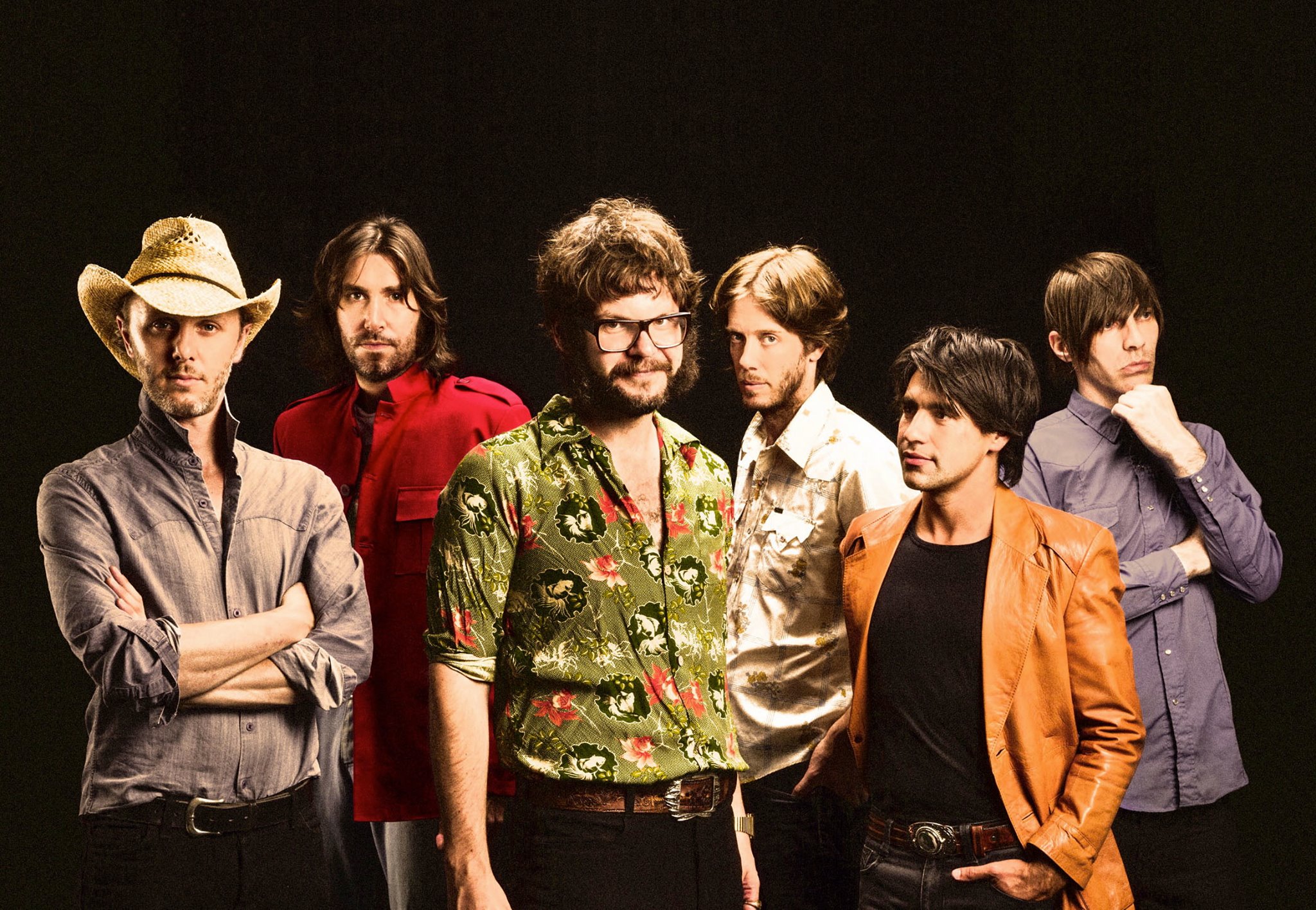
Henry Wagons: “It was good to have more hairy, loud men to aid the cause”
IT’S 11am and Henry Wagons is getting ready to start work, even though it’s his day off.
“I’m not very good at resting,” he says. “Even now, on the coast, in my bed, I’m still talking to you.”
It’s this work ethic, coupled with a laddish charm and penchant for ragged Americana that the self-styled benevolent dictator of Wagons has made the basis of the Victorian group’s sixth record, Acid Rain and Sugar Cane.
“It’s our first one in a few years and it was incredibly fun to make,” he says. “It took a long time, but I think all of us are happy with the final result. It was long, loud and pleasurable, and I think that comes across in the record. I’m a proud father and very excited for it to get out there.”
Despite the three-year period since the band’s last record, Rumble, Shake and Tumble, Wagons says getting back with the group was just like riding the proverbial bike.
“The main core of the group all went to high school together,” he says. “They’re the people I like playing with the most. It’s like being an amoeba floating around in the plasma, drifting away from the mothership, then locking into the bacterial network again and pumping out the virus and the disease like nobody’s business. Maybe that’s a strange analogy! With the solo record [2013’s Expecting Company?] I had to make every single decision and more or less play everything as well, so I was looking forward to creating a collaborative record again. This record is more collaborative than any we’ve done before; I really leant on the guys. It was good to have more hairy, loud men to aid the cause.”
A reassessment of their approach to recording led Wagons to work out how to allow the band to play to its strengths.
“I had a very particular aesthetic and way I wanted to record the album,” he says. “I wanted to really capture the live element that we’ve got together. Studio environments can make communication difficult when you’re all wearing headphones and listening to separate mixes between separate glass panels. All too often in the studio I’ll be in a vocal booth with an acoustic guitar, I’ll finish the song and there’ll be 30 seconds of total silence where we’re all glancing at each other through our respective vacuum chambers, wondering how it went and gesturing through mime. You’ll hear a crackly producer from three metres back going ‘that was good, maybe do it one more time!’ We’ll be like ‘what the fuck’s going on here?’ So to cut a long story short, I wanted to record in an environment where we’re all in the one room. I’d kind of been listening to the Bob Dylan and The Band record The Basement Tapes, where you can really hear that they’re all recording in one room, kind of shit-faced. It’s not so much the most high-fidelity recording, à la Sting or Pink Floyd. They were there to have a good time and the actual recording is almost an afterthought. I basically ended up recording it at a place I got on the Mornington Peninsula in Victoria, where I have basically loaded in all the vintage gear I’ve collected over the years and set up a studio space. It sounds live, because most of the songs we are all playing together in one room. My vocals come through a PA system in the same room as where the drums are, and it creates this space that I think you can hear in the record. Instead of some elaborate setup, where you’re recording the drums with 20 microphones, the ambience actually comes through the vocal microphone, which is placed six metres away. All the instruments bleed into each other as if we’re on the stage, and it’s a very exciting way to record. I don’t think the fidelity has suffered from it at all. We recorded with a whole bunch of gear I’ve acquired over the years, inspired by Elvis’s late ’70s stage setup in Vegas, so we’ve got a lot of fun old gear.”
Despite the familiarity felt within the band, outside help was enlisted from an esteemed source.
“We were able to take our time,” Wagons says. “We weren’t spending our record advance on studio time, where the clock is ticking every day. What it meant is that we could spend money on recording with people we respect. We had Mick Harvey, the former Bad Seed; he’s done amazing production work with PJ Harvey and did the Serge Gainsbourg stuff. So, instead of spending a thousand dollars a day on some hot-shit national studio or going into Sing Sing or whatever, we were able to bring in geniuses around us; these people we really revered. It took a long time to record, but at our own leisure we’d get together and have four-day getaways. I even had a baby in the middle of the recording process, so it basically came together across six months at our own pace. We were able to just press record when it was all ready to go. The record is quite a trip, quite a journey and the songs take unexpected twists and turns a lot of the time. We were enjoying ourselves too much; we didn’t want to just shit out a three-minute song each time. Mick Harvey’s production style is to join the band, essentially, so he’d be playing drums, keys or percussion on every single song on the record. We had all this money left over to pay to get it mixed at Ocean Way Studios in Los Angeles by the guy who did Edward Sharpe & the Magnetic Zeroes, who have some of the most epic sounding records of recent times. I wanted a dose of that on our record, and he has made it sound incredibly full and incredibly live. It just wanted the average way of blowing your record advance; we were very considered and spent it in a way that made us have a whole lot of fun that translates onto the record. I’d do it again in the same way in a heartbeat.”
While every Wagons album release is an event in itself, the live Wagons experience is on another level.
“The album has a lot of horns and female backing vocals,” Wagons says. “For the big capital city shows, that’s going to be represented on-stage. We’re in the midst of rehearsing the new show as we speak. Because the songs are so live on the album, that energy is transferring well to the live stage. There are going to be a lot of really fun new elements to the show. As it is, I love to interact with the crowd and get amongst it, and this show is definitely going to be no different to that; it’s going to be very loud and very fun.”
ACID RAIN AND SUGAR CANE IS OUT MAY 16. WAGONS’ TOUR OF AUSTRALIA BEGINS IN ADELAIDE MAY 22.
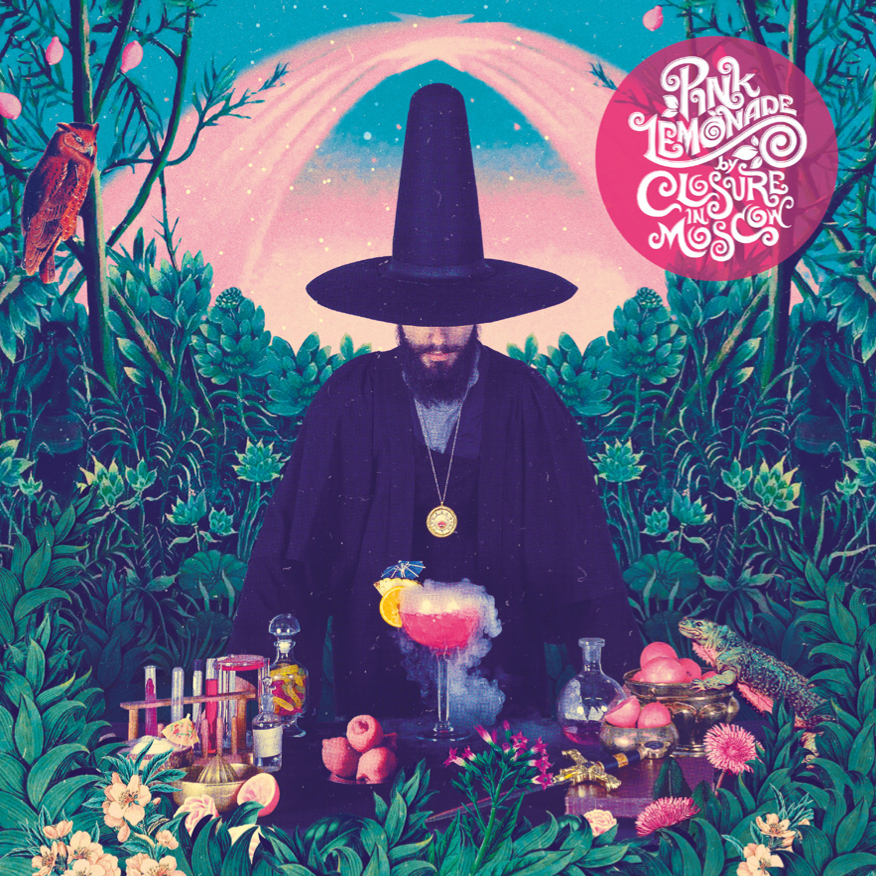
Record review: Closure In Moscow – Pink Lemonade (2014, LP)
If there’s one genre of music in which it’s okay to get more than a little strange, it’s prog-rock. A style once maligned for being overblown and poser-ish, it’s since been rescued from the musical scrapheap by a troop of contemporary bands; one of the best of those being Melbourne quintet Closure In Moscow. Their second full-length album is an eleven-track collection of bizarre-in-a-good-way rock riffs, weird tangents, off-time rhythms and mystical lyrics that combine to make an album that doesn’t just take you on a journey, it makes you forget how to get home again. The band easily flit between metal, avant-garde, hard rock and even a bit of soul, as they do on just one song; the excellently-named ‘Neoprene Byzantine’. There are some serious musical chops contained within the band, particularly guitarists Mansur Zennelli and Michael Barrett, and singer Christopher de Zinque, whose voice is as versatile as they come. With song names like ‘Dinosaur Boss Battle’, ‘Mauerbauertraurigkeit’ and ‘The Church of the Technochrist’, you can guess the album doesn’t contain your average boy-meets-girl style lyrics, and just trying to guess exactly what is going on in each song is half the fun. Just when you think you’re getting it, they throw in ‘Happy Days’; a rockabilly-tinged number that is about as catchy as these guys are going to get. Finished off top-notch production from Tom Larkin, this is an album that needs to be heard, even if it takes a while to work out what you’re listening to. (Sabretusk)
Shane Parsons of DZ Deathrays: “We can pretty much do what we feel like”
THEIR debut album might have won the 2012 Aria Award for Best Hard Rock/Heavy Metal Album, but Brisbane thrash duo DZ Deathrays are expanding their sound on follow-up Black Rat.
“Our single ‘Northern Lights’ was one of the first songs we wrote,” explains singer-guitarist Shane Parsons. “It came together pretty quickly. We hadn’t put out a slow song in a long time, so we thought we’d do something that’s kind of like our ballad. We went over to England to do some shows with our other band Velociraptor and we used that time to jump in a studio and do that song over there. We wanted people to see that we could do other things; we’re not always going to be all loud guitars, cymbals and screaming. It’s the slowest song on the record by far; everything else is more upbeat and some songs are the heaviest we’ve done. It was like a bit of a curveball, I think; to see how people would react. We got a lot of good feedback, and we also got some people who were shirty as us for releasing a song that wasn’t exactly how the other songs sounded, which was interesting. But we can pretty much do what we feel like, and some people are going to like it and some aren’t.”
The duo of Parsons and drummer Simon Ridley have had a meteoric rise since their humble beginnings playing house parties, having toured relentlessly and played some of the biggest festivals in the UK and North America.
“We started playing a few of the new songs at SXSW, including the latest single, ‘Gina Works At Hearts’,” Parsons says. “We’ve played ‘Northern Lights’ for a bit, and another song called ‘Ocean Exploder’, which we’ve been playing since we toured with The Bronx about a year ago. It was our third year doing SXSW, and we did ten shows in four days. It was good to have that much to do, but at the same time it began to get a bit tough. We were playing a show at midday and then had a last show at one in the morning, and we were in town the whole time sitting in bars trying to stay sober but also stay a little bit drunk, you know? We played a couple of really great shows, but unless you’re a band that’s really high up on the buzz radar, you’ll play five shows and two will be good, I think. Maybe four out of ten were good for us this time. We only really saw the bands that were on before and after us, and even then I was too busy packing it. That was the worst thing probably; not being able to see other bands that I wanted to see. I had a couple of days off where I went to some showcases and saw a few bands. I went to the Laneway showcase and saw Royal Blood and a bunch of bands in one go, and the pressure was off, so it was good to just mosey around the festival. You go there for the experience, and we decided that we’ll do a lot of shows and push ourselves to the limit, and then we had a week off and went to San Francisco.”
Their upcoming headline tour of Australia will provide the perfect opportunity for fans to hear new material on home soil.
“It’s been great playing the new songs,” Parsons says. “We’ve been putting together the set-list for the Australian tour; being able to chop and change between the new songs is really fun. It’s not hard to reach an hour long set now, with two albums of material to choose from. It was a funny one because we really wanted to get something out last year. We had done a bit of touring at the beginning of last year and had the rest of the year off. We were a bit worried about being away for too long; especially from the UK and America. Then it just took time to actually get the songs together and get them to a level we were happy with for the album, and it’s really good to have it all sorted and ready to go. We did a few writing sessions where we went away into the countryside and came back with ten or twelve songs, and four of those would get re-written again and again. Even up until going into the studio there were a couple of songs about to be recorded that we hadn’t finished and were kind of half done or maybe didn’t work as well as some of the others. We just tried to write as much as possible and eliminate any dead weight. We wanted this album to be shorter in track numbers and a bit more punchy in terms of the songs grabbing you straight away, so we did focus on that a little bit more than on the first record.”
The growth in the band’s sound means an additional touring musician is needed, with a potential long-term opening for the right person.
“The new record has a whole bunch of extra guitars on there, and they’re the best bits,” Parsons says. “We can play the songs without them, but it doesn’t have the same impact as having them there. It’s just an evolutionary thing for the band, and if we could train somebody up on all the songs we would be happy to tour as a three-piece. We had a choice to have another person up there playing or having a backing track, and we’re always going to choose to have another person there. We had Cesira [Aitken] from The Jungle Giants play with us at SXSW. We’ve got a friend playing a few shows on the Australian tour, and Dion [Ford] from Palms – who are supporting us – is going to do all the rest. At the moment, we’re doing four songs they’re going to play on during the tour. I’ve got the guitar parts all tabbed out, so they just have to learn them, but it’s pretty easy stuff. In the future I guess we’ll see if somebody is willing to go full-time with us and tour everywhere. The only thing is it’s quite hard for somebody to go on tour with us, which means they can’t work at a job, which is hard when people have to pay rent and stuff. We’ll see how we go with it all; there are only a few songs which need an extra guitar, and the rest we play as a two-piece.”
BLACK RAT BY DZ DEATHRAYS IS OUT MAY 2ND. AUSTRALIAN TOUR DATES:
Thu 8 May Elsewhere | Gold Coast, QLD (18+)
Fri 9 May The Zoo | Brisbane, QLD (18+)
Sat 10 May Spotted Cow | Toowoomba, QLD (18+)
Thu 15 May Karova Lounge | Ballarat, VIC (18+)
Fri 16 May Corner Hotel | Melbourne, VIC (18+)
Sat 17 May Jive | Adelaide, SA (18+)
Thu 22 May Prince of Wales | Bunbury, WA (18+)
Fri 23 May The Indi Bar | Scarborough, WA (18+)
Sat 24 May Amplifier | Perth, WA (18+)
Sun 25 May Newport | Fremantle, WA (18+)
Thu 29 May Transit Bar | Canberra, ACT (18+)
Fri 30 May Rad | Wollongong, NSW (18+)
Sat 31 May Oxford Art Factory | Sydney, NSW (18+)
Record review: Damon Albarn – Everyday Robots (2014, LP)
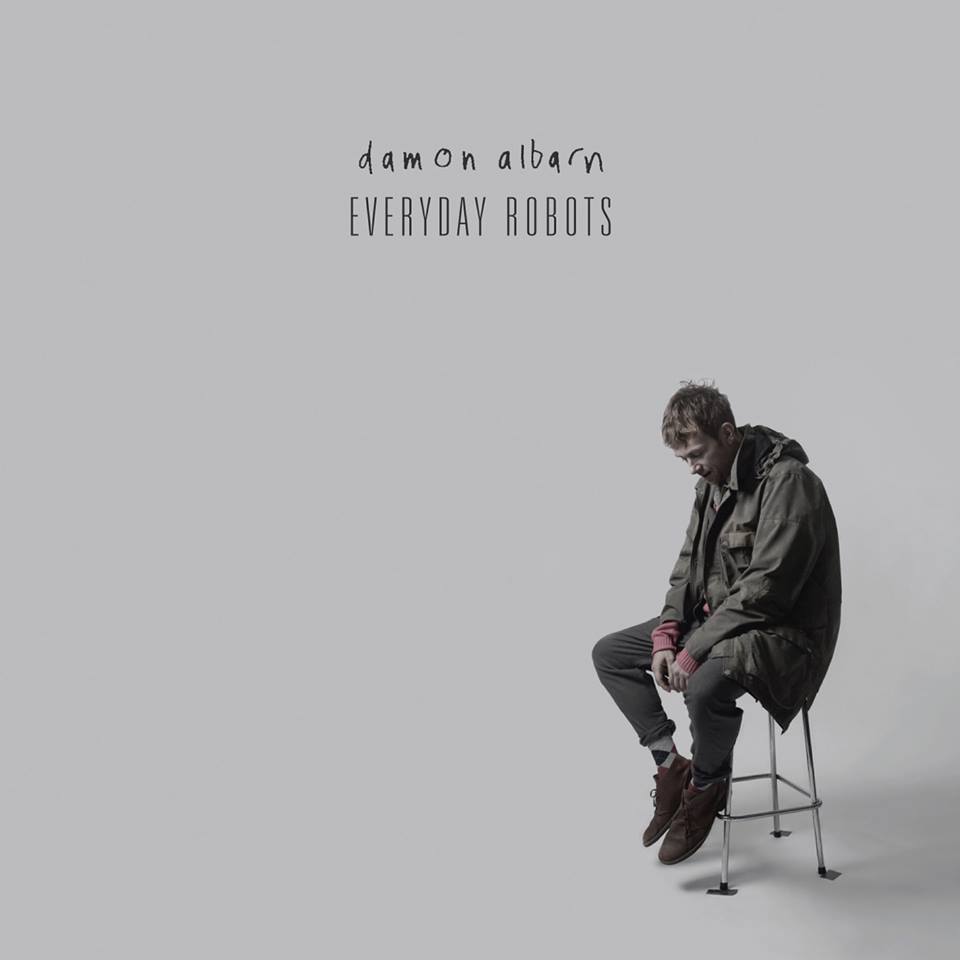
Damon Albarn has always been an eclectically-minded soul, even if the gulf in public exposure between his most well-known work with Blur and his lesser recognised side projects and collaborations is as big as Britpop circa 1995. From producing Bobby Womack’s last record, to opera and a variety of Clash fantasies channelled through Gorillaz and The Good, the Bad & the Queen, the 46 year-old Englishman has dipped his toe in many a musical puddle since Blur’s 1991 debut. The most obvious absence from his glittering resume has been a solo record, and it’s a gap Everyday Robots fills with aplomb, although anyone hoping for the mock cockney goofiness of Blur’s heyday or the electro-pop of Gorillaz will be disappointed. Instead, this is an album of a more reflective and subtle nature, and one that explores Albarn’s love for African rhythms and Caribbean-flavoured melodies, carried off with the luxury of control and freedom not available to the majority of other recording artists. He begins by railing at the overuse of hand-held devices on the disjointed title track, before becoming entrenched in melancholy on ‘Hostiles’ and ‘Lonely Press Play’; the latter holding just enough of a hint of reggae rhythm to prevent it wallowing too deeply in the mire. ‘Mr. Tembo’ – written for an orphaned elephant he met in Tanzania – sees him enjoying himself in a much lighter fashion, as an infectious ukulele riff combines with Gospel harmonies to make the most playful track here. The seven-minute ‘You & Me’ could be a microcosm for the entire album; a story of regret and paranoia set to apathetic piano lines being uplifted with a steel drum mid-section that allows light to flow in through the gloom of Albarn’s lyrics. Elsewhere, the well-connected singer can’t resist a collaboration or two, as Brian Eno pops up to sing a lullaby-like verse on laid-back closer ‘Heavy Seas Of Love’ and Natasha Khan (Bat For Lashes) provides eerie background vocals on ‘Selfish Giant’. It’s unclear why it took this long for Albarn to make a solo album, especially when he was recently quoted as saying he gave producer Richard Russell 60 songs for the record. In the end it doesn’t matter; this is the sound of a man making an album exactly the way he wants to, even if it does make you think he should have given it a stab a long time ago.
Russell Marsden of Band of Skulls: “It’s a tipping point now”
ENGLISH alt-rockers Band of Skulls are probably one of the hardest working bands in the business.
Since their 2009 debut Baby Darling Doll Face Honey, the trio of Russell Marsden, Emma Richardson and Matt Hayward have consistently won fans the old-fashioned way; by touring relentlessly and improving with each album. Singer-guitarist Marsden explains how their hard work is paying off with new record Himalayan.
“It’s an exciting time,” he says. “It’s a tipping point now. The fact now that we have three albums to choose from really makes a difference. Only having one record makes playing a show for more than forty minutes quite a challenge, so now that we have all these records to choose from makes our shows much stronger. We’ve had the record finished for a while and it’s kind of a relief to be able to share it with people. I think that’s probably the emotion that’s going through our minds right now. We’ve been playing the songs live, so we’ve got a little bit of a feeling about how people feel about the new songs, but now people can get the record, take it home and live with it, then come see us play. When we’ll be down in Australia, that will definitely be the case, so that’ll be exciting.”
The band’s second album, Sweet Sour, was released in 2012 and saw their songs evolve with a cleaner, harder sound. This time around, they weren’t willing to sit still either.
“We changed producers for this record,” Marsden says. “That was kind of a big shift. Nick Launay came in to do this one, and we made it in London, so this was the first time we didn’t record in the middle of nowhere. We went into the studio every day and worked on the songs, instead of being stuck somewhere on a farm. It really changed the dynamic of the recording session, and I think that comes out in the music; it was fun to do it every day and we really relished the challenge. Previously it was more intense, but this time we were doing a week together and a week apart. This time we definitely took the work away, then reconvened and kept the best ideas and trashed the rest. We all had to learn to accept that fact that your idea might not be the best idea. We’re quite good at it; we don’t come to blows but we might disagree now and then. Musically, I think the sound has come of age. We know what our sound is, but we also feel allowed to not just be a blues-rock band or just a heavy band, and our audience will allow us to continue to experiment in a few different directions. It’s more of a challenge to be able to play the new songs; we’ve written some that are quite tricky and are just at the edge of our ability. We challenge ourselves, and the first few times we play them live are seat-of-the-pants moments, but once you get over the first couple of times the confidence grows and it becomes more natural. Once we get our teeth into them, it’s really great. The record comes out soon and the songs know it; I think the songs are onto us. But there’s a certain buzz about playing tunes for the first time in front of people, and that’s part of the thrill which we’ve enjoyed so far. There are a couple of tracks we haven’t done yet too, so we’ve still got a couple of those moments left.”
Despite the obvious benefits of having new songs to play live, Marsden admits the expectations the band put on themselves to write the best songs possible is the driving force behind the band.
“We give ourselves our own pressure,” he says. “Outside pressure doesn’t even get a look in. We’re really proud of the two records we’ve made and we loved working with [producer] Ian Davenport on those records, but we set the bar higher this time. If a song isn’t as good as something you’ve done before, then it basically isn’t good enough. Recording is an amazing experience, although it’s not easy. There are a lot of long hours, and it can be relentless and the hours are gruelling. It can wear you down and drive you insane. It’s a bit like sitting an important exam, where the result is going to affect your life in the future, but seeing ideas that you have in your head realised is a thrill. When something comes out well in the recording, you can’t help but sneak a thought about how it’s going to sound playing it to people in the future.
An upcoming June tour of Australia is something Marsden is hoping the group can repeat in the near future.
“We’ve been a couple of times now and the audiences are fantastic and really knowledgeable,” he says. “Your festivals are really good as well; you get a lot of international acts coming over. The competition is stiff, and we know it’s not going to be an easy ride, but we’ll be playing some bigger venues for the first time and that’s really exciting. I wish we could come back to Australia more often, but it’s a long way and it costs a lot of money for bands to come over. Hopefully this won’t be the last trip on this record. If it goes as good as we hope, we can maybe come back and do some more cities as we only have three stops this time. Hopefully we can return not long afterwards.”
HIMALAYAN BY BAND OF SKULLS IS OUT NOW. THE BAND TOUR AUSTRALIA IN JUNE.
Record review: Jake Bugg – Messed Up Kids (2014, EP)
As if two albums in two years wasn’t enough, mop-topped sensation Jake Bugg is back with a new EP, and a puzzling little release it is. Based around the track ‘Messed Up Kids’, which already featured on the Shangri La album and was released as recently as November, this four song EP has the feel of either a single or a blatant cash-grab; it’s hard to tell which. The three other tracks – ‘A Change In The Air’, ‘Strange Creatures’, and ‘The Odds’ didn’t make it onto Shangri La, and are packaged here as extras or bonus tracks, but they didn’t make it onto the album for a reason. ‘Messed Up Kids’ is a simple and catchy little number, although it’s unfortunate that Bugg’s voice too often makes him sound like something that buzzes around your face and needs to be squashed – pun intended. After that, the quality drops away, and this release reveals itself to be the bag of leftovers it is. ‘A Change In The Air’ is a painful Byrds rip-off that could do with a lyrical re-write and Bugg doesn’t have the character in his voice to effectively pull off the blues number that ‘Strange Creatures’ tries to be. ‘The Odds’ adds a bit of stomp to proceedings to finish up, and while fans of the boy wonder will no doubt gobble this up, this release basically consists of a song that’s already been released and three B-sides that don’t add up to much. (Universal)
Taylor Hawkins: “It sounds like we don’t give a fuck”
TAYLOR Hawkins might spend most of his time being drummer for one of the biggest rock bands in the world, but when the Foo Fighters take a rest, he doesn’t sit still.
The affable 42 year-old’s new side project is classic rock-influenced trio The Birds of Satan; whose self-titled album is unashamed in its straight-up approach to rock music.
“Wiley [Hodgden, bass/vocals] and Mick [Murphy, guitar] are a couple of buddies of mine,” Hawkins explains. “We play in a cover band called Chevy Metal; we play seventies and eighties rock from when we were kids. I just happened to be jamming with those guys and we always sound good together, and when it came to the time when I wanted to make a record, it felt good and I thought those guys could help me make the record really quickly. We did it and it was great. [The album] was really fun for me, and really easy to make, actually. It sounds like we don’t give a fuck, but sometimes that sounds good, you know what I mean? We did all the music in four days, and then we did the vocals over a two day period. Part of me really wanted to do it quickly, and I wanted it to sound like that. It’s not an [overly] produced record; I’ve done that with the Foo Fighters and I’ve done that with my own band, the Coattail Riders. I wanted to make a raw record. At the time when I was making this record, I was listening to a lot of people’s first records; records made by bands who didn’t have a lot of time. There’s something about that. I mean, listen to the first Black Sabbath record; that was recorded in two days. The first Led Zeppelin record was made in maybe a week or something. Van Halen’s first. All of those records were made in one day to a week. There’s something about that I really like. I like producing records, the layering process and everything, but that’s a whole other sort of trip, you know? There’s something about just getting in there and doing something quick that has a different energy; I like those type of records. Although part of the reason that we made the record so quickly as well was because I didn’t have a lot of time. ”
No classic rock album is complete without a moment of rock grandeur or extended virtuosity, and here it comes in the form of nine-minute opener ‘The Ballad of the Birds of Satan’.
“That took us half a day,” Hawkins says. “We wrote it and recorded it in half a day, and we did another song that day as well, so it happened fairly quickly. We all threw three or four ideas at each other, stuck it all together and it came out like that, which is totally bananas. We set out to make it that way; I wanted to have a track that goes a million places, has weird time signatures and is sort of a schizophrenic kind of song. It was absolutely what I had in mind. I didn’t know how it was going to turn out, but I knew I wanted to do something like that.”
Despite the desire for a rawer sound and the tight time-frame involved, the well-connected California native was able to call on some outside help to finish the album off.
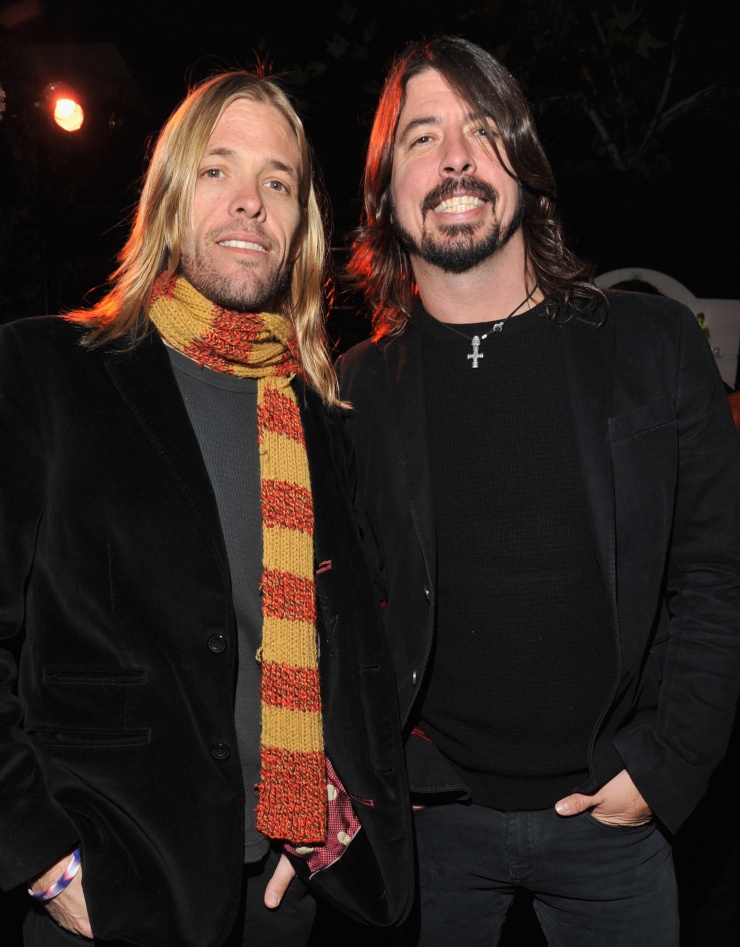
“Dave [Grohl] helped me finish writing a bunch of the songs,” he says. “He was a big part of the first song; the first riff was a guitar riff he had, which we put stuff together with. He was a big part of a song called ‘Wait Til Tomorrow’ and another called ‘Raspberries’. Those were the three he played on, if I’m not mistaken. Pat [Smear] came in at the very end on ‘Too Far Gone To See’ and played some guitar and things.”
With a debut album in the bag, Hawkins is keen to play the songs live, although in what form is yet to be decided.
“We’ve just sort of getting started doing that,” he says. “We played together the other day for a couple of hours, and I think we’ll start playing [the songs] in shows soon, which is exciting. I think that it can fall under the umbrella of other things. These are all songs that I basically have written or have written with other people. There are songs with The Coattail Riders that we could play with The Birds Of Satan. There’s no reason to be precious I don’t think; if we play a Coattail Riders song, it’s fine. I’m not trying to be disrespectful to that band, but I feel like The Birds Of Satan stuff could be played by a bunch of different bands, or by anything we’re doing at that time, you know what I mean? I could have made it with [The Coattail Riders], but it would have been very different. The Coattail Riders are really, really good players. This band are really good players too, but they’re good in a different way. This is the first record Wiley has ever even played on, so he’s hanging on by the skin of his teeth, but I like that energy. Mick is much more of a hard rock guitar player than anyone in The Coattail Riders, so it’s just a different feel. They could have made this record, but it just wouldn’t have been this record. It would have been another cool record for sure, and I probably would have liked it just as much, but it probably would have been very different. Either way, it was going to be made raw, and it probably would have been a lot cleaner with those guys. That’s not necessarily a bad thing, you know what I mean?”
THE BIRDS OF SATAN’S SELF-TITLED DEBUT ALBUM IS OUT NOW.
Interview: Craig Finn of The Hold Steady
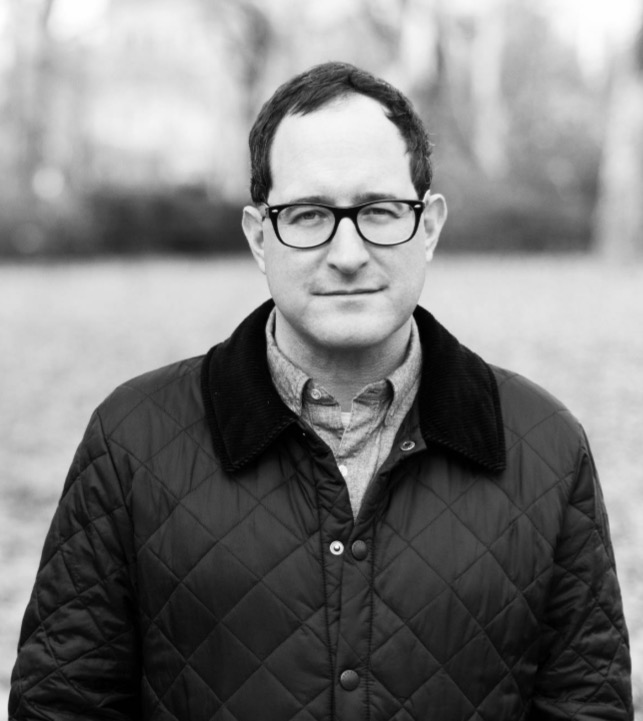
THERE’S A TRACK on the new Hold Steady album called ‘On With The Business’, and that’s exactly what singer-guitarist Craig Finn is getting. It’s been four years since Heaven Is Whenever saw the band’s music maturing and the then 38 year-old’s lyrics further enforcing his reputation as a rock and roll storyteller of the highest order. It’s easy to see why Finn’s lyrics are what they are, as he reels off names of writers you’ve never heard of.
The engaging and erudite Minneapolis-raised New York native is still telling stories with his literature-rich lyrics on new album Teeth Dreams, and since the departure of flamboyantly moustachioed keyboardist Franz Nicolay after 2008’s excellent Stay Positive, the band has taken on an extra guitarist. With a fatter, Thin Lizzy-esque dual guitar sound, The Hold Steady may have reached a new phase in their musical life cycle, but while Finn is happy to talk up his band’s new dynamic and approach to making music, he’s equally happy to chew the fat on a range of other subjects, from chasing girls as a youngster to Nirvana and the future of rock.
Congratulations on the new album. How does it feel to have it out there?
It feels really good, you know. This is the same as any album, but they take so long to get out; we recorded it in August and it was mixed in October. I’m just excited to be out here playing these songs for people. We went down and did SXSW and played seven times, but they were all these short showcases, and I’m excited to now be playing real shows to the real fans.
How did the new material go down at SXSW?
It went great and continues to go great. It’s always fun to have a new record out; you go and do a new song, and now that it’s out people jump up and sing the words, and you’re like “alright; these guys have got the record”. It feels really good.
Do you feel nervous playing songs live for the first time?
You get sort of nervous, but in some ways it’s also great because you have to pay attention a little more or be on autopilot a little less. In that sense it’s really nice; it’s kind of more of a challenge and you have to think about it, and that’s really cool. You’re maybe paying attention to different things than you are for the rest of the set, in a good way.
Why has it been four years since your last album?
We were going really hard, you know? We did five albums in seven years and toured extensively on each of them. Things were kind of fatiguing; the wheels were falling off the wagon, so to speak. I think everyone was a little tired, and creatively we weren’t in a very good place. We took a break and I made a solo record, which took some time, then we started trying to make this record. The one thing that’s different about this record is that [guitarist] Steve Selvidge joined for it. This is the first record we wrote and recorded with him, and now we have two guitar players. He had joined on the touring for the last record, but this is the first we had wrote and recorded with him. He lives in Memphis and the rest of us live in New York, so there was a bit of a geographic hurdle to get over when we started writing. It was a little formal at first, or a little forced, but we got over it eventually and wrote a ton of songs; maybe even over-writing. We had way more songs than we needed, but once our producer Nick Raskulinecz came in it happened quickly. He was like “you guys have plenty of songs for a record, let’s just go make this thing”.
What makes Steve Selvidge a good fit for The Hold Steady?
We had met him as a guitar player in an opening band years before; a band called The Bloodthirsty Lovers. Tad [Kubler, guitar] and Steve hit it off right away; they started playing guitar together and he seemed a good fit personality-wise, and then we found out that Tad and him were born on the exact same day. We thought if we were going to do a two-guitar line-up, then this was meant to be. It’s a push and pull thing between their guitars; the way they play back and forth and the way they play with each other. That’s come to define this album, and it’s a huge part of our sound now.
Do you enjoy recording or can it be a chore?
There are a lot of parts that don’t have a lot to do with me, you know? There’s a technical aspect to it, and then there are all the instruments that you aren’t playing. Depending on how you’re making the record, there can be a lot of downtime. I like making the records, but there are days which are pretty slow. I really like playing shows, so the record is a way to go out and introduce your songs to people and go out on tour again. I guess I like touring better than recording, although I love to see things fit together, and the creative moments are really fun.
What is it that appeals to you about writing about female characters in your lyrics?
For one I think so many stories we tell – whether it’s songs, books, movies or whatever – are about boy meets girl, so you need girls in there. Being of the opposite sex, there’s a mystery there for me, and I think in many books and movies the female is empowered with his mystery. Ultimately, being in a band whose audience is largely male, I need to find a way to make real women characters who you can really empathise with and that are very human. That becomes important for me.
Why do you think there are so few musicians doing the same thing?
In the big picture, I think for a lot of people lyrics are an afterthought. I’ve always been obsessed with characters in songs, and one of the things I’ve tried to do – rather than just introduce characters – is character development. Sometimes going back to these characters means I can flesh them out a bit more; that may be one of the ways that they might be a little more realised as humans.
In the song ‘On With The Business’ you mention “that American sadness”. Can you define what that is?
I got that from an interview that I read with David Foster Wallace. He’s a writer I’ve been obsessed with; I’ve read all his books and probably every interview he’s ever done. He talks about this particular American sadness, or the understanding that there’s a void inside us. There’s a realisation that no matter what we do, or what we try to fill it with – meaning drugs and alcohol or consumer goods, you know, stuff; there’s still sort of an emptiness. That song is about consumerism and about how these characters are doing whatever they can do to get ahead, and by that it means they just get more stuff. It’s the first time I’ve written about that kind of consumerism, and it made me think of the American sadness quote.
What plans do you have for touring, and can we expect an Australian trip at any point?
I’m hoping we can tour Australia either late 2014 or early 2015. We’ll be in the States for the [northern hemisphere] summer and hopefully get back to Europe in the fall; we have quite a bit of touring planned. I think we’ll probably come for your summer. Our winter, your summer would be ideal.
A couple of off-topic questions to finish up. There has been quite a resurgence in interest in Nirvana recently, surrounding the 20th anniversary of Kurt Cobain’s death. How much of an influence did Nirvana have in your life?
I was pretty entrenched in underground punk and hardcore music by the time Nirvana came into my life. I wasn’t an obsessive Nirvana fan; I certainly appreciated them, but I guess I was already kind of committed to that kind of thing. I have to admit that after Nirvana came out, it sort of became okay for certain girls to look at a guy like me; a more alternative guy or more weird guy. Kurt Cobain definitely helped my cause with a few girls.
Do you see them as being worthy of the Rock and Roll Hall of Fame induction so soon?
Absolutely. Even though I wasn’t obsessed with them at the time, the songs absolutely stand the test of time. He was a great, great singer and so many people held on to that and if you look at how many people he moved and the sea change they represented in the early ’90s, they are more than worthy.
The Arctic Monkeys recently claimed rock and roll has returned. How is it looking from your viewpoint?
It doesn’t seem to me to be at its most popular. I feel that younger people seem to like electronic music more, and hip hop is really big. I think the younger someone is, the less likely they are [to be] into rock and roll, but that said, I see die-hards every night we play. I don’t think it’s going anywhere and I don’t think it’s ever gone away. I think it’s always going to be here, but I don’t know if I believe if it’s ‘back’ or at a particularly strong point right now. I think probably in a couple of years a 22 year-old whiz kid will come out and capture the hearts and minds of young people, and that’s when rock and roll will have a resurgence on a commercial level. Right now I think it’s just holding steady; no pun intended.
TEETH DREAMS BY THE HOLD STEADY IS OUT NOW.
Record review: Ball Park Music – Puddinghead (2014, LP)
In some ways it seems that Brisbane indie-pop five-piece Ball Park Music have had a meteoric rise since their 2011 debut Happiness And Surrounding Suburbs. In reality the hard yards put in on tour up and down the country and a song-writing craft of a quality well above the average Australian pop bands plying their trade right now have put the band in the position they’re now in. This third album sees them moving increasingly away from the punchy, upbeat mood of their debut, as singer Sam Cromack’s lyrics explore darker topics, especially on ‘Everything Is Shit Except My Friendship With You’ and ‘Struggle Street’; the addition of organ and choral touches on the latter providing a particularly Gothic feel. Dark is contrasted with light at several other points, although hopefully Cromack is being sarcastic with his claim on third track ‘A Good Life Is The Best Revenge’, because we all know that’s not true. There are new sounds too; the first half of ‘Cocaine Lion’ could almost be called shoegaze, before breaking out into a resplendent pulse of ’90s alt-rock, while ‘Teenager Pie’ is a lazy, lounge-y track that ambles along at a hazy pace despite another set of dark lyrics. There’s an undeniable tail-off towards the end, with ‘Polly Screw My Head Back On’ and Girls From High School’ being a fairly dull finish, but Ball Park Music should probably dust off their formal gear and ready their acceptance speeches; this album is going to win awards. (Stop Start)