THE Ramones kickstarted punk, inspired a generation of kids to pick up guitars, and shook the rock establishment to its core.
Now, forty years after the New York band sang about beating on the brat with a baseball bat, drummer Richie Ramone is keeping their spirit alive with his own blistering punk-rock shows. Ramone touches down in Australia in late April for a run of east coast gigs with promises to play rock ‘n’ roll as loud as it should be.
“I’ll play some of the material from my last record and the one coming out.” Richie says. “Also songs I played with the Ramones back in the day, then I’ll play some Ramones classics. It’s a really good set, you know? It’s a complete Ramones set. In 2013 I played ANZ Stadium with Aerosmith. I had a good time and it’s beautiful over there. I’m really looking forward to this trip.”
In 1983, the then-unknown 26 year-old joined the legendary band just after the release of ‘Subterranean Jungle’, the quartet’s seventh studio album.
“I just happened to be in the right place at the right time,” Richie says. “Somebody told me they were auditioning drummers, they gave them my name and that’s how it worked. I didn’t know them beforehand, and they called me and I just did the audition like any other audition. It was an amazing thing that I ended up in one of the greatest bands of all time. Right away we hit it off. Joey took me under his wing.”
His song-writing and vocals provided a much-needed new dimension to the band, and Richie went on to appear in over 500 shows. Singer Joey Ramone is quoted as saying Richie “saved the band” when he joined.
“The last two or three records, the last two especially, before ‘Too Tough to Die’ were probably not great records,” Richie says. “When you get a new person in the band, it changes the blood and energises the band. ‘Too Tough to Die’ came out in 1983 and did that. They accepted [my songs]. A good song is a good song, you know? Johnny didn’t want me to have more than one or two songs if he didn’t make the numbers, but they accepted it.”
Dysfunction was allegedly rife within the Ramones, including constant tension between guitarist Johnny and singer Joey, mental illness, drug abuse, and betrayal.
“All of it was exaggerated,” Richie says. “They were one of the most professional bands. We worked, you know? But it’s also like a family that’s together a lot; there’s weird shit going on. But when it came time to play a show, we were all together; we made sure of that. But they wanted to break up many times, I think, but I don’t know what caused them to stop [in the end].”
Since departing the band in 1987, Richie has had an eclectic career in music, including composing classical suites and releasing his debut solo album, ‘Entitled’, in 2013. A follow-up is in the works and is set for release this year.
“I’m my own artist now,” he says. “I have the last name and the Ramones taught me a lot. They gave me direction and taught me about how to respect the fans, and I carry that with me, but I’m my own artist, not the Ramones. I can’t be the Ramones. [The new album] is a fucking really great record and I’m really excited about it. I’ve got a Depeche Mode song [‘Enjoy the Silence’] on there, which I really like. I’ll be playing one or two songs from it when I get out there. I don’t like playing a lot of new songs when I’m on tour, so it’ll be only one or two.”
The death of drummer Tommy Ramone in 2014 meant that no founding members of the Ramones are still around, but the spirit of the band is as strong as ever, helped by the ubiquitous Ramones T-shirt and logo.
“There are a lot of new fans,” Richie says. “The thing I see is parents bringing their kids. There’s a fourth generation Ramones thing happening now. Parents want to introduce their kids to good rock ‘n’ roll. There’s tons of fans all over; we’ve got people coming to shows from 65 to 16. But it works. And they’re all wearing the T-shirt [laughs].”
Richie Ramone plays:
Thursday 28th April 2016
Great Northern Hotel – Byron Bay NSW
Friday 29th April 2016
Wooly Mammoth – Brisbane QLD
What a pleasure it is to give an album a spin after enjoying a single, and finding out the whole lot is as good as the individual reason you arrived at this place in the first instance. Such is the case with Hello Friends, the excellent second album from Melbourne-via-Adelaide musician Stephanie Crase (formerly of Batrider). The instantly-familiar ’90s guitar-pop sound of single ‘Shoot and Score’ provides a good indication of what’s to be discovered across ten tracks. At first it all sounds so sunny and warm, but there’s darkness just out of shot at many points, and Crase is often in a scathing mood. Opener ‘Son of a Gun’ finds her in such a headspace, but it’s more contemplative than combative, while ‘Make Your Way Back to Me’ is part Sonic Youth, part dream-pop transcendence. The distortion-driven ‘Wine Won’t Wash Away’ is a highlight, while the slow, gentle guitar lines and reflective lyrics of ‘Tumbling Down’ and ‘So Long’ are no less engaging. Crase’s skill is in making it all seem so effortlessly easy, whether it’s witheringly dissecting those around her, switching from loud to quiet à la the Pixies, or peeling off an epic solo, and there’s a lingering feeling she’s not really taking it all seriously, which only adds to the appeal. The musical reference points are clear, but its Crase’s contradictions which make this such an appealing collection of tracks, and there’s much more here than meets the eye.
There’s a reason it took until just recently for someone to have the gonads to call their band Australia: it’s a moniker that will invite all manner of cliché and lame comment. It’s a good job then that the Sydney group, formed by core members Guy Fenech, Oliver Marlan and Nick Franklin, have the musical chops to give anyone who hears them something else to consider; mainly that they are an indie-pop band with imagination and talent coming out of their ears. The lead single from their debut album, ‘Wake in Fright’, provides one of the best examples of this. A foreboding bass line, Fenech’s crooning, and distorted guitars make for a track that ticks boxes on many levels. There’s big production to match all the big synth numbers, while things get softer on the more sentimental ‘In My Dreams’ and ‘Not the Place I Know’, on which Fenech does a decent melancholy Bowie for an impressive five minutes. The jewel in the stereotypically-antipodean synth-pop crown is the danceable ‘Love is Better’, which brings the ’80s kicking and screaming into the present with unstoppable momentum and a shout-along chorus. Overall, it’s a lot of fun and it’s clear the band doesn’t take itself too seriously despite the lofty name (their T-shirts read “Australia – the band. Not the country, not a country band”). Tip: for best results, type ‘Australia – the band’ when Googling.
IN welcome news for fans of classic rock, legendary Runaways lead singer Cherie Currie has announced a debut five-stop Australian tour in May.
Having waited nearly forty years for the opportunity to see the iconic ‘Cherry Bomb’ singer in the flesh, Australian audiences should go wild for the rocker who, as a 15 year-old in 1975, joined Joan Jett, Lita Ford, Jackie Fox and Sandy West in forming the influential band.
Under the watchful eye of manager and rock svengali Kim Fowley, The Runaways grabbed headlines with their powerful rock shows and punk-rock jailbait image before imploding in 1979. Currie overcame alcohol and drug dependency before The Runaways found a new audience when a biographical film, inspired by her memoir, was released in 2010, with Dakota Fanning playing Currie.
This will be your first Australian tour. Why has it taken so long?
It’s been so long because I haven’t been in the business, really. I went into acting, got married, had a kid, then became a chainsaw artist. I had always written songs and recorded; a couple are on the new Reverie record as well as the live record that will be available when I come and see you guys in May. I was doing other things, and I think being a chainsaw artist really did fill that void, but every time I get on stage I realise it is something I was born to do. It’s the place I feel most comfortable, believe it or not.
Did you deliberately stay away from music, or just naturally fall into other things?
The thing is, it wasn’t that I stayed away, it just didn’t happen. After my Capitol record I did a lot of writing and worked with some great people, but sometimes it’s just not the time and there’s nothing we can do about it. This happens to be the time for me now, and it’s a good time, because when you get to be 56 years old you really don’t care and just want to enjoy life. You want to be the best you can and you’re not fighting for, or insecure about, anything any more; you’ve grown past that. Plus, you’re not full of yourself, like a lot of people who have a lot of success at a young age and believe all the hype. I’ve been around long enough that I don’t believe any of it [laughs]. I just like really good people who are down-to-earth, because that’s the person I am, and that’s how I am on stage. With maturity comes a better performer.
What do you play in your sets these days?
I want to give the fans what they want. I want them to reminisce. I get to reminisce when I go to see bands I love; it’s disappointing when you don’t hear the songs you love. I’ll be doing Runaways stuff, new things, and a couple of tributes.
How does it feel playing songs you first played as a teenager when the band image was fairly sexualised?
The only sexualised part of the Runaways, really, was ‘Cherry Bomb’, which was me putting on a corset for three minutes [laughs]. Otherwise, we wore jumpsuits and it wasn’t that sexualised. We were much more covered than anything you see today, that’s for sure. I came up with the corset because the band had just come out of the gate and I thought it would be something that would bring attention to the song, and it did. But it’s great to be doing songs that I’ve been doing for forty years; it never gets old for me. Never. I have as much fun doing them as the audience does listening to them.
What was the catalyst for making a new album after so much time?
I made a record in 2009 with Matt Sorum from Guns ‘N’ Roses; he produced a record for me. Unfortunately my management company at the time did not want to put it out, so now I’ve finally negotiated a contract where they’re finally going to put it out within the year. It’s a great record. Billy Corgan wrote a duet that he and I do together. I’ve got Slash and Duff [McKagan], and of course Matt, Brody Dalle and Juliette Lewis. It’s a real fun record. Reverie, which I put out on my own, is the one Kim Fowley approached me on when he was very ill. I wanted to take the opportunity to create some memories with this man, instead of living in this place of all my memories of him came from being a child. They’re not good memories and I feel like I needed to face that and make new memories. So that’s what we did, and I’m very grateful we did that before he passed away.
[Last year, former bassist Jackie Fox (real name Jackie Fuchs) told the Huffington Post of having been raped by Fowley in 1975 after having been given quaaludes by a roadie, with differing accounts of exactly what happened being offered by various bandmates.]
What are your feelings about Fowley now?
I was there. What Jackie claims happened is not what I saw. And again, I did stand up and walk out when I couldn’t seem to stop it or they didn’t seem to want to stop. Regardless, it was a different time when young girls really wanted to be with older men, and I think what Kim Fowley did was deplorable and horrible, and that’s why I wrote about it in my book. While he was alive I faced him on it. But again, it’s forty-something years later and the person is now dead, and she had a very good relationship with Kim up until the time he got sick, and I never understood why she didn’t address it before then, because I gave her ample opportunity. But you know what? People do things in their own time, and I wish her well, like I wish everyone well in this band. I hope only the best for her.
Do you have a relationship with Jackie now, or is that gone?
Not now. Simply because she was well aware of what I witnessed, but for some odd reason – and it’s documented in interviews I did back in the ’80s – she tried to stop me even though I changed the name. She did everything she could to stop my book from coming out in 2010, even though my kidnapping; where I was beaten half to death and brutally raped by a madman, she didn’t care about any of that. She just didn’t want me to tell a story about something I witnessed, even without her name attached. To me, that’s really somebody who’s pretty self-serving. I gave her every opportunity to write it with me, you know? Not only was she aware, but the Huffington Post was very aware of what I had witnessed, as well as two other people who have passed away. There was one other girl who collaborated my story, but they chose not to include that. It had to be this narrative, and I guess that’s the only way that Jackie feels uncomfortable, but you can’t include a 16 year-old of sitting there, doing nothing and watching something that I did not see. I did not see what she claims; that did not happen. If she’s going to do that on national television, she’s doing it for another reason. She’s not doing it to benefit victims of rape. She’s doing something else and using me and Joan [Jett] to blame, and I’m never going to let that slide, I’m sorry. I just can’t tell a lie, and I won’t lie for her. That’s the bottom line. Trust me, it would be so much easier if I just went with her narrative, but the bottom line is I have to be true. I’m sorry Jackie can’t be, but it’s not my problem; I wish her the best, I really do. I know what it’s like to be abused by someone.
Did you feel the movie was a fair and accurate representation of the band, overall?
I really, really wished that Jackie and Lita had been involved. Unfortunately Lita never read the contract. I guess her husband read her the first page of the script and they threw it in the trash. Of course Jackie then went to the Linsons [producers John and Art Linson] demanding four times the amount of money Joan and I were making, and demanding to be a producer, so they just wrote her out. She then said they could use her name but they said no; she did not make a good impression, and that was unfortunate as Joan and I really wanted her to be a part of it. So that meant we didn’t have hers or Lita’s input, and of course we didn’t have Sandy with us any more, so that was really sad. But I think that visually, it’s phenomenal. [Director] Floria Sigismondi captured the seventies in a brilliant way, and of course Dakota Fanning, Kristen Stewart and Michael Shannon did a superb job, just superb. I mean, who gets to make a movie made about them? I’m just going to say “Job well done, thank you very much” [laughs].
What are your plans for the rest of the year and beyond?
I’m excited about the live record as I just came out of the studio the day before yesterday after fine-tuning some mixes, and it sounds great. I’m looking forward to the Suzi Quatro film that I wrote a song for; actually, the production company is there in Australia. I have a lot of carvings I have to catch up on, but coming to Australia will be a high point in this gal’s life, I’ll tell you that much. I’m just so happy and blessed to have this opportunity, and I’m very grateful for it.
MUCH like a rectangular container filled with assorted sweet confectionery, the best thing about a new Primal Scream album is you never know what you’re going to get.
Since their mid-eighties formation the Scottish band have dipped their collective toes in jangle-pop, acid house, dub, Stones-influenced rock, krautrock and electronica, all while raising enough hell to kill off many a band of weaker constitution.
As the Scream’s eleventh album Chaosmosis is released this month, guitarist Andrew Innes explains that while the band may have left their hell-raising days behind, they are still as experimental and angry as ever.
“We try to keep moving on and trying new things,” he says. “I always buy new bits of equipment, and that’s how the band evolves. We don’t just sit down and write on the guitar we’ve written songs on for ages. Some of the most mental sounds on [the new album] are things [Northern Irish DJ/composer] David Holmes e-mailed me about. He said I should get this fuzzbox because it’s insane and told me to just buy it and don’t even think about it. What people think are distorted synths are a guitar through this crazy fuzzbox. One of the pluggers of the record said ‘What’s that terrible noise at about two minutes thirty? I think it’s a god-damned synthesiser; can we edit it out?’ I e-mailed back telling him it was one of my finest guitar solos in the last ten years. The sound evolved to be quite electronic, and because we’re using electronic synths, the drums are also quite electronic.”
After a dalliance with Byrds-esque pop the band broke big with 1991’s Screamadelica, a masterpiece of acid house and neo-psychedelia. A long period of success and excess followed, and Innes admits writing songs is much easier these days with the benefit of a clear head.
“I think you get better at your craft,” he says. “ Now, the bit that’s inspiration is hard, but the bit that’s perspiration isn’t as hard. Being more together – I mean, obviously we aren’t as crazy as we were in 1993 – means you know right away what’s good or not. We don’t have that thing where you get up in the morning after working all night and don’t know whether it’s good or not; you know right away. Things are a bit less hectic than they used to be, shall we say.”
A constant in Primal Scream albums over time has been the sense the band has its finger on the political pulse. Chaosmosis is no different, says Innes.
“Songs like ‘Golden Rope’ and ‘When the Blackout Meets the Fallout’ [are political],” he says. “’Autumn in Paradise’ is about devastated towns and communities in Britain. Maybe there’s not as much in-your-face shouting about it as there has been in the past, but it’s more subtle. [The British Conservative government] made that promise about making the north a powerhouse and they don’t give a fuck; they really don’t care. As soon as the Tories got a majority they just got on with doing what they want to do, which is making the world safer for their mates, and making the world better for big business. The weird thing is, in the past the Tories would have at least thrown a bone to the middle classes, but they don’t even give a fuck about them any more. That’s how it’s changed; the doctors are on strike for God’s sake, and [the government] doesn’t care. They care about their pals; the big corporations and that’s it. And the sad thing about it is people in the south of England vote for it. People in the old industrial heartlands in the north don’t vote for it, the Scottish definitely don’t vote for it, the Welsh don’t vote for it, and the Irish don’t vote for it. My friend has a good theory that the English had their revolution too early. It was maybe 100 years too early, and then they wanted their king back. They like being subjects, but when you grow up in Scotland you’re a bit more anti-authority.”
Picking top-drawer collaborators is another skill the bad has mastered. This time around, Haim feature on opener ‘Trippin’ On Your Love’, Rachel Zeffira pops up on ‘Private Wars’, and Sky Ferreira duets on lead single ‘Where the Light Gets In’.
“We met Haim on Jools Holland’s show,” Innes explains. “They are lovely girls and we just clicked and liked them. They’ve got this thing that siblings have, because they’ve been singing together all their lives; they’re just good and know what they’re doing. They brought this sunshine to the record, and it was a great honour for us. They were on tour and only had something like four hours off, and they came round to the studio when they could have been having a rest. Then we had this song that we thought would be a good duet, and Sky’s name came up. Luckily we knew someone who knew her, but we thought she might not know who we were because we’re not that big in America, but she was more than happy. She can really sing and as I was recording I got to listen to just how good she is, just like I did with Robert Plant on the last album.”
The band have no immediate plans for an Australian visit, but that could all change with one phone call, Innes says.
“All we need is one of those Australian promoters,” he says. “I’ve been telling people that next January is free, because you can’t beat leaving [the UK] and heading south, preferably for three weeks [laughs]. If there are any promoters out there, we’re just a call away and we’re ready to work.”
BLUESFEST Byron Bay is almost upon us and American blues-rock maestro Joe Bonamassa is seeking redemption.
His two exclusive Australian shows at the Easter long weekend event, while hardly requiring a crossroads-like pact with the devil, will provide the hugely talented singer-guitarist with a chance for atonement.
“I played Byron Bay one time; I believe it was 2010,” he says. “I had the shittiest backline and came off the stage thinking I had ruined my entire career in the country of Australia. I thought my guitar sound was just dreadful, but sod’s law meant that I had more people, artists included, coming up to me asking me ‘Man, what were you using up there because it sounded great?’. So I go ‘What fucking show were you watching?’. This year I’m actually shipping my own gear over there, so it gives me a fighting chance; at least me personally. But probably nobody will say anything. ‘Oh it sounded shit, never mind’ [laughs].”
The garrulous and amiable New Yorker’s 12th studio album, Blues of Desperation, will be released just in time for his Australian shows, and represents somewhat of a return to his roots.
“After exploring so many avenues – I was in a hard rock band, I did two years of doing traditional blues, we did The Three Kings tour, the album with Mahalia [Barnes], the stuff I do with Beth Hart – I woke up one day and thought that what I am really good at is blues-rock,” he says. “That’s actually probably what I’m best at, and I should get back to doing what I do best. The album represents that; the urgency to get back to swinging the heavier bat and playing heavier stuff.”
Blues of Desperation sees Bonamassa once again teaming up with producer Kevin Shirley; an arrangement that is unlikely to change any time soon.
“Kevin and I came up with the title based on the song,” Bonamassa says. “It has this weathered kind of feel. It was brought to my attention it was maybe too dark of a title, and for a minute it was changed to Drive, before I finally decided that my life should not become a focus group thinking about who will be turned off by a title. Frankly, it’s not going to sell one more or less copy either way, and I’ve always done things in my career that just felt good, natural and organic. If I saw the record in a store, I would stop and look at it. But if I saw an album called Drive; it’s too vanilla for me. [Kevin and I] have been together for 11 years now. I told him that I think the reason we get on so well together is that everyone sticks to their job; I’m the travelling salesman, Kevin does the records, and Roy [Weisman, manager] runs the business. Kevin is great about putting me into situations that challenge me, and with musicians I would never think of. He has such a great vision of what I’m capable of, even when there is some resistance. I come in with the songs and we hash out the arrangements and we’re pretty much always on the same page. I’ve also learned to appreciate the inspiration of a single take, rather than grind the inspiration out of it, if you know what I mean?”
At only 38, Bonamassa has already been a working musician for 26 years, having opened for B.B. King when he was 12. The idea that a true bluesman never really retires might not apply here, however.
“I reckon I have another 24 years left before I can officially retire after 50 years in,” he laughs. “I’m not a run-of-the-mill blues guy. I tell you, I’m not going to be a lifer. The problem is to do this at a high level and to keep the quality up, it takes a lot of preparation. I’m not one of those cats who just walks on stage and it all just comes out of me. I think there’s more to life; I don’t want to look down the line when I’m too old to pursue something else and think I squandered the opportunity [to do something else]. Not that having a career in music is a bad thing; it’s an honour to do this for a living, but there’s more to life than plugging a Gibson guitar into a Fender amp, you know? There’s a big world out there. I get to travel it, but I never see it. I go to all these great places, and I see the hotel and the gig. I could get up super-early and see some museum but I don’t feel like doing that after singing the night before. I’d like to be a tourist once in a while, you know?”
On top of his abundant playing and writing skills, Bonamassa has been a student of the blues since childhood, starting with the ’60s British blues guitarists who brought the form to the masses.
“It was my original gateway into blues,” he says. “As a kid, to hear blues music that was basically early heavy rock was very appealing to me. As a six or seven year-old, it’s very hard to get the subtleties of Robert Johnson, as you can barely hear it on a record player. Only 20 years after the fact did I realise the true genius of those original masters, and even now I’m discovering them and realising how many of their ideas were, let’s say, borrowed by the British blues-rock scene of the ’60s. My first introduction was the Jeff Beck Group, and that was the gateway. After that it was Fresh Cream, Disraeli Gears, all the Free stuff – I was enamoured with Paul Kossoff, Rory Gallagher, Gary Moore. [Gary Moore album] Still Got The Blues was one of the most pivotal albums in my early teenage years because it taught me I could overplay and people would still like it [laughs].”
While Bonamassa is a big fan of Australia and its music, he admits he lives in a bubble when it comes to what music is most popular here, or anywhere. Luckily his Queenslander girlfriend keeps him informed.
“I have a lot of ties to Australia,” he says. “Mahalia [Barnes] and I were literally just a week ago at Carnegie Hall; she was singing with me. I kind of know what is going on. I’m wilfully ignorant about the pop music scene. I mean, sometimes I’ll run into somebody and my girlfriend knows I have that what-the-fuck look on my face. She’ll be like ‘That’s actually a really popular artist’, and I’ll be like ‘Great! Congratulations’. One guy I love is [blues slide guitarist] Dave Hole, who lives in Perth. He’s one of the best.”
JOE BONAMASSA PLAYS BLUESFEST BYRON BAY SATURDAY MARCH 26 AND MONDAY MARCH 28. BLUES OF DESPERATION IS OUT MARCH 25.
Possible reactions to the news Violent Soho have called their new album after a Texan town famous for a religious cult siege include (a) Oh FFS, they’re going for the American market, it’s going to be too polished, (b) Please don’t let them be turning into U2, or simply (c) Hell fuck yeah, a new Violent Soho album. Thankfully a first listen reveals the band to be the same Mansfield scruffs they have always been, and most certainly not prepared to switch from XXXX to Budweiser just yet. After the all-conquering success of 2013’s Hungry Ghost, the quartet must have wondered whether sticking with the tried-and-trusted alt-rock formula or trying something different was the right move, and it’s the former policy that has won out here. Shout-along anthems (‘Viceroy’, ‘Like Soda’, ‘Holy Cave’), drug references (‘How to Taste’) and huge grunge-y riffs (just about everything else) are the ingredients long-term fans know and love, while there are changes of pace in slow-burning closer ‘Low’ and Foos-esque ‘Evergreen’. It took eight months for singer-guitarist Luke Boerdam to write the 11 tracks here, and he has kept his subject matter as close-to-home as always: boredom, drinking and smoking with friends, and the expectations of modern life are tackled with honesty and heart. It’s been a long, hard road for Violent Soho to get where they are today, but if Hungry Ghost was their breakthrough, Waco will be the album that cements their place as one of Australia’s best rock bands.
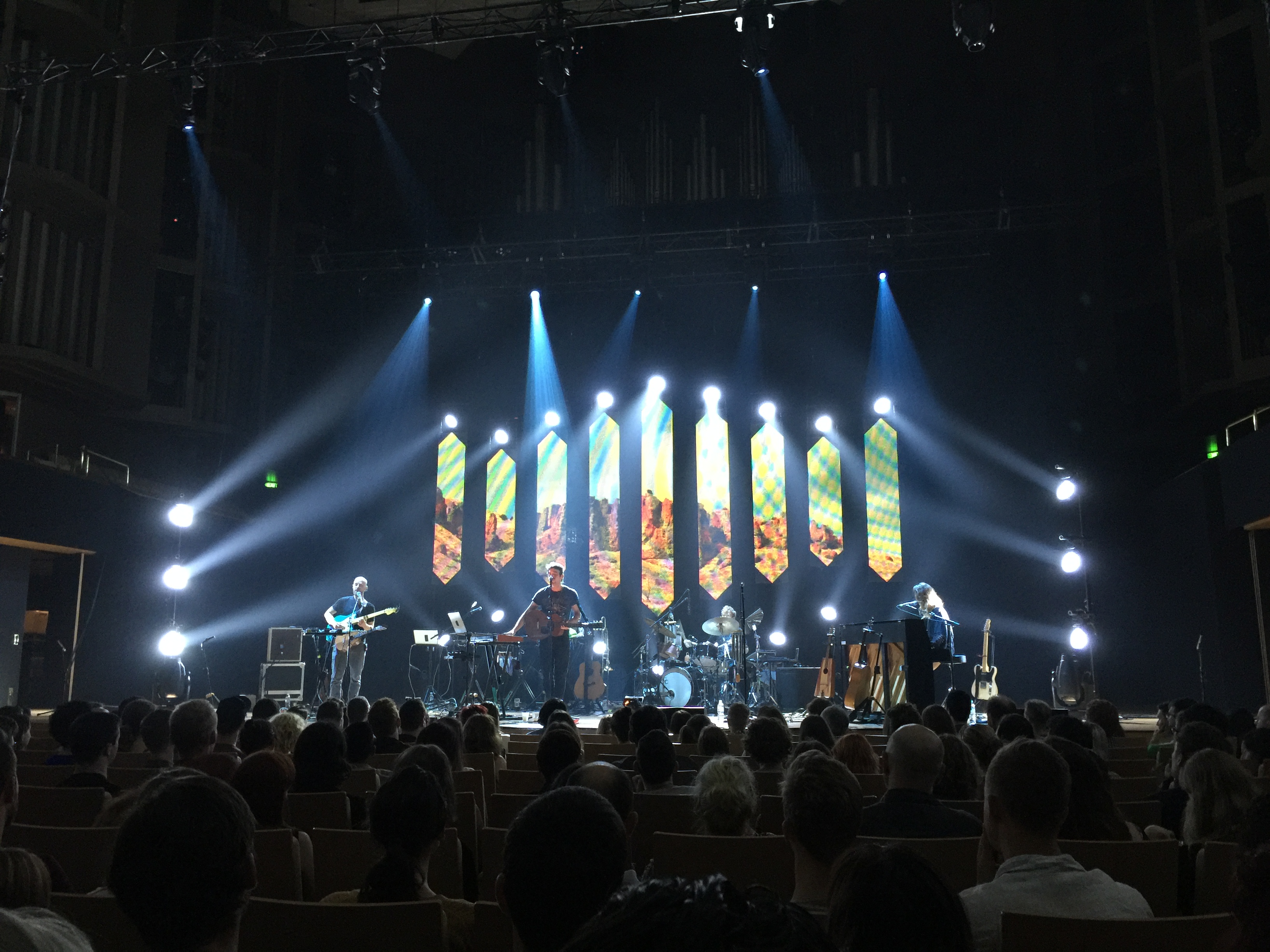
QPAC Concert Hall – seemingly as tall as it is long and with 1800 seats – is a bloody big venue and needs some big noises to make it feel full.
It’s clear within seconds that Sydney’s Ngaiire, supporting Sufjan Stevens on this tour, is a singer who is more than up to the task. Diminutive in size, but certainly not in vocal ability, the Papua New Guinea-born artist will surely have won many new fans with this over-too-soon 30-minute set. ‘Fall Into My Arms’ is an early highlight, while single ‘Once’ and ‘I Can’t Hear God Anymore’ are moments of unbridled joy. What a bright future she surely has.
The Sufjan Stevens Show in 2016 is essentially a two-part drama: an intense trip of 14 tracks from across the 40 year-old’s career with all the electronic trimmings, followed by a stripped-down, semi-encore of a further handful of songs that brings it all home with intimacy and charm.
The opening trio of ‘Redford (For Yia-Yia and Pappou)’, ‘Death With Dignity’ and ‘Should Have Known Better’ have the audience in raptures as a searingly-vivid light show evokes the feeling of being in a particularly garish (and particularly loud) church or cult meeting. The five-piece band go about their task with a near-telepathic sense of communication, as the mood of a piece can lift or drop depending on a look or the slightest gesture.
‘Drawn to the Blood’, ‘Eugene’, ‘Carrie & Lowell’ and ‘Blue Bucket of Gold’ from 2015’s all-conquering Carrie & Lowell make appearances before the band disappear and reappear after deafening calls for more.
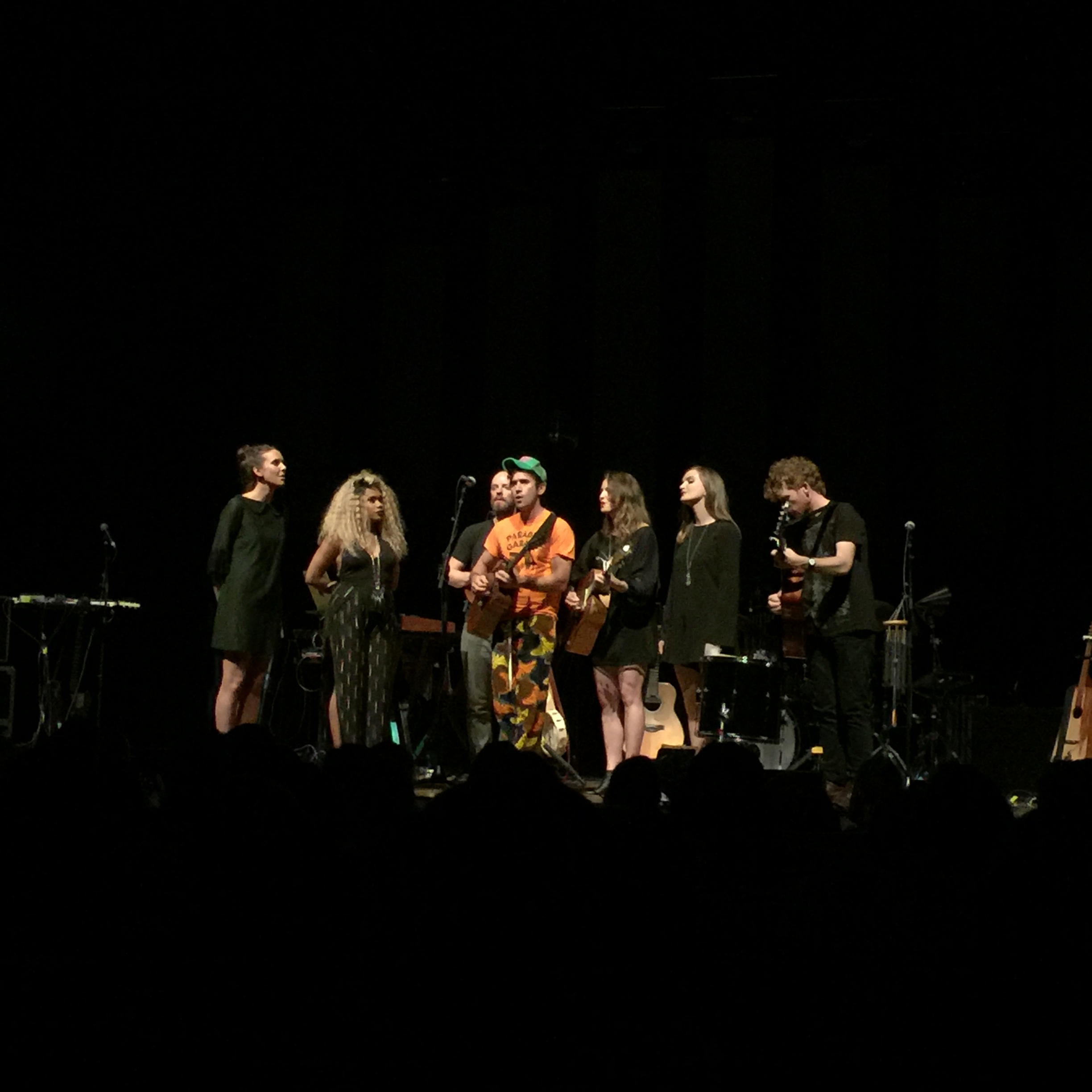
Now, dressed in fairly ridiculous orange t-shirt and cargo pants, Stevens is more laidback and chats to the audience, including labelling his banjo a “strange instrument”. The closing section of the show is, in many ways, more rewarding for the gig-goer, as it provides a chance to see the musicians’ true skills at work in a stripped-down and more measured setting.
Songs including ‘The Dress Looks Nice on You’ and ‘John Wayne Gacy, Jr.’ are worked through, before obvious closer ‘Chicago’ sees Ngaiire return to the stage for a grand finish.
WITH a forty-year career and string of bonafide punk-pop classics under his belt, Buzzcocks frontman Pete Shelley could be forgiven for wanting to slow down and take stock. In true punk fashion, however, that’s exactly what the 60 year-old is not doing.
The frontman and songwriter of ‘Orgasm Addict’ and ‘Ever Fallen In Love (With Someone You Shouldn’t’ve)’ is taking his band on a world tour to celebrate four decades in the business. Just don’t expect the understated and softly-spoken Shelley to do anything but take it all in his stride.
“We’re naming all our shows this year our 40th anniversary shows,” he says. “But it’s something which has snuck up on us really. We never expected 40 years; even 40 minutes would have been stretching it when we started. We started off with small expectations and didn’t know how long we could carry on before someone stopped us. [Punk was] the most un-commercial form of music we could imagine. It was completely the antithesis of what popular or critically-acclaimed music was at the time, and that’s probably why it worked, because it wasn’t the same old, same old. I tend to see how it actually was, to keep myself from slipping into nostalgia. I think nostalgia is for other people, but it does occur to you sometimes; I think ‘Oh, there are quite a lot of good songs we’ve got’.”
The quartet, also including long-serving guitarist Steve Diggle, are bringing their glorious punk-pop anthems to Australia to play Golden Plains Festival and a string of state capital shows. Preparations have begun in earnest.
“We started rehearsals on Wednesday and have a list that is 48 songs long,” Shelley says. “There’s no way we’re going to be able to play all 48 at one gig. We’re trying to get up to speed on enough songs so, during the year, we can chop and change to keep it fresh, instead of having the same 20 songs being played all the time. I think I’ve written about 120-130 songs, or maybe up to 150. Even choosing 48 out of those; there are still lots of ones I’d forgotten I’d written, so I suppose we’ve got an expansive piece of cloth to cut our modest garments on.”
While the vast majority of bands from the original wave of punk are long gone, Buzzcocks have endured line-up changes, break-ups, and the stress of putting together nine studio albums and countless tours. The secret to the band’s longevity is simple, Shelley insists.
“I think the obvious reason is we couldn’t take a hint,” he laughs. “We’re almost like brothers now. I’ve probably spent more time with Steve in the past 40 years than with my own brother. We still disagree on most things, but we agree to disagree. It’s an important step in life to be able to do that [laughs].”
In an interesting twist of fate, the DIY aesthetic of ’70s punk is once again an element of Buzzcocks’ recording, with 2014’s The Way being made with the help of online crowd-funding.
“We went back and made our own album again, so we were right back to the DIY principle,” Shelley says. “It gives you the control and you have a relationship with the people who are buying your records and appreciating it. I’d rather that than getting someone else to sell it to complete strangers. You’re making music for your friends. Making an album can be quite daunting because normally it’s done in complete secrecy and nobody knows you’re doing anything, but with this, it’s a bit more transparent and people’s enthusiasm that you’re doing it is something that gets relayed to you.”
The chances of Shelley adding to his 150 tracks written isn’t exactly helped by his song-writing style. The suggestion he makes it hard for himself is laughed off in his typically understated manner.
“I’m not actively writing at the moment,” he says. “The way I write songs is, if I have an idea, I give myself the luxury of being able to forget it. When it comes back I’ll think about it some more, then forget it again. I work on the assumption if it’s such a great idea and even I forget it, it’s not all that good an idea [laughs]. I’d rather have things I can remember. When it comes down to record the music is when I crystallise the song.”
As veterans of multiple world tours, Buzzcocks know Australia well, and it’s always a good place for the band to get into tour-mode.
“I remember driving through country roads and avoiding cane toads,” Shelley says. “It’s so much different to the UK; there’s no escaping it. It’s always good to go; the people are friendly and we’ve always had a good time. I remember the first time I was in Adelaide and it was about 40 degrees and was like being in front of a blast furnace. The trip to Australia is the first of the world tour trip. Then it’s the west coast of America, France, Italy and Holland. In the UK we’re doing some festivals; the Isle of Wight Festival is one of them. It’s going to be a full year.”
BUZZCOCKS PLAY:
Thursday, March 10 – The Triffid, Brisbane
Friday, March 11 – The Factory, Sydney
Saturday, March 12 – Golden Plains Festival, Meredith
Sunday, March 13 – Corner Hotel, Melbourne
Tuedsay, March 22 – The Gov, Adelaide
Wednesday 23 March – Rosemount Hotel, Perth
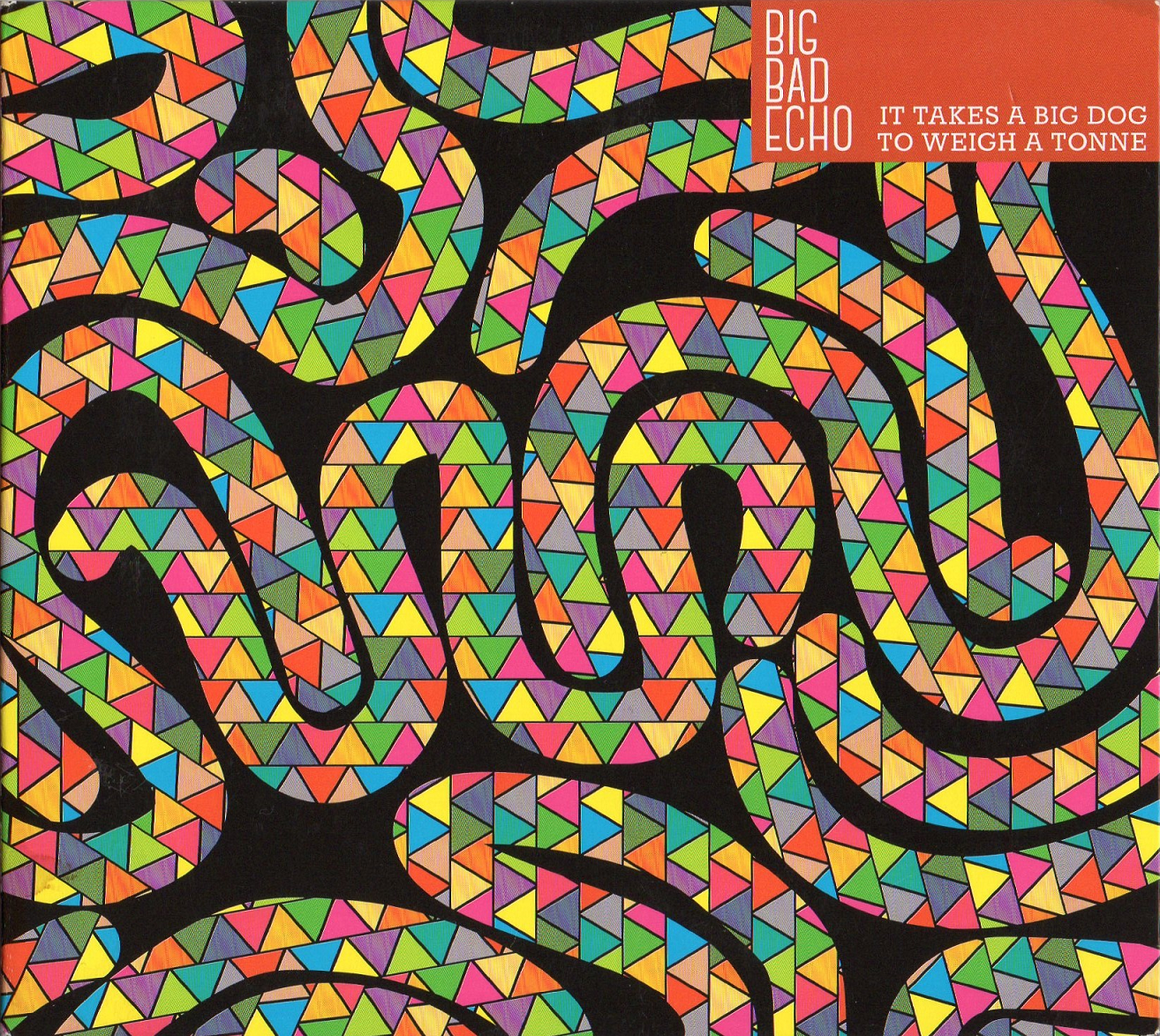
Convention, what is it good for? Absolutely nothing, if the excellent seven-track debut EP from Brisbane-via-Rockhampton quintet Big Bad Echo is anything to go by. It’s for this reason it’s such a refreshingly-eclectic release: fuzz-rock, cacophonous drones, spoken-word monologues, off-kilter psychedelia, and a catchy lead single combine to make a record that throws up one high-quality surprise after another. ‘Cannon Fire’ and ‘Half Polyester Sheets’ provide an opening 11 minutes of pounding layers of noise fit for any late-night road trip, while vocalist Mick Reddy recalls Jim Morrison at his most shamanistic. ‘Ice Breaker’ is the obvious single, although its repetitive rumblings and ruminations are far from radio-friendly and all the better for it. “All I ever wanted is to fall at your feet” Reddy sings, amid an outpouring of angst, urgency and reverb. ‘Two Crows Flying’ takes a turn for the weird, as a dismal vocal fights for space with searing guitars and a sinister synth, and closer ‘Blink Your Eyes’ mashes all the aforementioned elements into the type of six-minute, Herculean beast of a track that leaves instruments and musicians alike bruised and broken. Witnessing a band marching triumphantly to the sound of their own – somewhat peculiar – drum makes you hope they can make an album, as all the evidence Big Bad Echo have offered thus far points to something big, and certainly not bad.
THERE’S a little corner of northern New South Wales that really floats Steve Earle’s boat, and given his country-rock pedigree, it’s perhaps surprising it’s not Tamworth.
Luckily for music lovers it’s also the location of one of the world’s premier blues and roots festivals: Bluesfest.
“Byron: it might be the best beach town in the world,” Earle says. “It’s my favourite, anyway. I’ve had some really good shows there over the years; the last few years particularly. I had a really good show there with the band on the last tour, and I had a really, really good solo show there on the trip before that. I got to ride back to town with John Paul Jones and Donovan in the same car, you know? I got to interrogate them about all those great records, because Jones played on all those great Donovan records, so that was pretty cool. [Bluesfest is] one of my favourite festivals, period. The other big blues festival I play is in Ottawa, but it doesn’t have that beach.”
The 61 year-old Texan released his sixteenth studio album, the bluesy Terraplane, last year, and is set to appear at the Easter weekend festival with his band The Dukes alongside similarly-billed legends Brian Wilson, Tom Jones and Taj Mahal.
“I don’t know [if I’m a legend]; I’m more of a rumour,” he laughs. “It’s weird. It’s the thirtieth anniversary of Guitar Town this year. We’re going to try to do a few things to commemorate it. The Australian tour is actually the last leg of the cycle we have been on all of 2015; the very last leg of the Terraplane tour. I’ve already recorded the record with Shawn Colvin, and that’s what I’ll be doing next summer. Then I’m going to make another record with The Dukes, which will come out in 2017. I decided I was going to make a blues record [with Terraplane], but it’s a big deal when you’re from Texas; it’s a high bar. So I decided my next record was going to be a country record, whatever that means. Sometimes I think it means what I might have done after Guitar Town if [producer] Jimmy Bowen hadn’t pissed me off, but mainly it’s going to be based on honky-tonk. I’ve been putting aside the country-er things for that.”
Terraplane came into existence just as Earle was going through his seventh divorce, resulting in an album that was not only steeped deeply in the blues, but intensely personal at the same time.
“I don’t know how cathartic [writing] it was,” he says. “At the time, they were the only songs I could write. You know, I’m not writing jingles. I mean, I can write projects; I can write for somebody else, for a television show, or for a movie, and put myself in a certain place. This was a very personal record, because there wasn’t much else I could do. It might be I made a blues record because it was the only type of record I could have made last year.”
Having survived major drug and alcohol problems in the 80s and early 90s, Earle is now able to help others in a similar position, but does admit to being suspicious of why his past addictions are still interesting to people.
“I’m doing this residency at clubs in the States right now,” he says. “I’m doing a song from every record I ever made. There’s only four of those records that I was taking drugs when I made them. So it seems silly to be talking about it now. It’s still a big part of who I am; right now I’m writing a memoir, so I’m right back into that shit again. I have no problem with talking about it if it’s going to help somebody, but I get tired of talking about it with people who I suspect don’t have any other reason for talking about it except the lowest common denominator reasons. That part of it gets on my nerves from time to time.”
When not writing top-notch blues and country songs or warding off questions about his past, Earle is heavily involved in political activism. He is vigorously opposed to the death penalty, has argued in favour of access to abortions for all women, and his most recent work has been both close to home and on a national level.
“I’ve been raising awareness for schools with autism, because I have a son with autism,” he says. “Politics gets personal sometimes. My son gets the best care we can get him, but I have to lawyer up to get it. Luckily, the law says the city has to help me and my neighbours’ tax dollars have to help me. I’m the poorest guy in New York City, I think. Manhattan, anyway. I live here by the skin of my teeth, so I can’t imagine what happens to people who have regular jobs and four or five kids. I’m also very actively supporting Bernie Sanders’ campaign; ‘The Revolution Starts Now’ plays at almost all of Bernie Sanders’ rallies, and I’m very proud of that. I’m a socialist and he is a socialist. Normally if there’s one thing I can do for a political candidate I want to see elected, it is to stay as far the fuck away from them as possible. In the case of Obama I was able to say in the second term that I was a socialist and Obama definitely wasn’t. Hillary [Clinton] is, left to her own devices, almost a Republican. She’s very much a creature of Wall Street. I’m having the luxury of having a viable candidate running right now, and that’s Bernie Sanders.”
Away from the concerns of national politics, time spent in the southern hemisphere will not only allow Earle to rekindle his love for Australian beaches, but also his fondness for our musicians.
“It’s where I met Kasey Chambers,” he says. “I was there with Buddy Miller and my band, and Buddy was also opening our shows. Julie Miller didn’t make the trip, and Kasey, when she was 18 years old, sang with Buddy on that tour. On a bill before that, I saw a great show by The Saints there, although the first time I saw The Saints was at the Cat Club in New York years before, but I saw a great Saints show ten or twelve years ago in Byron. I’ve known Paul Kelly since before I even went to Australia for the first time; I met him in ’86 when he was [in the States]. That’s one of my favourite things about Bluesfest; you get to see a lot of good music, as you get to play twice.”
STEVE EARLE PLAYS BYRON BAY BLUESFEST MARCH 25TH AND 26TH
What do you get if you cross a Sex Pistol, David Bowie’s guitarist, and a drumming Stray Cat?
The result is Matlock, Phantom & Slick: a trio of legendary musicians set to serve equal portions of anarchy, glam and rockabilly on their upcoming Australia tour.
The band – Glen Matlock on bass and vocals, Earl Slick on guitar, and Slim Jim Phantom on drums – has been a going concern for around two years, and while former Sex Pistol Matlock is keen to talk about a range of subjects, the band’s live playlist is another matter.
“I’m not going to tell you,” he laughs. “It’s a bit like telling the punchline of a joke too soon. Not that it’s a joke, but you’ve got to have some surprises. But, there are certain songs [to be expected]; if I went to see the sadly-deceased David Bowie and he hadn’t done ‘Heroes’, I’d be going home disappointed. So we all know there are certain songs people expect to hear, and I’m sure you can work out which ones they might be. We do songs from all of our careers. That’s fair enough, innit?”
Refreshingly humble for a co-writer of what is often considered one of the most influential rock albums of all time in Never Mind the Bollocks, Here’s the Sex Pistols, Matlock is keener to talk about the future than his illustrious, if short-lived, punk past.
“We’ve actually got an album in the can of mainly my material,” he says. “We did it about a year ago and have been talking to people about getting it out. We went to a studio in Upstate New York with this guy Mario McNulty who engineered the Bowie album before the one that’s just come out. It’s cracking stuff and I’m proud of it. We do a cover version of ‘Montage Terrace (In Blue)’ by Scott Walker, believe it or not, and Jim plays kettle drums on it. You’ll have to hear it to understand where we’re coming from. It’s hard to describe your own music. The record business is quite different now; everybody is chasing the latest 17 year-old they think are going to be the new Beatles, but invariably aren’t.”
A big fan of Australia, Matlock is looking forward to making his fifth appearance Down Under.
“The first [visit] was in the eighties and the America’s Cup was on in Perth,” he says. “I remember when the sailing started in Fremantle, the boats were so far in the distance you couldn’t see anything, so that was a bit of a washout. That was in ’85, I think. I came back with the Pistols in ’96 for four weeks, then I’ve been over playing with Robert Gordon at the Byron Bay Blues Festival. Then I was there about two or three years ago with a guy called Gary Twinn, who had a band called Supernaut. His mum and dad were Ten Pound Poms. Also I have some relations there; my cousin lives in Melbourne and my ex-wife lives in Sydney. All good reasons for coming, and the weather’s a bit better over there.”
Having individually played parts in many historic moments in rock history, Matlock, Slick and Phantom have direct playing connections to both the recently-departed Bowie and Lemmy Kilminster: a possible hint to that live playlist.
“I knew both of them,” Matlock says. “I was fortunate to meet Bowie quite a few times and I got on really well with him. I met him in ’79 and then in New York in the early eighties and he was fantastic; really magnanimous and interested in people. He sought other people’s opinions and listened to what you had to say and took it on board. But he was a laugh as well, you know? Lemmy – I’ve known him for years. He used to knock around with all the punks not long after he’d left Hawkwind and was trying to get Motörhead together. The last time I played in the States with the Pistols at the Whisky a Go Go he came backstage to say hi and everybody had a lot of time for him. We’re just that generation now where people are shuffling off their mortal coil. I suppose they’re the ones who survived all the immediate excess of being rock stars, but it has ultimately taken its toll.”
While all four founding members of the Sex Pistols are very much alive and kicking, hope remains for another reunion tour.
“[There’s nothing] I know of as yet, but never say never,” Matlock says. “It’s the beginning of 40 years of punk this year, but also 40 years of the Sex Pistols, if you want to hang it on something. It’s down to John [Lydon’s] whims quite a bit, but I know my bank manager would be happy.”
Matlock was famously dumped from the Sex Pistols in 1977 in favour of the chronically-untalented Sid Vicious. Claims by manager Malcolm McLaren the reason was “for liking the Beatles” have been repeatedly refuted over the years.
“That was bollocks for a start,” he says. “It was just something McLaren said. I left because John could be really hard work. When you’re 19 going on 20, you don’t always see the wood for the trees. When we reformed in ’96 I felt vindicated, because of all the people in the world they could have asked, they asked me again, so they possibly came round to my way of thinking a little bit more.”
When it is suggested he might not have been given fair dues for his song-writing contributions to the Sex Pistols, Matlock shrugs it off with characteristic humility and humour.
“I think I’ve managed to claw a bit of that back now,” he says. “I think people have [recognised] my contribution to the band. But I don’t wake up in the morning thinking about how I used to be in the Sex Pistols; there are lots of things to do in life. The phone always rings with interesting projects and invitations to go and do this, that and the other. The only time I think about the past is when [journalists] ask me about it, you know what I mean? So neh neh neh neh neh [laughs].”
Dubbed the ‘Men of No Shame Tour’, the upcoming run of shows will see the band perform seven times along the east coast, with a pre-show Q&A session giving the audience a chance to verbally prod their hosts.
“I would rather have called it the ‘Tough Cookies Tour’ because that’s what we are,” Matlock says. “[The Q&A] is something the promoter dreamed up, but I’m used to it. I’ve done similar things at the Edinburgh Festival; playing acoustic shows, telling stories and inviting questions. That was during the show, but before the show will be a bit different, because you’re usually worried about where you left your eye-liner, you know? I’m a big boy and I can deal with it.”
DIIV’s second album marks Zachary Cole-Smith’s return from the brink of career suicide, having been widely labelled a heroin-addled waster since his September 2013 arrest for narcotics possession with his girlfriend, singer/model Sky Ferreira. The project’s debut album Oshin was a somewhat overlooked masterpiece, and it took the frontman and songwriter to kick his drug problems and re-launch himself into writing for this album to even see the light of day. The result is an ambitious double LP that recalls much of the glory of Oshin while expanding deeper into the realms of indie-rock, dream-pop and prog. Droning, relentless riffs, jangling chord progressions, and the whiff of New York hobo chic are again the order of the day, which provide many moments of majesty, most especially on the title track, first single ‘Dopamine’ and second track ‘Under The Sun’. Ferreira makes an appearance on lead vocals on ‘Blue Boredom (Sky’s Song)’, which never really gets going, while the feeling of ‘Mire (Grant’s Song)’ is, as the name suggests, of a singer wallowing in misery, and ‘Take Your Time’ follows the same formula, albeit with much more sombre tones. Overall, the record’s no Oshin on the whole, mostly due to the feeling that fewer tracks could have made it a more attractive package (point in case: the unnecessary, 17-second ‘(Fuck)’) and too much of the latter half of the album sounds like a single, coagulated mass. Nevertheless, Cole-Smith remains both an intriguing figure and indie-rock creative worth keeping an eye on.
“From this day forward, you will call me by my real name,” Kele Okereke repeats during the ambling ‘My True Name’; a hint that he would like to wipe the slate clean with Bloc Party’s first album since 2012’s Four. It’s a statement that fits with the 34 year-old frontman’s changing musical output, as he flits between pulsating dance, indie guitars and overwrought balladry on album five. But there lies the problem: it’s a record that feels more like a ragtag collection of off-cuts and B-sides than a cohesive whole, and it could perhaps be argued that it shouldn’t be labelled a Bloc Party album at all. The initial impression is that Okereke wants to unleash a string of dance anthems, as on lead single ‘The Love Within’, but is held back by the necessity of including those pesky guitars Bloc Party fans have come to expect over the last 15-odd years. Of course, much has changed personnel-wise since Four. Gone are long-term bassist Gordon Moakes and drummer Matt Tong, but how much of an effect that has had on song-writing is unclear. The over-cooked balladry of ‘Fortress’, ‘Different Drugs’ and ‘Exes’ contributes the least, and while there are some deft licks throughout ‘So Real’ and ‘The Good News’, the result of listening to Hymns is a lingering question: Will the real Kele Okereke please stand up?
Bloc Party’s Hymns is out on January 29th via Create/Control
A near sell-out crowd witnessed a bonafide EDM legend’s triumphant return to Brisbane on a balmy Australia Day Eve, as the man sometimes known as Norman Cook proved he’s still the master of his craft.
An opening run-out for local talent Nick Galea was followed by a two-hour set from Erick Morillo as dusk closed around the natural amphitheatre of the Riverstage. “If you’re having a good time, make some motherfucking noise,” the Colombian-American demanded, to massive cheers. “If you’re having a good time and you’re gonna have sex tonight, make some motherfucking noise,” came next, to a much less confident response.
After only a few minutes turnaround, Cook appeared on stage at 8:30pm, and attacked his audience with a non-stop assault of sound for 90 minutes. Such is the length and breadth of appeal of Cook’s career that it could almost be divided into eras, and elements of every one of them got a run out and were met with a similar positive response.
‘Eat, Sleep, Rave, Repeat’ and ‘Renegade Master’ kicked off proceedings, and as Cook moved through a relentless run of his many tracks and remixes, he also found plenty of time to pay homage to his musical heroes, with excerpts of Iggy Pop, Marvin Gaye, the White Stripes, Talking Heads and of course, the Chemical Brothers thrown in for good measure. A couple of well-appreciated Bowie tributes were nice touches, including mashing ‘Rebel Rebel’ into the mix, and the light show would have worried every epilepsy sufferer from Southbank to the Valley.
The only way to finish was, of course, his signature tune, ‘The Rockafeller Skank’. As the vast, happy audience poured out of the Riverstage, Fatboy Slim had to be given major credit for raising a valid question: when was the last time so many happy Brisbanites came together and danced their socks off on a Monday night?







 Paul McBride