FOR most musicians, a national tour means five or six dates taking in the obvious urban hotspots. Sydney folkie Jack Carty, however, is bringing his new tunes to a village near you on his upcoming 32-date tour.
“It’s really good to get out to regional shows,” he says. “There are audiences out there who are hungry for live music. It’s good to get outside the capitals and get to all the people who want to hear live music. I grew up in the country, and I remember when I was kid, if there was a band coming to town there would be a buzz, even if we didn’t know who they were. I love that about getting out to regional Australia. I’ve also played a lot of those places before, so it’s nice to go back and play for the people who’ve bought the records and became fans. It doesn’t really matter where I am; I just close my eyes and sing.”
The 27-year old is touring on the back of his new album Esk, which features a number of musical collaborators, including Josh Pyke on first single ‘The Joneses’.
“He and I toured together about two years ago,” Carty says. “We did a huge 27-date national tour together. Well, when I say he and I toured together, I really mean I supported him. We became friends and stayed in touch. When the time came to write and record this record, I gave him a call one day and asked if he’d be interested in working on it with me, and he just said yes. It really was that simple; he’s a super-down-to-earth guy. Then we ended up touring together again earlier this year, so I’ve spent a lot of time with him now, and he’s an amazing and nice guy. I then recorded ‘The Universe’ with Katie Noonan and the rest of it is a whole different bunch of collaborations. I worked on some songs with Casual Psychotic, who is the guy I made the EP with last year. The last album was quite personal and introspective, and I think that’s how I naturally write songs, so I wanted to collaborate more to see what would happen if I mixed in some outside influences.”
Having been quietly but assuredly building his fanbase with two albums and two EPs since 2010, Carty sees Esk as another stepping stone in his musical development.
“I think this is the best record I’ve ever made,” he says. “But I also think it’s not right to compare. Break Your Own Heart was a break-up album; it’s meant to be quiet and introspective and is the only record up to Esk that I feel completely proud of. Not that I think that it’s perfect, but it is what I meant it to be, if you know what I mean. But Esk is the best thing that I’ve done so far.”
JACK CARTY PLAYS:
MELBOURNE – HOWLER DEC 4
SYDNEY – LIZOTTE’S DEE WHY NOV 13 & BRASS MONKEY CRONULLA NOV 27
BRISBANE NEW GLOBE THEATRE OCT 17
HE GREW UP in a travelling religious cult, writes songs about his ex-girlfriends and splits his time between fashion modelling and being a successful singer-songwriter.
With such an eventful past, is it any wonder that 35 year-old American Christopher Owens has named his latest solo album A New Testament?
“On my European press tour I’ve been having to explain the concept of the title,” he says. “For someone like me, it’s a real bonus to not just understand the lyrics, but the first language thing makes it easier to explain them. I don’t know what the word would be, but there’s baggage that comes with that phrase that they don’t fully get.”
The ex-Girls singer finds a large amount of his material being inspired by past relationships, which luckily doesn’t have a negative effect on his current one.
“I’ve sung about so many [ex-girlfriends],” he laughs. “I’ve written about girlfriends from a long time ago in a very reflective way. ‘Jamie Marie’ is a song about a girlfriend from a long time ago. If you look at the lyrics, maybe I say their name or I’m talking about them, for the most part I’m talking about how I feel. First of all, I don’t think they feel very invaded as I’m not giving much about them, and second of all, they’ve always been pretty nice songs. My songs about other people are generally nice, not nasty. Doing a whole album about my ex-girlfriend is something I could see being difficult for my current girlfriend, but the reason she is so great and why we’ve been together for as long as we have, is because she doesn’t get hung up on things like that. She knows I wrote that album before we had even met, and she knows this is what I do. She has the ability to see what’s going on and I think she’s okay.”
The Miami native’s latest release is his fifth in as many years – a trend he is keen to continue.
“I just like to record as much as possible,” he says. “Part of me would say I should be doing two a year, because I have the songs and the ideas already, but it’s good to take a little breath and pause, and make things stand the test of time in a way; give the songs a year or two to see if I still think they’re good after that. But I think at least one a year is a good year. It’s like a Woody Allen film or an Ingmar Bergman film, you know? There are a few people who can keep that pace, and if I can keep that pace, I think I’ll be doing well.”
With a heavily reflective mood to the album, will A New Testament bring a little peace to Owens?
“I’d say I’m doing better now, for sure,” he says. “I don’t want to get into things I could complain about, like my upbringing. I never went to school, for example. I’m going to wish I went to school for the rest of my life; I know that. I can count many things I’m very happy to have. This album is just out, and my mind is already on the next.”
HAVING sold more than 40 million records worldwide, English singer Rick Astley is back performing after retiring from music in 1993, making a comeback in 2007 and seeing his most famous song become the subject of the Internet ‘Rickrolling’ phenomenon. Most widely known for his 1987 smash ‘Never Gonna Give You Up’, which went to number one in 25 countries, the 48 year-old is heading to Australia to play a run of shows throughout November and December.
With the amount of success you had at the start of your career, you must have went through some pretty crazy things.
I definitely had a good go at it for a little while, yeah. Compared to today’s stuff, my thing was pretty tame really. I think it’s the bands and the boy bands that get that kind of thing. Obviously there’s Justin Bieber today and various people like that. Mine was relatively quiet, to be honest. There was a bit of a fuss here and there, in certain countries more than others. I always remember that the Latin countries went a bit bonkers and Japan was pretty crazy fan-wise, but I had it pretty tame really. I was relatively recognisable back in the day, because I had a red quiff and all the rest of it, but I think certain people just stand out, you know what I mean? They get out of the car and it’s just like ‘bang’ – that person is a pop star. I kind of shuffled around behind people quite a bit [laughs]. I wasn’t in love with the whole fame and pop star thing really. I know I’ve said that in interviews before, but I was a bit bemused by it and it didn’t suit the way I am. I love being on a stage, I’m a bit of a bighead and I like performing and singing, but being famous didn’t add up to me because that world seems more about fame for fame’s sake, do you know what I mean? Obviously I did have mad moments – of course I did. Even back in the ’80s, there were people who were good at pushing that publicity button, but I did the total opposite to a certain degree. Some people craved it, but to me it seemed ridiculous.
After a long spell away from music, what made you decide to come back?
There were a number of things. We have a daughter, who is now 22, and when she was 14 or 15 I had had lots of offers to go here, there and everywhere. I never fancied it until I got an offer to go to Japan. My daughter was 14 or 15 and was really into art – she’s been studying art for quite a few years – and she really wanted to go to Japan, loved everything Japanese and one of her best friends was part-Japanese. We all went as a family and I went to do these three gigs, treating it as a paid holiday basically – I’ll do the gigs and just forget about it. I did the first gig and just walked off stage thinking ‘why haven’t you bloody done that before?’ I just really enjoyed it. I think because I went with that attitude, it really opened the door for me. If someone had said we were doing some thing where we’re getting a load of ’80s pop stars together at Wembley Arena or something, I probably would have gone ‘uh, no thanks’, even though I’ve done those things since. I got paid really well for doing it, which I’ve never been shy of saying to people as people are either fooling themselves or outright lying if they say they’re not partly swayed by money to do things, even within music-land. I think that in the Western way of doing things, that’s my value – someone will pay me to go and sing those songs or just sing in general, so I think I must be doing something right or still have something if someone is willing to pay me to do it. I genuinely didn’t do that one for the money – although it was a nice sweetener – but it just seemed like a mad thing to do for a week at the time, and that’s how I got started again.
Well, you’re going to be paid to come to Australia very soon.
To be honest, I get paid for the flying and the travelling, but the actual gigs are the best part. I do gigs with a couple of friends – we have a little rock band that’s kind of like our own mid-life crisis, and I still love music and play music. I think most [musicians] think we get paid for the hanging around and the travelling, but the gigs are the fun bit – most artists would say that.
Is it solely a nostalgic thing right now, or do you have plans to write new material at all?
I do tinker with new things, and at some point in my life I would like to make a record that actually got played on the radio – I would love to do that [laughs]. I still haven’t given up that dream, but it’s just about finding something I believe in and am comfortable doing. There’s lots of things I could have a go at, but half the time my heart’s not in it so it’s pointless. The other half the record companies get excited by the fact that I had a big record called ‘Never Gonna Give You Up’ and a few others, so they think ‘oh, we must be able to sell something else’. But it doesn’t work like that; you still got to make a decent record, do you know what I mean? When I do gigs now on my own, I still play my hits and have no issue with that, and maybe when I come to Australia I could throw in a couple of new songs that nobody has ever heard before, but I’ve got to be careful with that. People aren’t coming to hear me sing new songs, you know? I went to see Kate Bush last night, and it was absolutely amazing. There’s a part of me that would have loved her to sing some of the old songs, and she did a few, but I didn’t miss the others because what she did was absolutely amazing. That, for me, is on a totally different level because you’re entering her world in that concert. She could have got up there and not played any of her old songs and still managed to make it fantastic, but whether you’re U2 or myself, there are songs that people want to hear you sing, and I know that. I can totally understand that and I’m happy to do it.
Rickrolling: is it just a bit of fun, a pain in the arse, or somewhere in the middle?
It’s not a pain in the arse in any way, because it doesn’t have anything to do with me. It could just as easily be Daverolling or Bobrolling or whatever. I’ve just treated it as something that’s fun, weird and bizarre; all the fantastic things that have been done on the Internet in connection with that song. I can really see the funny side of it and the genius of what people have done, to be honest. Some of the things that have been edited together have been great. The original Rickrolling thing is a little bit weird because after one or two times it’s bound to be a bit too much, but some of the other things are amazing. Someone edited Obama’s speeches so he was kind of talking through ‘Never Gonna Give You Up’ – that was brilliant. Too much time on his hands, but brilliant. Someone else did the whole cast of Mad Men singing it – it must have taken forever and is hilarious. Another one of my favourites is from a friend in Boston, at the Massachusetts Institute of Technology, where someone had climbed up on a great big gas tank and put the first seven notes of the song up there – not the lyrics – so you had to be able to read music to understand it. I just thought that was kind of funky and bizarre, but whatever. I’m glad; it breathes more life into that song and it’s kind of nice in that way.
What are your plans for the rest of the year?
We go to Japan for a couple of gigs first – Tokyo and Osaka for a few days and we’re having a few days before that to get acclimatised to the time zone. The one thing people don’t look forward to about Australia is the jet lag; there’s nothing worse. Hopefully we’ll arrive in Australia having got over that. The last gig is on the second of December, then we’re going to stroll home with a few days in Singapore and then it’s Christmas. It’s a nice way to finish the year as you’re just coming into your good weather while we’re just coming into our crappy weather. We’ll be ready for it in a few weeks time.
Rick Astley Australian Tour Dates
Wednesday, November 19 – Whitlam Theatre, Revesby Workers Club, Sydney
Friday, November 21 – Tivoli, Brisbane
Saturday, November 22 – Twin Towns Ex Services Club, Tweed Heads
Monday, November 24 – Rooty Hill Rsl Club, Sydney
Tuesday, November 25 – Enmore Theatre, Sydney
Wednesday, November 26 – Canberra Theatre, Canberra
Friday, November 28 – Chelsea Heights Hotel, Melbourne
Saturday, November 29 – Palais Theatre, Melbourne
Sunday, November 30- Costa Hall, GPAC, Geelong
Tuesday, December 2 – Festival Theatre, Adelaide
In 2001, former Guns N’ Roses guitarist Slash collapsed at a soundcheck, woke up in hospital and was given between six days to six weeks to live.
A pivotal point in the hard-drinkin’, heavy-druggin’ Los Angeles native’s life, it marked a turning point that saw the legendary axeman get sober and eventually begin writing and releasing records of his own.
“I’ve gone through a lot of different stuff,” he says. “I was comfortable with a lot as far as when Guns N’ Roses was happening, but there’s been a lot of stuff I’ve had to go through to get to the point of where I’m at now on my own; it was very hard. Maybe there were periods there when I probably had question marks in brackets around whatever I was doing, but I never really stop and specifically think about stuff like that. I just like doing what I do. It seems insane to people that I don’t have a specific motivation now other than just liking music. I like playing live, I like writing, I like touring and everything that goes with it. Making records and going out in front of audiences; this is what I picked up a guitar for.”
World On Fire is Slash’s third solo album, and the second on which the 49 year-old has worked with Myles Kennedy and The Conspirators.
“It’s exciting; we finished it in May,” he says. “We’ve been doing this for five years now. It started off as nothing; I didn’t have any plans for this. It was just really a band that I’d put together to support my first solo record, but it turned out to be such a great bunch of guys that I decided to work with them to make the next record following that, which was Apocalyptic Love. Basically at that point it had already turned into a band and was one of those sort of magical combinations of people that I didn’t see coming, but turned out to be really great.”
Produced by Michael ‘Elvis’ Baskette, World On Fire is 17 tracks of typically Slash-esque hard rock, with plenty of big riffs and solos, and was recorded in double-quick time.
“Usually it’s one or two songs a day,” Slash says. “But with this record we ended up doing 17 tracks in six days. It was good. I write the stuff on the road, here and there, and then I work it up with Brent [Fitz, drums] and Todd [Kerns, bass] and start getting a real musical arrangement together. I then send it out to Myles so he can start getting some ideas. They’re with me the whole time on the road when most of these ideas come in the first place, so they’ve heard most of it before. We’ve jammed in soundchecks and dressing rooms or whatever, so most of the initial ideas they’ve heard. I grew up in a very rock and roll environment, musically, and guitar solos are a very important part of rock and roll songs. They’re just a really exciting part of a good rock song.”
An upcoming slot on the Soundwave 2015 bill will give Slash and co. a chance to play the new material to Australian audiences for the first time.
“I’m excited about it,” he says. “We did it in 2011 or 2012 – I can’t remember exactly. We did the tour and there was Slayer and a bunch of cool bands on the bill. It was a lot of fun, and was one of the coolest sort of moving tours that I’ve ever done. We are really looking forward to it. Everything [on the album] is basically all recorded live. We don’t write songs with the intention of them being live songs, but when we go in to record it, we just play the songs live so much it just comes out that way. Everything on the record more or less comes from a live setting, so it should all translate great live, you know? We’re on tour now with Aerosmith in the States and then we start a world tour in November. It’ll basically run all the way through next year.”
Despite Gene Simmons recently claiming rock music is dead, Slash is quick to come to its defence.
“I’ve been hearing that same exact quote since the seventies,” he says. “But anyway, I think rock music as a medium will never ever die or anything like that, but it’s going through a hard time. The way that the business has become is predominantly, if not a hundred percent, corporate at this point. When it comes to record companies and radio and all that kind of stuff, rock music doesn’t really have much of a place in it. But that’s what I love about what’s going on right now – there’s this really great underbelly of very genuine, spirited rock and roll happening. It’s starting to get that sense of rebellion back, which is really great. I think that’s important, and I think it should be ‘us against them’, you know? I sort of like the way that things are going and I don’t see rock being dead at all. I see it in Europe and a lot just recently in America. I can’t speak on behalf of Australia, but I do know certain bands over there who have that same attitude.”
With more than his fair share of hard-living and dark times behind him, and his new band line-up set in stone, the only question remains is whether one of rock’s great survivors is willing to drop the solo moniker and give his bandmates equal billing.
“I’m not going to,” he laughs. “Never.”
WORLD ON FIRE BY SLASH FEAT. MYLES KENNEDY AND THE CONSPIRATORS IS OUT SEP 15.
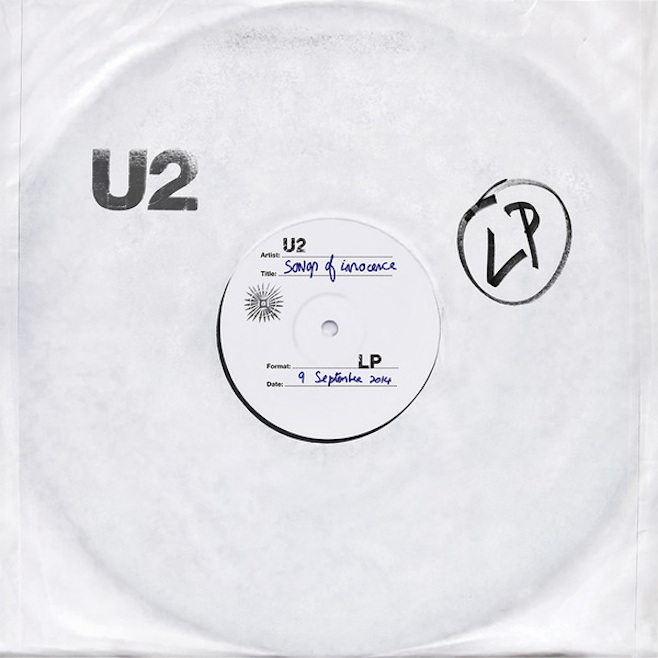
What is this thing that has appeared in my iTunes account without my permission? I didn’t ask for it. I didn’t want it. The other tracks in there were doing just fine before these 11 barged their way in and caused a disturbance in the force. The manner in which the Irishmen’s lucky 13th album has basically been forced on millions of people won’t help curb the growing trend of U2-bashing, but the marketing side of things can of course be forgiven if the music is quality. But therein lies the problem; it’s mostly not. Supposedly one of the band’s most personal albums to date, the once-I-was-a-young-lad lyrical platitudes and general emotional emptiness add up to an album filled with the most bloated sides of U2’s music and scarcely few of the better elements of their earlier career. Only Bono could write a tribute to a punk legend and make it entirely about himself, as on ‘The Miracle (of Joey Ramone)’, while the Beach Boys-tinged ‘California (There Is No End To Love)’ and ‘Sleep Like A Baby Tonight’ suggest that the song pool for this album can’t have been a rich one. They’ve had a career most other bands can only dream of, but it’s hard to listen to this album and think that U2 were once trend-setters; it’s all too vague and formulaic to make any kind of impact other than disinterest. Right clicking and hitting the delete button seems like an attractive method of restoring iTunes harmony. (Island)
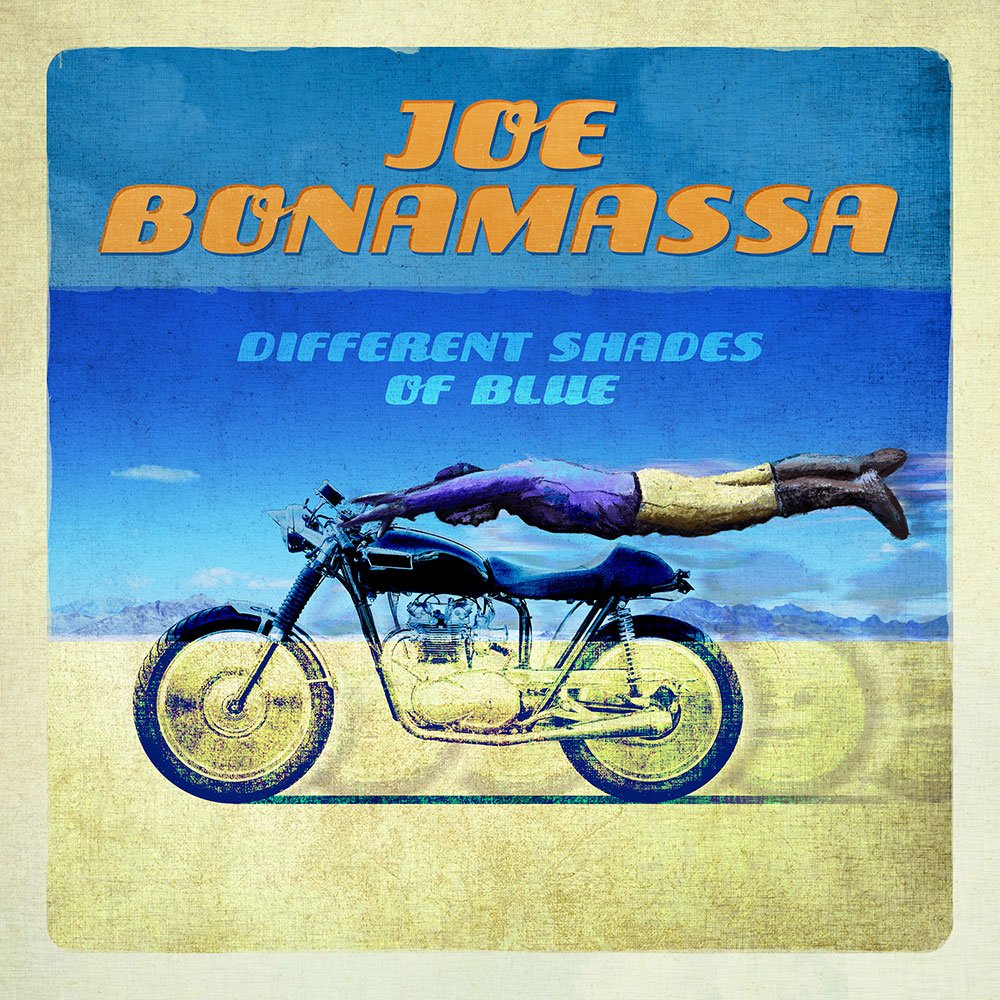
This being his 11th solo album of blues-rock in just 14 years, Joe Bonamassa could be forgiven for running out of new ways to express his prodigious guitar talents on record. Thankfully, Different Shades of Blue finds the 37 year-old American axe-slinger on top form and showing once again why he’s one of the hottest six-string shredders in the world today. This is the Grammy nominee’s first album to feature all original material; a significant step for a blues-rock purist. Not that the influences aren’t as glaringly obvious as usual; the hands of Clapton, Page and Rory Gallagher are all over this record, and that can only ever be a good thing. At the top of the pile for rock riffage is second track ‘Oh Beautiful!’, which rivals anything found on Led Zeppelin II, while ‘Heartache Follows Wherever I Go’ brings the melancholic blues and there’s even a Queen-esque ballad to keep things varied with ‘Never Give All Your Heart’. Bonamassa is often labelled as Eric Clapton’s natural successor, although Clapton himself probably wouldn’t take kindly to that, given he’s still putting out records himself. In saying that, it’s a fitting sentiment, and this record will only serve to reinforce it.
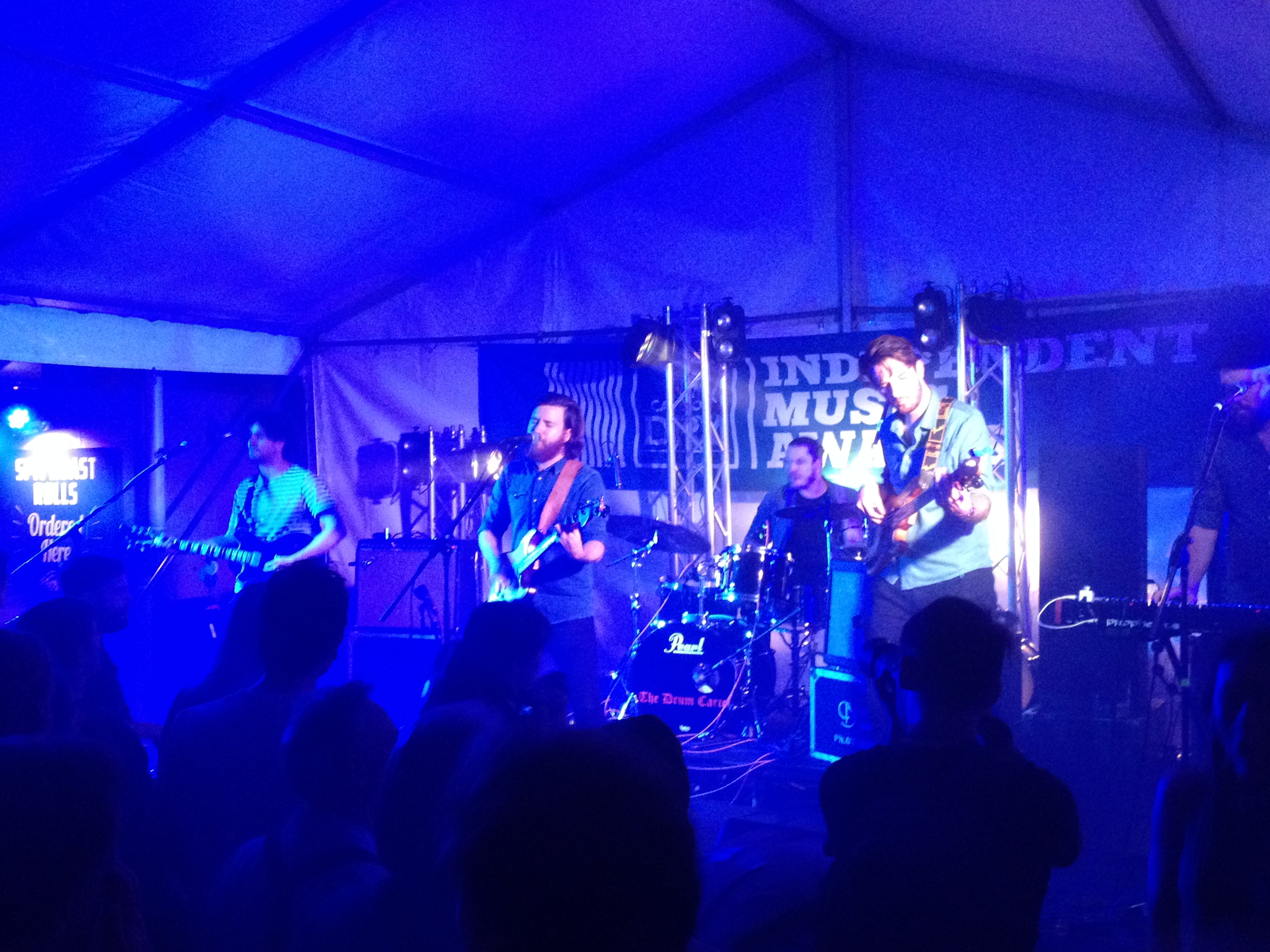
FOR the second night in a row, Oh Hello! is the place to be to kick off BIGSOUND Live, as Brisbane quintet WAAX bring an early dose of bluesy psych-rock with plenty of big riffs and bite to get the evening started. Frontwoman Marie DeVita has just the right amounts of snarl and throaty vocals combined with a slightly unhinged stage presence to make her one of the most engaging singers on show over the two nights.
One of those fantastic BIGSOUND Live surprises comes next, as Dunedin trio Males come close to obliterating the eardrums of everyone packed into Ric’s Bar, with an outstanding show of powerhouse, sweat-drenched drumming from Paul ‘Pipsy’ McMillan being worth the ticket price alone. This band deserves mountains of attention.
What happens next at Black Bear Lodge is a much more serene affair, with Melbourne’s Fraser A. Gorman knocking out mellow moods with plenty of boyish charm and big grins. His proclamation of “I hope everyone’s going to hit the tubs tonight super hard, because I fucking am” gets a big response.
Over at The Rev, Adelaide’s Jimblah is putting everything into his performance despite a fairly static audience, and next door at The Brightside Tkay Maidza has drawn just about every industry figure to her show; the diminutive South Australian opening with ‘Arm Up’, complete with searing synths.
With times running over at The Elephant, a vast horde of Holy Holy fans are treated to the last few songs of electro-poppers Coach Bombay, including their final track ‘Girls’, before the Brisbane lads themselves take to the stage after a quick changeover and instantly bring a touch of class to proceedings with the opening duo of ‘History’ and ‘If I Were You’.
The small number of punters packed into the Underdog to see Flyying Colours can consider themselves lucky, as the Melbourne psych-rock/shoegaze quartet put on a fantastically absorbing and colourful show, complete with colourful language on the subject of Peter Garrett’s abilities as a member of parliament. Their latest single ‘Not Today’ is well worth checking out, based on this performance.
Despite having been away from the spotlight for what seems like a long time, Brisbane’s Art of Sleeping sound like a band on top form. Frontman Caleb Hodges assures the large gathering that they have been working on new material, although the band’s ‘old’ material still sounds fresh.
To finish off the night, it had to be Melbourne’s The Bennies at the New Globe Theatre. Frontman Anty had been prancing around the Valley in gold spandex trousers all night, before taking to the stage and bringing the party vibes in abundance. After expressing his disappointment with the music industry for not having yet been offered any cocaine, he leaps around the stage shouting “let’s take cocaine and pingers and go fucking apeshit!” Good idea, Anty. Well played, everyone.
PERHAPS it’s appropriate that the first song I hear at BIGSOUND Live 2014 is ‘Get On Your Horse’ by The Furrs at Oh Hello! It’s an appropriately-named kickstart to another night of top drawer Australian music across a multitude of stages and hidey-holes in the Valley.
After that start, the trek to the Zoo is punctuated by a short stop at the Press Club to catch All Our Exes Live In Texas; the folky Sydney quartet sounding like perhaps the most elegant act on show anywhere here tonight.
You wouldn’t call Steve Smyth an elegant performer, but he’s all the better for it. The impressively-moustachioed Sydneysider’s sweat sprays off in fountains as he throws his Gibson and himself around the Zoo’s stage, with new song ‘Shake It’ being a particular highlight among many great tracks.
Over at the Brightside, Adelaide’s Bad//Dreems show why they’re one of the most hyped acts of this year’s BIGSOUND, as they power through a rip-roaring set of songs from their EP and upcoming debut album. A cover of The Replacements’ ‘Bastards of Young’ is the perfect setup to closer ‘Dumb Ideas’, as the quartet steal the show for tonight.
Following Bad//Dreems is another hyped act, the Britpop-heavy DMA’s, who finish with their sing-along epic ‘Delete’ to a massive response. At the same time, in the darkened cavern of Alhambra Lounge, Melburnians Lurch & Chief are making an unholy racket in all the best ways, with ‘We Are The Same’ being the standout.
At the Rev in Warner Street, a much more chilled vibe is apparent, as Melbourne’s Martha Brown – aka Banoffee – is going solo with a set of cool r ‘n’ b and synth numbers in an enticingly air-conditioned environment.
Every BIGSOUND night needs a big finish, and this time it’s provided by Kingswood. The Melbourne rockers are flying high, having just released their excellent debut album Microscopic Wars. Despite teasing a few bars of ‘Stairway to Heaven’ and playing the intro to QOTSA’s ‘Feel Good Hit of the Summer’ after calling for the BIGSOUND delegates to “get your hands in the air”, it’s their own ‘Ohio’ that provides the massive close. What a night.
FOR someone who is an ARIA Hall of Fame member, a holder of a Medal of the Order of Australia, and is often called an icon of Australian music, former Australian Crawl vocalist and songwriter James Reyne is a refreshingly laid-back character.
Perhaps it’s because he’s happy with what he’s achieved in music, or maybe he’s simply enjoying life and the freedom that being his own boss gives him. Either way, get ready to enjoy his charm and song-writing once again as he takes his acoustic show on a national tour, including a stop in Geelong on September 20th.
“The shows have been going really well so far,” he says. “It’s a cross-section of all the stuff I’ve been known for. There’s me playing acoustic guitar and singing, a guy called Brett Kingman playing acoustic guitar and singing, and his sister Tracy Kingman singing; so it’s three voices with two guitars. We usually do all the hits people would want to hear, but we can slot in the odd new one. We can bookend them; put two or three either side of the new ones [laughs]. I’m lucky that I have a good core of fans who keep up with the current stuff. I’m often surprised by the number of people that yell out for newer stuff and I think ‘oh wow, I didn’t think they’d know that one’. But we definitely do all the hit stuff, because we’d get lynched if we didn’t [laughs].”
With a near forty-year career in music behind him, Reyne is rarely taken by surprise. Then came a letter earlier this year letting him know he’d been chosen to receive an Order of Australia; something the 57 year-old doesn’t take lightly.
“I was chuffed that they thought I was worthy,” he says. “I’m very grateful and it was very kind. I don’t know how it works, how you get nominated or chosen, but I’ll take it, thanks [laughs]. First, they sent a letter saying I was being given it and to please not tell anyone before they announce it. I think I told my mum and made her swear to not tell a soul. She was more surprised than I was, but she might have been lying to me; she might have told some friends.”
With a number of classic Australian Crawl records and a slew of solo albums in his back catalogue, Reyne can afford to go at his own pace when thinking about new material.
“[Songwriting is] always a creative outlet for me, and as I get older the more I seem to enjoy doing it,” he says. “I’m self-funded and not under any pressure to put anything out, but every couple of years I get to a point where I think I might just record some stuff. I’m lucky that I have some great friends who are technicians, because I’m an idiot with technology. I’m hardly ever these days sitting around planning my next album; it’s more like ‘okay, I’ve got a bunch of songs, I might as well stick them down’”.
He may come across as a laid-back guy of the highest order, but Reyne and his band show no signs of slowing down in terms of putting in the hard yards on the road.
“We’re touring and doing shows with the band and then this acoustic run” he says. “Then we’ll be doing some festivals and outdoor things over summer – we’ve got gigs up until May or June, so we’re usually working about nine months to a year ahead. There are all sorts of other things I’m interested in and I keep my fingers in other little pies, but this is my job and it’s how I earn a living. I’m lucky that I do a job I enjoy. If I didn’t do this as a job I’d probably do it as a hobby, and I’m lucky that I have people who are interested enough in what I do. I can still play at places all over the country and people want to come and see what I do. But I hope I’m getting better, because I do practise my craft and we do it consistently. An [element of] so-called show business is learning when to say no, so you can stay vaguely fresh; not say yes to everything. ‘As much as I love you, it doesn’t suit me right now’; that’s a big lesson in show business, I reckon. Try to stay vaguely cool, if you can [laughs].”
IT’S a long way from the sleepy town of Forbes, NSW (population 7000) to the stage of TV talent show The Voice, but it’s a psychological leap Celia Pavey has seemingly taken in her stride.
Having won over a national TV audience and judge Delta Goodrem, the 19 year-old folkie is now embarking on a national tour in support of her new EP, Bodies.
“I’m very excited and a little bit curious and nervous as to what people will think of it,” she says. “I feel very positive about it, and it was a very wonderful experience to be working on it. It’s good that it’s finally out there. I came off the show and I sort of knew who I was as an artist, but it was good to get down to writing the EP and realising what it was going to sound like and what the vibe was going to be. It did take a while, but good music does take a while and you’ve got to work hard to make it sound the way you want it to.”
Having some songs already part-written, the singer-songwriter has been able to count on some pretty solid collaborators to help finish them off.
“I did a bit of co-writing with Tim Hart [Boy & Bear] on a song called ‘Shadow’,” she says. “We had things in common in our friendship and things we had been through, so it just flowed really well, and the song is a beautiful track. It was lots of fun and it was great to work with him; he’s very down-to-earth and is very in touch with folk music, so he knows what my music is about. I also worked with Jake Stone of Bluejuice on ‘Bodies’, which is the main feature of the EP. Everyone I worked with had really open minds about the style of music and what the songs were about.”
Studying at the Australian Institute of Music before blind auditioning on The Voice meant that Pavey had musical talent on her side, but her naturally shy personality was a potential barrier to success on the show.
“I wasn’t thinking too much about it,” she says. “I usually like to take things as they come. The whole experience was really full-on to start with as I didn’t know what was going to happen. It was full-on, but it was an amazing experience to go through.”
Thankfully, her rendition of Simon & Garfunkel’s ‘Scarborough Fair/Canticle’ immediately won over judge Delta Goodrem, with whom Pavey teamed up.
“She’s incredible; such a wonderful person,” she says. “She has guided me and helped me overcome my fears of being on stage. She said to me I just have to be myself and know who I am as an artist, just perform and be myself. There’s always nerves, which are important as you need the adrenalin for the performance, but to be able to overcome the fear is important. It’s all about realising you’re up there because you want to be and you’re there for a reason.”
While she has found an audience and built a fanbase on the back of her appearance on The Voice, Pavey is ready to move on and be regarded as an artist in her own right.
“It’s more about finding myself as a folk artist and keeping myself down-to-earth,” she says. “Not just launching into the pop world because that’s what most artists feel like they should be doing to make a career or something. You’ve got to take it slow and wait for people to appreciate what you do as an artist. Television shows can be a little full-on. I’m not quite sure how to explain it as I’m still thinking about all that, but they can exploit artists. Sometimes it can be beneficial and other times not – it’s all a bit crazy. I think it’s definitely important to experience things in life that will help you in the long run. It really did help me positively, although there were some negative parts that I guess will help me positively in the future and help me grow. You just have to give things a go and see what happens.”
She may only be 19, but Pavey probably would rather have been born around 1950, such is her affinity to the hippy/folk movement of the late sixties; something will be evident by her song choices on her national tour.
“I’ve got four songs on the EP, but I’ve got a band and we perform for an hour,” she says. “I’ve brought some more originals into the set – some of which will be on the album coming up. We’ve got a couple of fun covers; ‘White Rabbit’ by Jefferson Airplane and some groovy sixties songs. I love Joni Mitchell, so I do a couple of her covers; I like to do ‘Big Yellow Taxi’ and ‘Woodstock’. They really take people on a journey; the music back then was just incredible.”
When & Where:
Thursday 11th September
Melbourne | The Toff in Town
LEGENDARY author Ken Kesey wrote the novel in 1962, and the 1975 film went on to win Oscars for best lead actor (Jack Nicholson in a career-defining role as protagonist Randle P. McMurphy), lead actress, picture, director and screenplay.
It therefore takes a brave bunch to take such illustrious material to the stage, and it’s New Zealand actor Andrew Lowe’s task to make the risk-taking, anti-authoritarian McMurphy come alive in Brisbane Arts Theatre’s latest production.
“One Flew Over The Cuckoo’s Nest was just too irresistible for me to pass up,” Lowe says. “The hard part is trying to get away from the film and putting your own ideas in. People have their own perception of how they think it will be played. I feel [the play] is very different to the film, but then the film was very different to the novel. In the novel, they’re very much normal people that have been deemed mentally unfit for society, whereas in the film I feel they really played up the mental illness part more; not caricatures, but getting into comedy. Ours is still in development, and we’re going down the entertainment route as well, but I think it’s got to be that way for an audience to be engaged by it.”
The story follows McMurphy as he is sent to a mental institution to await sentencing by a criminal court. At first he sees his new surroundings as a place in which to escape doing jail time, although he soon begins to revolt and rally his fellow patients against the overbearing and subtly cruel Nurse Ratched, and the two become locked in a battle of wills that only one can survive.
“I think the play has some great points in it,” Lowe says. “The mental illness side still applies today; the way we treat mental illness. In the film it’s about McMurphy rising up against Nurse Ratched and promoting individualism and each person’s own traits as unique and part of human nature, whereas Nurse Ratched tries to make them conform. It’s a powerful piece because we need to embrace people’s individual traits in society and understand who they are and to let them be who they want to be. I think these days we have pills for everything that are supposed to tackle and solve everything, and this play shows that that’s not the way to do things necessarily – McMurphy is a great advocate of that.”
Lowe, who got into acting in Australia after studying law and accounting for five years in his native New Zealand, has diverse industry experience and sees Brisbane Arts Theatre as a vital part of the theatre and arts scene in Brisbane.
“I’ve done about 20 short films and I was behind the scenes on Angelina Jolie’s Unbroken,” he says. “I was the lead actor’s stand-in. I spent four months working with [Jolie], and it was fantastic to see how it all comes together and what it takes. It was a great experience; I just want a part of it now [laughs]. I’ve just shot a Tropfest film too; it ends up as a tragedy and I decided to break the fourth wall a lot on that as well – that Malcolm In The Middle sort of thing. This is my fourth show at Brisbane Arts Theatre. I’ve done Picnic at Hanging Rock, Frankenstein and A New Way To Pay Old Debts. Someone told me it was the oldest theatre in Brisbane, and that just speaks for itself if you ask me. There’s obviously a lot of history there and a lot of the origins of theatre in Brisbane. Of course, it’s a community-based theatre, so it’s great as an outlet for people who just want to get up there and do it, have a go and have some fun.”
ONE FLEW OVER THE CUCKOO’S NEST RUNS FROM OCT 4 TO NOV 1.
“YOU can’t take journalists on, because they have the last word. Like, if I was to really piss you off now and be really arrogant, rude and horrible, you’re going to be the one writing ‘Kilbey’s a cunt, I wouldn’t go see his fucking band at BIGSOUND’”.
This is just a sample of the type of industry advice to expect from The Church frontman Steve Kilbey, who will appear at the BIGSOUND conference as a keynote speaker with his band. Not that he’s fully sure what his role will be as yet, as becomes clear when he is asked what he expects to be speaking about.
“I don’t fucking know,” he says. “People are going to be asking me questions, aren’t they? Isn’t that how it works? I know I’m on a panel with The Church, and we sit there and field questions from the audience, and then I’m going to be on a panel with my manager and field questions about managers and artists, then I’m going to play a thirty-minute gig. I’m supposed to give you some bullshit now, but really someone said ‘hey, do you want The Church to be at BIGSOUND?’ I didn’t even know what BIGSOUND was and I was like ‘I don’t know. Yeah, I guess so.’ Some people whose advice I trust said I should go and do this and it’d be good. Everyone is saying it’s really good; I don’t really know anything about it. I’m just kind of wandering in, hoping to make the best of whatever happens to be there.”
After some initial prickliness, the 59 year-old singer and bassist becomes increasingly garrulous, self-deprecating and funny over the course of a twenty-minute interview, as he talks about his time in the music business, the benefit of hindsight and a recent change to The Church’s line-up.
“I suppose people will ask about longevity and why Marty [Willson-Piper] left and why Ian Haug joined, what our new album is like and what are the perils and pitfalls one should avoid and all that,” he says. “These are the sort of things you could ask an old seasoned trooper who has been around the tracks a few times.”
[At this point Kilbey points out that he doesn’t think he should be asked questions that might crop up at BIGSOUND, but relents when it’s pointed out that an article is being written about him, thus a requirement exists for him to say something. The floodgates then open and don’t close for fifteen minutes. Better get comfortable.]
“Alright: perils and pitfalls for musicians,” he says. “The business itself is set up – [or was] in my day at least – to take advantage of the types who could play music and knew about writing songs and stuff, but when it came to percentages and deals and someone looking after your money and all that, you just signed the contract without reading it. Also, being too emotional with the other guys in the band; taking it all out on them. I wish I had thought a lot of the time before saying things.
“I suppose walking that fine line between being successful and doing what you should be doing yourself; trying to hit that sweet spot between doing what you want to do and being successful as well – it’s hard to get that balance right. You can easily fall off that fine line and find yourself doing what you want to do and nobody is listening to it, or you can have success and it’s not the success you want to have, and it’s only going to be short-lived as there’s nothing really holding it up. Unless you’re massively successful like The Eagles or something, who can do whatever they like, to have a long career you have to try to please yourself while looking out there to see if anyone else is being pleased as well. Not living completely in the vacuum, but not folding or throwing in your hand every time you get a bad review or go through a couple of years where everyone’s ignoring you and it seems like things have plateaued. It’s all about hanging in there doggedly.
“I’ve been writing my memoirs and there have been a couple of points in the road where we quite patently did the wrong thing. Pissing off a couple of very important journalists – one in England and one in South America – by being flippant and stupid and stuff; things like that can stop your career dead. [The English journalist we upset] was a guy called Steve Sutherland. In the beginning he was our champion. This often happens with journalists – they start off as cub reporters and they write gushing reviews about you, then a few years in when they’re cleaning out their wardrobe and having a bit of a purge, it’s like a right of passage for them to start going ‘oh, this band didn’t really turn out like I’d hoped’.
“Sutherland seemed to get his hands on every one of our records from then on and give them bad reviews. He gave an album called Heyday a bad review, and it didn’t deserve a bad review because it was a great record. He compared it unfavourably to a whole bunch of English bands like Big Country and stuff like that. We were going to have the front cover of Melody Maker and this guy turned up and I fucking gave him what for; I kind of almost physically threatened him. I thought it would work, that he would put us on the cover with some story about how Kilbey tore him apart, but what he did was nothing. There was no article. I remembered that when I was raving on to him he had this smug look on his face that said ‘you can say whatever you like, because now there’s not going to be an article’.
“If the guy had just turned up and I had pretended like I hadn’t read all these bad reviews, which I can still almost quote verbatim, we would have been on the front page of Melody Maker and he might have reanointed us. I stupidly thought I could take him on, and you can’t take journalists on, because they have the last word. Like, if I was to really piss you off now and be really arrogant, rude and horrible, you’re going to be the one writing ‘Kilbey’s a cunt, I wouldn’t go see his fucking band at BIGSOUND’. At the time, I thought they were battles I could win, before realising that they aren’t.
“At the start, I was just a naive idiot who could play bass guitar, sing a little bit and write songs, and suddenly I had all these other jobs like being a leader of men. I had three other guys in my group and had to keep them under control and I had to do interviews, meet people, and be this and be that. You put one foot wrong out there and it can be all over. I’ve been lucky to have got second and third chances; I blew it tons of times with my big mouth, drug addictions, indiscretions and hopeless gigs when I turned up ill-prepared. You have to keep your eye on the ball the whole time; I don’t think as many people get as lucky as me. A lot of it is luck or simply being in the right place at the right time, and there’s something about that factor that nobody can ever manipulate or anticipate. Where is the right time? Where is the right place? Every portal that is used to get into the music business; once it’s used, it’s normally gone.
“Take The Arctic Monkeys – they did it all on MySpace, and suddenly there’s a zillion bands on MySpace, but it’s too late, you know? There are ways to get in, but my story won’t be a story that anyone can emulate, because even if things hadn’t changed and the business is exactly the same, the way it happened for me won’t be the way it happens for anyone else. Just like the way it happened for Mick Jagger and Keith Richards wasn’t the way it happened for me, Iggy Izalea and blah, blah, blah. You’ve got to make your own luck, persevere and be resilient.
“[The music industry] is not a place for the faint-hearted and you can’t have too thin a skin, which is somewhat of a paradox for someone like me. To write all the songs I’ve written, I’ve had to be thin-skinned as [song-writing] requires a certain amount of vulnerability and thin-skinned-ness. Then, to read reviews where people are saying [your record is] the worst record they’ve ever heard, you have to be able to go ‘fuck you! I don’t believe you.’ You’ve got to be good at so many different things.
“In the beginning I was good at song-writing, not that good at playing bass, certainly not that good a singer, I was a lousy leader of men and I had everybody in the band upset. It’s a bit like being a father; I tried the strict approach and they hated me, and I tried the lenient approach and they walked all over me. That’s what being a band leader is like. When you’re like me, you’ve constantly got to be readjusting your course as you sail across the sea, moving from left to right, dodging whales and sharks and other boats, then when the wind is right you make the most of it. You’re always on your toes when you’re still relying on it to make a living.
While the by-now energetic Kilbey pauses for breath, the conversation is steered towards the future for The Church, and the band’s upcoming new album – their first since 2009.
“[Ian Haug] is an incredible, powerful guitarist,” he says. “He’s brought a lot of enthusiasm, happiness and a kind of willingness to work and make it succeed. I think he rejuvenated the other three guys; having someone whose relatively a spring chicken compared to me has helped. The first day I turned up to write a song with him I was very nervous because I had asked him into the band off my own bat; I didn’t even ask [the others]. When I turned up at Ian’s studio outside Brisbane we wrote a song within about five minutes had written the song that now closes the album. We immediately established a working pattern.
“I’m not sure how Powderfinger used to write songs, but Ian immediately fell into our way of writing, which is to fiddle around and then suddenly find something we like. He didn’t seem to have to learn the method; I’ve seen other people very confused by that method and want things already formed. When we made the album, he was just an endless source of material. It’s not like the three of us and him just hanging on there – Ian’s directly responsible for a lot of the songs. As you would expect for someone who was the guitarist in Australia’s biggest ever bands, Ian came loaded with assets and so far I can’t complain about one thing he’s done.
“I guess his status is now the other guitarist in The Church, until something changes, because it’s just a rock and roll band, and if he’s had enough or something goes wrong then so be it. Plus we’re all getting pretty old, so someone is probably going to drop off the perch and that’ll be the end of the whole thing.”
THE CHURCH APPEAR AS KEYNOTE SPEAKERS AT BIGSOUND SEP 11 AT 10AM.
WITH four album releases in five years, English quartet Bombay Bicycle Club know the importance of finessing and expanding their sound.
It’s been this approach that’s seen them move from being simply another indie guitar band to something altogether more multi-faceted, explains guitarist Jamie MacColl.
“I think if we did what most other bands do we would have toured our first album for two or three years, and we did the opposite of that,” he says. “Strategically, it was probably the worst thing we could do, but it came off nonetheless, and I still don’t quite know how. When we released the [first] album we were 18 or 19, and we just kept getting bored easily and wanted to try new things, so we ended up making three albums in two years. That was just representative of the fact we were young and trying to figure out what we wanted the band to sound like. I think it was only towards the end of the third album when we finally came across a sound that we were comfortable with, and the latest album has explored that further. I think it’s what the band together, really. If we just kept making early-’90s influenced indie-rock, I don’t think it would have gone on as we would have just got bored. There are so many bands who I grew up listening to – particularly indie bands – who had very successful first albums and were then unable to move on from that and got trapped by the sound of their first album. Luckily, we’ve managed to escape that”.
The band’s latest release, So Long, See You Tomorrow, features a wider range of instrumentation than before, which was inspired by frontman Jack Steadman’s travels through India. Just don’t label it ‘world music’, says MacColl.
“I think ‘world music’ is a ridiculous term in itself,” he says. “[It’s] just very lazy journalism; especially when applied to our latest album. There are a couple of prominent Bollywood songs on the record, but those are needles in the haystack in terms of the overall picture of the record. For journalists, the fact that some of the album was written in India and there’s a connection with the name, it suddenly becomes the thing that they write about. That’s wrongly come to define the album, which is a shame, but it’s certainly not world music by any means. I think – aside from the band – it’s a bit offensive to anyone who makes music that isn’t influenced by traditional western pop and classical music.”
Whatever label is pinned on it, the band will bring their new material for an Australian airing, with three shows chalked up for September.
“At this point we’ve got four albums that are all quite different to one another and we tend to try to do a bit from each of them,” MacColl says. “So, our show is interesting because it’s kind of an hour and a half of songs that don’t necessarily fit together, but I often find bands that play songs that sound the same for an hour and a half are quite boring. With us, there’s plenty to keep you interested. I think the thing that always seem to strike people who haven’t seen us before, is they expect it to be quite chilled out, both the crowd and ourselves, but that’s basically the opposite of what happens. We are a very energetic live rock band; far more than you’d expect from listening to the records. Particularly in the UK and Europe, we have gigs where the crowds tend to be quite aggressive, which I find a bit inexplicable, but it happens.”
With over 100 shows already under their belts this year, the band are set to be on top form for their Australian jaunt, but bigger things lie ahead for MacColl and the band.
“[The rest of the year] is a continuation of what we’re doing now. After Australia we’ve got another month long American tour, then a bit of South America, Europe and the UK, and a final gig of the year at Earl’s Court in London, which will be our biggest ever headline show.”
AS SINGER, guitarist and songwriter for Dinosaur Jr. since their foundation in the mid-eighties, J. Mascis has forged a reputation as being a blisteringly-brilliant grunge and alt-rock guitar hero who consistently appears in those forever-changing “best guitarists of all time” lists. The 48 year-old is also known as being an infamously awkward and reticent interviewee; a reputation he showed no signs of being willing to deconstruct during our chat. On the horn to discuss his second solo album – the acoustic-heavy Tied To A Star – the Massachusetts native is an intriguing subject from the off.
Congratulations on the new album. How does it feel knowing it’s out there being consumed by the public?
It’s hard to tell just sitting around in my house. I hope to get some feedback on it from people soon.
Have you had much feedback so far?
Yeah, people seem to like it.
How long have you had these songs? Has it been a major process to put the album together?
Uh… I can’t remember. Yeah. Most of them I wrote just for the album, I guess, you know? Mostly last year.
Why did you choose ‘Every Morning’ as the first single?
Uh… it’s the most radio-friendly, I guess. It has drums, which most people like.
You don’t seem like someone who worries too much about radio play.
Well, that’s what singles are about, I thought.
The video for the single [with Portlandia’s Fred Armisen] is pretty fantastic. How did that come together?
I guess it was a guy called Jake Fogelnest and some other guy. Funny guys.
You definitely looked the part in your role as cult leader.
Oh, thanks.
You have a few collaborations on Tied To A Star. When you’re writing, do you have particular musical collaborators in mind, or does it work itself out later?
Umm… usually I don’t have anyone in mind when I’m writing. Chan [Marshall, vocals on ‘Wide Awake’] – her voice just fitted the song and that really worked out. Most of the other people either just lived near me or are friends. It wasn’t too difficult.
What are the biggest advantages to making a solo record over a band record?
There are different limitations and there are only so many possibilities these days to narrow it down from the beginning. It helps to focus somehow.
A song like ‘Drifter’ – it probably wouldn’t appear on any of your other band’s albums, for example.
Right. Just because it’s instrumental, but it’s interesting just to leave it. I figured it was good enough on its own, without vocals or anything.
What can you tell me about Dinosaur Jr – is that band on a break at the moment, or are there any plans to do anything together?
We’ve got a couple of gigs in November, but that’s all we’ve got planned right now. Lou [Barlow] is moving back to this area, so that will be interesting for the band. He’s been in L.A. a long time, and after we kicked him out of the band he moved to Boston, so he hasn’t been back here living since we kicked him out. It will be interesting to be like a local band or something.
What are your plans in terms of touring the new record?
I’m touring round the States for most of the fall, then a little bit of Europe, then I’m not sure. Maybe Australia.
So we can quote you on that? You’re coming to Australia?
Hoping to, yeah.
There was a recent interview you did with Sub Pop in which you said Australia was one of your favourite countries. What is it that appeals most?
Yeah, I was just saying that to somebody else. I like the fact the beach is near the city – you can walk from the beach to a coffee shop or a record store – you know, civilisation. It’s a struggle when my wife wants to go on vacation. I hate being isolated on a beach, it’s just a nightmare. That’s what I like about Australia – it’s not like sitting on a beach in the Caribbean wanting to blow your brains out or something. There’s stuff going on.
Do you still enjoy touring as much as you did in your early career?
Yeah, I like it more than I used to. It’s more about playing – I don’t like the travelling that much.
You’ll love the 24-hour flight to Australia, in that case.
Swagger can take you a long way in music, and garage-rockers The Ninjas have it in spades. But when it comes to the crunch, you have to be able to back it up with great tunes, and luckily the Brisbane quartet have come up with the goods on this five-track debut EP. As with many first releases, it’s a record of two halves; first comes the angular lo-fi indie-rock, before the riff-heavy second half cranks the rock up to eleven. Opener ‘Can’t Go Back’ could have been lifted from The Strokes’ underrated Room On Fire album, while second track ‘Kill ‘Em All’ combines Josh Stewart’s towering Britpop vocals with Pat Ferris’s likely-lad guitar glory à la The Libertines circa 2002. What possessed Ford to use the sleazy bass-driven grooves of ‘Yeah Yeah’ in an advert for their latest gas-guzzler we may never know, but it’s a driving and danceable track that’s more suited to a Happy Mondays gig than a used car lot. Pleasingly, the closing double of ‘Boogie On It’ and ‘Never Had Much Time’ show that this is a gang whose hearts truly belong to the golden Gods of rock and roll and all their resplendent glory. While there’s probably not a jot of martial arts talent among them, it’s reassuring to know this particular band of ninjas are slinking around the shadows of Australian music making tunes that pack a punch as powerful as this. (Independent)









 Paul McBride