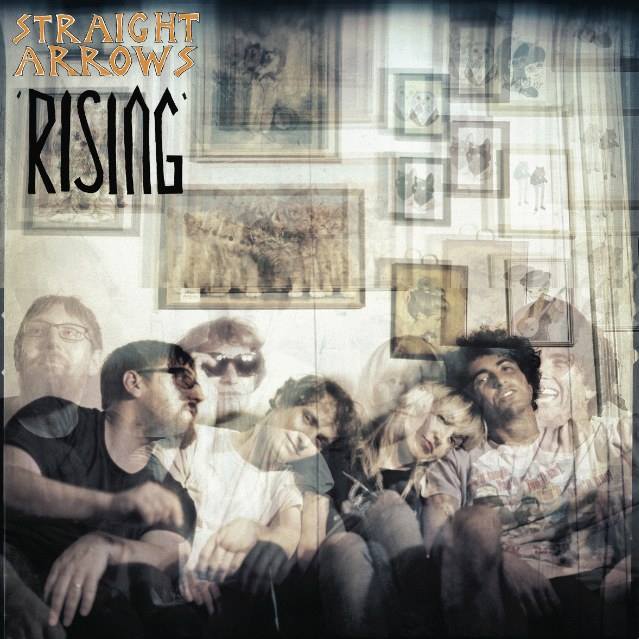
Record review: Straight Arrows – Rising (2014, LP)

straight arrows rising

Even on record, Sydney’s Straight Arrows sound like a band you want to party with. Semi-strict devotees of the original wave of ’60s garage-rock they may be, but they’ve also got more than enough primal middle-fingers-to-the-air punk attitude to make sure their second album smells more like beer and sweat than it does of nostalgia.

Not that nostalgia is necessarily a bad thing; it just sounds better when it’s run through the musical meat grinder that is Straight Arrows’ perfectly primitive guitar thrashing, barely discernible vocals and so-lo-fi-they’re-almost-non-existent bass lines.

The breakneck ‘Can’t Stand It’ immediately harks back to the classic garage bands of the ’60s, while the 90-second ‘Rotten Teeth’ is appropriately titled to be the most ‘punk’ song here. Single ‘Petrified’ catches singer and Arrows mainman Owen Penglis in a more measured mood, before the song grinds to a halt, broken and battered by the waves of messy surf guitar spattered all over the final minute.

‘Without Ya’ is an anomaly in that a prominent, driving bass-line features for the first time, with the end result benefiting hugely in what could almost be called a groovy fashion, recalling much more of a West Coast garage vibe than anything else here, but the most pleasant surprise is that there isn’t only reverb-laden garage-rock on Rising, as might be expected. At times the path trails off on tangents with strange or dark undertones, as on the introductory track and ‘Fruit of the Forest’.

This aside, be happy in the knowledge that bands like Straight Arrows – on the whole – don’t exist to take us on long-winded musical journeys into the unknown. They’re here to make us want to jump around like idiots; and thankfully this album more than does the job.

For FasterLouder

Record review: Remi – Raw x Infinity (2014, LP)

remi album cover

Last year, Melbourne rapper Remi Kolawole dropped the single ‘Sangria’; a blissed-out scorcher of a tune that spoke of the joys of summer, sun and getting sh#tfaced. There’s always a time and a place for songs like that, but the 22 year-old’s lyrics have moved on from those hazy days in the bars of Brunswick, to somewhere where the present isn’t looking quite as rosy. Like a rabid greyhound out of the traps, Remi – backed by Sensible J on drums, production and DJ duties, and Dutch on beats and production – sets off at speed from the start and doesn’t let up, with many a sacrificial rabbit in his sights along the way. He has insisted in interviews he’s not a particularly political rapper, but lines on the title track like “Tony Abbott and the Government / Need to get on the boat to Iraq and sh#t / Take a walk down the Gaza Strip / They’ll either wake up or get blasted then” say something different and show something Australian music needs a lot more of in 2014: guts. There are party tracks too (never fear), and ‘Livin’ might be the best one here; a controlled diatribe against workin’ 9 to 5, while ‘Tyson’ is brutal braggadocio at its best. While this is only Remi’s second album, after 2012’s Regular People Sh#t, it feels like the work of a seasoned pro. This guy is going to do big things. (House of Beige)

For mX

Remi: “I was trying to write stuff that was a bit deeper”

remi

REMI Kolawole began collaborating with Sensible J and Dutch in 2011, and the rapper’s lyrics have continued to evolve without looking back. The Melbourne trio’s new album Raw x Infinity takes a new, edgier direction, as on singles ‘Livin’ and ‘Tyson’.

“We’re just trying to show to anybody who had only heard ‘Sangria’ last year the direction we’re going in,” Remi says. “Our last album, Regular People S#%t, was quite an eclectic listen. A lot of people who have heard that album would probably be ready for our current album, but for a lot of people who hadn’t – as triple j opened us up to a much wider audience than before – this was a good way to let them know what they were in for when they were getting this album. We have beats that are heavily driven by strong drums, live musicianship and there are no samples on ‘Livin’. I guess it’s also a bit deeper than ‘Sangria’; we’re talking about how we’re all being told how to live, as opposed to getting pissed in Brunswick [laughs]. I guess that it’s more of a move to show people our range and what we’re going to do. We just really like the song as well.”

The 22 year-old is keen on embracing a wider range of subject matter, and tackles topics like racism and politics in his songs. But does he consider himself a political rapper?

“Quite the opposite [laughs]. I just write from the average person’s point of view. I can’t pretend to be anything more than I am. [Tony Abbott] doesn’t really speak to me or the people who are around me. Obviously that’s just my opinion, and that’s what rap is. If anyone agrees, that’s cool, and if anyone disagrees, that’s cool as well. It’s all quite progressive; we’re always trying to do something new. On this album, I was trying to write stuff that was a bit deeper. This was all stuff that I just kind of picked up, but by no means do I want to be considered a political or super-conscious rapper. I just write about what I see or what I experience, and I guess some of the political issues came out.”

New single ‘Tyson’ is a no-holds-barred blast of Remi flaunting his lyrical talents over a brutal beat.

“Obviously you should be sending a message,” he says. “That should be a part of what you’re trying to do. But at the same time, you can also rap just to rap and get it out of your system. You can write some shit that hopefully sounds cool, you know what I mean? That’s ultimately what ‘Tyson’ is; just straight rap braggadocio bullshit that I’ve tried to construct to be as entertaining as possible. All the stuff that I write is basically made up of my experiences, or stuff Sensible J, Dutch and I talk about. I could be anywhere; I could be on the bus and see something happen and write about that. On the flip side, with Sensible J; he’s making beats in his head while he’s at his computer at his day job, so you just got to let the music take you whenever, in the most un-corny and unclichéd way [laughs].”

The new material has earned the trio plenty of national radio play, which Remi happily embraces, albeit with a touch of caution.

“Up until about three or four months ago we didn’t actually have any management or anything like that,” he says. “So we always operate like nobody’s got our back, if that makes sense. We’re thankful for anyone who plays our shit, because the stuff we’re doing at the moment is lyrically and sonically different to what’s going at the moment. It’s strange to us if anyone picks up on that and we’re thankful for it. By no means are we banking our career on anyone, because I don’t think you should be writing your music for a station or a magazine or anyone. Those avenues should allow the artist to do what they do, then spread their music, not the other way around. I’m totally thankful for what triple j has done for us, as well as any other media coverage that we’ve received. At the same time, I’m not going to bank on the stuff we do being picked up or written about because that would stifle my creativity and the creativity of Sensible J and Dutch.”

The group’s upcoming calendar is a busy one, with plenty of chances to air the new material.

“We’ve got our national tour coming up; the Raw x Infinity tour,” Remi says. “Then after that, we go to Splendour in the Grass, which will be great. Then we’re doing a few other – perhaps two or three – nationwide tours before November. Then we’re going to Germany in November, and back in December to hopefully do a bunch of festivals. We’ll be doing a couple of showcases in Germany, and we’ll definitely be going over there just to kick it [laughs]. I’ve been told only good things about Berlin, so I’m pretty excited.”

RAW X INFINITY BY REMI IS OUT NOW.

For Beat Magazine.

The White Album Tour: Prefab Four

white album

IF YOU’RE GOING TO CHOOSE a single album to base your 21-musician show around, it had better be a good one.

Four of Australia’s top rock singers; Chris Cheney of The Living End, Tim Rogers of You Am I, Phil Jamieson of Grinspoon and ARIA Award-winning singer-songwriter Josh Pyke have chosen to do exactly that. Thankfully for everyone concerned, they have chosen wisely.

Their upcoming White Album Concert tour will see the four musicians backed by a 17-piece orchestra to run through the 1968 classic Beatles album on a national tour, including such numbers as ‘Back in the USSR’, ‘Dear Prudence’, ‘Helter Skelter’ and ‘Happiness Is A Warm Gun’ in a repeat of the widely successful 2009 tour that brought a slice of the swinging sixties into the modern day. High demand for the show at QPAC’s Lyric Theatre on 13th July has led to the addition of a matinee show on the same day.

Speaking to news.com.au, Jamieson and Rogers explained that it was an easy decision to reconvene and get into a Fab Four frame of mind once more.

“The timing worked,” Jamieson said. “We weren’t in a cycle trying to sell our own rubbish so we could do these amazing concerts again. It was a blast for the audience and you could not disguise the absolute joy we all had up on stage.”

Despite having commitments with You Am I and his solo work, Rogers was also quick to jump at the opportunity.

“We were completely surprised by the reaction to it,” he said. “I don’t think I’ve been in anything that’s been so complimented. Anything I’m involved in there always seems to be a certain percentage of dissenting voices questioning as to whether I’m a complete hack or not! The four of us are quite different personality-wise and quite complimentary. Doing anything that’s other people’s material is not my automatic go-to thing. I prefer writing what I perform. But it’s like stepping into a character, it’s almost like sweet relief at times. You can go and be a performer. There’s less Rogers angst, more Lennon angst.”

In terms of musical releases, 1968 was a teeny bit special. Maybe it was the influence of the Summer of Love the year before, the rise of the counter-culture movement in America and elsewhere or the sudden widespread availability of a range of mind-altering new drugs, but one twelve-month period saw the release of some of the most influential and era-defining music of possibly any other year in musical history, and to say the charts of the day hosted an embarrassment of riches is an understatement. Hendrix’s Electric Ladyland, Johnny Cash’s At Folsom Prison, The Band’s Music from Big Pink, The Rolling Stones’ Beggar’s Banquet and Van Morrison’s Astral Weeks featured alongside albums by The Doors, The Byrds, Big Brother and the Holding Company and Aretha Franklin.

At the top of the pile, though, has to be the White Album, so called for its blank, nameless cover. Written at a time when the Beatles had long since quit touring and the distance between main song-writers John Lennon and Paul McCartney was growing ever wider, exacerbated by musical differences, ego and supposedly meddling spouses, the album still sounds fresh today. It also contains one of George Harrison’s finest compositions in ‘While My Guitar Gently Weeps’; a song only taken seriously by Lennon and McCartney after Harrison enlisted the help of Eric Clapton to play lead guitar on the track. Josh Pyke explained in an interview with the AU Review why the song and album will always be considered a classic.

“It’s just a genuine phenomenon,” he said. “There is never going to be another band like the Beatles. And even if there are bands that are technically as popular or sell as many records, I think it’s fair to say they will never have the lasting impact upon culture as the Beatles have; because the Beatles came at a time when nothing was like what they were creating and they kept on pushing the limits of records, and they peaked and kind of disappeared under tragic circumstances when they were still massive; there was no slow decline.”

“With the White Album, you’ve got your raw, Hamburg rock’n’roll,” Cheney told Time Out Melbourne. “Then you’ve got stuff like ‘While My Guitar Gently Weeps’ and ‘Rocky Raccoon’. It was pretty fractured at that point, so they were all in different studios doing their own stuff. I think every band needs that friction or it’s going to result in bland music. I know from personal experience, the hardest times with The Living End have produced the best results, because you’re fighting for something, and you’re pushing each other towards a greater result.”

The show will see the double album’s thirty songs played in full and in order, starting with ‘Back in the USSR’ and finishing with ‘Good Night’, and will include guitars, strings, horns, two drummers and musical direction by former Air Supply guitarist Rex Goh.

THE WHITE ALBUM SHOW APPEARS AT QPAC’S LYRIC THEATRE 13 JULY AT 3PM AND 7PM.

For Scene Magazine/Scenestr

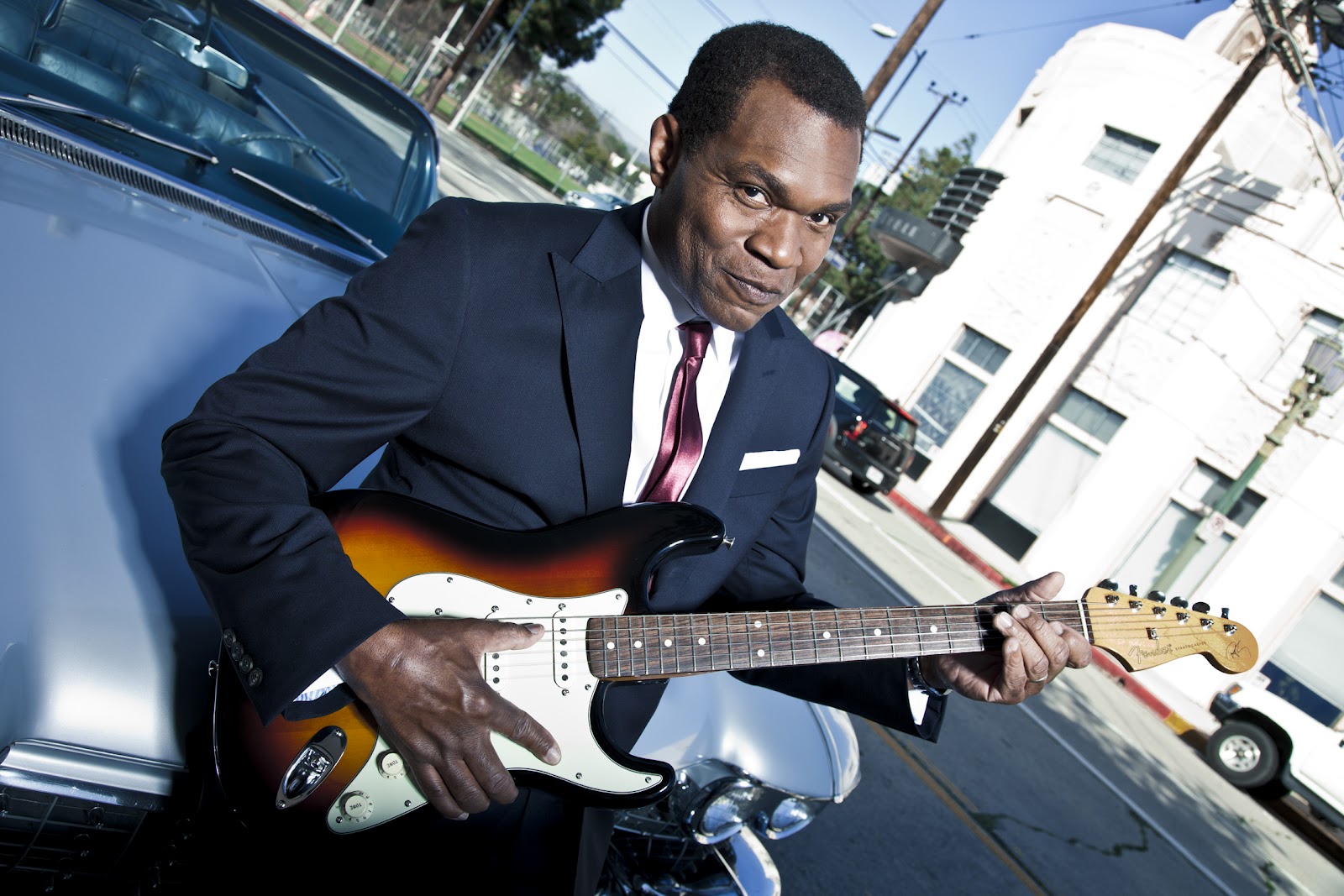
Interview: Robert Cray

robert cray

WHERE do you start with a musician as accomplished as Robert Cray? He’s been playing the blues since the seventies, has over twenty albums in his catalogue, has bagged five Grammy Awards and played with the biggest names in the business, from John Lee Hooker, Albert Collins and B.B. King. Oh, and he also appeared in Animal House with John Belushi AND is still releasing top-notch blues records. On top of all this, he’s only one of the nicest guys around. Have I missed anything? Probably.

Hi Robert, let’s talk about your new album, In My Soul, first of all. How do you feel when you have a new record being released?

Happiness. It’s great because it’s a new record that gives us an opportunity to add to our repertoire and more to play to the fans. It’s a lot of fun.

You made some changes to the line-up just before recording. Why did you feel that was necessary?

Change is good; it’s necessary sometimes. We had two changes for this record. The first of which was having Les Falconer join as drummer. I’ve watched Les from afar, but not too far away; he’s been in the Keb’ Mo’ band for years. It just so happened that three or four years ago Les asked me if I ever wanted to make a change to consider him, and I did so about 16 or 18 months ago, so that was the reason for that change. We changed keyboard players, and we have Dover Weinberg on board, who also used to be in the band in the late ’70s. We made the change because I remember Dover having a great sound and a great feel, and I thought it would be great to have him work on the new record before we went into the studio.

Will this version of the band be set in stone for the foreseeable future?

For the foreseeable future, yes. We have a good time and we have a new album to present with this band. But we also play a lot of the older songs and we have a really good time with those, thank you.

Was the soulful feel to the album a deliberate step or more of a natural progression?

It was just by osmosis, actually. We had Steve Jordan come in to do the production. Steve’s a great musician as well. He made a couple of suggestions before we came into the studio; one was the Otis Redding cover, ‘Nobody’s Fault But Mine’, and the other was a Mable John song, ‘Your Good Thing (Is About To End)’. He suggested those two songs, but I thought it was going to be that maybe we’d record them in case the band and myself didn’t have enough original material. Well, the band had original material which were rhythm and blues, and I had songs which were rhythm and blues as well, so we just wound up with soulful songs.

How did you react when he suggested covering ‘Nobody’s Fault But Mine’?

I dug it, because it’s a song by Otis that I’ve admired for years. I’ve never had the opportunity to play it, but lots of friends of mine have covered the tune and I always thought it was cool.

What else does Steve Jordan bring to the table?

Steve’s a great communicator and organiser. He gets everybody into the studio, makes them participate and feel like they’re part of the project. That’s really important and how he conducts all operations in the studio. For example, we have this one song that’s a bonus track called ‘Pillow’; it’s got this really ’70s funky feel to it. Before we tackled the song we went into the control room where Steve had a copy of Curtis Mayfield’s Super Fly record. We played a couple of tracks and started reminiscing about all the ’70s music, then we took a lunch break and let the music digest itself, you know? We came back into the studio, the electric sitar came out, different drums came out, and he had set the mood for the song. He’s in there conducting us, he’s in there dancing or he’s playing along, you know?

One of my favourites is ‘What Would You Say’, which contains a bit of social commentary. Would you call it a political song?

It’s not political in the way other songs we’ve done before covered deeper subjects like the wars in Iraq and Afghanistan. This is commentary and trying to be a bit more positive about what’s going on today with homelessness, the cancer that’s everywhere today and the war in Syria. But not in a big way, if you know what I mean. I wouldn’t call myself a political singer, but we do touch on it.

How was your experience of Bluesfest last year?

It was fantastic. We should come every year as far as I’m concerned [laughs]. It’s always a blast to be a part of it, but also to witness it. It’s a great event.

So you’re putting your name firmly in the hat for any future Bluesfests?

My name is in there every year. It’s just a matter of getting the opportunity to do it. There are so many acts who want to do it, and we have to wait our turn.

You’ve played with most of the blues greats in your time; which one made you the most starstruck?

That’s hard to say. I think all of them did, you know? I’m starstruck by all of them. But the thing is, all the people I’ve had the opportunity to meet have always been really nice and comforting, in the sense that they see how nervous you are and see that you’re awestruck and all that. But they reassure you and make you feel cool.

Could you pick one blues player who has had the biggest influence on you?

Probably Eric Clapton. I play that style of electric guitar, you know? John Lee Hooker is huge, Muddy Waters the same, but my style is more akin to Eric Clapton and the electric players he admires.

When you were in Animal House in 1977, was there any indication that it would be a cult classic movie?

As far as I knew, nobody knew what would happen with the film. We had just bit parts in it; we weren’t even credited as the musicians in the band. We just lip-synched to the music. We never saw a script, so we didn’t even know what the working title was. It was just a bunch of local guys doing a movie, then all of a sudden it’s what it is today. Now it’s history.

How much contact did you have with John Belushi?

He befriended a good friend of mine, Curtis Salgado. We lived in Eugene, Oregon at the time. Curtis was fronting a band called the Nighthawks from Eugene; it was where the movie was filmed and also where I lived at the time. On Monday nights we had a splinter group called the Crayhawks; a combination of the two bands. Belushi would come in and people would ask us if we knew Belushi was in the audience, and we’d go ‘who’s John Belushi?’ because we were always working on Saturday nights and never had seen the programme. But eventually we let him on the stage to do his Joe Cocker impersonation, and all the while the movie was being filmed in Eugene, Curtis was taking John Belushi back to his house and schooling him on blues. To cut a long story short, he got educated through Curtis and that whole thing begat The Blues Brothers. The prescription sunglasses Curtis wore became part of The Blues Brothers model and they dedicated the first record to Curtis Salgado.

What are your plans for the rest of the year and beyond?

Well, we just came back from a six-week tour of the UK and Europe. This coming week we’re about to start another six-week leg in the States, followed by another European leg in the fall. If things go right, maybe we’ll see you at Bluesfest next year. Like I said, my name is in the hat [laughs].

IN MY SOUL BY THE ROBERT CRAY BAND IS OUT NOW.

For the AU Review
Record review: Lucy Hale – Road Between (2014, LP)

lucy hale road between

A quick web search tells you everything you don’t want to know about Lucy Hale. She’s a 24 year-old country-pop-singing reality TV ‘star’ and actress from Memphis, Tennessee, whose acting credits include such pinnacles of television and film as Jonas Brothers: Living the Dream and Scream 4. This is her debut album, and while Hale has a decent country voice with twangs in all the right places, there’s nothing else here but an 11-song collection of such sickly formulaic, Shania Twain-lite drivel that will make you want to violently hurl or throw a punch at the cat. The expected themes are all present and correct, from teen angst (‘Nervous Girl’) and useless boyfriends (the banjo-twangin’ ‘Goodbye Gone’) to pseudo-driving ditties aimed at boneheaded truckers (‘From The Backseat’). “There’s nothing wrong with an itty-bitty white lie,” she sings on ‘Love Tonight’, and that’s about as deep as it gets. At this point you realise how little input Hale must have had on her own album, such is the artificial vibe seeping from every note, and while her sole writing credit appears on final track ‘Just Another Song’, by that stage, that’s all it is. It’s a formula that has been proven to work, and it probably will for Hale, but having to listen to this guff is an excruciating experience from start to finish. Until a few days ago I had never heard of Lucy Hale; how I look back on that time with longing. (Universal)

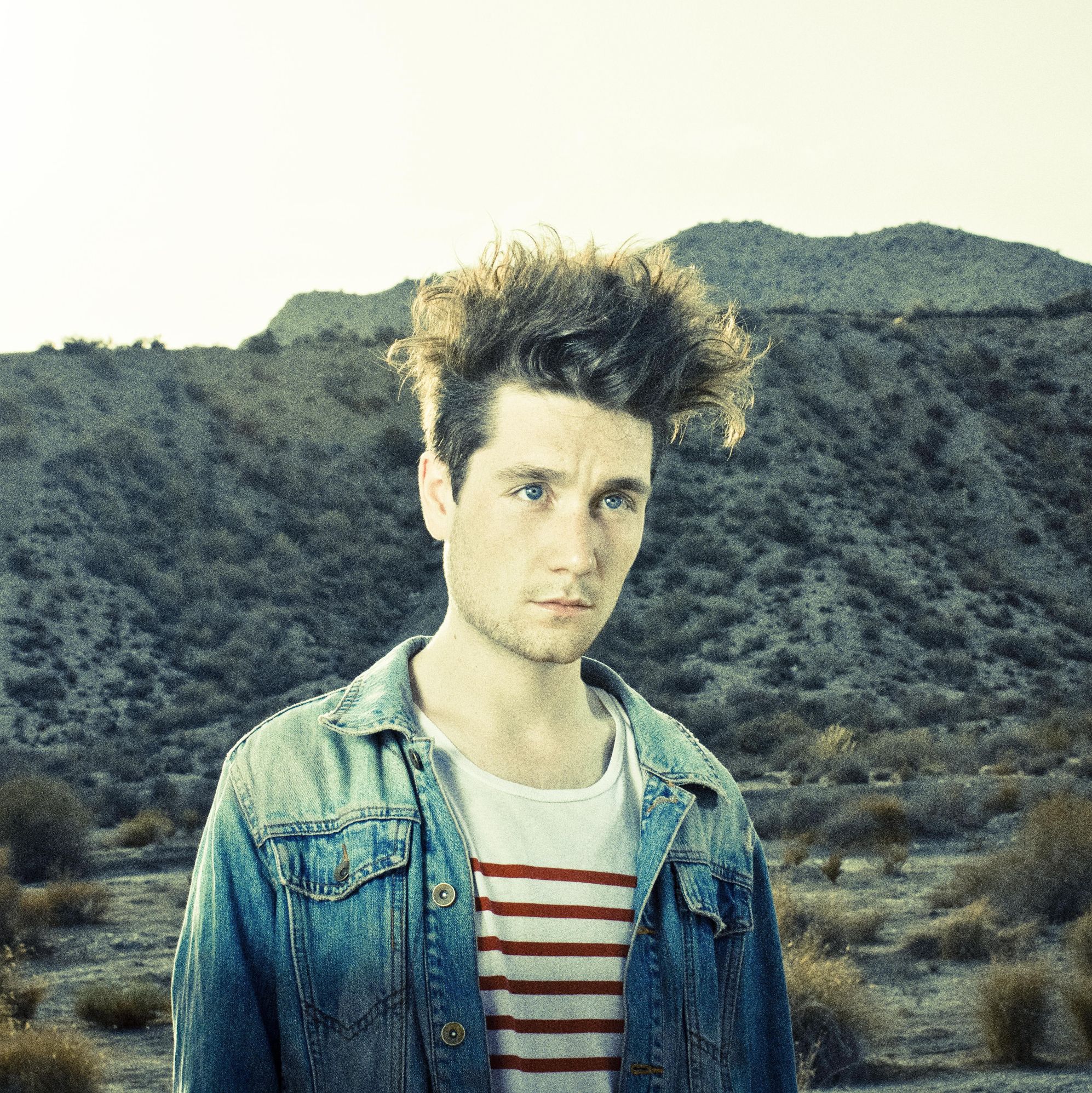
Will Farquarson of Bastille: “Australian women are very attractive”

bastille band

THE synth-pop juggernaut that is English quartet Bastille returns to tour Australia after selling out venues here last year, and bassist Will Farquarson wastes no time explaining why the band is looking forward to it.

“The women,” he says. “Australian women are very attractive. Actually, you have all the same chocolate and chips and stuff as us; that’s really homely. When you’re travelling it’s really nice to be somewhere that has things from home, like a Twix or something. I know it’s ridiculous. And you have the Queen on your money, which is nice. Architecturally it’s more like America, but the people are closer to English people, so it’s kind of like being at home but in a cool American way. Everyone is so friendly as well, and the fact it’ll hopefully be sunny most of the time is going to be good. We’re just coming for the heat.”

The cheeky Farquarson, speaking from the band’s tour bus somewhere in Central Europe, goes on to dryly explain how the group’s live show has evolved.

“We’ve got more lights and a bigger screen now,” he says. “We’ll jump about more, maybe. We’ve got a couple of new songs. One is called ‘Blade’ and is a bit rock-y; I play guitar on it, and we did ‘Weapon’ with a rapper called Angel Haze. Our fans can be quite surprised when we come on stage with a rapper, although sadly he can’t come to all our shows, so we won’t be doing that at all of them. I can’t rap; I’d have a go but I don’t think anyone wants to hear it.”

Bastille have only existed since 2010 and have released only one album, but that didn’t stop them selling out venues in Sydney and Melbourne in August.

“We’ve been lucky with live stuff generally,” Farquarson says. “It’s surprising that happened somewhere so far away, and given we’d not been there at all beforehand. It’s amazing anyway when you sell a show out, but especially when it’s at the other side of the world. It’s better than nobody coming, which would be rubbish. We’ve [recorded] quite a bit of the new album. To break things up on tour we’ve been recording while we’re away. We’ve got maybe ten or so songs as demos ready to go. In the [northern hemisphere] summer we’ll be going into the studio to get the album done and then maybe early next year it’ll be coming out. We’re not worrying too much about it; I think we’ll be okay.”

The band’s debut, Bad Blood, was re-released as an extended version entitled All This Bad Blood, which means extended periods of touring.

“We wanted to do a double album,” Farquarson says. “It’s everything we’ve done live, mix-tape things and some of the B-sides from the past couple of years. Just because something is a B-side doesn’t necessarily mean we don’t like them, and we still wanted people to hear them. We thought it would be nice to put all the things that didn’t make it onto the main album together. We’re going to be doing a load of festivals – God knows how many – over the summer, which will be wicked fun. Then we’ll be trying to record this album, then it’s back to the grindstone after that. The main objective is to get the album done this year; that’s one thing we all really need to focus on. If we can do that we’ll be laughing. Maybe we’ll have time for a holiday at Christmas, I don’t know.”

BAD BLOOD AND ALL THIS BAD BLOOD ARE OUT NOW VIA VIRGIN.

Bastille tour dates:

Friday 13 June – Brisbane Convention Exhibition Centre
Saturday 14 June – Sydney Hordern Pavilion
Sunday 15 June – Melbourne Festival Hall
Wednesday 18 June – Perth Challenge

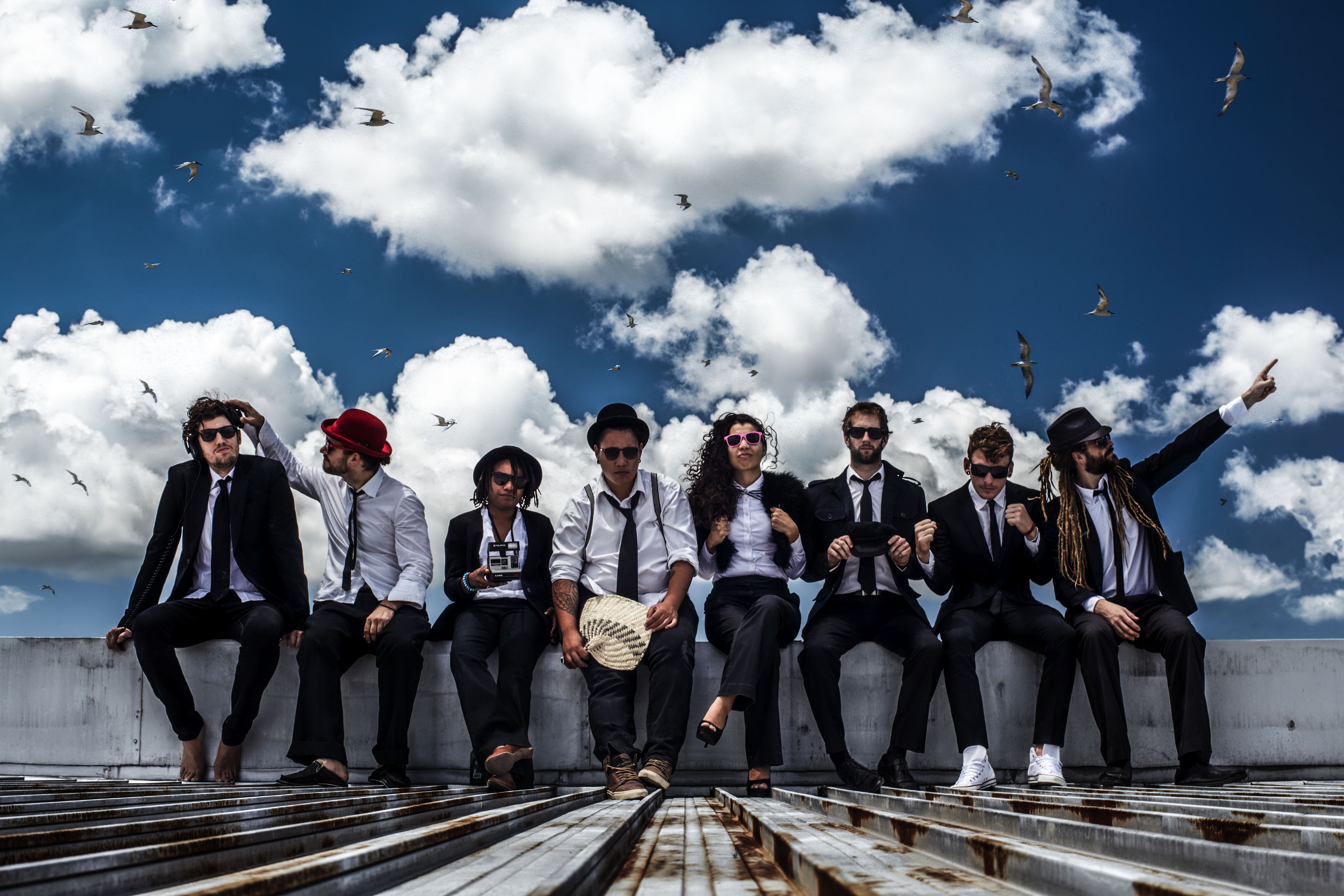
Ofa Fanaika of Chocolate Strings: “We’re kind of superstars in our own little way”

chocolate strings

BRISBANE funk/reggae/soul collective Chocolate Strings have just released a new single, and it’s a smooth and delicious taste of things to come, says singer-guitarist Ofa Fanaika.

“’Playing Pretend’ is a double A-side single with another track called ‘Polyamory’,” she says. “It’ll be part of an album that we’re looking to release in September or later in the year. We’ve recorded maybe eight tracks at this point, and we’re just working out what sort of journey we want to take our listeners on and what best represents where we’re at now. We’re going to try to capture that on the album.”

The song features the band’s trademark collision of genres and a soulful vocal by Nia Falekakala.

“It started with a guitar riff I’d been mucking around with, and the vocalist on that particular track wrote the lyrics for it,” Fanaika says. “The essence of the song is about being genuine and upfront, and saving yourself the drama of wishing you had done something right at the beginning, hence the name ‘Playing Pretend’. We were recording a bunch of tracks and it just seemed like the one that stuck out the most, and after other people had heard it, it ended up being a favourite.”

The band has eight members pitching in ideas, so when asked if everyone agrees on everything, Fanaika laughs.

“No comment! No, we’ve been doing this for a pretty long time and we’re pretty upfront with stuff. We don’t like to beat around the bush when it comes to things that are best for the songs, so we don’t actually have a lot of fights. A lot of the time we’re playing songs live before we’ve recorded them, so we can run through the process that way, and decide if it’s something we can put down.”

Firm roots in Brisbane’s creative community has helped the band develop and grow.

“I’m pretty proud to be a West End citizen,” Fanaika says. “It’s a lot different to most other suburbs in Brisbane. It’s a particularly creative community and inclusive of artists, and a real imaginarium of people that are thinking about expression. We can bounce ideas off other people who are doing a similar thing in whatever creative thing they’re promoting, and a lot of concepts cross over; the artistic, music and community worlds. In West End, our networks are shared amongst other like-minded people, so for every person who likes Chocolate Strings, they tell ten other people. In this neighbourhood, we’re kind of superstars in our own little way, and that’s kind of a nice thing.”

CHOCOLATE STRINGS PLAY THE MOTOR ROOM MAY 30. ‘PLAYING PRETEND’ IS OUT NOW.

Record review: Wolf Alice – Creature Songs (2014, EP)

wolf alice creature songs

Questions young bands have to ask themselves number 1186: do we save up all our good songs for a debut album, risking losing momentum and fans, or strike when the iron is hot, put out an EP and potentially lessen the quality of said long-player? English indie-rock quartet Wolf Alice are a band leaning heavily towards the latter approach, this being their second EP of top quality indie-rock in the space of less than twelve months. As their moniker suggests, Wolf Alice’s music is half rough and half gentle, with elements of grunge, rock and shoegaze at the pointy end and subtle indie at the other. This four track effort starts off strongly with the colossal ‘Moaning Lisa Smile’; a mesh of heavily fuzzed guitars and big vocals, before kicking it up another gear with ‘Storms’, a song which isn’t unlike something fellow English rockers Band of Skulls might write. In frontwoman Ellie Rowsell, indie-rock kids might have a new Goddess to worship; her commitment and command of every song being particularly impressive. Third track ‘Heavenly Creatures’ comes as a surprise after two alt-rock numbers; Rowsell’s whispered vocals and ringing harmonies over a simple guitar and bass line provide a cosy cushion for your ears to sink into, and closer ‘We’re Not The Same’ begins in misery before exploding with angst and feedback. It remains to be seen whether Wolf Alice can move past being labelled a ‘hype’ band to something more substantial, but if they keep tunes of this standard coming, the world of rock is theirs for the taking. (Dirty Hit)

Will Farquarson of Bastille: “Everyone at NASA seemed to be a fan”

bastille rio

ENGLISH synth-pop sensations Bastille may be in the middle of a sell-out US tour before hitting Australian shores next month, but bass player Will Farquarson has bigger things on his mind. Outer space, for one.

“We went to NASA the other day and met the director,” he says. “We expressed an interest on the Internet and then they got in touch and invited us. He said ‘Oh hi, I became the director of NASA when I stopped flying spaceships’. It’s a surreal thing, the fact that writing some songs and playing a bit of guitar gets you to hang out at NASA. Also, we got taken to the actual place where they’re building the Orion spacecraft, which is the next generation of spacecraft. It wasn’t even like a tourist-y trip; it was the actual laboratory where they’re building the spaceship, and it was all a bit weird. But a lot of things in our lives are quite surreal, to be honest. The strangest thing was that everyone at NASA seemed to be a fan, and it’s a sad thing as they were imploring to be ambassadors of NASA as they need the younger generation to engage and show an interest. When NASA people said ‘Oh my God, you’re in Bastille,’ I was like ‘Dude, you’re literally a rocket scientist’.”

Cosmic concerns aside, Farquarson and his three band-mates are looking forward to a run of Australian shows in June, having sold out venues in Sydney and Melbourne as recently as August.

“We’re always amazed when we sell out shows in our own country,” he says. “So to do it in places where we haven’t spent as much time is just amazing. It’s mind-boggling that we haven’t done much promotion there, and yet there’s this appetite for our music, but it’s very gratifying and we look forward to coming. Our live show is more band-oriented and more heavy, with a harder edge to it than the record. The record was made as a studio project and then when you tour it for a year and a half or two years it takes on a new dimension; it has a bit more guts.”

Over a quarter of a million copies of debut album Bad Blood have been sold in the UK alone; a statistic that Farquarson isn’t keen on analysing too intensely.

“A lot of people in the industry are always looking for the formula,” he says. “I think that it’s just that Dan’s [Smith, vocalist] song-writing is strong. I think sometimes people don’t realise that our stuff just connects with the public, and we were lucky that we were quite a word-of-mouth sort of thing; we never really got much hype or press in the UK. I think we just grew quite a solid, loyal fanbase over the course of the two years prior to releasing the record. [The album] went triple platinum, which is a crazy, crazy number of records to sell.”

As if that isn’t enough, the record was re-released as an extended version in November.

“It can be quite cynical after an album is out to just chuck a couple of bonus tracks on,” Farquarson says. “But there’s quite a lot we’ve done in the last year and a half that didn’t make it onto the original album. There were a lot of B-sides that were recorded that we loved just as much as the ones that were on the album, we did two mix tapes and there were was some material that we did live. So, we wanted everything that we’ve done with a whole bonus section on the second disk, and it was nice to put all the bits and bobs into the one package.”

The band recently covered Miley Cyrus’s ‘We Can’t Stop’ for a UK radio session, with almost disastrous consequences.

“We did an Eminem riff at the beginning,” Farquarson says. “Apparently he’d written a verse on his record dissing her, but then it turned out that was all a hoax. We kind of inadvertently got involved in a beef that wasn’t even real, and nobody wants to be involved in a fake beef. I think generally she gets a bit of a rough deal. I don’t like her music particularly, but she gets flak for doing things that other people do and don’t get flak for. Rihanna and Madonna and other pop stars have done things just as risqué and trashy, and yet she has become a bit of a pariah, I think.”

With an end to touring almost in sight, Farquarson already has one eye on the next Bastille album.

“We’ve got 16 or 17 tracks demoed for our second album already,” he says. “We’re going into the studio in September to record; hopefully by then we’ll have twenty or maybe more. I think it’s always better to have more material and whittle it down. Our producer has gone on tour with us, so we’ve been doing things on our days off and during soundchecks. One of the weirdest things about being in a band is that when you have so many commitments and do so much travelling, making music is sort of a secondary thing to flying around the world, touring and promo stuff. It’s been nice to spend some time being creative again.”

BASTILLE PLAY:

Friday, June 13 – Convention Centre, Brisbane
Saturday, June 14 – Hordern Pavilion, Sydney
Sunday, June 15 – Festival Hall, Melbourne
Wednesday, June 18 – Challenge Stadium, Perth

BAD BLOOD BY BASTILLE IS OUT NOW.

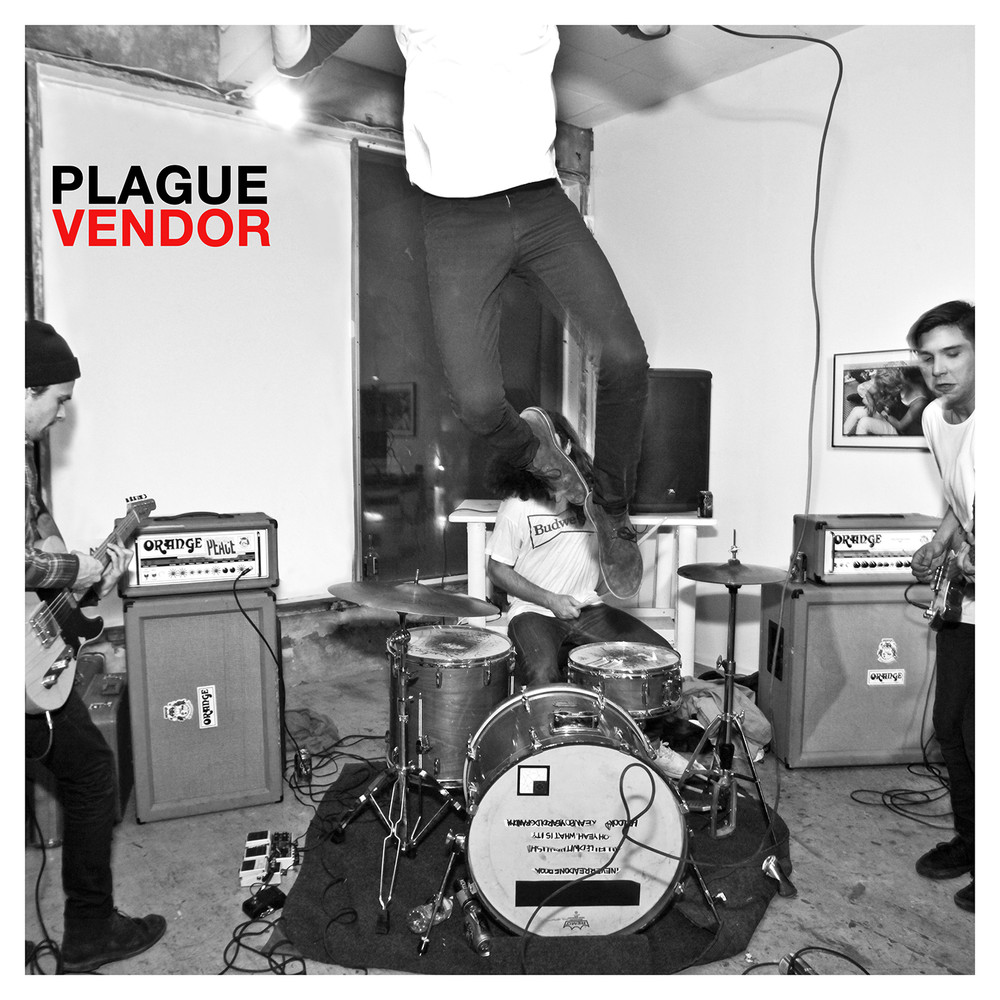
Record review: Plague Vendor – Free To Eat (2014, LP)

plague vendor

California quartet Plague Vendor may come from the same town as Richard Nixon, but they’re anything but conservative. A combination of punk energy and twisted and downbeat lyrics, the band’s debut album is simultaneously arresting and exhausting. Opener and highlight ‘Black Sap Scriptures’ is a dark tale with vaguely mystical pretensions set to a mighty and crunching guitar riff, while second track ‘Breakdance On Broken Glass’ doesn’t let the frenetic pace let off. There is so much of the Dead Kennedys in what is going on here, that fans of the seminal punks will want to check these guys out, if they’re not too busy being angry at the world to do so. It’s always interesting when an album has a song with the same name as the band on it; it’s tempting to wonder whether the track contains the entire group’s musical manifesto. If that’s the case here, then Plague Vendor’s is to beat their instruments to within an inch of their lives while shouting out the letters of their name to a bass-line that’s nasty enough to burn your record collection and blame it on the cat. Elsewhere, ‘Finical Fatalist’ tells the touching tale of frantic singer Brandon Blaine driving his car off a cliff. On ‘Garden Lanterns’, Blaine proclaims he’s “God damn, done it again, found something better than a one-night stand,” revealing himself to be an angry punk with a soft centre. This is high-octane, sweaty and shouty punk that makes you want to work off some calories in an angry, pogo-ing fashion. Not for the faint-hearted. (Epitaph)

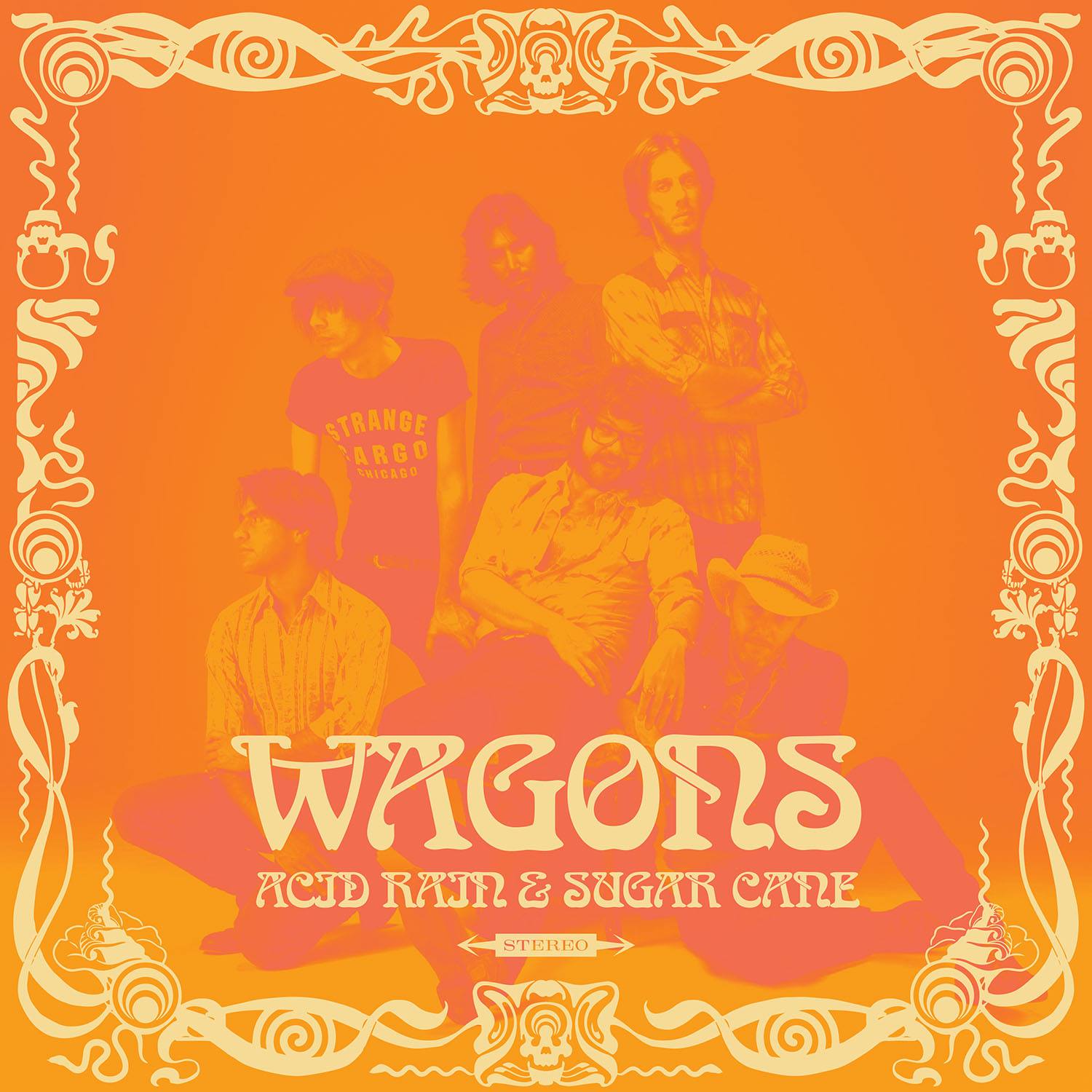
Record review: Wagons – Acid Rain and Sugar Cane (2014, LP)

wagons acid rain and sugar cane

It’s been three years since Wagon’s last album, Rumble, Shake and Tumble, but during what seems at first glance like an extended holiday, Wagons’ main man Henry Wagons became a father and made a solo album comprised entirely of duets.

Recorded in his Mornington Peninsula studio with a horde of vintage equipment and Mick Harvey on production and additional musical duties throughout, this 11-song collection – the band’s sixth – has everything long-term fans will expect to hear, and a few surprises to keep things more than interesting.

Ragged Americana, whisky-soaked lyrics and tales of heartbreak from the Victorian coast to the saloons of Nashville are the order of the day, carried off with the flamboyant gusto and cheeky humour that Wagons has earned a reputation for on the live circuit. Heart-wrenchers ‘Beer Barrel Bar’ and ‘Never Going To Leave’ sit smoothly next to galloping sex-and-booze anthems ‘Search The Streets’ and ‘Chase The Eclipse’, and Brisbane’s entertainment precinct is summed up perfectly on the brilliantly loose ‘Fortitude Valley’ with a slight twist on a classic line – ‘women to the left of me, jokers to the right’.

Recording took place with all six band members in the same room à la Bob Dylan and The Band’s The Basement Tapes, resulting in a live feel that makes sure there’s not a bad track or stale moment at any point. This is an album that is simply a pleasure to listen to, from start to finish.

James Vincent McMorrow: “It definitely took me by surprise in the most wonderful way possible”

james vincent mcmorrow

JAMES Vincent McMorrow’s music is tailor-made to fill big spaces, metaphorically and literally. Luckily for him – and us – an upcoming show at QPAC and two nights at the Sydney Opera House will allow it to do just that.

“I want [the show] to be something that’s not just song, gap, song, gap,” he says. “I want it to be something that flows and gets bigger as the set goes along. We’ve got this really expansive lighting rig that we’re bringing; it’s kind of the fifth person on-stage. Hopefully we’ll bring a booming big set.”

The 31 year-old Irishman is no stranger to Australia, having been here as recently as five months ago, but he admits the sudden demand for tickets caught him off guard, in a good way.

“I don’t really pay attention to what’s going on in particular countries unless I’m there,” he says. “We were [in Australia] in January and the reaction was brilliant. When we talked about doing these shows, the idea was to do them way later, then all of a sudden I was told things are really good here. About a week after they put them on sale, I got a call saying that the Sydney Opera House was sold out and they were adding second dates. It definitely took me by surprise in the most wonderful way possible. I mean, I’m pretty ambitious and I want to play places like that, but I didn’t expect it to happen this quickly in somewhere as far away as Australia. But then, you can’t predict everything; sometimes things just work. We just finished the US tour, and it was very much big venue to small venue to big venue, depending on which city we were in. I don’t feel any different if we go from 1600 people one night to 600 people the following; I still feel the same. Obviously Sydney Opera House is a special place; it’s like the Royal Albert Hall or Carnegie Hall or somewhere like that. There’s a resonance that goes beyond it being just another show, perhaps. I’ve looked at all the other Australian venues and they are all stunning and look amazing, so I won’t think about them any differently, and they’re all equally important.”

Released in January, Post Tropical is McMorrow’s second album, and sees his sound moving further away from his folk roots in a more soulful direction.

“This record was made for people to live with for a while,” he says. “I didn’t expect it to give itself away to people incredibly quickly. It’s been interesting going from territory to territory and seeing people’s reactions. The first record did very well in Europe, and when we played shows there we could see people starting to wrap their heads around the new sounds and new ideas. By the end of the shows we could really see people understanding it. When we went to the US, people were really into it intensely, and we could hear people singing every word. It was very soon for that for me; with the first record I spent two years working away before people really heard anything. The response to the new record was really quite compelling and drove me onwards to play the songs better and better every night. The response has been how I hoped. I never expect it; I just hope for it when I do these things.”

The first single is ‘Cavalier’, which McMorrow explains is the most accurate representation of what Post Tropical has to offer.

“I chose it because I thought it was the best song on the record, in the sense of letting people know what’s coming,” he says. “I wanted it to be a song that draws a line in the sand, or plants my flag in the ground or whatever you want to call it. It’s a definitive sound; there could have been songs that show where the last record was and where the next one is going, before we deliver something like ‘Cavalier’ further down the line, but I didn’t want to do that. I think people are smart, and I’m not in the business of trying to convince people; you either like it or you don’t, and that’s totally fine. With ‘Cavalier’, I thought people will hear it and either be in or be out. If they hear it and understand what I’m doing and what I’m going for, musically and stylistically, then they’ll like it. I don’t want to waste people’s time putting out songs that might be a little bit like something they might’ve heard before, then when they go to the record it’s different.”

JAMES VINCENT McMORROW PLAYS QPAC FRI 23 MAY. POST TROPICAL IS OUT NOW.

Interview: Andrew Savage of Parquet Courts

andrew savage

BROOKLYN, New York-based indie-rock quartet Parquet Courts will return to Australia to play Splendour in the Grass, having been here as recently as January for St. Jerome’s Laneway Festival. With a new album – entitled Sunbathing Animal – about to be released, their show promises to be heavy on new material, with the band’s trademark energy and witty lyricisms being certain to feature. I talked to singer-guitarist Andrew Savage to find out the band’s plans and why the ‘slacker’ label needs to be taken out of circulation.

Congratulations on the new album. How do you feel knowing it’s about to be released?

Man, it feels great. It didn’t feel real until I held it in my hands. I just got my own copy last week. It’s the coolest looking album I’ve ever been on, that’s for sure; I love the way it looks. It’s my first gatefold, and it’s been my lifelong dream to have a gatefold record, as they were always the coolest ones when you were a kid. So yeah man, I’m feeling good about it. Throughout the whole time of making it, we were aware that we had a new audience, you know? We were very cognisant that we had a fanbase, whereas with Light Up Gold, nobody really knew us and we didn’t have to worry about it. I would hesitate to call what we feel worry, but it’s more of an awareness that kind of resulted in more of a realised album.

Did the realisation you have a fanbase change your approach to songwriting?

Not explicitly, because it was one of those things we knew in the back of our heads and slowly started to realise, but I think it did make me aware of not wanting to give people the same thing they got on the album before, you know what I mean?

Do you think about how the songs will sound live when you write them?

The songs in Parquet Courts are really fully written live, or half-and-half at least. A lot of times we’ll come up with stuff in the studio, and that’s really fun, but a lot of the songs on Sunbathing Animal are a year and a half old, so we’ve been playing them for a long time.

How have they been going down live?

We’ve had songs like ‘She’s Rolling’ that have been in the set since before Light Up Gold was re-released on What’s Your Rupture? Those have become kind of set standards by now. We’ve gotten mostly positive feedback from all the new stuff live.

Sunbathing Animal has come quite quickly after Light Up Gold – do you feel like you’re under pressure to release new material quickly, or do you prefer to do it that way?

It’s not that quickly, because Light Up Gold came out in August 2012, so in August it’s two years old. Even still, when it came out, we had already recorded it about six months before that, so that’s pretty well-worn territory. Honestly, we have been dying for this to come out as we want to give people something new. I don’t feel a pressure though, as there’s nobody who will even give it to me. We don’t go into the studio unless we have at least enough stuff to start; we only record when we’re inspired to.

How was your experience at the Australian legs of Laneway Festival earlier in the year?

It was great – I loved Australia. I had already accrued a few friends down there, so we got to see some people we hadn’t seen in a while. I liked the festival, although we played some club shows too in Sydney and Melbourne, and I think that was probably the highlight for me.

What can fans expect from your show at Splendour?

I hope they give us at least an hour (laughs). It’ll definitely be mostly stuff off Sunbathing. That’s what we’ve been waiting to do for a long time. We’ve held back on doing all new stuff because we realise not everybody knows all that stuff yet, and it might be a bummer for somebody to have a band come and play a bunch of songs nobody knows. We’ll be in Japan the day before Splendour in the Grass, and then two days after we have to be in Chicago, so we’ll only be in the country for about 48 hours.

You so often have the ‘slacker’ label pinned on you. How do you feel about that?

I think that calling someone a slacker is kind of slacker, because it’s lazy. If anyone takes just a little bit of time to investigate who we are as a band, you’ll realise that it’s not applicable. At the same time, I understand half of rock and roll is lore, so if someone says these guys are slackers, then people believe it because that’s kind of an archetype that exists in rock and roll; the slacker guy, or the guy who’s a deadbeat and doesn’t have to work hard for it. It’s a fantasy, you know? People like that are pretty rare. People who get called slackers or slacker artists would surprise people with how non-fitting that term is to them. You can’t keep making art if you’re a slacker; part of being an artist is staying hungry and continuing to do what you do. It’s one of those things that once someone says it, people don’t question it, and it becomes part of the language. Once upon a time someone called us that, and most people just say ‘that’s good enough for me’.

Do you read or care about reviews of your albums or shows?

To me, a bad review is when someone doesn’t really think about what they’re doing. Even if a review is heavily critical and against what we’re doing, if it was done intelligently I would still consider it a good review. To me, the bad reviews are the ones where obviously the person hasn’t listened to the whole record or maybe even made a blind endorsement. To me, that’s a bad review. When you work so hard on something, you want to hear what people think about it. I could pretend to be one of those aloof guys that doesn’t read reviews and don’t care what people think. I’m interested in reading or hearing about how someone analyses what I’ve done; that’s mostly what it is.

Another thing you’re often called is a ‘buzz’ band. Does that have any meaning to you whatsoever?

I think that’s kind of silly. I don’t even know what that means. I guess it’s just a band that’s popular at the moment, which we kind of are. That’s not something I care about. We’re not trying to maintain ‘buzz’ status; it’s kind of a dispensable term. There’s always a new buzz band, but I’d kind of like to be one of the bands that moves past that and becomes just a regular band.

Parquet Courts hasn’t embraced social media as much as most bands tend to do. Is there a particular reason for that?

I don’t have any social media personally, and I’m the only one in the band likely to maintain it if we did. I don’t have Facebook, Twitter or any of that stuff. I’ve got Gmail; I talk to people on that, but it’s really that nobody in the band wants to maintain it. It’s not so much of a statement, and I have certain convictions in that world, but with Parquet Courts it’s a if-it-ain’t-broke-don’t-fix-it kind of thing. None of us have ever done [social media] with a band, and I was playing music long before the advent of social media and I remember it being just fine for me. In other words, it hasn’t presented itself as a necessity to me. In some ways, it makes creativity harder and is kind of a big distraction. It’s kind of like white noise to me, and I’ve got enough white noise in my life to worry about; I don’t need more.

What are your plans for the rest of the year?

We’ll be touring all summer. I’m not sure what’s going to go on in the fall, as my brother – the drummer – is finishing up school and has to take five different math classes. Sean and his wife are expecting a child in September, so naturally he’s going to take time off to be a dad. I can’t exactly say what the future holds after the summer, but definitely this summer we’ll be hitting it hard and going everywhere we can go.

SUNBATHING ANIMAL BY PARQUET COURTS IS OUT JUNE 2nd. PARQUET COURTS PLAY SPLENDOUR IN THE GRASS.

Record review: Parquet Courts – Sunbathing Animal (2014, LP)

parquet courts sunbathing animal

It’s tempting to pin the ‘slacker’ label on New York indie-rock quartet Parquet Courts, given that their most well-known song to date, 2012’s ‘Stoned and Starving’, tells the simple tale of singer Andrew Savage wandering the streets fiending for “Swedish fish, roasted peanuts or liquorice”. To do so, however, would be a disservice, as there is much more to the band. Featured on their second album Light Up Gold, that song introduced the everyday laugh-out-loud ramblings of a young city musician describing his surroundings, and was enough to bag the band slots at both Laneway Festival and Splendour In The Grass this year. One of the great – and simultaneously infuriating – things about Parquet Courts is that it’s not always clear when they’re being serious and when they’re taking the piss. Undoubtedly a fine and witty wordsmith, frontman and lyricist Andrew Savage comes across as part Ivy League stiff, part frantic punk-rock poet; but his energy and commitment make him a believable street storyteller on Sunbathing Animal. Unlike the instantly explosive Light Up Gold, the album begins in more measured fashion with ‘Bodies Made Of’, before setting off at pace with ‘Black & White’ and breaking the momentum down to a slow crawl on ‘Dear Ramona’. Among the remaining full-tilt rockers are ‘Instant Disassembly’, which could easily be the soundtrack to a comedy Western, and ‘Raw Milk’, which adds a hint of blues to finish up. While they’re now opting for a more cautious approach to urban punk than the head-on take of previous work, it’s this progression which keeps Parquet Courts’ particular brand of indie-rock more exciting than most.