Live review: HOLY HOLY + Fractures + Big Bad Echo – The Zoo, Brisbane – 22/8/15

SOMETIMES I think I’ve had enough of all these bleedin’ indie bands and the whole damn scene. I mean, how am I meant to feel good about myself when they’re making looking cool appear as easy as flicking on a switch, while I’m four beers in with a self-conscious sweat on my back that’s making me want to pack in this gig lark for good?

It’s probably a good idea, therefore, to be reminded of what a great guitar band can do and what an indie-rock gig can be from time to time. The warmth, the uplifting fervour, the sheer bloody majesty of it all. It’s good to be reminded of these things, and HOLY HOLY (augustly capitalised, if you please) seems the type of band capable of doing it. A sold-out Zoo is, as always, the prime venue for the occasion.

Two support bands set the scene for tonight’s show. First up is Brisbane quintet Big Bad Echo, who will have won a plethora of new fans with this performance. Part The National, part Jesus and Mary Chain, part “huh?”, their dark and trippy jams are mesmerising and intense. Eyebrows were raised as a saxophone was produced at one point, but it was a move that only served to make their strangeness more daring, and as a result, endearing. Consider this reviewer converted.

big bad echo

Fractures is Melburnian Mark Zito, who delivers a collection of dark and often melancholy songs from his debut, self-titled EP. ‘Unwind’ and new track ‘Noise’ sound particularly good and go over well with a swelling audience bursting with anticipation.

fractures

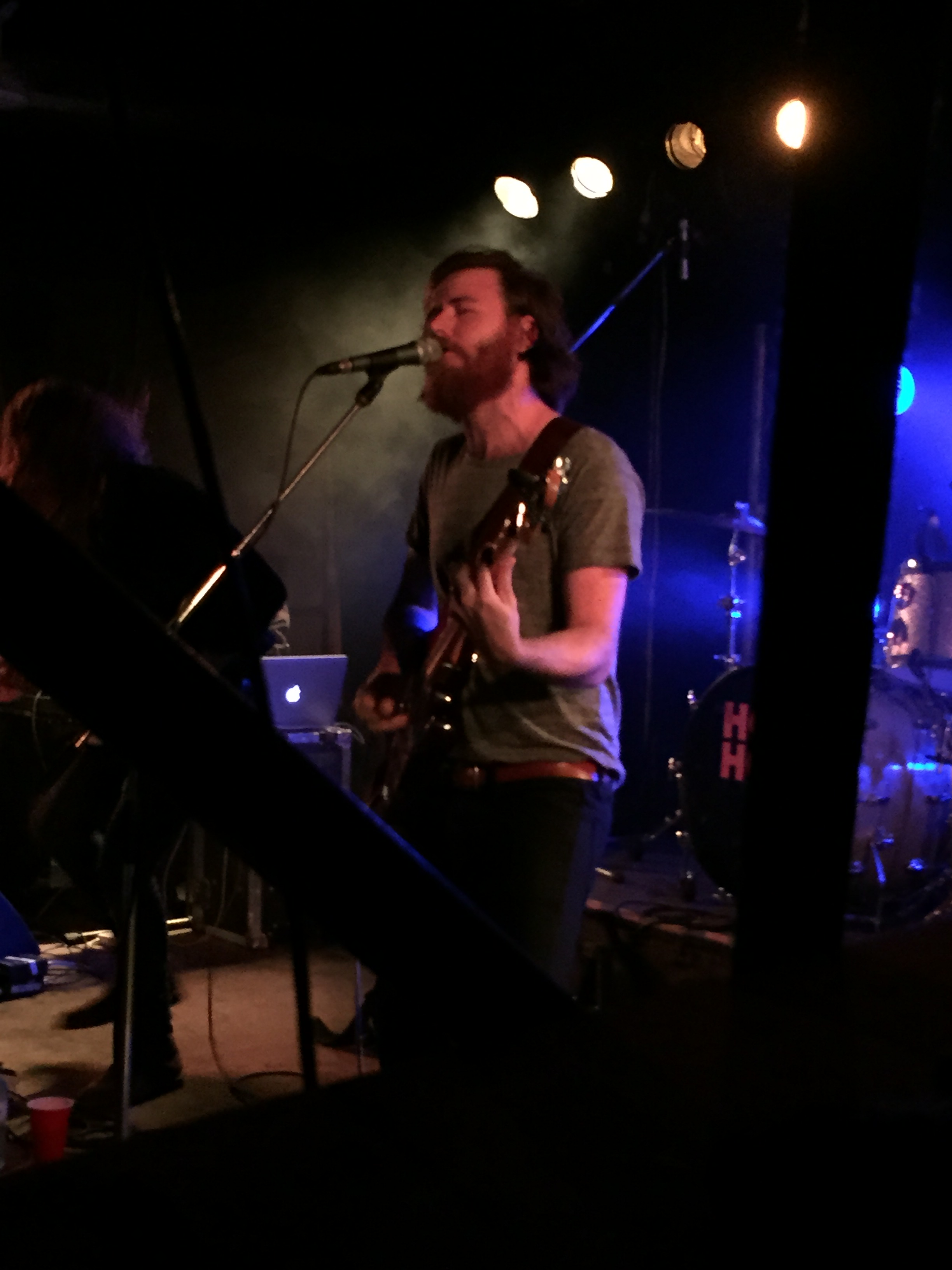
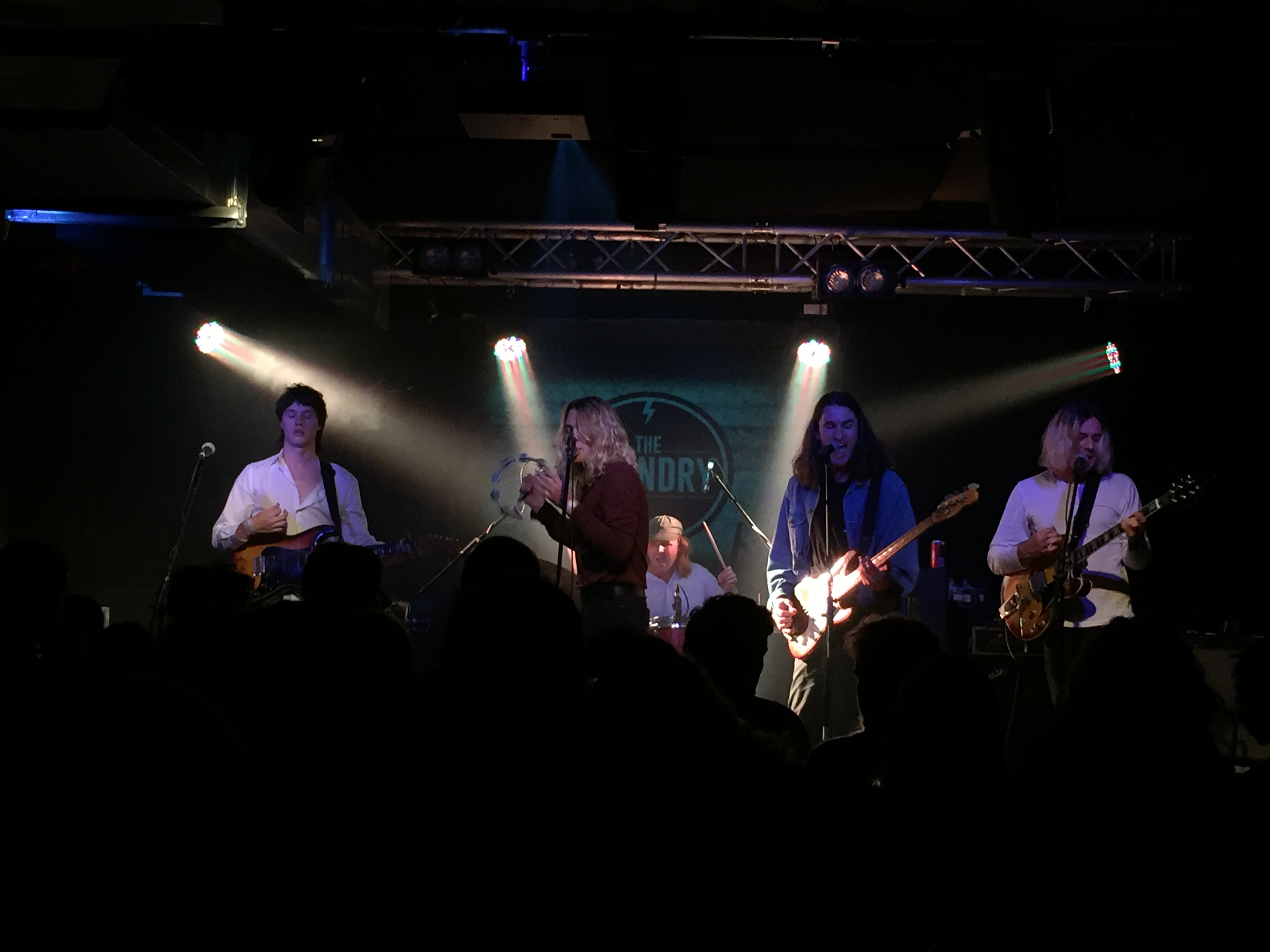
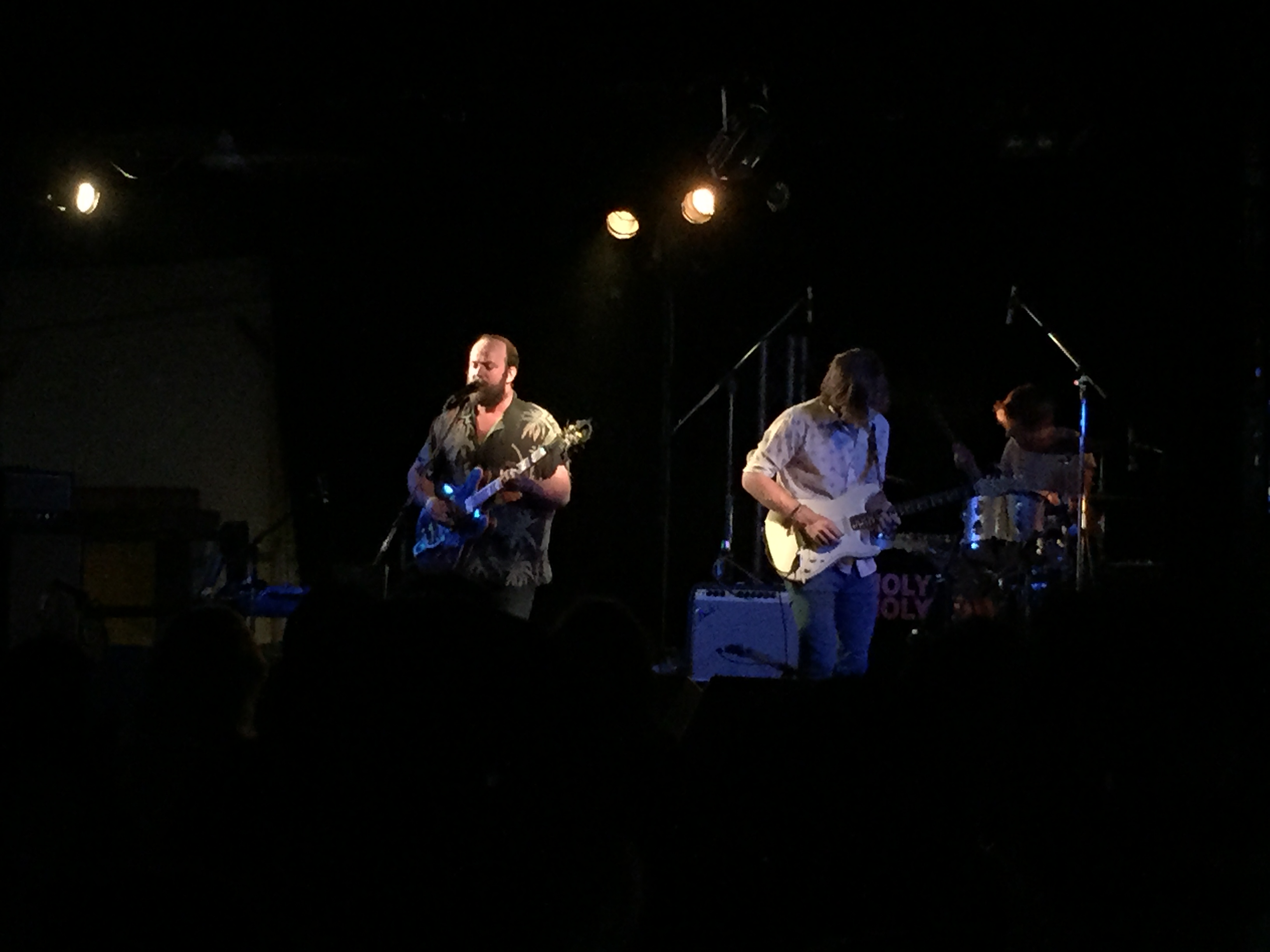
And so, time for that aforementioned majesty. HOLY HOLY are a band on an upward trajectory that has recently seen them tour overseas, play Splendour in the Grass and release a well-received debut record. Singer/guitarist and songwriter Tim Carroll’s Brisbane roots make this particular show a little bit special for the band and audience, and the boys deliver in fine style (and yes, there was dancing).

holy holy brisbane

‘History’ and ‘Sentimental and Monday’ are top tunes to start with, as Carroll’s controlled, masterful vocals compliment Oscar Dawson’s slick licks. ‘Wanderer’ quickly follows in what is a largely laidback and comfortable set so far, before a Terminator 2: Judgment Day theme cover pops the balloon of earnestness in unexpected and compelling fashion. ‘House of Cards’ and ‘A Heroine’ further cement the band’s skills as not only top songwriters but performers too, and as ‘Impossible Like You’ leads into the soaring ‘You Cannot Call For Love Like a Dog’, some sort of symbolic wall is kicked down and the mood in the room instantly feels elevated by several levels. It’s a song good enough to remind even the most weary gig goer of the joys that drew us in in the first place; all soaring dual guitars and singalong lines that demand facial contortions from everyone who wants to sing or air-guitar along.

An encore of Neil Young’s ‘Southern Man’ rounds off what is a fantastic night of rock music, provided by an Australian band who have come of age in recent months. As I take the first steps along Ann Street towards the chaos of Brunswick Street Mall, I can’t helping feeling my faith in indie-rock is restored.

Live review: The Foundry Re-Launch – Fortitude Valley, Brisbane – 20/8/15

the foundry brisbane

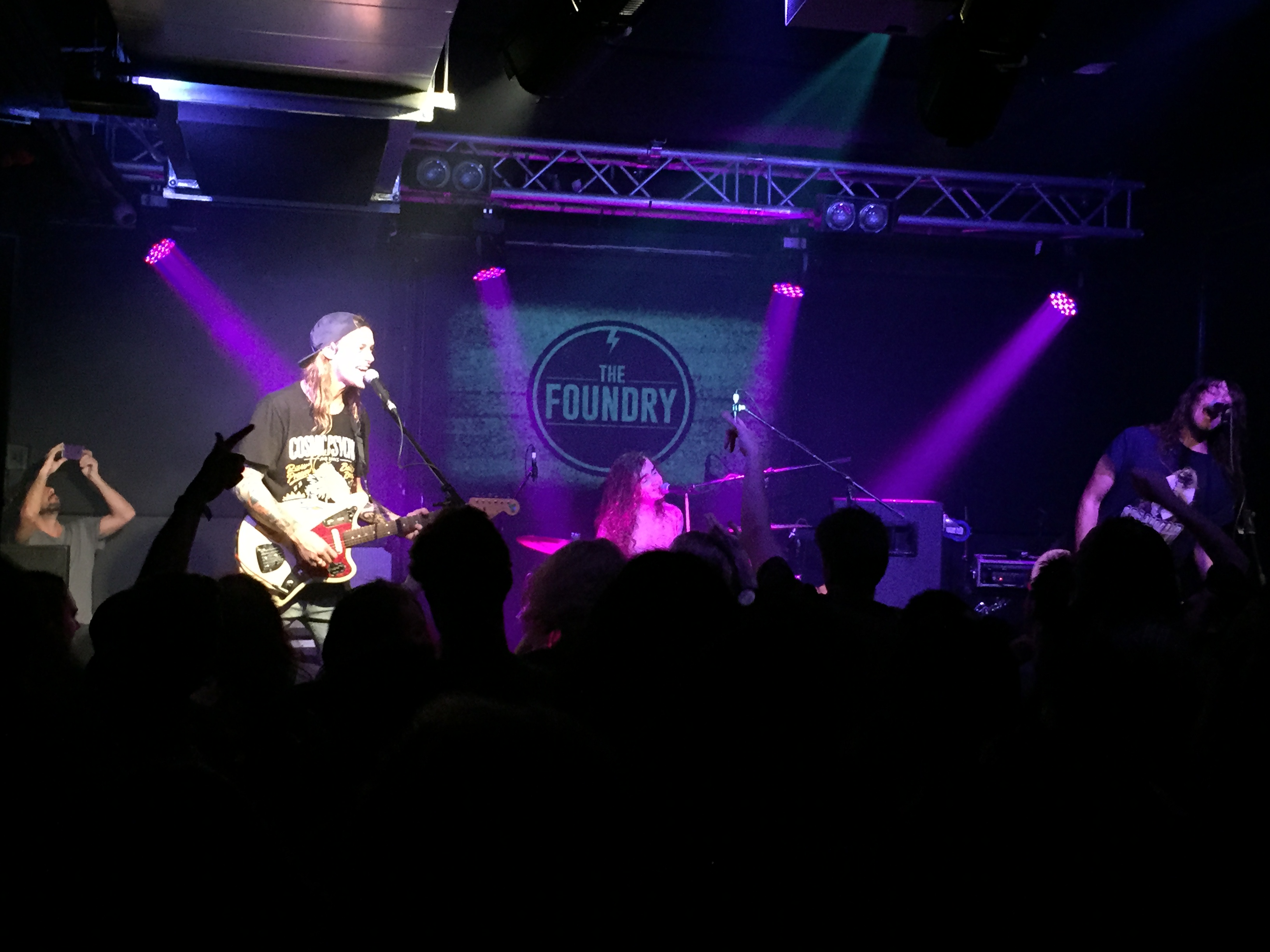
‘G’DAY, it’s been a while,’ read the sign over the door of Fortitude Valley’s newest and coolest live music venue for its official re-launch last night (Thursday 20th), as the Foundry reopened its doors for business after what has seemed like a long wait since its initial March opening.

Live performances from Major Leagues, Orphans Orphans, Palms and Dune Rats helped the Wickham Street live venue, arts space and creative studio complex celebrate its return in explosive fashion, in what is another major win for Brisbane’s live music scene.

Many rounds of complimentary drinks and food courtesy of the adjacent Greaser Bar helped a packed house settle in before local lasses (and lad) Major Leagues opened the musical entertainment for the evening with a typically delicate set of pop and shoegaze tracks, with ‘Endless Drain’ sounding particularly good in front of a rapidly growing audience.

Spencer White of local supergroup Orphans Orphans probably had the biggest and most impressive frontman pout on display anywhere in Brisbane during his band’s set, to go with his equally impressive mullet and undeniable lead singer charisma. The quintet – also featuring members of Jungle Giants, Moses Gunn Collective and the Belligerents – put on a wonderfully retro show of ‘60s and ‘70s-tinged pop tracks with clear nods to Jagger, Morrison, and even a little David Johansen.

Orphans Orphans

Orphans Orphans

Palms are a special band. The Sydney quartet seem the type of rough-and-ready gang who would be the most energetic party guests but would probably destroy you in a fight, yet their best songs have titles like ‘Love’ and ‘Don’t Be Ashamed’ – both of which sound fantastic tonight. Despite it being their first gig in over a year, the guys shred with sweaty aplomb, lead by the always-impressive Al Grigg.

Palms

Palms

And so, with the eloquent opening of “We’re Dune Rats, you cunts,” the Brisbane trio let loose a typically shambolic set filled with countless drug references, nudity, offers of sex and C-bombs; basically exactly what has come to be expected from a Dune Rats performance. ‘Dalai Lama Big Banana Marijuana’ is enough to have the audience’s dancing off-tap, while ‘Red Light Green Light’ gets the biggest reaction of the night, leaving DJ Dom Alessio to pick up the pieces.

Dune Rats

Dune Rats

It’s taken a while, but the great news is the Foundry is back and is here to stay this time. There’s already an outstanding list of gigs locked in for the rest of the year, leaving no reason for you to not check it out.

For Scenestr

Record review: The Babe Rainbow – The Babe Rainbow EP (2015, EP)

babe rainbow ep

As sure as smoke means fire, where there are psychedelics, the sitar is certain to follow. George Harrison and Brian Jones were largely responsible for introducing it to Western audiences in the sixties, and it’s satisfying to see its mystical qualities still enhancing the mood of music lovers half a century later. Byron Bay’s The Babe Rainbow have risen to the challenge of being modern-day champions of the ancient Indian instrument, and carry the weight of expectation with aplomb on this debut self-titled EP. Describing their style as ‘punk mushroom’ on social media is somewhat of an evasive move by the trio; in truth this EP owes as much to the Kinks and the Beatles as it does to Syd Barrett and Kevin Ayers. At only four tracks and 12 minutes it’s a brief but absorbing affair, opening with the infectiously jangly ‘Love Forever’. Galloping single ‘Secret Enchanted Broccoli Forest’ flips the calendar back to the summer of love with the aforementioned Eastern flavours, while ‘Planet Junior’ finds a much more mellow level and ‘Ash May and Dr. Lovewisdom’ is deceptively dark. The best bit about this EP is that it’s not a wig-out record that gets lost in a droning fog, but a comfortably hazy, psychedelic twangfest reined in by a three-minute pop structure. Incorporating pop sensibilities is an ace move by a group of guys who don’t allow the ability to play tightly get in the way of a being a band who look like they just got off the bus to San Francisco circa 1967. These tracks are fun, catchy and just a little silly, making this a promising release from a band worth keeping an eye on.

For Beat

Record review: Holy Holy – When the Storms Would Come (2015, LP)

holy holy

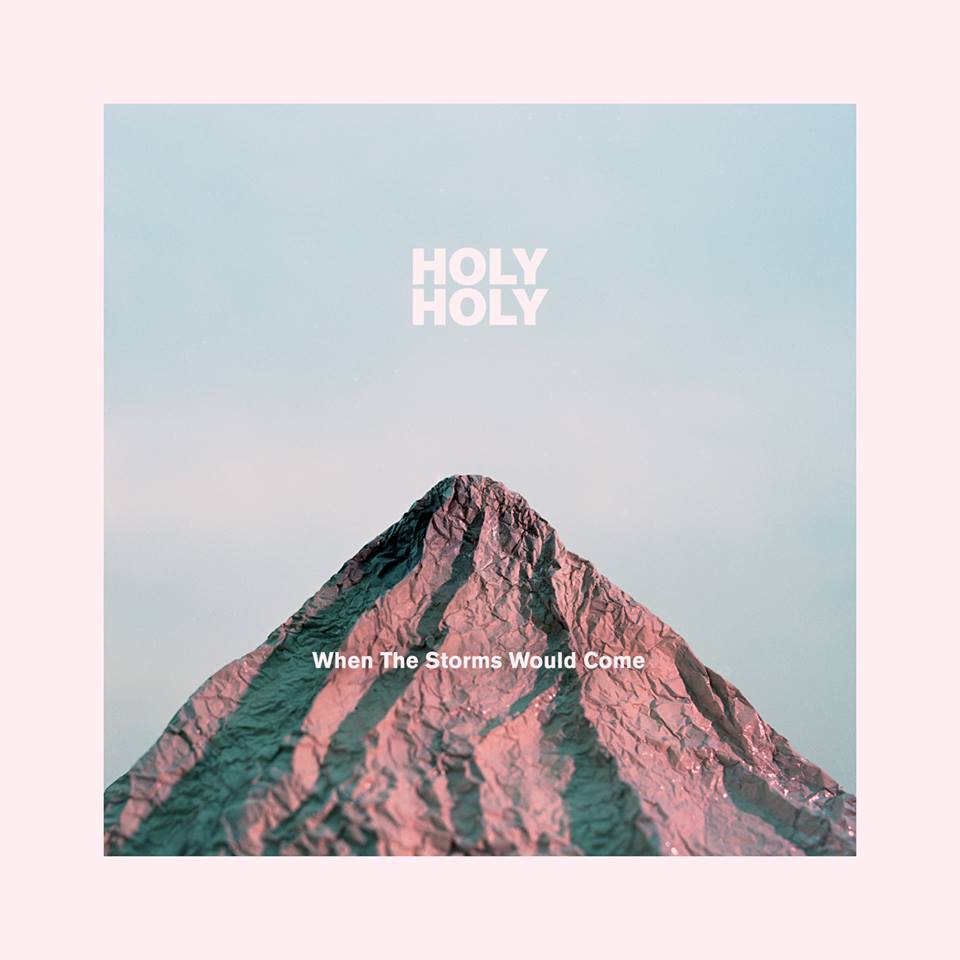
Ambition has its pitfalls. A young band with big ideas and vague lyrics referencing “burning hearts” and “faces changing” risks being compared to U2, or worse; Mumford. To counter, you’ve got to bring something of your own to the table; bait to drag the listener’s mind from the horizon to the foreground. A handsome helping of compositional clout is what sees Holy Holy’s Tim Carroll and Oscar Dawson stand head and shoulders above many bands of a similar ilk, and a debut album of class, artistry and scope is the general result of their efforts. The Brisbane/Melbourne duo are fresh from the Splendour mud and recent European shows, where these songs have been going down a storm, including meandering first single ‘History’ and the pleasantly lilting ‘Outside of the Heart of It’. Just as you’re getting used to the folky melodies, though, they hit you with the atypical ‘You Cannot Call for Love Like a Dog’. An all-dominating dual-guitar T-Rex of a track, its soaring lead lines and solos are easily the highlight of the album, and make you wish the band would take a trip down to Shredtown more often. ‘Pretty Strays For Hopeless Lovers’ gets close to the same level of prodigious picking, but, having peaked at track six, the second half of the album feels like a trip back down the mountain depicted on the cover. The ambition of ‘… Like A Dog’ is the major wow factor here, and while some of the slower tracks are somewhat same-y, this is a debut album of some promise.

For The Brag

Record review: Tame Impala – Currents (2015, LP)

tame impala currents

“It is not the strongest or the most intelligent who survive, but the ones most responsive to change” is a misquote often attributed to Charles Darwin, and it’s an idea vocalist and songwriter Kevin Parker seems acutely attuned to on Tame Impala’s contender-for-album-of-the-year third LP. Psych-rock has been the name of the game up to now, but would you expect such an accomplished band to trundle out the same smack as before? “They say people never change, but that’s bullshit,” Parker sings defiantly on ‘Yes, I’m Changing’, as guitars make way to more electronic (read: dance and pop) elements than on any TI release thus far, with notable exceptions ‘Eventually’ and the goofy disco-funk of ‘The Less I Know the Better’. His love of ‘90s Michael Jackson shows in ‘Love Paranoia’, while ‘Gossip’ recalls 1998-era Air and ‘Past Life’ gets deep into dreampop territory. There’s no big rock number in the vein of ‘Desire Be Desire Go’ or ‘Elephant’, but the addition of one doesn’t feel like it would be a good idea. In fact, this is the most coherent Tame Impala release yet. These are the times, people: some of the best Australian music is being made right here, right now. Well, in Fremantle, to be precise. Currents is the sound of Parker dropping his guard and embracing everything he loves about great pop music.

For The Brag

Record review: Bully – Feels Like (2015, LP)

bully feels like

“Invisible handcuffs locked on me, been praying for my period all week,” sings Bully songwriter Alicia Bognanno a few bars into single ‘Trying’. It’s an appropriate glimpse into the mind of the Nashville band’s frontwoman; her lyrics are as honest as they are defiant. With so much to get off her chest, it might be expected that her band’s debut album be overly self-indulgent, but there’s a charming and vulnerable side to Bognanno that, when coupled with the quartet’s grunge-y riffs, makes for an album that rocks in all the right ways. When she’s not gently admitting “I’m just looking for clarity to help me to get through,” she’s yelling “I remember getting too fucked up, and I remember throwing up in your car,” in opener ‘I Remember’. The 25 year-old’s stroppy contempt in ‘Picture’ will speak to anyone who has had their photo taken when they didn’t want to, while lines like “I thought that he would never hit a girl, but I guess you never know” are delivered with a world-weariness of someone who has seen it all. ‘Trash’ is nothing like the New York Dolls number of the same name, but prowls dark corners with its hackles raised, and the title track owes much to Billy Corgan. There’s a whiff of early Replacements in the likes of ‘Six’ and ‘Brainfreeze’, but it’s ultimately Bognanno’s lyrics and delivery which steal the show here. Well worth checking out.

For Beat

Josh Pyke: Talented Troubadour

josh pyke

FOR a guy promoting his latest album, Josh Pyke isn’t that fussed talking about it.

In fact, he’s happy to discuss anything but. Is this a trait borne from arrogance, or the humility of a man who lets his music do the talking? The smart money is on the latter.

With ARIA award wins, widespread industry acclaim and legions of fans on his side, Pyke could be forgiven for feeling confident about the release of his upcoming album, But For All These Shrinking Hearts. Instead, the Sydneysider is keeping his feet on the ground and aiming – as always – to connect with his fanbase in the most personal way possible.

“For me, the biggest barometer for success is good touring,” he says. “Last year was the strongest touring I had done in my career. It was incredibly gratifying at that point in my career; ten years in and with four albums at that point. To be playing to 3500 people at a sold-out solo show in Melbourne felt incredible. My hope is to play great shows to people who really want to be there. I want my songs to become part of peoples’ lives in some way. The best feedback I get is when people say one of my songs was played at their wedding or when people get tattoos of my lyrics or something like that. I want to write songs that mean something to people.”

The 37 year-old releases his fifth full-length on July 31, but what’s getting him most impassioned right now is the current state of the creative industries.

“I think about this stuff a lot,” he says. “How can people do their best work and earn a living – even a modest one – that will allow them to do it full-time and become an absolute gun at what they do? The creative industries are passion industries, so [they] don’t pay very well, and you’ll often hear the argument that [people in creative industries] are doing what they love, so why should they get paid at all? It’s just a ridiculous argument, because people value creativity. They value it enough to steal it; they just don’t value how it gets made. I kind of understand that as a consumer, but the only way to counter it is to figure out a way to remunerate artists without having much of an impact on general consumers. As much as subscription services aren’t paying artists huge amounts yet, I’m hopeful they will at some point. I like that fact they offer the consumer a great product and the consumer can feel virtuous in knowing they are paying for what they are consuming, and it doesn’t take a lot of effort. But I think as soon as you create the barrier of a payment it makes the consumer not want to do it, and begins the cycle of rhetoric and fucking bullshit like ‘You don’t deserve to get paid,’ ‘You’re doing what you love,’ ‘The labels are the problem,’ and all this stuff. I don’t think it’s really fair that people who aren’t experts in the music industry or being a musician to have such strong opinions on it; it really annoys me, you know? I don’t have really strong opinions on how to be an accountant or a teacher. I think they are really important jobs and I don’t begrudge those people getting paid for what they do because they’re experts at something I can’t do. But you don’t see that in the creative arts, because everybody has an opinion because it’s a subjective thing.”

So what about the small business of that new album? Surely Pyke has something to say about it.

“I feel good,” he says. “I love the record and I feel very proud it and the development it is from my previous stuff. It’s always scary at the same time; basically inviting people to judge it. But I’m super-proud of it and that’s as much assurance as I can have about it.”

But For All These Shrinking Hearts is a heavily thematic story of Pyke’s life over the last couple of years, with many lyrically-rich stories for fans to pick apart.

“I hadn’t given it a lot of thought up until I started being asked about it in interviews,” he says. “I kind of realised that the theme is the idea of there being a line in your life that you have to draw. You either cross over it and it’s a brave thing to do, or it’s a brave thing to not cross over it. How those choices manifest themselves in your life; that seems to be a theme which pops up in a few of the songs. There have been a lot of things that I don’t want to talk about which have inspired a lot of the songs. There was a particular point where there was something affecting my life and I had to decide to deal or not deal with it, and on reflection it’s come up a lot.”

It may have a cover adorned with a picture of Charles Redheffer, the American inventor who claimed to have invented a perpetual motion machine in 1812, but it’s an album heavy with symbolism relevant to today.

“I was looking for a tattoo idea and I liked the idea of an image of something that doesn’t stop,” Pyke says. “When I get tattoos I want them to remind me of something that’s important to me; I thought it was a good thing to [depict] the idea of not stopping and keeping moving forward. Then when I started researching it and I found out there was no such thing as a perpetual motion machine, it was definitely less appealing but it made me think more about that. When I found the story about Redheffer pulling a swifty over everyone I thought of this image of an old man cranking the wheel while eating a sandwich, and I thought it was a good metaphor for what I see is the state of the world; forging ahead without thinking of the future. Politicians aren’t thinking of sustainable ways of living, and I don’t just mean environmentally, but culturally as well. They’ll just win elections and do things that get them across the line now. It also made me think about creativity and my relationship about creativity, and how creativity begets other creativity; it never stops. I don’t know where my songs end up.”

Having worked with a wide range of Australian musicians, it was only natural that Pyke sought to collaborate on But For All These Shrinking Hearts. Dustin Tebbutt was the first to get the call.

“Dustin is a friend of mine anyway,” Pyke says. “Right towards the end of when I’m making a record, I get to a point when I feel like I’ve done the bulk of the work. I had about 15 songs which I was very happy with, but I think it’s good at that point to step outside your comfort zone and see if you can do any magical last-minute thing when you’re not under pressure. I didn’t know Marcus [Azon], but I was in a café close to my house and I heard this song and thought I would love to write with someone with those sensibilities. I asked the lady at the café and she said it was Jinja Safari. I called up my manager and asked if he could hook me up with a co-write and he said ‘Oh, we just started managing those guys.’ He came over and we wrote a couple of songs, one of which didn’t make it onto the album. It was really comfortable and inspired; I felt that we had a really creative synergy.”

Laughing in the face of the rule warning of working with children and animals, Pyke hired his son to add vocals to the end of ‘Hollering Hearts’.

“He’s four and a half now,” he says. “I had the final mix of the song and thought I just needed something more chant-y at the end. He sang it into my phone and I e-mailed it down to John [Castle, producer]; he put it into the mix and you can definitely hear it in there. It’s a nice moment.”

But For All These Shrinking Hearts is out July 31.

For Scenestr

Record review: Wolf Alice – My Love Is Cool (2015, LP)

wolf alice my love is cool

It’s easy to tire of the endless run of identikit NME-endorsed monotone and monochrome oh-so-English toffboy quartets masquerading as the new Clash-via-Libertines for the 21st century. Palma Violets, the Vaccines, Peace et. al are bands whose style-over-substance approach and try-hard ramshackle do little to deter the feeling that each of their parents have probably never driven anything smaller than a Range Rover with a horsebox, and that Pete Doherty is somehow still revered despite having been irrelevant for over a decade.

London’s Wolf Alice skirt around the edges of being such a band, sometimes dipping their toe into the clichéd indie-rock no man’s land that has been the final stop before the knacker’s yard for many a rock-lite pretender, but thankfully their debut album has just enough guts and range to prevent it from being more than just another shade of beige in the guitar-rock rainbow. If they didn’t have singer-guitarist Ellie Rowsell – a Justine Frischmann for the selfie-stick generation – Wolf Alice would barely be worth mentioning; the 22 year-old frontwoman carries her trio of anonymous male bandmates with aplomb throughout My Love Is Cool.

The band’s earliest work was rooted in folk, and it shows as Rowsell engages her inner Sandy Denny on ‘Turn To Dust’ and ‘Swallowtail’ sees one of the lesser three do his best Nick Drake impression. The delicate noir of ‘Silk’ sets up single and belting rock banger ‘Giant Peach’ perfectly; it’s here the controlled vocal talents of the diminutive Rowsell are most impressive, and on ‘Fluffy’ she shows screamo isn’t beyond her. Filler ‘You’re A Germ’ will embarrass as the band mature, as will the forgettable ‘Freazy’, but it’s exactly how Wolf Alice find and settle on their sound on album two which will make or break the band.

MY LOVE IS COOL IS OUT JUNE 19TH ON DIRTY HIT RECORDS

Interview: Edwyn Collins

Edwyn Collins

As a founding member of cult post-punk band Orange Juice and as a solo artist in his own right, Edwyn Collins has made a thirty-year career out of blending the best of indie, Northern Soul and punk. His 1994 smash ‘A Girl Like You’ saw him find fame on a global level, before a near-fatal cerebral haemorrhage in 2005 changed his life forever. After a long period of rehabilitation in which he learned to walk and talk again, the Scot returned to making music with a passion as strong as ever. I took some time to chat with the bona fide legendary musician and producer before his appearance at Sydney Festival in January.

Hi Edwyn, it’s been almost nine years since you fell ill. How are you health-wise right now?

I’m great. I had six months in hospital when I couldn’t say a thing except “yes”, “no”, my wife Grace’s name, and “the possibilities are endless” over and over again. I’m getting there slowly; recovering my speech and so on. My speech is still dodgy, but I’m getting there.

What songs are you planning to play when you come out to Australia? What can fans expect from your shows?

The first song is ‘Falling and Laughing’ which is one of my very first songs from 1980, and I still play it today; I like the verse and chorus. ‘Rip It Up’ of course, ‘A Girl Like You’ of course, and my new album Understated and so on. A selection from my entire career basically; all my indie hits! I’ll be bringing James Walbourne on guitar, Carwyn Ellis on bass, and Sean Reed on keys.

You’ve always had the ability to write simple and brilliant pop songs. What’s your method?

Before my stroke I found it easy to write. Now I still find it easy to write the music, but the words take a long time to do. Thinking about the subject matter is hard for me to do. Before, it was easier to sit down and think about things and visualise them, but now it’s somewhat harder to do, and takes time. The music still flows well, but the verses and choruses especially take more time. I can still use a guitar with my left hand to form the chords – C, D, F minor and so on – and use a Sony tape recorder to record ideas. Sometimes I’ll think “oh, that’s excellent” when the ideas are flowing and when I’m travelling I’ll take the tape recorder with me.

What are the pros and cons of not being on a major label and being managed by your wife?

It’s relatively easy. Grace and Susan do all the donkey work as my managers. I’m concentrating on being in the studio at the moment. It’s really fine. My wife has been an angel to me, helping me to communicate and to get on with my life, as well as helping me to understand the world. Understanding and visualising the world once more was the hard part. During the six months in the hospital I was not normal, and even now some people say something is daft within my brain, but it’s all fine. During the six months in hospital I was so frightened and disturbed. It was such a weird experience. I was asking myself who am I and what’s gone wrong, and nowadays it’s much easier I have to admit.

Do you enjoy producing other bands or making your own music the most, and what new music has caught your eye?

It depends; probably fifty-fifty I’d say. It’s all good stuff and worthwhile I think. I like The Cribs and Franz Ferdinand, but I’m 53 now and I must admit I’m getting old and a bit detached from new music, but I say bring on the young pretenders! I like my indie, Northern Soul, punk and hip-hop, and that’s it.

What are you most looking forward to about coming to Australia?

I came to Australia around the time of ‘A Girl Like You’ and I really enjoyed it immensely, so I’m really looking forward to it this time. It’s a long journey, but it’s going to be great.

EDWYN COLLINS APPEARS AT SYDNEY FESTIVAL 18-21 JANUARY AND AT MELBOURNE’S KELTON CLUB 17 JANUARY.

Interview: Jake Burns of Stiff Little Fingers

FORMED in 1977 at a time of deep political and social turmoil in their hometown of Belfast, Stiff Little Fingers are the original punk-rock mainstays. Known for their energetic live shows and angry lyrics tackling subjects from sectarian violence to teenage boredom, the band will make only their second ever trip to Australia to play Soundwave Festival. I spoke to singer-guitarist and chief songwriter Jake Burns.

Tell me about the recording of your new album, No Going Back. How does it sound so far?

At the moment we’re only getting started; the drum tracks are down and Ali is working on the bass tracks at the moment, and that’s kind of how it works, we build these things up in layers, you know? We all go in together, play all the songs through once and they get recorded, so Steve has a basic skeleton track to work with, and then he does the drums for real. Then Ali goes in and replaces his skeleton bass-lines with the real ones, and so it keeps going. Starting tomorrow, we’ll begin on the guitars. We’re actually slightly ahead of the game, which is always a good place to be, as you can never be sure when there’s a nasty little hiccup just around the corner; something which will take a day out of your schedule.

When are you expecting to have it finished?

February 5th is the last day in the studio. Then I get to fly home to Chicago on the 6th. I’ll have about six days to unpack, do my laundry, re-pack, then fly to Auckland. Then, we’re on tour until May. It’s a long time away from home, but it’s what we’ve signed up for.

In terms of lyrical content, could it be called a classic Stiff Little Fingers album?

I’m not going to say it’s a classic; that’s for the audience to decide. There aren’t any “I love her and she loves me” songs on there, because it’s not what I write, you know? I’ve never been able to do that; every time I’ve tried it sounds like bad schoolboy poetry or something. They’re all songs about things that have made me angry. Steve and Ian have both written a song, and they’re all songs about things that have fired us up in one way or another over the last few weeks and months.

You went down the crowd-funding route for this album. Are you surprised at how well it turned out?

I think everybody was. We allowed two months for it, and we reached the target in under twelve hours; it was incredible. I was sitting at home and I knew it had been launched, when my wife came running down into the studio in the basement and asked me if I was watching the pledge figures, and I said no, as it had only been launched that morning. She told me to stop what I was doing and come look, and we sat and watched it. The best description was made by her; she said it’s like election night, and nobody goes to bed until this thing reaches a hundred. Literally, within an hour of saying that, it reached a hundred percent. It was astonishing; I don’t think any of us realised the regard the audience has for us. We always knew we have an incredibly loyal audience, but that was truly – without wanting to sound fake – humbling. And they’re still pledging!

Do you see that as the future for bands making records now? Would you do it again, for example?

I’m sure we would. When the Internet took off in all it’s glory, it was basically the end for traditional record labels. The writing was on the wall when even the likes of Madonna and U2 were doing deals based on touring and merchandise rather than record sales. At that point you think if U2 can’t sell bloody records, what chance has anybody got? When it came up we were hesitant, but then we realised this would make us a proper, independent band again. This takes us right back to where we started, but with thirty-six, thirty-seven years experience behind us. It can only be a good thing, and it’s turned out to be an astonishing thing. It seems like we’re masters of our own destiny, whereas in the past, when you’d go in to make a record you’d have it in your mind that you’re spending EMI’s money. Not that you’d be slapdash and throw it around – at the end of the day it’s your money anyway – but we’d just give the record to EMI and it’d be up to them to go and sell it. Now, it’s the audience’s money, and they’ve already bought the record; that’s effectively what this is. They’re putting a huge amount of trust in us, and what if they all hate it? They’ve all already bought it, pretty much. We feel a huge amount of responsibility – much more so than any record before – because this is our audience we’re genuinely playing for; they’re our bosses this time around. We don’t want to let them down.

You’ll be playing Soundwave Festival very soon. What can fans expect from the show?

We’ve only played in Australia once before, and even then it was only in Sydney and Melbourne. It’s a festival setting, and I don’t even know how long of a set we’ll be given. So what we’ll basically try to do is keep the chat to a minimum, play as many songs as possible, and try to cram as much of our career into whatever time we’re given. We’re doing two sideshows in Sydney and Melbourne, so we can stretch out a bit, but we’ll work on getting the balance of the set right. Sometimes it’s harder to work out what to leave out, rather than put in, you know?

Do you still feel that songs like ‘Alternative Ulster’ are relevant today?

That song was never specifically written about Northern Ireland. Yes, there are R.U.C. references in there, but it was basically a song about being young and having nothing to do. It was set in Northern Ireland, which of course just meant having even fucking less to do than if you’d been somewhere else. But, it’s just a fairly universal song about being a teenager, which I was when I wrote it. Sadly, that’s still the case with teenagers today. Those who were living in what was basically a war-zone in Belfast at the time; I could see why they were bored. It always used to annoy me when bands from London would say they were bored and had nothing to do. Are you kidding me? Hadn’t they seen the back page of the NME? There were always about ten gigs I’d kill to go and see and they were all on that night!

Can you tell me a little bit about how Ali (McMordie, founding bass guitarist) came back into the band?

When Bruce (Foxton, bass guitarist 1991-2006) said he wanted to go, we had a long talk about it. Those were a big pair of boots to fill. Bruce was a big name, and he is a fantastic bass player and singer. We tossed a few names around, and realised that auditioning people probably wasn’t going to work. After a while we thought about asking Ali if he was interested in coming back. I’d kept in touch with Ali over the years; if he ever passed through Chicago we’d go for a beer or whatever, and he’d come to see the band and stuff. But I hadn’t really spoken to him for a while, and I wasn’t even sure if he still had a guitar and was still playing, but eventually I gave him a call and left a message saying that he might be able to do me a favour. He returned the call, and as luck would have it he was due to come through Chicago in a few days time, so we met up and discussed it. Initially I asked him to only do the one tour to see how it went. He’d been doing tour managing very successfully, but he came back, seemed to have a ball and I don’t think we ever asked him to stay, but he’s still here (laughs).

And finally, I told my brother I was interviewing you and he wanted to ask you a question, so here it is. Why did Jim Reilly (drummer, 1979-81) leave the band? Was it because he’s a complete tit?

(Laughs). Umm… no! Jim just didn’t like the new songs I was writing and I think by that stage we had toured America a couple of times, and Jim had one eye on wanting to try his luck there, and that’s exactly what he did. He jumped ship and moved to San Francisco, and ended up in a band called Red Rockers, who got themselves signed to C.B.S.. They had a little bit of success with a top-forty hit and toured with the likes of Neil Young and Bob Dylan, so he had a half decent run. Last I heard, he was back in Belfast.

STIFF LITTLE FINGERS PLAY SOUNDWAVE FESTIVAL BEGINNING SATURDAY 22nd FEBRUARY IN BRISBANE. TICKETS FROM http://soundwavefestival.com/tickets
Alex Wilson of sleepmakeswaves: “We’ve always been inspired by punk-rock”

sleepmakeswaves

HAVING a love of maps and map-making might not be the most rock ‘n’ roll thing to admit to, but Sydney’s sleepmakeswaves aren’t your average rock band.

The instrumental post-rock quartet have just released their new album, Love of Cartography, which will take their live performances to a new level, says bassist Alex Wilson.

“The whole album title came from a discussion that me and our guitarist Otto [Wicks-Green] were having about how we really love maps,” he says. “We wrote a couple of songs on acoustic guitars and we were trying to come up with some sort of mid-western indie-rock meets Kurt Vile kind of side-project called Love of Cartography, and it never eventuated. When we were actually trying to come up with names for this record, it just kind of stuck, and it’s this whole metaphor of map-making as a touring band, but also being at a time of your life where you’re making maps for the rest of your time on this earth as well. It’s got a bit of mystery and hopefully people can take something away from it in an individual way as well.”

It’s been three years since the band’s debut album, and in that time they’ve racked up eight Australian tours, three European tours, a US tour and an appearance at SWSW; experiences which affected the making of Love of Cartography, Wilson says.

“One of the things was we realised was that a lot of what matters to us these days is our live performances. We started getting this idea that we wanted to reflect the energy and importance that we placed onto the live show, and there was a conscious effort to balance that new-found obsession with the live performance and making a record in the studio. I don’t think we would have been brought to that place or developed the capability to do that record had we not spent so much time playing our old songs on the road and finding out what about them worked live and what was more a studio kind of thing. It’s interesting for an instrumental post-rock band, because so much of the power of the music comes out of that sternum-rattling volume we can get out of a big PA. I like to think we got closer this time that we did before.”

Turning to their fans for help to make the album is an approach that could have gone either way, but luckily a crowd-funding campaign paid off – and then some.

“It all comes down to the economics of being in a band at our level,” Wilson says. “We’re not trying to put the boot into any fans at all, but the realistic thing is that people don’t pay as much money for your music as they used to, but they’re still demanding the same level of quality. We thought long and hard about it, and decided on balance that it would be possible to run a campaign in an honest and authentic way, and deliver extra quality and that step up people want. It was an interesting process for us because we always came out of a DIY scene and had done everything up to that point off our own backs, so it was a bit of a change to the way we saw ourselves as a band. On the plus side, there was the amount of support and goodwill we got; we asked for $25,000 and I was on the edge of my seat thinking ‘what if this is a total failure and absolutely bombs?’ So, to actually overshoot that and wind up with $30,000 to spend alongside what we were putting in ourselves, it was an amazing, gratifying experience that blew us away. But it’s that Spiderman thing: with great power comes great responsibility.”

So, how have four guys with no vocalist managed to engage with so many audiences around the world?

“What we’ve tried to do is create a physical vibe between the four of us on-stage,” Wilson says. “I think we’ve always been inspired by punk-rock in that way; the sort of bands that were really big influences on me and Jonathan [Khor, guitar] were old post-hardcore bands like Alexisonfire and At The Drive-In. Even though they had vocalists, the lyrics were never so much the point. It was more about the energy of four young men trying to leave a bucket of sweat on the stage and hopefully break a few things in the process.”

The band are currently in the middle of the Australian leg of their tour, with one eye on a homecoming show to rap up the jaunt.

“We’re really looking forward to finishing up the tour on August 16th at Manning Bar,” Wilson says. “We’ve had a lot of good times there before and it’ll be really great. We want to try to get back to Europe later in the year and do some shows. This is the first time we’re doing a serious, worldwide, coordinated album release, so from my perspective it’s all new territory. I’m just waiting to see what happens.”

SLEEPMAKESWAVES PLAY MANNING BAR AUG 16. LOVE OF CARTOGRAPHY IS OUT NOW.

For The Brag

Courtney Barnett: “I don’t feel like I’m some sort of amazing superhero or anything”

courtney barnett

MUSICIAN interviews are often challenging affairs, ranging from something like getting blood out of a stone to verbally wrestling a Herculean ego.

Chatting with Courtney Barnett, however, is a laid-back joy from start to finish, such is the singer-songwriter’s honest and down-to-earth nature. This is especially refreshing given the Melburnian has had two massive years since her debut EP was released in 2012, including a North American tour and an appearance on The Tonight Show.

“I have a little moment every now and then, and think how far from this time two years ago my life has changed,” she says. “I try to go away a lot as well, to be myself and collect my thoughts. Playing huge festivals like Glastonbury has been pretty surreal, as has doing TV shows and shit like that – it’s kind of weird and out of my normal world. Even travelling overseas is a big deal for me. I’d never travelled before, I could never afford it; not even for a holiday. But it’s fun; it doesn’t just feel like work. Obviously it is part work, part fun, but it’s pretty cool. We get to experience a bit of the local stuff – I try to go to galleries and go to parks and stuff like that.”

Being labelled a saviour of Australian indie music by certain sections of the music press isn’t something Barnett is keen to take seriously.

“I think there are plenty of great Australian musicians,” she says. “It’s nice when people say stuff like that about me, but there are so many other great bands and great songwriters. I don’t at any point think I’m some weird saviour for Australian music. I’ve got great friends and people who help me and don’t treat me any different and shit like that. I feel like that my feet are on the ground; I don’t feel like I’m some sort of amazing superhero or anything; that’s kind of ridiculous. Coming from here, where everything is smaller, I’ve realised how much I’ve loved being home since I’ve been here.”

An upcoming national tour starting at the tail end of September will mark the first headline shows for Barnett and her band in Australia, but don’t expect her to be getting complacent just because it’s home turf.

“We’ve always been supporting someone else or doing festivals or something, so it’s kind of exciting to finally be able to do that,” she says. “But I treat every show exactly the same – it’s about the music, not who you’re playing to. I feel lucky to go onto any stage and have people listen to my music. It’s actually kind of more nerve-wracking playing to a home crowd or playing to friends and people who know you – I find that way more nerve-wracking than playing to complete strangers. It’ll probably be a really stressful tour [laughs].”

A recent crowd-funding experiment in support of Barnett’s own Milk! Records label lead to the target being reached in double-quick time.

“I was so blown away by that,” she says. “I’ve never done one of those Pozible things, so wasn’t sure if it would work or what, but I was blown away by the support. I never thought that Milk! records would grow into this real community-driven project, and I’ve witnessed so many of the same people buying stuff when we release stuff and coming to the shows and supporting each band that we pick up along the way. It’s become this beautiful little community family thing, so I was pretty moved when it happened straight away, so it was very cool. We were in a position where we had already recorded our songs as we had money from a Christmas show we did last year, but then we needed the money to do the pressing. We had already created the actual thing, so there was less pressure with creation, and it was more like a pre-order – we just didn’t have enough money to print vinyl.”

A record company that existed for a long time only on paper, Milk! has become one of the hottest names in Australian indie music right now.

“I started it just for my own release,” Barnett says. “Just so my CD looked more professional, so more people would listen to it and more people would review it. Nobody took much notice at first and it took a while, then we started helping other musicians and friends and other people started joining in. When we had the Christmas party last year and sold out the Tote, I realised we’d opened up a little door for a community of people who liked the same bands – it was a very special moment.”

With two critically-acclaimed EPs under her belt, now is the time for the long-awaited debut album.

“It’s all recorded and pretty much finished,” she says. “We’re going to release it early next year. I’m just drawing a whole bunch of pictures for the artwork and stuff. I’m really proud of it; I really challenged myself, tried different things and pushed myself to step out of my comfort song-writing zone and lyric-wise. I’m really happy with it; I feel that it’s the next logical step from the last bunch of songs I wrote. We’ve been playing a bunch of the songs on tour, but we want to save a bunch for the actual release.”

COURTNEY BARNETT PLAYS THE CORNER OCT 2, 3 & 4.

For Beat

Live review: TV on the Radio + Kirin J Callinan – the Tivoli, Brisbane – 10/6/15

tv on the radio brisbane

AHHH, the summer of 2008.

It was a bleak time for popular music. That ‘Electric Feel’ song was hanging around like a fart in a blanket, Kaiser Chiefs were still being taken seriously and Kings of Leon had begun the long journey up their own arses. All was not well, oh my brothers and sisters.

But just as the wave ebbs, again must it flow, and its warm and welcome embrace arrived in the form of TV on the Radio’s breakthrough third album Dear Science; a masterpiece of indie/art-rock that was as innovative as it was well-received. Nothing would be the same for the Brooklyn band again, and now, two albums later, they have become something of an institution, highly regarded internationally for both their recorded and live output. In the country to play Vivid Live and a handful of east coast headliners, the quartet are taking the opportunity to give material from their latest album, Seeds, an Australian airing for the first time and it’s Brisbane on a cold (read: not that warm) Wednesday evening that’s the setting.

Someone who cares little for the setting is Kirin J Callinan. “Look at all you Brisbanites together – isn’t it good? Well, it’s good for you, not me,” he laughs, most of the way through a set that chafes, charms and confuses. Top-drawer between-song banter is fast becoming a lost art, but Callinan is a master, although it’s his ability to deliver the unexpected – in this case the crushingly soulful ‘Apology Accepted’ followed by the camped-up-Iggy-on-acid ‘The Toddler’ – that makes him most exciting.

TV on the Radio’s performance, on the other hand, is anything but unexpected – they are tight, trim and untempered by genre, style or trend. Taking the start-with-a-humdinger-before-taking-it-up-a-notch approach with ‘Young Liars’ and ‘Lazerray’, it’s clear the band are up for it from the first few bars. Tunde Adebimpe is a rare breed; a singer who can roar and howl while remaining smooth and soulful, and he consistently proves this while flapping limbs with impressive fury.

‘Happy Idiot’ is an early highlight; it’s typical of the band’s best output in that it’s simple, catchy and urgent, while ‘Could You’ is its obvious twin and ‘Winter’ arouses Adebimpe’s suspicions concerning the lack of anything winter-like in Brisbane. ‘Wolf Like Me’ gets perhaps the biggest response of the evening before ‘Trouble’ and ‘Repetition’ provide a wigged-out close.

It’s now – during their encore – that TVOTR throw a curveball (simultaneously speaking to the nerd in us all) with an excellent reggae/dub version of the Game of Thrones theme. It’s an ace move that is well-received but leaves more than a few heads being scratched, while ‘Staring at the Sun’ provides a more familiar and fitting close to a solid and, at times, rousing performance.

Hats off to TV on the Radio; they made existing in 2008 a more tolerable affair and they’re still doing it seven years later. That ain’t no mean feat.

For Scenestr

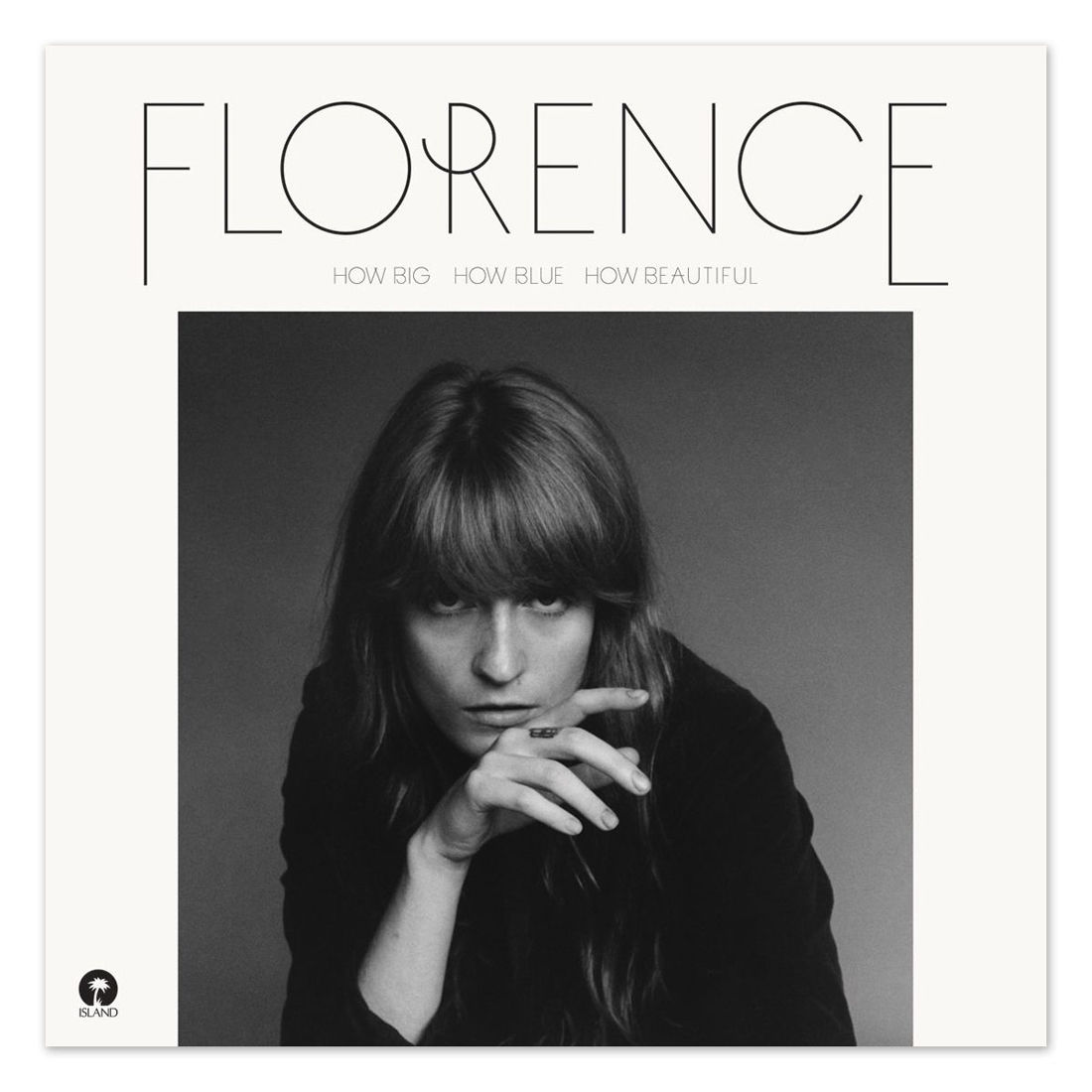
Record review: Florence + the Machine – How Big, How Blue, How Beautiful (2015, LP)

florence

I don’t wanna get all overdramatic here, but when the walls keep closing in and we can’t rely on pop music to get us out of a jam, what’ve we really got? Too many bleak hours spent peering through train windows, fixing paper jams and despairing at the ineptitude of our so-called leaders tends to induce the propensity to place one’s hope for mankind in things we know often do us more harm than good: pop records for starters. But the trouble with expectation is the higher it soars, the further and harder it falls. The prospect of Florence + the Machine’s third album being a belter is strong on paper; only a soulless drooler wouldn’t want it to be great. Hell, in these dark days of flaccid stadium-fillers, we need it to be a stone-cold killer; but the crushing reality is it’s a near-flat heartbreaker that will do little to brighten the stale pop horizons of 2015. At times it’s quieter and more introspective than what’s gone before, but that’s not the problem; too much spirit and colour has been wringed out of these songs and hung out to dry by Mumford & Sons and Coldplay producer Markus Dravs, and the line between booming and overblown is crossed too often. The heaven-sent Florence Welch is in fine voice at various points, most impressively on lead single ‘What Kind Of Man’, but overall, this album is just another reminder that the distance between how good you want something to be and how good it actually turns out is often disappointingly great.

For Beat