Richard Jupp of Elbow: “It was a proper moment”

elbow

THEY’VE been together for over twenty years and have six critically-acclaimed albums and a host of accolades under their belts, so a lightning storm isn’t going to stop Elbow winning over yet another Glastonbury Festival audience, explains drummer Richard Jupp.

“[English drum and bass act] Rudimental were on not long before us,” he says. “Then the beautiful British summer weather absolutely let rip. It was torrential and then the lightning started. Unfortunately Rudimental had to be pulled off stage, and they were having an amazing set. I was standing at the side of the stage with my wife and son and they were absolutely killing it, but obviously the lightning was a threat. When it did finally stop, Lily Allen – who was on before us – amazingly pulled a couple of tracks out of her set so we could catch up, time-wise. Once she came off our crew played a blinder; they managed to turn over in about half the time it usually takes a band to get on stage, so we were able to get on a couple of minutes early, which was incredible on our crew’s part. Again, we had this sort of Glastonbury moment where the clouds parted, the sun made an appearance and we had that sunset set that we’ve had the last couple of times we’ve played there. I don’t know what’s going on; somebody’s put a word in somewhere, but obviously we were very grateful and it was a proper moment.”

Australian fans can expect similar moments – albeit without the downpour and sunset – as the band has announced a run of October theatre shows, with appearances in Brisbane, Sydney and Melbourne.

“When we come to Australia, we’ll be playing the Tivoli again, and a few places we’ve played before; big old theatres,” Jupp says. “Then obviously we’re playing the Sydney Opera House, so we want to do something special there. We’re talking about maybe doing some obscure b-sides like ‘McGreggor’ or ‘Whisper Grass’; I don’t know. Maybe something that lends itself a bit more to the grandeur of the place. I know it’s all seated, and there are a couple of big tunes that might not suit that, so we’ll need to sit down and have a discussion. I’m looking forward to seeing what we can pull out of the bag for that. There’s always stuff we can get better, but so far it’s been brilliant. We’ve been on the road since March; through the UK, a little bit in Europe, America, then back into Europe with Portugal, Holland, Belgium, Moscow and two nights at the Eden Project in the UK. After Latvia we have a couple of weeks off, then well be looking forward to getting to Australia.”

The band’s latest album, the grand and melancholic The Take Off And Landing Of Everything, has received almost universal critical acclaim, and was written at a time when lyricist and singer Guy Garvey had split from his long-term partner. Luckily for the band, the record filled with loss and remorse has gone down well with fans all over the globe.

“There’s obviously a certain amount of ‘thank fuck for that’ when people liked it,” Jupp says. “We have been around for a bit, and you do get a little bit conscious of how we’re perceived. We don’t want to try to compete with all these young bucks, but we really enjoyed the process of writing this one because we all did more a bit more separate writing, then brought it into the studio. It was a new thing for us really, and it worked out really well. Tracks like ‘Real Life (Angel)’; Craig pretty much brought in the complete track and we Elbow-ified it, then Guy spent some time putting lyrics on. Mark wrote all of ‘Honey Sun’; everything on that track is all his. It was a little bit weird; we’re used to doing the writing together all of the time, but it was really nice getting something in a drop box or a transfer with some weird and wonderful sounds that you could take up to the attic and put some beats or a bass-line on. I was able to get into melody, which is always a dangerous thing for a drummer, but it was a really good way of working.”

THE TAKE OFF AND LANDING OF EVERYTHING BY ELBOW IS OUT NOW.

ELBOW TOUR AUSTRALIA IN OCTOBER.

For Scenestr
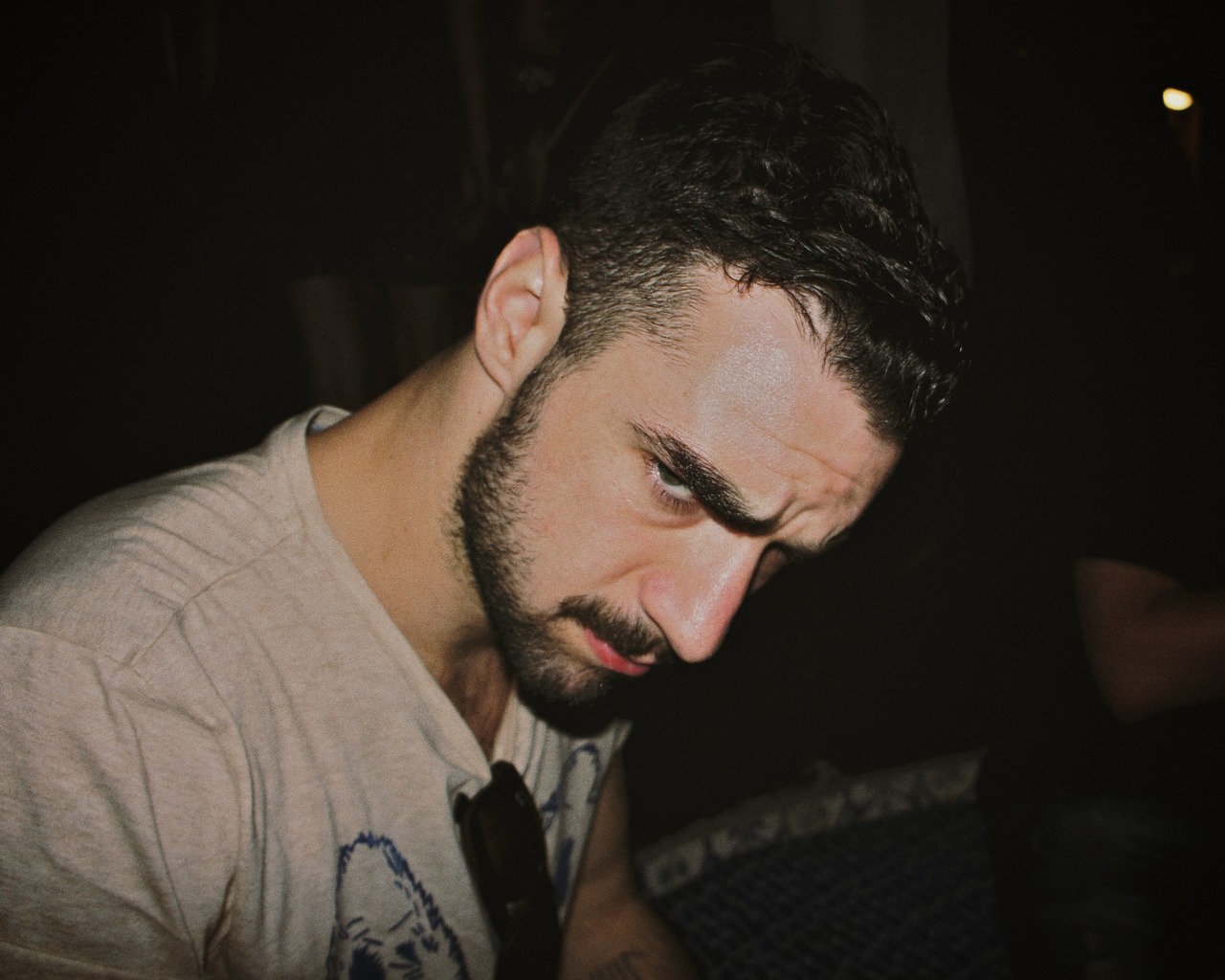
Interview: Kevin Baird of Two Door Cinema Club

kevin baird

AUSTRALIA and Two Door Cinema Club are no strangers.

The Northern Irish indie-pop trio have graced our shores a number of times for both headline and festival shows, but their upcoming appearance at Splendour in the Grass will be their biggest test Down Under yet. With a new label and material behind them, expect them to rise to the challenge, says bass player Kevin Baird.

Hi Kevin. What’s the plan to get yourself into a Splendour-headlining frame of mind?

I think we’re going to be super-excited to play. We haven’t really been playing much this year; it’ll only be our second or third show we’ll have played in all of 2014 at that point, so we’ll be really up for it. I think it’ll probably the biggest headline festival slot we’ve ever played, so it’s pretty exciting and we’re just going to go for it. I don’t think we’re going to be too nervous or anything; we’re just going to enjoy it.

How did you feel when you heard you were headlining?

I think if it had been last year or the year before we might have felt a bit of pressure, but the overwhelming feeling now when we get asked to headline things, is like ‘finally’. We sort of feel that we’re ready to do it, and it’s where we want to play on the bill. We’ve played enough and we’ve done enough big slots to know that we can headline a festival, so it’s really nice to know that you’ve got to that point. We always looked at other bands who were in that position when we’d be playing at midday or whatever and hoping we get to that point. So, the overriding feeling is happiness.

Will you do anything differently from a normal TDCC show?

I don’t think we’re too protective of ourselves in that way; even if we’re headlining a festival, we’re not under the illusion that everyone there is a massive Two Door Cinema Club fan. I think a lot of bands make that mistake. We’re obviously aware which songs translate better to someone who’s not a massive fan, and it’s all about pace and speed and not really giving people a chance to relax. We’re not going to be spending 30 seconds between songs talking rubbish, or standing in silence tuning our guitars. It’s all about momentum when you’re in a big outdoor arena; I think at a festival you just got to get on with what you’re trying to do.

Will you be playing any new material at Splendour?

We’re sort of toying with the idea at the moment. We’ve been writing a lot of new stuff while we’ve not been playing shows this year. We haven’t quite decided if we’re ready for an unveiling or not, but if we were to do it, I think Splendour would be a very nice place to do it.

How much have you written?

I think we’ve lost count, but we’re working in double figures in terms of ideas at least. The first album was very different, because there was no pressure. We just arrived with the album, recorded it and it was done. With the second, we sort of wrote 15 or 16 songs and 11 of them ended up on the record. I think this time around we’re trying to be a bit more conscious of having more choice, so we’re just writing as much as we can, hoping to have about twenty or thirty songs to pick from.

Are you looking take your sound in any new directions with the new material?

We were writing the last record in 2011 and a lot has happened and changed about what we are listening to, our perspective of things and our lives in general. It’s more natural to sort of write what we feel like writing, and that just naturally comes out differently. We actually find it much more unnatural to just rip ourselves off, if you know what I mean. Any time we’ve tried to do that it’s come out as a terrible song, so we end up doing whatever feels right at the time. Luckily for us people have liked it so far, and hopefully they’ll like it when we release another record.

After your second album, you left the Kitsuné label and signed with Parlophone. Was there any particular strategy behind that?

We left Kitsuné at the end of our record contract, and we felt like we wanted a change. Parlophone were one of the labels interested in signing us. Kitsuné have always been incredibly amazing and have been a really positive force in our music, image and everything. But at the end of the day we sort of became a bit frustrated – and it’s a horrible thing to say – about money, and although Kitsuné put everything in and we couldn’t ever have asked for more, we’re quite ambitious. We have quite large fanbases in places like Singapore and Malaysia, and we feel like we need to be releasing albums there, so that was one of the things that made us want to go with a big company; to make sure the records come out in these places. The previous two albums; they had to import them from Japan or Australia. Parlophone are amazing; they’re the small family relationship of an indie label, but with a major machine behind it.

If you could have a cameo role in any TV show, past or present, what would it be?

The Sopranos. It’s just the best TV show ever. I’d like to be one of the animals that Tony Soprano loves, but I don’t think that would be possible. So I’ll be some sort of animal keeper, so Tony Soprano will like me.

Which celebrity or musician would you be happy to sit next to on a long-haul flight?

Not the other guys in the band! Someone who’s not very talkative, because I don’t like to talk. Someone who is really boring.

Finish this sentence: fuck the expense, send me a case of…

Umm… Cooper’s Pale Ale. Love it.

TWO DOOR CINEMA CLUB PLAY SPLENDOUR IN THE GRASS JULY 26.

For Splendour in the Grass

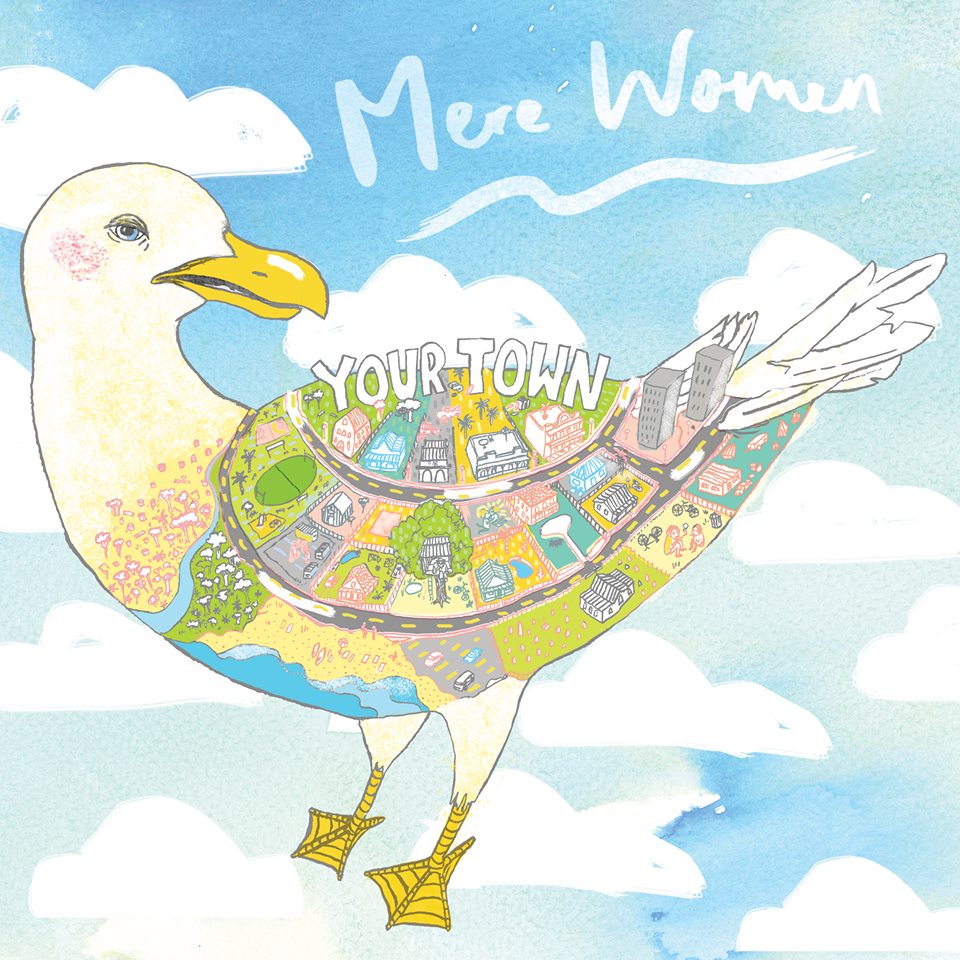
Record review: Mere Women – Your Town (2014, LP)

mere women your town

DIY post-punk trio Mere Women recorded their second album in a cold-storage warehouse, and if ever a record’s surroundings affected the final sound, it’s here.

All hauntingly-focussed vocals, stabbing guitars and dark disdain, Your Town is the type of brutally abrasive collection of songs that would never make sense played in daylight or with anything on your mind except thoughts of anger, helplessness and schadenfreude.

The Sydney trio of keyboardist/singer Amy Wilson, drummer Katrina Byrne and guitarist Flyn Mckinnirey have been knocking around since 2011, and their 2012 debut Old Life earned them acclaim as an underground act worth keeping an eye on. Since then they have honed in on a more cohesive sound that perfectly captures the crushing, claustrophobic feeling of small-town-anywhere in all its depressing glory.

If the title track were a person, it’d be one of those pent-up, vaguely unhinged people you meet on public transport who fill you with equal amounts of intrigue and dread. Single ‘Our Street’ is the musical manifestation of suburban solitude, as Wilson asks “will you still want me when I’m old and frail?” and “will you think of me when I’m cold and pale?” with a jagged pop melody, as Mckinnirey’s relentless riffs flail and stab.

Waiting for the gloom to ease off over ten songs is a long and exhausting process, but by the time closer ‘Moon Creeper’ tries to lull you into a false sense of security with a soft opening 30 seconds, you know it isn’t going to happen, and another Mckinnirey riff proves you right.

Overall, Your Town is a well-crafted and worthwhile album of post-punk, even if after listening to it you’ll want it to creep back into the shadows of the ill-lit warehouse it crawled out of. This is music for dank basements and crushed hopes.

For FasterLouder

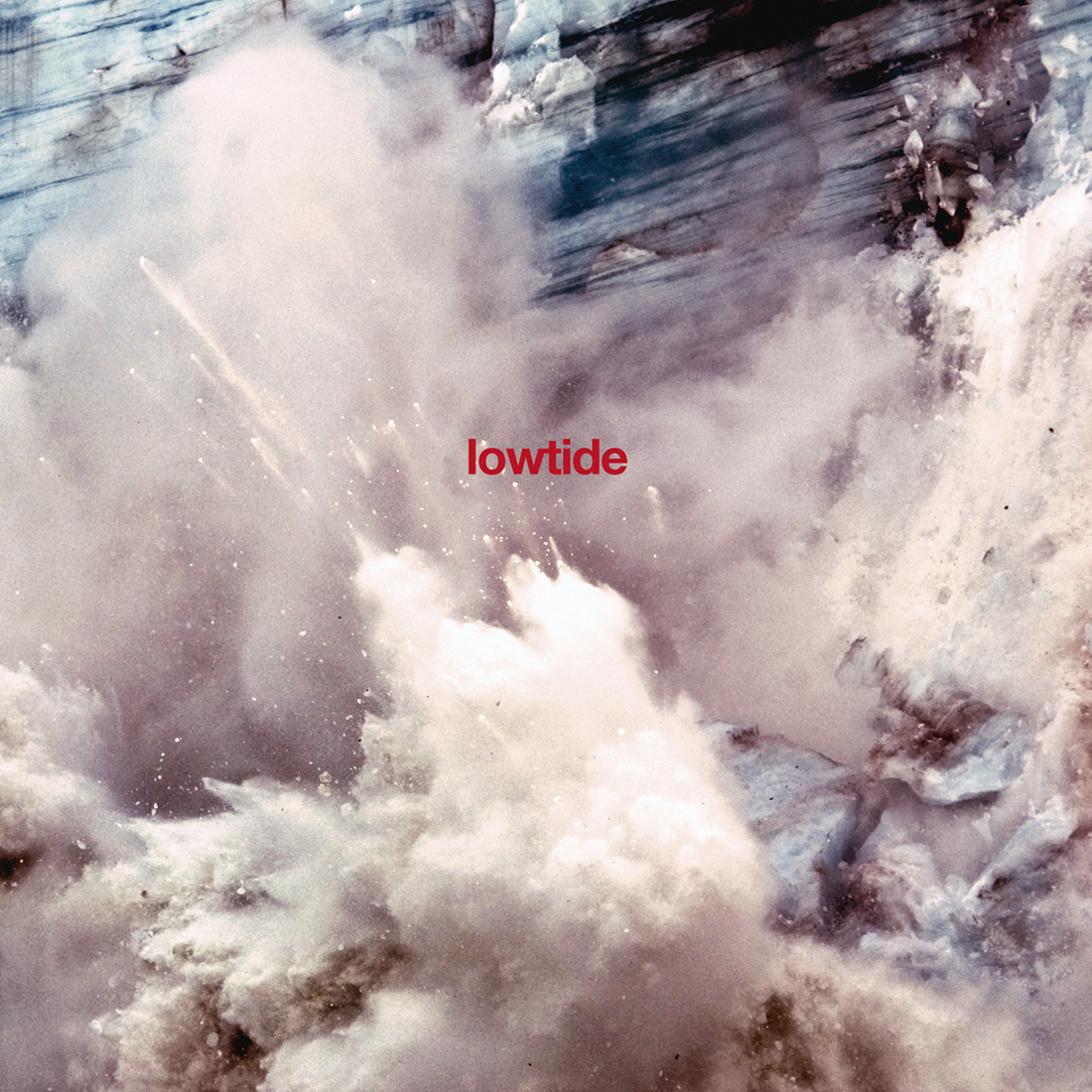
Record review: Lowtide – Lowtide (2014, LP)

lowtide album

Melbourne’s Lowtide are a band that takes their time, but boy has it been worth the wait. What started as a bedroom project for guitarist Gabriel Lewis in 2008 has blossomed into a four-piece band with a strong live reputation and now a debut album in the bag; and what a fine debut album it is. While shoegaze is the label that will be slapped all over these nine songs, there’s a lot more to sink your ’90s-cut teeth into. The band seem to know the perfect time to drift out of focus, as on ‘Still Time’ and ‘Yesterday’, before returning sharply into view with crisp pop single ‘Held’ and darkly primal ‘Autumn’. First single ‘Blue Movie’ could be ripped from a Lynchian dream sequence, whereas the chugging bass rhythms on ‘Wedding Ring’ provide a more forward-looking approach. Top marks have to go to singers Giles Simon and Lucy Buckeridge, whose poised vocals provide constant highlights on most tracks. Unfortunately, such fresh beauty often causes music reviewers to roll out plum old phrases like “melodic textures”, “aural layers” and the worst of all, “sonic soundscapes” in failed bids to capture the grandeur of this music in words, but crap like that doesn’t do it justice. Whether you want to call it shoegaze, roogaze, dream-pop, indie or whatever, this is simply a classy piece of work that should feature in everyone’s end of year best-of list. (Lost & Lonesome Records)

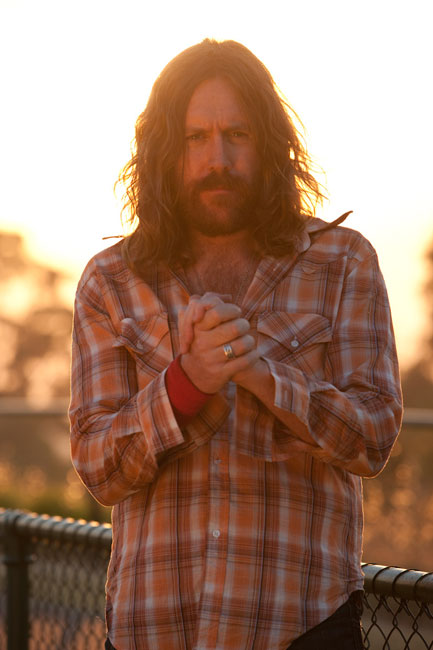
Gabriel Lewis of Lowtide: “I’ve battled this for a long time in my head”

lowtide

HAVING EXISTED in various forms since 2008, yet only releasing their debut album this month, Melbourne shoegazers Lowtide aren’t a band you’ll catch making snap decisions. Blame their perfectionist guitarist and all-round nice guy Gabriel Lewis.

“Yeah, it has been ages actually,” he says. “When we recorded it there were lots of overdubs and returning to things. I sort of decided how my guitar was sounding in the studio sessions wasn’t as up to scratch as I’d like, so I overdubbed everything and broke everything down separately, just to get full control over everything and its sound. Otherwise, I think we’d played too much all at once and it got a bit choked. I really like doing that sort of stuff, because the idea is always there when I’m performing the songs, but I know that I don’t have enough fingers to be able to play all the stuff that I’m thinking of. So it’s kind of cool to flesh it all out and to see it realised in a way that we hope to be able to do.”

The quartet’s eponymous debut may have taken an age to see the light of day, but consistently strong live performances have paved the way for its arrival and reception.

“To begin with, we were so relieved just to have it done,” Lewis says. “But now it’s really exciting; the response we’ve had from the single so far has been really amazing. Live, there’s always a pretty strong response. The good sign is that you can’t hear too much talking going on in the room, which is nice. Especially with the quieter songs, people tend to lose attention and be chatty or whatever, but it seems to hold, so I think that’s a win.”

The first single is ‘Blue Movie’; a sparse slow-burner, although any future writing may come about in a different way, or so Lewis hopes.

“When we started there were a lot of songs already written,” he says. “[They] sort of just slotted into place in the band. More recently, we’ve had a few jams and a few ideas started from the two bass players doing parts over each other, then I’d come along and do stuff over that. I’m hoping to do more of that in the future. Everything I’ve written is really kind of taxing as far as performing goes. When we play shows it’s non-stop for me, and everybody else gets to have a bit of a relax now and then (laughs).”

Shoegaze’s original wave of popularity might have peaked in the early ’90s, but Lowtide are just one of a number of new bands taking the genre in a new direction.

“I’ve battled this for a long time in my head,” Lewis says. “You kind of don’t want to knock off what everyone’s done in the past, and if it works so well then why re-invent the wheel? Then there are a lot of bands classed as nu-gaze or whatever, adding their own edge to it to try and stand out from the crowd. I find that generally weakens the concept, and I guess if you look at blues or rock – there are standard ways of doing them, and it’s the same with shoegaze. Shoegaze is a fairly independent or off-the-radar thing, so maybe that’s why people feel that they need to try to make something else of it. But I think it’s now establishing itself, and the sound is still popular, even if it’s still linked to the ’90s because that’s when it first blossomed. It keeps coming and going as well; there have been ups and downs, and it’s just coming up at the moment, which is really exciting.”

As humble a musician as you’ll probably find, Lewis is happy take one thing at a time for Lowtide.

“At the moment we’re just focussing on the album launch,” he says. “[It] is on the 25th of July at the Tote, and after that we’ll be touring to Brisbane, Sydney and over to Adelaide as well. Then we’ll take it from there, I guess.”

LOWTIDE IS OUT NOW.

For mX

Record review: Doctopus – Wobbegong (2014, LP)

doctopus wobbegong

Shortly before his death in 1982, gonzo music journalist Lester Bangs played down the importance of using sophisticated recording techniques by claiming that the best records are made and played on garbage equipment. By that standard, lo-fi slacker-rockers Doctopus must have made one of the records of the year, because their second album is so heroically sloppy it should be served with a napkin and wet wipes. Not that the Perth trio would be the types to give a damn; it’s just good to be pre-warned when dealing with such a gloriously unfocussed piece of work. As their name suggests, the band have a minor preoccupation with marine life, as on the mostly nonsensical title track, which finds bassist/vocalist Stephen Bellair bawling “I wanna live underwater” repeatedly before switching to “I wanna live in a spaceship with you,” in move that’s more indecision than evolution. Naming a track ‘Stadium Rock’ and making it five minutes of squalling, rampaging feedback manically laughs in the face of everything that hair-metal stood for, and the eight-minute tuneless ballad that is closer ‘Chronic Reprise’ kills any chance of clarity and finishes off the record. If you’re looking for an overall idea or a general concept, you won’t find it here. Instead, it’s the utter lack of direction, whatever-goes attitude and general overall mess of sound that is most appealing about this seven-track effort. Musicians take note: this is how to stuff up an album good and proper. Lester would be proud. (Independent)

For mX

J of Jungle: “We almost pictured ourselves in a jazz club, with T doing a door solo over drops”

jungle band

THEIR music has been described as kaleidoscopic modern soul, but being in Jungle is all about feeling before style, says the band’s singer and producer, known simply as J.

“In the real world, I’m is doing all sorts of shit to try to prove myself,” he says. “Whereas J and T are our nicknames; they’re where we go and that’s what Jungle is for us. It’s just somewhere we can go and create and be free, and is a really powerful thing. It’s important that it’s not about any individual. It should always be about the music.”

Along with childhood friend T, J formed Jungle as recently as recently as ten months ago, and despite a much-hyped debut album released this week and an upcoming appearance at Splendour in the Grass, the London-based duo remains as mysterious as ever. Their self-titled record is very much a DIY release, featuring smooth, crisp bass-lines, urban grooves, falsetto vocals and a few happy accidents.

“A lot of the stuff we put down, we put down because it was hilarious,” J says. “There’s a solo that was a door creaking, which some people love and some people hate. Basically, I was on the computer listening to a track and T left the room to make coffee. The door in my bedroom is basically creaky as hell, and creaked almost in tune with the track in a weird kind of way. I was like ‘wow, stop, stop!’ and started pointing a microphone at the door, saying ‘you’re on, it’s solo time’. We almost pictured ourselves in a jazz club, with T doing a door solo over drops.”

Despite mostly being recorded in a home studio in west London, the album is littered with imagery of faraway places, as on tracks like ‘The Heat’.

“I suppose, if you think about it, everything on our album is a visual reference,” J says. “It’s all about how you can be in that place to create that music. For example, with ‘The Heat’; that’s the beach, you know? So, the beach is a metaphor for a feeling of happiness. Rather than just being in a room in Shepherd’s Bush, you can close your eyes and go to that space. Einstein said ‘simplicity is genius’, and it is; I think all the best things in life are simple, and I think we kind of look up to that quote.”

One faraway place Jungle aren’t going to have to visualise is Australia, with the band set to fill a slot at Splendour in the Grass.

“Oh God, I don’t know how big our set is going to be there – don’t tell me!” J says. “I just go around expecting these tiny little hundred-person gigs. Everything for us is about human connection. If you look at our videos, it’s all about the people and what they’re saying through their eyes, which you lose so much of in the digital age. It’s ironic that most people access it through the Internet. I think live we want to make it about having people on-stage, and I think people relate to people more than laptops, and they enjoy it. The interesting point comes when you explore the line between live and electronic; where does the human end and the computer begin?”

Part of Jungle’s mystery has been intentionally engineered; that’s for certain. But as J confirms, the duo are much more down-to-earth than at first glance.

“We finished a song called ‘Son Of A Gun’ and it gave us the energy and confidence to finish more,” he says. “And then you start to build up that archive of stuff. A lot of people struggle – and we have struggled – with finishing stuff or having the confidence to finish it. Its only really a sketch when it’s finished and you can only really judge it when it’s finished. It’s an emotional whirlwind of a process, especially when you’re doing everything and you’re writing, recording and mixing; it becomes one and you have to be quite structured in the way you deal with it, because you can end up producing and mixing before you’ve even written anything. There were probably terms where we were thinking that we hated the sound of a snare drum, but the song didn’t even have a chorus, you know? It was just about taking things one step at a time and doing what feels right. It’s quite a DIY process for us, and we kind of enjoy that. Some of the best parts on the record are the big mistakes, and you have to embrace things that just happened off the cuff. That’s a process that happened from when we grew up. When you first get a family computer and get a little USB mic and realise you can do this without having to go to Abbey Road or do it properly. We’re at an age now where you can create and produce stuff to high standards with these tools, and it’s not necessarily about how it sounds. There are some amazing records that sound like they were recorded in the plushest studios, but just don’t have any emotion in them. Whereas you’ve got some records that were recorded on one mic in a basement, that are the most incredible records ever. Therefore, looking at that, it’s not about where you are or what you’re recording, it’s more about that feeling, emotion and energy in the room. You can waste so much time positioning mics and that sort of thing.”

JUNGLE’S DEBUT ALBUM IS OUT NOW. JUNGLE PLAY SPLENDOUR IN THE GRASS.

For mX

Kram of Spiderbait: “We always feel that our shows are special gigs”

kram

SPIDERBAIT are hitting the road for their first national tour in ten years and an appearance at Splendour, and drummer/singer Kram is taking it all in his stride.

“We just turn up,” he says. “That’s our way to get pumped up. We don’t really prepare that much; we do some rehearsing and stuff, but my whole philosophy is that our music is very spontaneous. We don’t think about it too much; we save ourselves for the show and we don’t get there too early. We’ve been playing together for over 20 years, so whenever we walk onto the stage we feel each other’s dynamic through the songs we play, including the new ones in the set. Then we just let it happen; we let it all come out and let the audience’s energy, our energy and the music’s energy create a melting pot that you can stir for yourself and have a great time. That’s kind of the way I like to do it and how we operate. That’s why I think our shows are very exciting, because you’re never quite sure what’s going to happen.”

While their self-titled comeback album was released in November last year, it’s been a bit of a wait for the accompanying tour.

“It was basically difficult for us because of some family stuff,” Kram says. “We did a couple of festivals in Victoria and we were originally going to do Big Day Out, but that unfortunately folded as we couldn’t reach an agreement with them. It’s a shame that the show has reached its demise; we have a lot of great memories of that festival. So, we decided we would put it off and start it at Splendour In The Grass, which we’re playing this month, then we’ll do the national tour after that.”

Having just returned from Brazil and with film score work in the pipeline, Kram is as busy as ever, but the chance to get Spiderbait back on the road was an enticing offer.

“Everyone was up for it, absolutely,” he says. “The guys at Secret Sounds, who do Splendour In The Grass, were really keen on doing it. It was probably more their idea, in a way. We were like ‘yeah, that sounds good’ because we hadn’t toured for a long time; it’s just not something that we do very much any more. Once they put forward the idea and the dates were set up, we thought it was really cool. We’re looking forward to it; it should be good. We love playing live. We always feel that our shows are special gigs and we love that. We love the energy the crowd gives us and we’re very grateful to our fans for wanting to see us.”

SPIDERBAIT PLAY SPLENDOUR IN THE GRASS JULY 25 AND THE HI-FI AUG 9.

For Scenestr

Record review: Bob Mould – Beauty & Ruin (2014, LP)

bob mould beauty and ruin

Fans of Hüsker Dü tend to favour either the tracks on which guitarist Bob Mould or drummer Grant Hart sang; the former taking a more brutal approach at the mic and the latter being a more melodic soul. It’s been 26 years since the Hüskers broke up in acrimony and 25 since Mould’s debut solo record, but 2012’s Silver Age saw Mould triumphantly return to the rush of angry alt-rock riffage Hüsker fans loved him most for, and it’s in this vein Beauty & Ruin continues for the 53 year-old. Not that you’d think it after listening to sludgy opener ‘Low Season’; the longest track here at four minutes. With that out of his system, it’s straight into the two and three-minute blasts of rock ferocity, with ‘I Don’t Know You Anymore’ and ‘The War’ being particular stand-outs. ‘Forgiveness’ eases off enough for a mid-album catching of breath, and isn’t unlike some of REM’s earlier work, while ‘Tomorrow Morning’ is Candy Apple Grey-era Hüsker Dü rebooted for the 21st century. It’s refreshing to see and hear a rock musician still doing it better than many bands he inspired, and as Hüsker Dü’s classic Zen Arcade came out 30 years ago this month, maybe it’s time for a re-evaluation of Bob Mould’s standing in the annals of rock. On Beauty & Ruin, he’s a musical force of nature; just like he’s always been. Green Day et. al: this is how it’s done. (Merge)

Merrill Garbus of tUnE-yArDs: “Aren’t I supposed to know how to sing?”

tuneyards

SINGER and multi-instrumentalist Merrill Garbus is refreshingly honest about her need for musical reinvention on Tune-Yards’ new album Nikki Nack.

Her 2011 album Whokill received almost universal critical acclaim, and saw the New England native off on a gruelling world tour. After a period of reflection, the 35 year-old realised it was time to go back to basics for album number three.

“I didn’t want to use any of the old tricks I used to,” she says. “I didn’t want to use my older methods of writing and the looping pedal. The looping pedal has very specific limitations, and although it did me well for a long time, I think I had come to the end of the road with that. So it felt like if I wasn’t going to use the ukulele like on the first album and I wasn’t going to use the looping pedal, I was back to square one or ground zero with a big question mark saying ‘how do you write an album?’ without doing it the ways I have done it before.”

Ditching the looping pedal might seem like a bold move for a musician who has relied on it so heavily, but Garbus went a step further by literally going back to school.

“I started off by taking voice and drum lessons,” she says. “It was difficult. I love being good at things, and I don’t like not being good at things, so it was very humbling to learn that I don’t know everything and realise that I can improve and learn new techniques. I took a lot of Haitian drum lessons, and it was great to admit that I had no idea what I was doing and nothing to direct me, as I had just not heard that music before. It was really challenging, but that was easier than taking voice lessons. I mean, aren’t I supposed to know how to sing? I sing for my living, so you’d think I’d know how to sing, but it turns out I have a lot of improving to do there as well.”

After experiencing the intensive Whokill tour, Garbus admits it’s difficult to not get burnt out.

“I’m 35 years old,” she says. “My body can only endure so much partying and late nights. In other words, we hardly do that at all. To me, keeping my health up and having a regular routine is important. I have certain books that I read and I have yoga and I eat well; pretty simple things. This is me trying to pretend I have a healthy, stable life, even though we’re taking that stable life all across the world. It’s pretty fun.”

Tune-yards’ upcoming appearance at Splendour in the Grass will give the band a chance to test out its new skills on an Australian audience.

“We’ll be so excited to be in Australia,” Garbus says. “So we’ll have lots of energy I hope (laughs). I’m drumming a lot more this time around, and we have another drummer who plays a very unique setup. We’ve got two very amazing back-up singers. Nate Brenner is on bass as always, also with more synthesisers. Expect a lot of fully danceable music.”

NIKKI NACK BY TUNE-YARDS IS OUT NOW. TUNE-YARDS PLAY SPLENDOUR IN THE GRASS.

For mX

King Buzzo: “I’ll take the blame, no problem”

king buzzo

BECOMING involved in music as a high school friend and band-mate of Kurt Cobain, before forming grunge/metal legends the Melvins, Buzz ‘King Buzzo’ Osbourne has accomplished most things in music.

However, after a 31-year career involving over 30 albums of studio and live material, the singer-guitarist is still breaking new ground by going acoustic for the first time on new album This Machine Kills Artists.

“It just seemed like the right thing to do, you know?” he says. “I’ve done a lot of albums in the past and a lot of other types of work in the past, but there’s no real reason other than that. I worked on it for a few months and I realised pretty quickly that I can do things fast, because I didn’t have anybody else working on the songs. So once I had them written, I was able to go in and record them, and I had a great time doing it. It was just another challenge and I was up for a challenge. I’ll take the blame, no problem [laughs].”

The 50 year-old is equally self-effacing, engaging and blunt, and was just as driven by what he wanted the new album to sound like as how he wanted to avoid it sounding like. A quote on his website reads “I have no interest in sounding like a crappy version of James Taylor or a half-assed version of Woody Guthrie”.

“I just listened to most of what that stuff sounds like and just made sure I didn’t do it,” he says. “I think it’s mission accomplished in that department. I didn’t want to do some National Skyline type of thing at all. Lots of rock and rollers try to do that; they think it’s more legitimate or something, I don’t know. It’s weird. I could certainly do all acoustic covers of Hank Williams songs if I wanted to, but that just doesn’t sound very interesting to me, you know? As much as I love Hank Williams, it’s not for me to do it. If I could figure out some other angle on it, maybe, but I’m not going to worry about that. I’m trying to be kind of a heavy metal version of Captain Beefheart. I’ve been calling it ‘molk’, which is metal-folk. How does that sound? M-O-L-K; I don’t know anyone else who is doing that. It’s an original concept. For all intents and purposes that’s the kind of area I’m working in. So nothing’s too direct, but I think if you listen to it, it can mean a lot to a lot of different people. I’m never that direct, never I’m not going to lead you by the hand down the garden path. It’s a walk people have to take on their own, you know?”

With more than 2000 shows under his belt, it would be safe to assume Osbourne should take performing in his stride, even if the new format throws up some original challenges.

“I don’t have a band to hide behind on this,” he says. “I just have to go out there and make it work. I’m all on my own; there’s no drums or anything except me and my acoustic. It’s very stripped-down, very minimalistic and that’s kind of how I want it. I’m eight shows into this tour and I did about 17 or 18 shows before this. I’ve done the better part of 30 shows, but I’m still learning, you know? I’m figuring it all out as it’s brand new to me. By the time I get to Australia I’ll have more than 50 shows under my belt, so I’ll be feeling pretty secure that I’ve seen it all by that point, but there really is nothing like playing live to get that experience and feeling that anything and everything could go right or wrong. There’s no substitute for that; none. Things can still go wrong; even songs that I’ve played for years. You just never know. That’s all part of playing live.”

Osbourne will bring his solo show to Australia for a ten-date tour in August, and while he’s not generally known for being a chatty performer, expect at least a bit of banter between songs.

“For now, I have been telling stupid stories and stuff like that,” he says. “It’s not normal singer-songwriter type stuff, it’s more irregular. I want to present this as serious, but still vulnerable to some degree. I got to have some kind of communication with [the audience], but maybe as time goes on I won’t say a word. With most of the Melvins shows I don’t say a word; I just let the music do the talking and don’t worry about it too much. Sometimes at Melvins shows I’ll talk about whatever the fancy takes me, but not a tremendous amount. I’m doing 70 minutes with not a lot of talking; maybe five minutes talking out of 70 minutes. Sixty-five minutes of music is a enough for people to have to deal with [laughs]. Out of those 70 minutes, I’ll be doing about 50 percent old Melvins material and 50 percent new material, which is what I do normally anyway. It’s not a wild stretch, you know?”

The permanently-busy Osbourne confirms that despite his acoustic gigs taking centre stage for now, a return to blasting loud rock music isn’t far away.

“[The Melvins] have a new album coming out in early October and we’re going to do some new shows in the US in mid-October, roughly. Nothing’s on the back burner at all; it’s very much in the foreground. I leave nothing to chance, you know? I’m very much about plans; all kinds of plans. I’ve worked my ass off to get to this point.”

Despite swapping his electric guitar for acoustic, Osbourne laughs off the suggestion he might be mellowing with age.

“Listen to the album and you tell me,” he laughs. “It’s something else I can do, and that’s all it is. I’m a songwriter and that’s what I do; I make music. I do it for a living, I work on it as a craft. It’s all just part of the same thing, thank God.”

When & Where:

Thursday 14 August Geelong | Barwon Club (18+)
Friday 15 August Melbourne | Ding Dong Lounge (18+)

THIS MACHINE KILLS ARTISTS BY KING BUZZO IS OUT NOW.

For Forte

Dan Cavanagh of Anathema: “We’re not into lyrics about elves and we’re not into playing the fucking flute”

Anathema band

IT ONLY TAKES one four-letter word to get Anathema multi-instrumentalist and song-writer Dan Cavanagh fired up. Prog.

“I have no idea what it is, I don’t care about it and I don’t consider our band to be in it,” he says, when asked if the genre is in good shape globally. “It really is journalistic spiel to say we are a progressive band, you know what I mean? I do not consider us a progressive rock band; never have. In terms of where it is globally, I don’t care and I don’t even fucking know. If you’re talking about Pink Floyd, Kate Bush or Radiohead; that’s something I consider us to be closer to. If they’re a bit prog-rock, then I’ll take that, but we’re not into lyrics about elves and we’re not into playing the fucking flute. We’re not about time signatures and time changes and solos and what prog-rock seems to be known for; it’s got nothing to do with us. But I’m not knocking it! It’s just not for me. Pink Floyd, Radiohead and Kate Bush are for me.”

Luckily the 41 year-old Englishman is in more of a mood to talk about the (not prog) rockers’ tenth studio album Distant Satellites, and why it had the working title of Kid AC/DC.

“We’re all fans of Radiohead and AC/DC,” he says. “One thing I noticed was those bands strip back their music; it’s not over-layered, particularly on Kid A, which is a real difference from OK Computer. AC/DC do the same thing with rock and roll. Their music isn’t layered with strings and piano; it’s stripped-back, edgy rock and roll, which is great. We were tired of over-laying. Our previous albums are good, but we tended to just throw things on. This time we took a more mature and considered approach by not doing that. Both I and the producer independently came to that conclusion before we talked about it, but we were making an album that’s considerably more rock-edged than Kid A, so we called it Kid AC/DC.”

The album contains tracks called ‘The Lost Song’ in three parts; the result of a minor catastrophe that Cavanagh turned to his advantage.

“In about 2008, I recorded a riff which I considered to be a very good one for us,” he says. “I was very excited about it. A few weeks later it had actually disappeared off the recording and I couldn’t find it. I tried really hard to find other demos, and if it ever turns up I’ll be amazed and interested. Then I started trying and failing to remember that riff and these songs were written. So what I was doing was trying to write a song with a time signature and chord progression that may have been like the one that was lost. All three songs came from that. It drove me crazy, but John [Douglas, drums] said to tell myself the song was crap, and it’ll be okay.”

Along with Norwegian producer Christer-André Cederberg, the band were able to call on The Porcupine Tree’s Steven Wilson for additional duties.

“He was involved for just four days, but he made a difference,” Cavanagh says. “He mixed two songs on the album and two B-sides. All the production, writing and recording was already done before we asked him, and the reason we asked him was that Christer had taken ill and needed some time in the hospital for an operation. He couldn’t mix all the songs in time, so we asked Steven to help, and he did a great job as he always does.”

Almost unbelievably for a band that has existed since 1990, their three-date August tour will be the six-piece’s first trip to Australia. Does Cavanagh know why that’s been the case?

“Maybe because it’s so far away. It’s only just recently that we’ve got a really strong manager in place. We haven’t had a strong manager kind of ever, and it’s one of the reasons we’ve underachieved. We’re not going to underachieve any more, but maybe it’s just part of our story, I don’t know.”

ANATHEMA PLAY:
Thursday, August 21 – The HiFi Bar, Brisbane
Friday, August 22 – The Metro Theatre, Sydney
Saturday, August 23 – The Corner Hotel, Melbourne

DISTANT SATELLITES BY ANATHEMA IS OUT NOW.

For The Brag

Clare Bowditch: “Everything’s under wraps until you get there on the night”

clare bowditch

IF YOU’RE hard pushed to find time to run your business, raise a family and write your next album all at once, what’s the solution?

That’s easy: organise a national tour, invite Adalita along for the ride and let the pieces fall into place by themselves. At least, that’s what Clare Bowditch will be doing with her upcoming Winter Secrets Tour.

“I am sort of starting to write this new album,” she says. “My other project, my business, has been a very incredible but demanding lovechild. I thought maybe it was time to have a year off, which I do from time to time. But then I realised I write my best work after I’ve been talking with the people that I write for, which is my audience. So I needed to get back out on the road and hang out with them for a bit.”

The Winter Secrets Tour will see her do shows from Tasmania to Queensland through July and August, with the help of an old friend.

“I love Adalita,” Bowditch says. “We’ve worked together at various stages over the years. She’s a real inspiration to me; she’s a great artist who continues to make incredible work and she’s also very humble, which I definitely wouldn’t be if I was her. She’s insanely accomplished, but she’s also a good mate who makes great music. I love going on the road with her, and hopefully the audience will see a different side of her, as well as myself. Winter Secrets is very much a show-off, and we’ll make sure it’s one of the most memorable nights of your life, but everything’s under wraps until you get there on the night. The nature of Winter Secrets is that there are always lots of surprises.”

Bowditch’s new day job involves her Big Hearted Business project, which initially was meant to be a small affair, but quickly grew to something substantial.

“I thought it was just going to be a little thing that took a day a week, but it’s been a full time job for the past nine months,” she says. “Basically, we’re here to teach creative people about business and business people about creativity and why it makes sense. We make little mini movies called Inspiration Bombs, which are collaborations between artists like Claudia Karvan, Tex Perkins, Imogen Banks and people from different disciplines. We pair them with artists who make visuals for us, and we’ve been putting them up for free on the website as educational pieces. We also have a thing called (un-)Conference, which is an event where we get speakers from all over the world to come, and we put on a pretty unusual two-day event in Melbourne. We’ve just finished that a month ago.”

It’s been a long two-year wait since her last album, but Clare Bowditch fans won’t have to wait too much longer.

“My way of writing is to gather together at least a hundred sketches or half-finished ideas,” she says. “They’re sitting waiting, and have been for the last six months, and there are more coming every day. Then I dedicate a period of time to whittle them down, which I’ll probably do later in the year. It depends on which of my buddies I bump into between now and September too. This will be my eighth album I’ll start writing this year.”

Despite having a number of fingers in a number of pies, Bowditch has a strategy to cope with the different demands in her life.

“My realisation was during the challenge of writing The Winter I Chose Happiness,” she says. “I’ve kind of been challenging myself to slow down for a number of years, and I’ve accepted that when you’re creatively inclined, there’s always a degree of chaos in your life, so I’ve made a lot more room for quiet days at home. You come to a point of dynamic equilibrium with each project; some periods of the year I’m a stay-at-home mum, other periods I’m touring, other periods I’m working in the office. It certainly keeps it diverse.”

Despite the addition of a national tour and the writing of a new album in Bowditch’s life, anyone thinking the 39 year-old will be putting her feet up needs to think again.

“My friend and I are running a Big Hearted Business retreat in September, which will be great fun,” she says. “I’ll be playing shows and doing other work in places like Vietnam, as well as Australia. I’ll be continuing to create Inspiration Bombs with great Australian people, and constantly challenging myself to push through my own stories about what it means to be making music.”

When & Where:

Sooki Lounge, Belgrave July 17
Corner Hotel, Richmond July 18

For Forte Magazine

Record review: George Ezra – Wanted On Voyage (2014, LP)

george ezra wanted on voyage

Let’s get straight to the point here, because there’s nothing else necessary than a simple, quick comparison to describe the debut album from British singer-songwriter George Ezra. If you’re a fan of Jake Bugg or Ed Sheeran you’re going to love Wanted On Voyage. You’re going to lap these twelve songs up, consider the 21 year-old to have a spiritual, if not a direct musical lineage to the likes of Woody Guthrie and Bob Dylan, and use terms like “old head on young shoulders” when describing his wondrous story-telling-by-guitar abilities. However, if you’re neither a fan of Bugg nor Sheeran; congratulations! Move right along, forget the name George Ezra and sleep soundly with the knowledge your music taste is probably slightly less rubbish than everyone else’s. Most aggravating is the fact that Ezra clearly has a decent voice; huskily in contrast to his baby-faced appearance, but if ever a musician’s song-writing style lets him down, it’s here. Breakthrough single ‘Budapest’ is about as sophisticated as a bowl of goulash (no offence intended, Hungary; goulash is fantastic), and painful low point ‘Stand By Your Gun’ comes off like a catastrophically-executed mix of Culture Club and Talking Heads. So, who’s buying this stuff? God only knows. One thing is for certain: this album sounds like it should be dished out as a give-away in a Sunday broadsheet alongside the “Which yacht?” supplement and the adverts for retirees’ rail holidays. In short, this is housewife guitar-rock at it’s blandest. (Columbia)

For mX

Ella Hooper: “It’s been going nuts live”

Ella Hooper

WITH her stint as team captain on Spicks and Specks at an end, former Killing Heidi lead singer Ella Hooper is getting back in touch with her first love; making music.

The 31 year-old’s new single from upcoming album In Tongues is ‘The Red Shoes’; a take on the classic Hans Christian Andersen fairytale.

“I think it’s so evocative,” she says. “It’s well-covered territory; everyone’s had a go at reinterpreting this tale. I think the biggest influence on me was actually the [1948] film; the beautiful adaptation that was done around the ballet, where the ballerina dances herself to death. It’s about obsession, but remains very delicate and classy with the way it handles it. I think with this whole album, I’m looking at lots of different ways that things can take you over and push you off your natural path, and sometimes that’s a bad thing and sometimes it’s a good thing. ‘The Red Shoes’ is a little bit of both, I think.”

Fans of Killing Heidi will find much to like about the new single, but Hooper says to expect a few new ingredients throughout the record.

“[‘The Red Shoes’] is actually the rockier side of the album,” she says. “It’s not all like this. My first single ‘Low High’ is probably a better indication of the meat of the record, but I really wanted to get ‘The Red Shoes’ out there too because it is my rockier, more anthemic song, and it’s been going nuts live. There’s probably two or three other tracks in this vein, and the rest is more ethereal and a bit more kooky.”

While these are the first tentative steps into a solo career for Hooper, she was able to count on an old friend for support and musical direction.

“There’s definitely a big influence from my producer Jan Skubiszewski,” she says. “He’s Way Of The Eagle; he’s been around for years and has done lots of great stuff. He comes from a more urban background, so that was another reason I wanted to put down the guitar for a bit. I write almost all my stuff on guitar, so I wanted to put that down and get into a studio with Jan to work with some beats and do a couple of things I haven’t done before. He’s my main collaborator on this album and probably the reason why it sounds so different to everything else I’ve ever done.”

With much changing in the day to day life of the radio and TV personality, it was inevitable that her song-writing would be affected, she says.

“It’s a bit of a break-up record; it’s a tough one. It’s about Saturn returning, which is that astrological phase when you reach your late twenties in which everything you’re not meant to take into adulthood is ripped away from you or falls away, and you have to redefine yourself. I ended a long-term relationship and changed my working situation. You know, I’ve always been in bands with my brother and this is the very first time I haven’t worked with him. There has been so much change, and a lot of it has been scary and a little bit painful, even though I know it’s right. So the album is about going through those things to come out better on the other side.”

Hooper will play release shows in Sydney and Melbourne to air the new solo material, but don’t be surprised if she pops up in other projects any time soon.

“I’m focussing on the future,” she says. “There will be the two singles we’ve put out already, ‘Low High’ and ‘Häxan’, and ‘The Red Shoes’. We also like to chuck in a couple of interesting covers, because I do know it’s hard for a crowd to sit through a whole set of brand new music. We like to throw in anything from Fleetwood Mac to strange country songs. I already do miss [being in a band]. I miss hiding in the band and being part of a whole thing. I have an amazing backing band now, who I feel very close to. They’re fantastic musicians, and will be touring with me for the Sydney and Melbourne shows. I sort of feel like I have created a bit of a band around me, but I definitely look forward to other side projects where it’s not under my name; where I can just be a character amongst other characters again.”

Her stint on the rebooted Spicks and Specks came to an abrupt finish with the recent announcement that ABC wouldn’t be recommissioning the show, but Hooper remains upbeat.

“I would definitely love to do more [TV work],” she says. “It was just the most amazing opportunity, and it was really sad that it didn’t last longer, but I’m hoping to keep looking at things in that arena. At the end of the day, it was just not up to us and we’ve all had to practice letting go, and I’ve had so many nice comments about the show. I’m a big one for trying to get more music on television; I just think it’s crazy there’s so little. We have the fantastic RocKwiz, which I’ve been really involved with, and Spicks was a another really great way to get more music on TV. I’m passionate about that, and hopefully in the future I’ll be able to be involved in something that gets more music on TV.”

Although the show is a big loss to Hooper and lovers of music on television, don’t expect to catch her putting her feet up and taking things easy.

“Music isn’t how I pay the rent any more,” she says. “I do a lot of other things as well. I’ve got my radio show on Sunday nights all over the country on Austereo. I also host a program called The Telstra Road To Discovery, which is a song-writing search for the next great generation of song-writers; that kicks off in a month’s time and goes through the second half of the year. I’m also doing a few other things that I can’t talk about yet; some more mentorship and song-writing projects. I’ll also be writing some music for an event in the countryside where I come from, so I’ll be quite busy. Oh yeah, and releasing my album [laughs].”

Ella Hooper plays:
Newtown Social, Sydney – July 17
Shebeen, Melbourne – July 18

For Beat and The Brag