Interview: Sam Lockwood of the Jezabels

jezabels

SOME bands have got sass by the spadeful and The Jezabels are at the top of the pile of such bands: quite simply, they are Australian music royalty. Their 2011 debut Prisoner hit number two on the ARIA album chart; a feat matched by this year’s majestic follow-up The Brink. We chat with lead guitarist Sam Lockwood prior to their much-anticipated appearance at Splendour in the Grass.

Your first show was in 2007 was at a Battle of the Bands competition at a Sydney university. Just recently you played at the Sydney Opera House. Has the Jezabels conquered Sydney, so to speak?

No-one can conquer Sydney. It’s too wild a beast. But I can say we felt like we’d conquered something from when we sold out the Hopetoun Hotel a few years ago. Ever since then Sydney has been really good to us. So I guess instead of conquering, we feel like we owe Sydney a great performance whenever we return.

In an early interview one of you said you had to rework tracks from Prisoner to make them less complicated to play live. How much of an influence did that have when writing The Brink?

Prisoner was the first album where we went a bit experimental with the recording process. But what we didn’t think about was recreating the experimentation live. It’s hard to play five guitar layers at once. So, for The Brink we stripped everything back and tried to recreate our live sounds. It was a very liberating process.

What was it about London that made it a good place to record the album? And were you constantly bumping into other Aussie bands?

I saw Matt Corby at our rehearsal studio and subsequently went to his show and he blew my mind, so that was amazing. We became friends with Michael Tomlinson from Yves Klein Blue as well. There are a fair few Australians over there.

Lachlan Mitchell produced your EPs and your first album. Dan Grech-Marguerat worked on The Brink. How different are their styles of production? When looking for a producer, is it the catalogue of artists they have produced that initially attracts you to them?

They are actually surprisingly similar. I mean I didn’t really notice anything different. The most important thing that a producer needs to be is nice, and both Lachlan and Dan are the most beautiful people you could ever meet. For Dan, we saw that he’d worked with artists like Radiohead, Lana del Rey and the Scissor Sisters. He’d had great experience with pop and alternative stuff, and I think we have elements of both in our music. We felt he could be perfect.

How has The Brink been going down live overseas? Which country’s audience reaction has surprised you the most?

It’s been great. We’ve got awesome fans all over the world now. I’d say Germany is a special place for us. I don’t know why the Germans take to us so well – but honestly, I’ve noticed that Germans are very similar to Australians. Maybe that’s it.

A number of Australian musicians have covered your songs. Is there one that appeals to you most, and why?

Two would stick out for me. Firstly, Josh Pyke’s cover of ‘Endless Summer’ was such a great thing because he was the first big artist to take us out on the road. He’s a good friend and an awesome human. But also Big Scary’s cover of ‘Hurt Me’ was beautiful too. They are also great people and musicians, so that was quite amazing.

You’ve been on the road almost constantly for the past two years. What do you enjoy most about touring and what is the secret to staying sane or at least emotionally and spiritually coherent?

First of all, you don’t really stay that sane. I feel, because we spend our time with the same people constantly, you tend to lose some essential social skills. But it’s seriously amazing. It does get hard, however the hard times are the ones you remember the most.

Who on this year’s Splendour line-up would the entire band most like to share an evening with at a good Byron Bay restaurant?

Geez, I’ll take that one and say Future Islands. We saw them play in London a few years ago and we’re all big fans of theirs. That would be a fun evening, I think.
For Splendour in the Grass 2014

Interview: Andrew Dice Clay

andrew dice clay

Andrew Dice Clay is one of America’s most controversial and outrageous stand-up comedians. Banned from MTV and many other television and radio stations, and opposed by women’s rights and LGBTI groups internationally, he has been a polarising force in comedy for more than 30 years. He’s also one of only a handful of comedians to have sold out Madison Square Garden two nights in a row, and has a considerable acting career under his belt. For the first time ever, Clay will appear on Australian stages, as he brings his ‘The Diceman Cometh Down Under’ tour throughout October.

First of all, why has it taken so long for you to come to Australia?

The truth is I really don’t go anywhere. I don’t leave the States. Australians have always been coming to see me here so I just figured, why not. They’re cool people. They’re always at my shows in Vegas and they are some of the coolest people I’ve met, so I decided you know what take the trip, enjoy your life and have a good time. Let me tell you something, Australian people know how to have to good time.

Australians are no strangers to blue humour, but what can we expect from your show? Is it safe for us to bring our grandparents?

Uh, no! Not unless your grandparents are real and love the real deal, you know what I mean? I’ll tell you the truth, when older people come to see me they go crazy, maybe because they’re older, maybe they don’t give a fuck but they just love it. They go crazy.

Why should the Australian public spend their hard-earned cash to hear what Andrew Dice Clay has to say in 2014?

You know what, I’m current and I am the funniest guy in the world, that’s the bottom line. It doesn’t even matter what I’m talking about, they’re just going to leave the theatre going ‘I am so glad I got to see that’. I’m a concept performer, I know what I do to crowds.

When you were first starting out and throughout the ’80s and early ’90s, there seemed to more comedians willing to take a chance and be ‘controversial’. Do you think fewer comedians are willing to take a risk now?

Yeah, you got a lot of dirty comics out there. But you know dirty and funny are two different things, so a lot of them just curse for the shock value of cursing, but it’s not shocking anybody anymore. You got to paint pictures. I know how to paint those comedic pictures — those filthy, dirty, comedic pictures. That’s the key because anybody can talk dirty, anybody walking the street can talk dirty, it’s another thing to make it really funny and that’s where I pride myself.

You’ve been known for making some pretty controversial statements about certain groups of people in the past. Have you ever regretted anything you’ve said in your shows, as time has passed?

You know what, not really. No. The stuff I talk about; it’s base. It’s relationships, it’s what goes on between people, you know, sexual but it’s sexual cartoons. It’s funny! It’s like, I could meet the nicest girl, polite, nice, you know and then I kiss her and turn her into a dirty little whore. I don’t want somebody to be nice in the bedroom, I don’t want anything with being nice in the bedroom. And then you take it on stage and it just makes it really fucking funny.

Do you think you could have ever been as successful as you have if you hadn’t been seen as being controversial?

You know what, I honestly didn’t set out in my career to be controversial. It just came with the territory. I never even thought that way. I’m an actor and a comic, so it’s all about acting for me, it’s all about performance and theatre, [it] wasn’t about being controversial. The media did that. I never even used to think of that stuff.

How was your experience working with Woody Allen and Cate Blanchett in ‘Blue Jasmine’?

Working with them was unbelievable because from doing nothing, all of a sudden I’m working with what I call Hollywood royalty from the Baldwins to Cate Blanchett, who was just, to me she was just a throwback to what movie stars used to be. She’s unreal and she’s deserved every award she [has] won. I love her that’s it. And I’ve loved her for a long time before I did the movie with her, but doing the movie, I got to see how cool a person she was: down to earth, grounded, family-orientated. Just a great girl.

Does your return to stand-up and touring mean your acting career is on hold?

No, no. I just did a new thing that Martin Scorsese is doing for HBO. So that’s the newest one.

What are you most looking forward to about coming to Australia?

You know what, to me it’s just going to be a whole experience. It’s just going to be fun. The shows are going to be great. I’m going to have some of my people with me and we’re just coming there to have a blast.

For Scenestr

Interview: Rick Astley

rick astley

HAVING sold more than 40 million records worldwide, English singer Rick Astley is back performing after retiring from music in 1993, making a comeback in 2007 and seeing his most famous song become the subject of the Internet ‘Rickrolling’ phenomenon. Most widely known for his 1987 smash ‘Never Gonna Give You Up’, which went to number one in 25 countries, the 48 year-old is heading to Australia to play a run of shows throughout November and December.

With the amount of success you had at the start of your career, you must have went through some pretty crazy things.

I definitely had a good go at it for a little while, yeah. Compared to today’s stuff, my thing was pretty tame really. I think it’s the bands and the boy bands that get that kind of thing. Obviously there’s Justin Bieber today and various people like that. Mine was relatively quiet, to be honest. There was a bit of a fuss here and there, in certain countries more than others. I always remember that the Latin countries went a bit bonkers and Japan was pretty crazy fan-wise, but I had it pretty tame really. I was relatively recognisable back in the day, because I had a red quiff and all the rest of it, but I think certain people just stand out, you know what I mean? They get out of the car and it’s just like ‘bang’ – that person is a pop star. I kind of shuffled around behind people quite a bit [laughs]. I wasn’t in love with the whole fame and pop star thing really. I know I’ve said that in interviews before, but I was a bit bemused by it and it didn’t suit the way I am. I love being on a stage, I’m a bit of a bighead and I like performing and singing, but being famous didn’t add up to me because that world seems more about fame for fame’s sake, do you know what I mean? Obviously I did have mad moments – of course I did. Even back in the ’80s, there were people who were good at pushing that publicity button, but I did the total opposite to a certain degree. Some people craved it, but to me it seemed ridiculous.

After a long spell away from music, what made you decide to come back?

There were a number of things. We have a daughter, who is now 22, and when she was 14 or 15 I had had lots of offers to go here, there and everywhere. I never fancied it until I got an offer to go to Japan. My daughter was 14 or 15 and was really into art – she’s been studying art for quite a few years – and she really wanted to go to Japan, loved everything Japanese and one of her best friends was part-Japanese. We all went as a family and I went to do these three gigs, treating it as a paid holiday basically – I’ll do the gigs and just forget about it. I did the first gig and just walked off stage thinking ‘why haven’t you bloody done that before?’ I just really enjoyed it. I think because I went with that attitude, it really opened the door for me. If someone had said we were doing some thing where we’re getting a load of ’80s pop stars together at Wembley Arena or something, I probably would have gone ‘uh, no thanks’, even though I’ve done those things since. I got paid really well for doing it, which I’ve never been shy of saying to people as people are either fooling themselves or outright lying if they say they’re not partly swayed by money to do things, even within music-land. I think that in the Western way of doing things, that’s my value – someone will pay me to go and sing those songs or just sing in general, so I think I must be doing something right or still have something if someone is willing to pay me to do it. I genuinely didn’t do that one for the money – although it was a nice sweetener – but it just seemed like a mad thing to do for a week at the time, and that’s how I got started again.

Well, you’re going to be paid to come to Australia very soon.

To be honest, I get paid for the flying and the travelling, but the actual gigs are the best part. I do gigs with a couple of friends – we have a little rock band that’s kind of like our own mid-life crisis, and I still love music and play music. I think most [musicians] think we get paid for the hanging around and the travelling, but the gigs are the fun bit – most artists would say that.

Is it solely a nostalgic thing right now, or do you have plans to write new material at all?

I do tinker with new things, and at some point in my life I would like to make a record that actually got played on the radio – I would love to do that [laughs]. I still haven’t given up that dream, but it’s just about finding something I believe in and am comfortable doing. There’s lots of things I could have a go at, but half the time my heart’s not in it so it’s pointless. The other half the record companies get excited by the fact that I had a big record called ‘Never Gonna Give You Up’ and a few others, so they think ‘oh, we must be able to sell something else’. But it doesn’t work like that; you still got to make a decent record, do you know what I mean? When I do gigs now on my own, I still play my hits and have no issue with that, and maybe when I come to Australia I could throw in a couple of new songs that nobody has ever heard before, but I’ve got to be careful with that. People aren’t coming to hear me sing new songs, you know? I went to see Kate Bush last night, and it was absolutely amazing. There’s a part of me that would have loved her to sing some of the old songs, and she did a few, but I didn’t miss the others because what she did was absolutely amazing. That, for me, is on a totally different level because you’re entering her world in that concert. She could have got up there and not played any of her old songs and still managed to make it fantastic, but whether you’re U2 or myself, there are songs that people want to hear you sing, and I know that. I can totally understand that and I’m happy to do it.

Rickrolling: is it just a bit of fun, a pain in the arse, or somewhere in the middle?

It’s not a pain in the arse in any way, because it doesn’t have anything to do with me. It could just as easily be Daverolling or Bobrolling or whatever. I’ve just treated it as something that’s fun, weird and bizarre; all the fantastic things that have been done on the Internet in connection with that song. I can really see the funny side of it and the genius of what people have done, to be honest. Some of the things that have been edited together have been great. The original Rickrolling thing is a little bit weird because after one or two times it’s bound to be a bit too much, but some of the other things are amazing. Someone edited Obama’s speeches so he was kind of talking through ‘Never Gonna Give You Up’ – that was brilliant. Too much time on his hands, but brilliant. Someone else did the whole cast of Mad Men singing it – it must have taken forever and is hilarious. Another one of my favourites is from a friend in Boston, at the Massachusetts Institute of Technology, where someone had climbed up on a great big gas tank and put the first seven notes of the song up there – not the lyrics – so you had to be able to read music to understand it. I just thought that was kind of funky and bizarre, but whatever. I’m glad; it breathes more life into that song and it’s kind of nice in that way.

What are your plans for the rest of the year?

We go to Japan for a couple of gigs first – Tokyo and Osaka for a few days and we’re having a few days before that to get acclimatised to the time zone. The one thing people don’t look forward to about Australia is the jet lag; there’s nothing worse. Hopefully we’ll arrive in Australia having got over that. The last gig is on the second of December, then we’re going to stroll home with a few days in Singapore and then it’s Christmas. It’s a nice way to finish the year as you’re just coming into your good weather while we’re just coming into our crappy weather. We’ll be ready for it in a few weeks time.

Rick Astley Australian Tour Dates

Wednesday, November 19 – Whitlam Theatre, Revesby Workers Club, Sydney
Friday, November 21 – Tivoli, Brisbane
Saturday, November 22 – Twin Towns Ex Services Club, Tweed Heads
Monday, November 24 – Rooty Hill Rsl Club, Sydney
Tuesday, November 25 – Enmore Theatre, Sydney
Wednesday, November 26 – Canberra Theatre, Canberra
Friday, November 28 – Chelsea Heights Hotel, Melbourne
Saturday, November 29 – Palais Theatre, Melbourne
Sunday, November 30- Costa Hall, GPAC, Geelong
Tuesday, December 2 – Festival Theatre, Adelaide

For The AU Review

Interview: J. Mascis

j mascis

AS SINGER, guitarist and songwriter for Dinosaur Jr. since their foundation in the mid-eighties, J. Mascis has forged a reputation as being a blisteringly-brilliant grunge and alt-rock guitar hero who consistently appears in those forever-changing “best guitarists of all time” lists. The 48 year-old is also known as being an infamously awkward and reticent interviewee; a reputation he showed no signs of being willing to deconstruct during our chat. On the horn to discuss his second solo album – the acoustic-heavy Tied To A Star – the Massachusetts native is an intriguing subject from the off.

Congratulations on the new album. How does it feel knowing it’s out there being consumed by the public?

It’s hard to tell just sitting around in my house. I hope to get some feedback on it from people soon.

Have you had much feedback so far?

Yeah, people seem to like it.

How long have you had these songs? Has it been a major process to put the album together?

Uh… I can’t remember. Yeah. Most of them I wrote just for the album, I guess, you know? Mostly last year.

Why did you choose ‘Every Morning’ as the first single?

Uh… it’s the most radio-friendly, I guess. It has drums, which most people like.

You don’t seem like someone who worries too much about radio play.

Well, that’s what singles are about, I thought.

The video for the single [with Portlandia’s Fred Armisen] is pretty fantastic. How did that come together?

I guess it was a guy called Jake Fogelnest and some other guy. Funny guys.

You definitely looked the part in your role as cult leader.

Oh, thanks.

You have a few collaborations on Tied To A Star. When you’re writing, do you have particular musical collaborators in mind, or does it work itself out later?

Umm… usually I don’t have anyone in mind when I’m writing. Chan [Marshall, vocals on ‘Wide Awake’] – her voice just fitted the song and that really worked out. Most of the other people either just lived near me or are friends. It wasn’t too difficult.

What are the biggest advantages to making a solo record over a band record?

There are different limitations and there are only so many possibilities these days to narrow it down from the beginning. It helps to focus somehow.

A song like ‘Drifter’ – it probably wouldn’t appear on any of your other band’s albums, for example.

Right. Just because it’s instrumental, but it’s interesting just to leave it. I figured it was good enough on its own, without vocals or anything.

What can you tell me about Dinosaur Jr – is that band on a break at the moment, or are there any plans to do anything together?

We’ve got a couple of gigs in November, but that’s all we’ve got planned right now. Lou [Barlow] is moving back to this area, so that will be interesting for the band. He’s been in L.A. a long time, and after we kicked him out of the band he moved to Boston, so he hasn’t been back here living since we kicked him out. It will be interesting to be like a local band or something.

What are your plans in terms of touring the new record?

I’m touring round the States for most of the fall, then a little bit of Europe, then I’m not sure. Maybe Australia.

So we can quote you on that? You’re coming to Australia?

Hoping to, yeah.

There was a recent interview you did with Sub Pop in which you said Australia was one of your favourite countries. What is it that appeals most?

Yeah, I was just saying that to somebody else. I like the fact the beach is near the city – you can walk from the beach to a coffee shop or a record store – you know, civilisation. It’s a struggle when my wife wants to go on vacation. I hate being isolated on a beach, it’s just a nightmare. That’s what I like about Australia – it’s not like sitting on a beach in the Caribbean wanting to blow your brains out or something. There’s stuff going on.

Do you still enjoy touring as much as you did in your early career?

Yeah, I like it more than I used to. It’s more about playing – I don’t like the travelling that much.

You’ll love the 24-hour flight to Australia, in that case.

Umm… yeah… that.

TIED TO A STAR BY J. MASCIS IS OUT NOW.

For The AU Review

Interview: Kevin Baird of Two Door Cinema Club

kevin baird

AUSTRALIA and Two Door Cinema Club are no strangers.

The Northern Irish indie-pop trio have graced our shores a number of times for both headline and festival shows, but their upcoming appearance at Splendour in the Grass will be their biggest test Down Under yet. With a new label and material behind them, expect them to rise to the challenge, says bass player Kevin Baird.

Hi Kevin. What’s the plan to get yourself into a Splendour-headlining frame of mind?

I think we’re going to be super-excited to play. We haven’t really been playing much this year; it’ll only be our second or third show we’ll have played in all of 2014 at that point, so we’ll be really up for it. I think it’ll probably the biggest headline festival slot we’ve ever played, so it’s pretty exciting and we’re just going to go for it. I don’t think we’re going to be too nervous or anything; we’re just going to enjoy it.

How did you feel when you heard you were headlining?

I think if it had been last year or the year before we might have felt a bit of pressure, but the overwhelming feeling now when we get asked to headline things, is like ‘finally’. We sort of feel that we’re ready to do it, and it’s where we want to play on the bill. We’ve played enough and we’ve done enough big slots to know that we can headline a festival, so it’s really nice to know that you’ve got to that point. We always looked at other bands who were in that position when we’d be playing at midday or whatever and hoping we get to that point. So, the overriding feeling is happiness.

Will you do anything differently from a normal TDCC show?

I don’t think we’re too protective of ourselves in that way; even if we’re headlining a festival, we’re not under the illusion that everyone there is a massive Two Door Cinema Club fan. I think a lot of bands make that mistake. We’re obviously aware which songs translate better to someone who’s not a massive fan, and it’s all about pace and speed and not really giving people a chance to relax. We’re not going to be spending 30 seconds between songs talking rubbish, or standing in silence tuning our guitars. It’s all about momentum when you’re in a big outdoor arena; I think at a festival you just got to get on with what you’re trying to do.

Will you be playing any new material at Splendour?

We’re sort of toying with the idea at the moment. We’ve been writing a lot of new stuff while we’ve not been playing shows this year. We haven’t quite decided if we’re ready for an unveiling or not, but if we were to do it, I think Splendour would be a very nice place to do it.

How much have you written?

I think we’ve lost count, but we’re working in double figures in terms of ideas at least. The first album was very different, because there was no pressure. We just arrived with the album, recorded it and it was done. With the second, we sort of wrote 15 or 16 songs and 11 of them ended up on the record. I think this time around we’re trying to be a bit more conscious of having more choice, so we’re just writing as much as we can, hoping to have about twenty or thirty songs to pick from.

Are you looking take your sound in any new directions with the new material?

We were writing the last record in 2011 and a lot has happened and changed about what we are listening to, our perspective of things and our lives in general. It’s more natural to sort of write what we feel like writing, and that just naturally comes out differently. We actually find it much more unnatural to just rip ourselves off, if you know what I mean. Any time we’ve tried to do that it’s come out as a terrible song, so we end up doing whatever feels right at the time. Luckily for us people have liked it so far, and hopefully they’ll like it when we release another record.

After your second album, you left the Kitsuné label and signed with Parlophone. Was there any particular strategy behind that?

We left Kitsuné at the end of our record contract, and we felt like we wanted a change. Parlophone were one of the labels interested in signing us. Kitsuné have always been incredibly amazing and have been a really positive force in our music, image and everything. But at the end of the day we sort of became a bit frustrated – and it’s a horrible thing to say – about money, and although Kitsuné put everything in and we couldn’t ever have asked for more, we’re quite ambitious. We have quite large fanbases in places like Singapore and Malaysia, and we feel like we need to be releasing albums there, so that was one of the things that made us want to go with a big company; to make sure the records come out in these places. The previous two albums; they had to import them from Japan or Australia. Parlophone are amazing; they’re the small family relationship of an indie label, but with a major machine behind it.

If you could have a cameo role in any TV show, past or present, what would it be?

The Sopranos. It’s just the best TV show ever. I’d like to be one of the animals that Tony Soprano loves, but I don’t think that would be possible. So I’ll be some sort of animal keeper, so Tony Soprano will like me.

Which celebrity or musician would you be happy to sit next to on a long-haul flight?

Not the other guys in the band! Someone who’s not very talkative, because I don’t like to talk. Someone who is really boring.

Finish this sentence: fuck the expense, send me a case of…

Umm… Cooper’s Pale Ale. Love it.

TWO DOOR CINEMA CLUB PLAY SPLENDOUR IN THE GRASS JULY 26.

For Splendour in the Grass

Interview: Jon Davison of Yes

yes band

HAVING been in existence since 1968, English prog-rockers Yes are true mainstays of the music world, with more than thirty studio and live albums under their belts. Founding vocalist Jon Anderson left the band in 2008, paving the way for newest recruit, Californian Jon Davison, to become a part of a group who had already released three records by the time he was born. The newly rejuvenated line-up of Davison, Chris Squire, Steve Howe, Alan White and Geoff Downes will tour Australia in November, playing their classic ’70s Fragile and Close To The Edge albums in full, as well as releasing a new LP entitled Heaven & Earth.

You’re the new boy in Yes, having joined in 2012. How did you come to be in the band?

It was kind of by simultaneous means, which was interesting. My friend Taylor Hawkins, the drummer for the Foo Fighters, with whom I grew up, was always – during the last few years prior to my joining – suggesting to Chris [Squire, founding bassist] that should he need a replacement, I might be a suitable option. So Chris was aware of me, and at the same time the Australian tour in 2012 was booked and the band didn’t want to back out of it, so they were willing to take me on immediately. The manager called me first, saying there wasn’t even going to be an audition and that I would have to jump right in, so the band could continue looking forward to the tour.

How much notice did you have before the tour?

I think we were off maybe a month later, or six weeks at most.

Were you aware of all of the band’s material before you joined?

Yes, I was. Having been in a Yes tribute band, I knew most of the main tracks, but they were doing a lot of emphasis at the time on Fly From Here, so I had to learn the big bulk of that album, and there were a few others; a couple from Drama I hadn’t performed before. So there was a bit of a learning curve, but I had a lot of the material in my mind.

Have you had to change much to fit in, or are you more or less free to be yourself?

That’s a good question. It’s really a balance, you know? You want to do complete justice to the music, but you don’t want anyone to feel that something is missing, so you really pay homage as accurately as you can. To do that, you have to really incorporate your own style into it as well; you can’t be a clone. You have to incorporate what is uniquely you, so it’s a fine balance between those two aspects.

How long have you been planning to tour Fragile and Close To The Edge?

It’s been in the works for probably about a year now, because we’ve doing three classic albums for a couple of years now. We were thinking ahead a couple of years ago, wondering what we should do next and it felt like Fragile needed to be fitted into the occasion or formula somehow, and we’re doing Close To The Edge again, but we really wanted to do those two albums together, back to back. In most respects they’re the greatest, ground-breaking albums for the band.

So it’s purely a nostalgic thing.

Yeah, it’s a nostalgic thing, and I think it means so much to the fans to have that nostalgic experience; at least what I’ve heard that they’ve shared. Also, it’s never been done before. It’s an new move for the band. They’re always looking to do something new and fresh, and I think this is the answer to that.

It sounds like there are some fairly complex arrangements in those two albums. Are they relatively easy to translate to the live setting?

I would say for the most part. Really, at the heart of a band, that’s what makes them successful; being good players who feed off each other and work together. In essence they are a live band, and they’ve always taken that as far as they can. Although they’ve had some ground-breaking studio albums, ultimately they are a live band. So, yeah, it has been quite straightforward. Having said that, Fragile has a lot of over-dubbing, so there will be some re-interpretation and we’ll be doing whatever we can to make it as accurate as possible.

Could Heaven & Earth be called a classic Yes album, in terms of how it sounds?

I don’t know if it will end up being called that [laughs]. It’s very different and fresh, and it’s moving the band in a bit of a different direction, and that’s natural for every new line-up. Even though the other four have been involved a lot longer than I have, every time a new member comes in it changes things up. So, it’s a unique album in that sense and has to be translated not with words, but with music.

How has the song-writing been shared?

Steve [Howe, guitar] and I did the majority of the song-writing, but the band all very much collaborated as a unit, and I think that’s the final product that’s reflected and when the music is fully realised and comes to life. It’s definitely a group effort. For the most part, [listener reaction] has been quite encouraging so far.

What was it like working with Roy Thomas Baker?

He’s a character, and I mean that in an affectionate way. He’s a lot of fun and he’s very old-school, and that’s what I love about him. I’m a huge fan of his work and ’70s material in general, so it’s been great to pick his mind and analyse him at work. I think he ultimately brought out the best in the band; an organic quality to the material. We have him to thank for that.

Does he get involved in everything or let you get on with it in the studio?

Creatively speaking, he just lets us get on with it, but he has his own creative element in the technical aspect and getting the right sound. He’s big on sounds and the engineering aspect of the project.

Why do you think Yes have survived and stuck together this long?

There have never been more than two consecutive albums with the same line-up in the history of Yes, and it’s because of this I think they always had a new ingredient that helped to propel them forward in a spontaneous way. It’s also that they’ve always tried to break new ground; they’re very open-minded. When I was contributing music they never wanted to throw anything out; they would always fully explore something and really vibe with it before they make a decision about it, and I respect that so much. I know that that’s always been the formula. There have been times in their history when the music hasn’t come easily, but their tenacity and hunger has kept them going.

Do you think prog-rock is in good shape globally?

I would say yes; it’s a healthy, thriving thing. I wouldn’t say that by any means it’s a mainstream type of music, but that’s a traditional thing. That’s what a lot of people love about it; it’s their music and it’s unique. The fans feel like it’s their niche, and that makes it special for them.

How are you dealing with the heavy schedule the band has right now?

It’s just more experience. While I feel that I’m doing a pretty good job, there’s so much more I want to accomplish as a vocalist. I feel that I still have a long way to go to perfect my craft. So, the more I’m playing the better.

YES TOUR DATES:

Wednesday November 12 – PERTH Crown Casino
Friday November 14 – GOLD COAST Jupiters Casino
Saturday November 15 – SYDNEY State Theatre
Tuesday November 18 – MELBOURNE Palais Theatre

HEAVEN & EARTH BY YES IS OUT JULY 22.

For The AU Review

Interview: Chris Jericho of Fozzy

fozzy band

AS a former professional wrestler, Fozzy frontman Chris Jericho is used to talking big, but this time he really means it when he says new album Do You Wanna Start A War is the best of his band’s 15-year career. The metallers’ sixth album is due for release on July 25th, and Jericho has high hopes.

Your album’s about to come out. How are you feeling?

It’s always a cool time for you guys or for fans, but when you’re in the band and recording it, you hear the songs over and over and over again. From the writing stage to demo stage to tracking stage to editing stage to re-tracking to listening to putting the track list together and everything, we’ve heard the record hundreds of times. We think it’s the best record we’ve ever done. Now, a lot of bands say that and this is the way you should feel, but it’s always, shall we say, intimidating to wait and see what does everybody else thinks, and that’s kind of where we’re at right now. It’s a cool time to be at, because you make records for yourself and we did the best record that we think feels best for us. Hopefully people agree.

Why was ‘Lights Go Out’ chosen as the first single?

It’s one of the best songs on the record, has a great hook and is a little bit different. It has a little bit of a dance vibe to it. If Fall Out Boy and Black Sabbath had a bastard child, it would sound like ‘Lights Go Out’. You could hear it at a strip club and you could hear it at a Slayer concert and anywhere in between. The reason why it fits perfectly for us is that it’s still dark, but it’s got a groove that’s sexy and sleek. It’s a really cool song that we thought was one of the stand-outs. We wanted to start this record – even though it’s an old-school record like [Def Leppard’s]Hysteria or Appetite For Destruction, where there’s five or six singles on it, we wanted to start off with something a bit different, so when people hear it they go ‘wow, I never expected that from Fozzy’ or ‘we never knew Fozzy sounded like that’. It’s a song that opens doors, because it’s going to appeal to long-term fans and it’s going to make a whole lot of new fans, and that’s kind of what it’s all about.

How has the new material been going down live?

We’ve been playing ‘Do You Wanna Start A War’ and ‘Lights Go Out’. ‘Lights’ is making tracks on radio and we’ve been opening our sets with ‘Do You Wanna Start A War’; a song that people have never heard before. That’s always an interesting concept, but we can see people slowly getting into it because it’s such a hooky, catchy song and by the second or third chorus they’re singing it and they know it. I’m really excited to hear what people think when they hear the song for real; not just on a grainy, scratchy YouTube clip or just from experiencing it in the moment live. People might like it even better than ‘Lights Go Out’.

In a recent interview you said Fozzy have been playing both big arenas and small club shows. Do you have a preference?

It’s always been the way for us. Our motto is “10 or 10,000”; we play the exact same show whether there’s ten people there or whether there’s 10,000 people there. Any band will tell you this; it doesn’t matter if it’s Avenged Sevenfold or the local pub band playing across the street from you right now. Sometimes crowds are loud and crazy and sometimes they’re not, and it doesn’t matter. You have to be able to go with the flow, work that crowd and get them into it as much as you possibly can. Some nights you play in front of bigger crowds and some nights it’s smaller crowds; it doesn’t matter. You should never punish the people who’ve showed up. They’ve paid their money no matter if there were thousands or dozens of others with them. You can’t phone in a show, because every show matters, and we’re in the big leagues now.

Are you keen to throw your hat into the ring for Soundwave next year?

We’d love to play Soundwave. We played Soundwave in 2013 and it was one of the best tours of our career. We had great crowds; we were one of destination go-to bands every day. It was funny, because I always pay attention to what the crowd is like before you played and what the crowd is like after you played. It was very interesting, because although we were on early, you could tell people were coming to check us out because the band before had not a lot of people, then we played and there was six, seven, eight thousand people. In Sydney, eight thousand people came to see us and then I’d go out 20 or 30 minutes later, and the next band was playing in front of dozens of people. That’s when I started to realise we’re a destination band; people would come to see Fozzy and then go on to the next band. When you get that sort of reputation and response, you know you’re making headway. We’d love to do Soundwave again; hopefully it works out. If it doesn’t, we’ll come back in another capacity, because Australia has always been a great country for us. We’ve been touring there since 2005, and you can just see how the band has been growing and evolving every single tour, to the point where we toured Australia twice last year. I’d say that’s a pretty rare thing, to be able to do that. I love Australia; it’s a great rock and roll country, it has great fans, beautiful girls, awesome food. What more could you want? Book me now man; I’ll come play at your house.

You’ve had a few line-up changes over the years, but what makes the relationship between you and Rich Ward work so well?

It’s just chemistry and understanding. We’re lifers, man. We understand what it takes to make it. In all fairness, there were three of us who started; me, Rich and Frank Fontsere. Being in a partnership with two other guys for fifteen years is a pretty cool thing. Obviously everybody wishes they could be U2 or ZZ Top or Rush and have the same line-up their entire career, but everybody’s line-up changes. There was a time in the early ’90s where Iron Maiden had only two original members as well; Steve Harris and Dave Murray. And to this day they only have two. For us, the core unit is Ward, Jericho and Fontsere and it’s just one of those things. It’s like being in a marriage. If you’re going to make it in a long-term relationship you have to compromise and weather the good and the bad, and it’s the same as being in a band. It’s just that instead of being with one guy, you’re with two or three or four, and you don’t get to have sex with them, so there’s not even any fun in that respect either.

Will you be pretty much be touring for the rest of the year?

Yeah, just getting ready to release the record, getting ready to release the video and playing a bunch of radio festivals here in the States. Then we’ll start hitting the road in earnest, starting with the States and then heading overseas early next year. We did 17 countries last time, and I expect to beat that easily with this record.

DO YOU WANNA START A WAR BY FOZZY IS OUT JULY 25.

For The AU Review

Interview: Robert Cray

robert cray

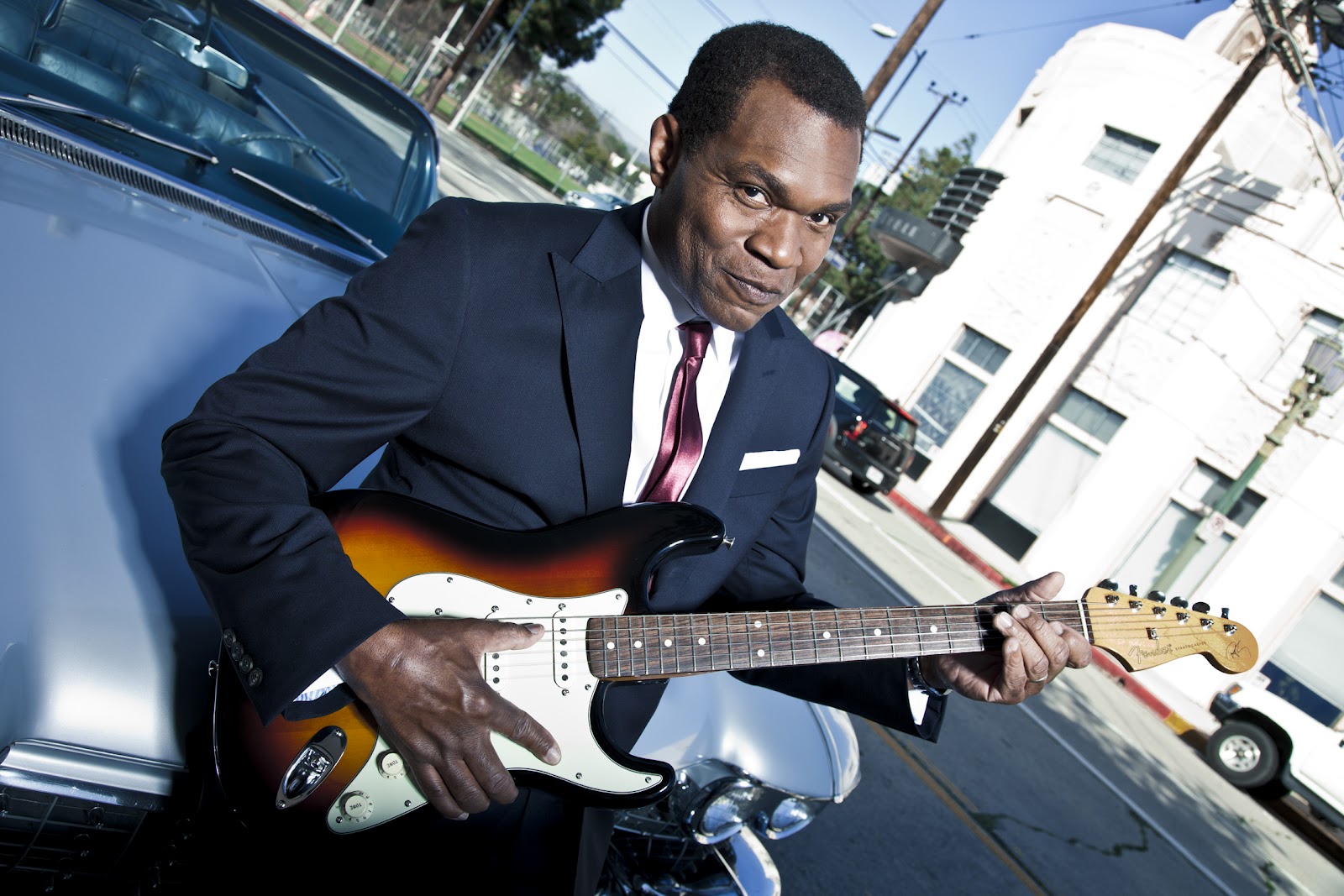
WHERE do you start with a musician as accomplished as Robert Cray? He’s been playing the blues since the seventies, has over twenty albums in his catalogue, has bagged five Grammy Awards and played with the biggest names in the business, from John Lee Hooker, Albert Collins and B.B. King. Oh, and he also appeared in Animal House with John Belushi AND is still releasing top-notch blues records. On top of all this, he’s only one of the nicest guys around. Have I missed anything? Probably.

Hi Robert, let’s talk about your new album, In My Soul, first of all. How do you feel when you have a new record being released?

Happiness. It’s great because it’s a new record that gives us an opportunity to add to our repertoire and more to play to the fans. It’s a lot of fun.

You made some changes to the line-up just before recording. Why did you feel that was necessary?

Change is good; it’s necessary sometimes. We had two changes for this record. The first of which was having Les Falconer join as drummer. I’ve watched Les from afar, but not too far away; he’s been in the Keb’ Mo’ band for years. It just so happened that three or four years ago Les asked me if I ever wanted to make a change to consider him, and I did so about 16 or 18 months ago, so that was the reason for that change. We changed keyboard players, and we have Dover Weinberg on board, who also used to be in the band in the late ’70s. We made the change because I remember Dover having a great sound and a great feel, and I thought it would be great to have him work on the new record before we went into the studio.

Will this version of the band be set in stone for the foreseeable future?

For the foreseeable future, yes. We have a good time and we have a new album to present with this band. But we also play a lot of the older songs and we have a really good time with those, thank you.

Was the soulful feel to the album a deliberate step or more of a natural progression?

It was just by osmosis, actually. We had Steve Jordan come in to do the production. Steve’s a great musician as well. He made a couple of suggestions before we came into the studio; one was the Otis Redding cover, ‘Nobody’s Fault But Mine’, and the other was a Mable John song, ‘Your Good Thing (Is About To End)’. He suggested those two songs, but I thought it was going to be that maybe we’d record them in case the band and myself didn’t have enough original material. Well, the band had original material which were rhythm and blues, and I had songs which were rhythm and blues as well, so we just wound up with soulful songs.

How did you react when he suggested covering ‘Nobody’s Fault But Mine’?

I dug it, because it’s a song by Otis that I’ve admired for years. I’ve never had the opportunity to play it, but lots of friends of mine have covered the tune and I always thought it was cool.

What else does Steve Jordan bring to the table?

Steve’s a great communicator and organiser. He gets everybody into the studio, makes them participate and feel like they’re part of the project. That’s really important and how he conducts all operations in the studio. For example, we have this one song that’s a bonus track called ‘Pillow’; it’s got this really ’70s funky feel to it. Before we tackled the song we went into the control room where Steve had a copy of Curtis Mayfield’s Super Fly record. We played a couple of tracks and started reminiscing about all the ’70s music, then we took a lunch break and let the music digest itself, you know? We came back into the studio, the electric sitar came out, different drums came out, and he had set the mood for the song. He’s in there conducting us, he’s in there dancing or he’s playing along, you know?

One of my favourites is ‘What Would You Say’, which contains a bit of social commentary. Would you call it a political song?

It’s not political in the way other songs we’ve done before covered deeper subjects like the wars in Iraq and Afghanistan. This is commentary and trying to be a bit more positive about what’s going on today with homelessness, the cancer that’s everywhere today and the war in Syria. But not in a big way, if you know what I mean. I wouldn’t call myself a political singer, but we do touch on it.

How was your experience of Bluesfest last year?

It was fantastic. We should come every year as far as I’m concerned [laughs]. It’s always a blast to be a part of it, but also to witness it. It’s a great event.

So you’re putting your name firmly in the hat for any future Bluesfests?

My name is in there every year. It’s just a matter of getting the opportunity to do it. There are so many acts who want to do it, and we have to wait our turn.

You’ve played with most of the blues greats in your time; which one made you the most starstruck?

That’s hard to say. I think all of them did, you know? I’m starstruck by all of them. But the thing is, all the people I’ve had the opportunity to meet have always been really nice and comforting, in the sense that they see how nervous you are and see that you’re awestruck and all that. But they reassure you and make you feel cool.

Could you pick one blues player who has had the biggest influence on you?

Probably Eric Clapton. I play that style of electric guitar, you know? John Lee Hooker is huge, Muddy Waters the same, but my style is more akin to Eric Clapton and the electric players he admires.

When you were in Animal House in 1977, was there any indication that it would be a cult classic movie?

As far as I knew, nobody knew what would happen with the film. We had just bit parts in it; we weren’t even credited as the musicians in the band. We just lip-synched to the music. We never saw a script, so we didn’t even know what the working title was. It was just a bunch of local guys doing a movie, then all of a sudden it’s what it is today. Now it’s history.

How much contact did you have with John Belushi?

He befriended a good friend of mine, Curtis Salgado. We lived in Eugene, Oregon at the time. Curtis was fronting a band called the Nighthawks from Eugene; it was where the movie was filmed and also where I lived at the time. On Monday nights we had a splinter group called the Crayhawks; a combination of the two bands. Belushi would come in and people would ask us if we knew Belushi was in the audience, and we’d go ‘who’s John Belushi?’ because we were always working on Saturday nights and never had seen the programme. But eventually we let him on the stage to do his Joe Cocker impersonation, and all the while the movie was being filmed in Eugene, Curtis was taking John Belushi back to his house and schooling him on blues. To cut a long story short, he got educated through Curtis and that whole thing begat The Blues Brothers. The prescription sunglasses Curtis wore became part of The Blues Brothers model and they dedicated the first record to Curtis Salgado.

What are your plans for the rest of the year and beyond?

Well, we just came back from a six-week tour of the UK and Europe. This coming week we’re about to start another six-week leg in the States, followed by another European leg in the fall. If things go right, maybe we’ll see you at Bluesfest next year. Like I said, my name is in the hat [laughs].

IN MY SOUL BY THE ROBERT CRAY BAND IS OUT NOW.

For the AU Review

Interview: Andrew Savage of Parquet Courts

andrew savage

BROOKLYN, New York-based indie-rock quartet Parquet Courts will return to Australia to play Splendour in the Grass, having been here as recently as January for St. Jerome’s Laneway Festival. With a new album – entitled Sunbathing Animal – about to be released, their show promises to be heavy on new material, with the band’s trademark energy and witty lyricisms being certain to feature. I talked to singer-guitarist Andrew Savage to find out the band’s plans and why the ‘slacker’ label needs to be taken out of circulation.

Congratulations on the new album. How do you feel knowing it’s about to be released?

Man, it feels great. It didn’t feel real until I held it in my hands. I just got my own copy last week. It’s the coolest looking album I’ve ever been on, that’s for sure; I love the way it looks. It’s my first gatefold, and it’s been my lifelong dream to have a gatefold record, as they were always the coolest ones when you were a kid. So yeah man, I’m feeling good about it. Throughout the whole time of making it, we were aware that we had a new audience, you know? We were very cognisant that we had a fanbase, whereas with Light Up Gold, nobody really knew us and we didn’t have to worry about it. I would hesitate to call what we feel worry, but it’s more of an awareness that kind of resulted in more of a realised album.

Did the realisation you have a fanbase change your approach to songwriting?

Not explicitly, because it was one of those things we knew in the back of our heads and slowly started to realise, but I think it did make me aware of not wanting to give people the same thing they got on the album before, you know what I mean?

Do you think about how the songs will sound live when you write them?

The songs in Parquet Courts are really fully written live, or half-and-half at least. A lot of times we’ll come up with stuff in the studio, and that’s really fun, but a lot of the songs on Sunbathing Animal are a year and a half old, so we’ve been playing them for a long time.

How have they been going down live?

We’ve had songs like ‘She’s Rolling’ that have been in the set since before Light Up Gold was re-released on What’s Your Rupture? Those have become kind of set standards by now. We’ve gotten mostly positive feedback from all the new stuff live.

Sunbathing Animal has come quite quickly after Light Up Gold – do you feel like you’re under pressure to release new material quickly, or do you prefer to do it that way?

It’s not that quickly, because Light Up Gold came out in August 2012, so in August it’s two years old. Even still, when it came out, we had already recorded it about six months before that, so that’s pretty well-worn territory. Honestly, we have been dying for this to come out as we want to give people something new. I don’t feel a pressure though, as there’s nobody who will even give it to me. We don’t go into the studio unless we have at least enough stuff to start; we only record when we’re inspired to.

How was your experience at the Australian legs of Laneway Festival earlier in the year?

It was great – I loved Australia. I had already accrued a few friends down there, so we got to see some people we hadn’t seen in a while. I liked the festival, although we played some club shows too in Sydney and Melbourne, and I think that was probably the highlight for me.

What can fans expect from your show at Splendour?

I hope they give us at least an hour (laughs). It’ll definitely be mostly stuff off Sunbathing. That’s what we’ve been waiting to do for a long time. We’ve held back on doing all new stuff because we realise not everybody knows all that stuff yet, and it might be a bummer for somebody to have a band come and play a bunch of songs nobody knows. We’ll be in Japan the day before Splendour in the Grass, and then two days after we have to be in Chicago, so we’ll only be in the country for about 48 hours.

You so often have the ‘slacker’ label pinned on you. How do you feel about that?

I think that calling someone a slacker is kind of slacker, because it’s lazy. If anyone takes just a little bit of time to investigate who we are as a band, you’ll realise that it’s not applicable. At the same time, I understand half of rock and roll is lore, so if someone says these guys are slackers, then people believe it because that’s kind of an archetype that exists in rock and roll; the slacker guy, or the guy who’s a deadbeat and doesn’t have to work hard for it. It’s a fantasy, you know? People like that are pretty rare. People who get called slackers or slacker artists would surprise people with how non-fitting that term is to them. You can’t keep making art if you’re a slacker; part of being an artist is staying hungry and continuing to do what you do. It’s one of those things that once someone says it, people don’t question it, and it becomes part of the language. Once upon a time someone called us that, and most people just say ‘that’s good enough for me’.

Do you read or care about reviews of your albums or shows?

To me, a bad review is when someone doesn’t really think about what they’re doing. Even if a review is heavily critical and against what we’re doing, if it was done intelligently I would still consider it a good review. To me, the bad reviews are the ones where obviously the person hasn’t listened to the whole record or maybe even made a blind endorsement. To me, that’s a bad review. When you work so hard on something, you want to hear what people think about it. I could pretend to be one of those aloof guys that doesn’t read reviews and don’t care what people think. I’m interested in reading or hearing about how someone analyses what I’ve done; that’s mostly what it is.

Another thing you’re often called is a ‘buzz’ band. Does that have any meaning to you whatsoever?

I think that’s kind of silly. I don’t even know what that means. I guess it’s just a band that’s popular at the moment, which we kind of are. That’s not something I care about. We’re not trying to maintain ‘buzz’ status; it’s kind of a dispensable term. There’s always a new buzz band, but I’d kind of like to be one of the bands that moves past that and becomes just a regular band.

Parquet Courts hasn’t embraced social media as much as most bands tend to do. Is there a particular reason for that?

I don’t have any social media personally, and I’m the only one in the band likely to maintain it if we did. I don’t have Facebook, Twitter or any of that stuff. I’ve got Gmail; I talk to people on that, but it’s really that nobody in the band wants to maintain it. It’s not so much of a statement, and I have certain convictions in that world, but with Parquet Courts it’s a if-it-ain’t-broke-don’t-fix-it kind of thing. None of us have ever done [social media] with a band, and I was playing music long before the advent of social media and I remember it being just fine for me. In other words, it hasn’t presented itself as a necessity to me. In some ways, it makes creativity harder and is kind of a big distraction. It’s kind of like white noise to me, and I’ve got enough white noise in my life to worry about; I don’t need more.

What are your plans for the rest of the year?

We’ll be touring all summer. I’m not sure what’s going to go on in the fall, as my brother – the drummer – is finishing up school and has to take five different math classes. Sean and his wife are expecting a child in September, so naturally he’s going to take time off to be a dad. I can’t exactly say what the future holds after the summer, but definitely this summer we’ll be hitting it hard and going everywhere we can go.

SUNBATHING ANIMAL BY PARQUET COURTS IS OUT JUNE 2nd. PARQUET COURTS PLAY SPLENDOUR IN THE GRASS.

Interview: Mark ‘E’ Everett of Eels

eels-credit-piper-ferguson2

SINCE their formation in 1995, the members of genre-spanning Eels have been an ever-changing musical entity that has produced eleven albums of songs filled with themes of loss, love and introspection. The Cautionary Tales of Mark Oliver Everett is the band’s latest release, and as their enigmatic leader – more often known simply as E – puts it, it’s their most revealing to date. I spoke to E to discover what inspired this period of intense reflection.

Congratulations on the new album. How does it feel knowing it’s in the public’s hands?

Well, I guess it’s a relief. Putting out any kind of album is a hard, vulnerable process, and this one is kind of doubly so as it’s so personal. I don’t recommend doing it.

Yet you’ve been doing it quite a bit in the last few years.

Well, not necessarily; we don’t always work in the typical way. We didn’t make five records in the last five years like it appears or how they’ve come out. There was a four-year gap between the Blinking Lights album and the Hombre Lobo album, and during that period we made the next three records, which all came out in a year. So it’s more like we’ve made five albums in nine years.

How long did you have the songs before recording?

About half of them were done before the last album we put out, Wonderful, Glorious. The other half were done after, so it’s all pretty recent, or about half is pretty recent.

Who did you work with on the album?

It’s the exact same group of guys that made Wonderful, Glorious, but you’d never guess it because it’s so different sounding. It’s just the band, you know? Me and the four guys who’ve been touring the world for several years now. Plus, an orchestra and some outside musicians, but even the orchestral arrangements were done by the guys in the band.

How do you stop your song-writing veering across the line between personal and self-indulgent?

I’m aware of the line. I think someone could take a cursory look or listen to it and go ‘this guy is so self-indulgent’ or whatever, but it’s the opposite to me. Why it’s such a hard record to put out is because I’m kind of throwing my dignity under the bus to make a point and so people can hopefully learn from my mistakes. I think that’s a worthwhile thing to do, but it’s not a comfortable thing to do. I believe it’s a lot more selfless than selfish.

What mistakes would you like people to learn from?

I think it’s plainly spelt out in the record on songs like ‘Agatha Chang’. I was in a situation that was a good situation for me, but I didn’t know it at the time. I didn’t appreciate it and I blew it.

So, it’s purely about relationships.

In this case it’s about a relationship, yeah.

Do you take control of every aspect of the creative process, or are you happy to let other band members step in?

This might appear to be a solo type of record, because of the title and the photo on the front, but it’s very much a band record. About half the songs were co-written with guys in the band, they did the orchestral arrangements and they play on everything, so there’s a lot of collaborating going on.

So, Eels is a democracy, not a dictatorship.

No, it’s a dictatorship for sure! The buck has to stop somewhere and the buck stops here, but I’m smart enough to be open to everyone’s ideas and suggestions.

Are you happy for someone in the band to tell you if an idea you have isn’t any good?

Yeah, because that’s what I like about collaborating. You can get a lot of stuff out of someone else that you can’t get out of yourself, and that’s probably the most fun part; coming up with something that you never would have come up with by yourself.

Why was 2007 the right time to release your autobiography, Things The Grandchildren Should Know?

I don’t know if it was the right time. It’s an odd time to write your life story when you’re 40. I used to experiment; no one asked me to do it. I wanted to see what it all added up to, and when I finished it I thought there might be something to offer the world here, and decided to put it out. It was such a nice feeling to do something as an experiment and have it be praised. I probably have more people come up to me in the street and say something about the book than the music at this point, you know?

Is it something you would do again?

Writing a book is very hard and lonely work and isn’t nearly as fun as making music. But if anyone who has read the book is interested in a sequel, the closest thing to it would this new album; the major update on what has happened since then.

The album has received almost universally good reviews so far. Do you read or care about reviews?

Well, it’s always nice if people get something out of it and appreciate your hard work, but I think the best thing to do is to brush it all off; it’s not something that really matters, I don’t think.

What are your touring plans?

Right now we’re about to go across America, then across Europe. We always intend to get [to Australia], but the last couple of times we haven’t because of scheduling conflicts. We’re trying to get there this year, and hopefully we will.

Do you see the release of a new album as solely a vehicle for touring?

I think of them as two different things. When you make a new album, the record company often wants you to go on tour. Touring has become the funnest part of my life; I look forward to it, and whether there was a record or not, I’d want to be doing it.

What will you be doing for the rest of the year after the tour?

That’s it; it’s a blank slate after the tour ends, but I don’t know when that’s going to end yet. I’m just pouring everything I’ve got into that, and there’s nothing in the works. I don’t know what will happen; maybe it’s time for a long nap.

THE CAUTIONARY TALES OF MARK OLIVER EVERETT BY EELS IS OUT NOW.

Interview: Craig Finn of The Hold Steady

craig finn

THERE’S A TRACK on the new Hold Steady album called ‘On With The Business’, and that’s exactly what singer-guitarist Craig Finn is getting. It’s been four years since Heaven Is Whenever saw the band’s music maturing and the then 38 year-old’s lyrics further enforcing his reputation as a rock and roll storyteller of the highest order. It’s easy to see why Finn’s lyrics are what they are, as he reels off names of writers you’ve never heard of.

The engaging and erudite Minneapolis-raised New York native is still telling stories with his literature-rich lyrics on new album Teeth Dreams, and since the departure of flamboyantly moustachioed keyboardist Franz Nicolay after 2008’s excellent Stay Positive, the band has taken on an extra guitarist. With a fatter, Thin Lizzy-esque dual guitar sound, The Hold Steady may have reached a new phase in their musical life cycle, but while Finn is happy to talk up his band’s new dynamic and approach to making music, he’s equally happy to chew the fat on a range of other subjects, from chasing girls as a youngster to Nirvana and the future of rock.

Congratulations on the new album. How does it feel to have it out there?

It feels really good, you know. This is the same as any album, but they take so long to get out; we recorded it in August and it was mixed in October. I’m just excited to be out here playing these songs for people. We went down and did SXSW and played seven times, but they were all these short showcases, and I’m excited to now be playing real shows to the real fans.

How did the new material go down at SXSW?

It went great and continues to go great. It’s always fun to have a new record out; you go and do a new song, and now that it’s out people jump up and sing the words, and you’re like “alright; these guys have got the record”. It feels really good.

Do you feel nervous playing songs live for the first time?

You get sort of nervous, but in some ways it’s also great because you have to pay attention a little more or be on autopilot a little less. In that sense it’s really nice; it’s kind of more of a challenge and you have to think about it, and that’s really cool. You’re maybe paying attention to different things than you are for the rest of the set, in a good way.

Why has it been four years since your last album?

We were going really hard, you know? We did five albums in seven years and toured extensively on each of them. Things were kind of fatiguing; the wheels were falling off the wagon, so to speak. I think everyone was a little tired, and creatively we weren’t in a very good place. We took a break and I made a solo record, which took some time, then we started trying to make this record. The one thing that’s different about this record is that [guitarist] Steve Selvidge joined for it. This is the first record we wrote and recorded with him, and now we have two guitar players. He had joined on the touring for the last record, but this is the first we had wrote and recorded with him. He lives in Memphis and the rest of us live in New York, so there was a bit of a geographic hurdle to get over when we started writing. It was a little formal at first, or a little forced, but we got over it eventually and wrote a ton of songs; maybe even over-writing. We had way more songs than we needed, but once our producer Nick Raskulinecz came in it happened quickly. He was like “you guys have plenty of songs for a record, let’s just go make this thing”.

What makes Steve Selvidge a good fit for The Hold Steady?

We had met him as a guitar player in an opening band years before; a band called The Bloodthirsty Lovers. Tad [Kubler, guitar] and Steve hit it off right away; they started playing guitar together and he seemed a good fit personality-wise, and then we found out that Tad and him were born on the exact same day. We thought if we were going to do a two-guitar line-up, then this was meant to be. It’s a push and pull thing between their guitars; the way they play back and forth and the way they play with each other. That’s come to define this album, and it’s a huge part of our sound now.

Do you enjoy recording or can it be a chore?

There are a lot of parts that don’t have a lot to do with me, you know? There’s a technical aspect to it, and then there are all the instruments that you aren’t playing. Depending on how you’re making the record, there can be a lot of downtime. I like making the records, but there are days which are pretty slow. I really like playing shows, so the record is a way to go out and introduce your songs to people and go out on tour again. I guess I like touring better than recording, although I love to see things fit together, and the creative moments are really fun.

What is it that appeals to you about writing about female characters in your lyrics?

For one I think so many stories we tell – whether it’s songs, books, movies or whatever – are about boy meets girl, so you need girls in there. Being of the opposite sex, there’s a mystery there for me, and I think in many books and movies the female is empowered with his mystery. Ultimately, being in a band whose audience is largely male, I need to find a way to make real women characters who you can really empathise with and that are very human. That becomes important for me.

Why do you think there are so few musicians doing the same thing?

In the big picture, I think for a lot of people lyrics are an afterthought. I’ve always been obsessed with characters in songs, and one of the things I’ve tried to do – rather than just introduce characters – is character development. Sometimes going back to these characters means I can flesh them out a bit more; that may be one of the ways that they might be a little more realised as humans.

In the song ‘On With The Business’ you mention “that American sadness”. Can you define what that is?

I got that from an interview that I read with David Foster Wallace. He’s a writer I’ve been obsessed with; I’ve read all his books and probably every interview he’s ever done. He talks about this particular American sadness, or the understanding that there’s a void inside us. There’s a realisation that no matter what we do, or what we try to fill it with – meaning drugs and alcohol or consumer goods, you know, stuff; there’s still sort of an emptiness. That song is about consumerism and about how these characters are doing whatever they can do to get ahead, and by that it means they just get more stuff. It’s the first time I’ve written about that kind of consumerism, and it made me think of the American sadness quote.

What plans do you have for touring, and can we expect an Australian trip at any point?

I’m hoping we can tour Australia either late 2014 or early 2015. We’ll be in the States for the [northern hemisphere] summer and hopefully get back to Europe in the fall; we have quite a bit of touring planned. I think we’ll probably come for your summer. Our winter, your summer would be ideal.

A couple of off-topic questions to finish up. There has been quite a resurgence in interest in Nirvana recently, surrounding the 20th anniversary of Kurt Cobain’s death. How much of an influence did Nirvana have in your life?

I was pretty entrenched in underground punk and hardcore music by the time Nirvana came into my life. I wasn’t an obsessive Nirvana fan; I certainly appreciated them, but I guess I was already kind of committed to that kind of thing. I have to admit that after Nirvana came out, it sort of became okay for certain girls to look at a guy like me; a more alternative guy or more weird guy. Kurt Cobain definitely helped my cause with a few girls.

Do you see them as being worthy of the Rock and Roll Hall of Fame induction so soon?

Absolutely. Even though I wasn’t obsessed with them at the time, the songs absolutely stand the test of time. He was a great, great singer and so many people held on to that and if you look at how many people he moved and the sea change they represented in the early ’90s, they are more than worthy.

The Arctic Monkeys recently claimed rock and roll has returned. How is it looking from your viewpoint?

It doesn’t seem to me to be at its most popular. I feel that younger people seem to like electronic music more, and hip hop is really big. I think the younger someone is, the less likely they are [to be] into rock and roll, but that said, I see die-hards every night we play. I don’t think it’s going anywhere and I don’t think it’s ever gone away. I think it’s always going to be here, but I don’t know if I believe if it’s ‘back’ or at a particularly strong point right now. I think probably in a couple of years a 22 year-old whiz kid will come out and capture the hearts and minds of young people, and that’s when rock and roll will have a resurgence on a commercial level. Right now I think it’s just holding steady; no pun intended.

TEETH DREAMS BY THE HOLD STEADY IS OUT NOW.

Interview: James Williamson of Iggy and the Stooges

james williamson

IN 1973 Iggy and the Stooges – Iggy Pop, James Williamson, and brothers Ron and Scott Asheton – released Raw Power; a seminal rock album that stunned audiences of the day and introduced the music world to the first spewings of punk. After the band fell apart in 1974, guitarist Williamson left music behind and had a successful career in the electronics and software industries, before rejoining the band in 2009. In 2010 the band were inducted into the Rock and Roll Hall of Fame, and released their latest record Ready to Die last year. Williamson’s new project involves re-workings of songs from the Raw Power era; a collection which will be released as an album entitled Re-Licked.

Why did you decide to re-visit these songs?

You know, it was a series of things. I’ve always kind of wanted to hear those songs recorded properly. Back in the day we thought when we wrote them that they would be on a studio album, and we toured with them. Then we changed management, and unfortunately we didn’t get the option for another record from Columbia Records after Raw Power, so all that existed of those songs was the bootlegs for all these years. I started out wanting to find a female vocalist, as I thought ‘Open Up And Bleed’ would really be good for someone who sang kind of like Janis Joplin, and so I looked and looked and a friend of mine in Austin, Texas sent me a link to Carolyn Wonderland singing, and I just said ‘that’s my girl’. I got in touch with her, and she was totally cool; didn’t know me from anybody, but was totally cool to record it. That’s the first single [and is] coming out on Record Store Day on the 19th of April. I was pretty inspired to go on and continue doing them, and I’m so glad I did as all these singers have stepped up and done a fantastic job. Really, I think you’re going to be pretty amazed at some of these performances.

What other singers do you have on there and how did you come to work with them?

The next single is with a girl called Lisa Kekaula of The BellRays; she just completely rocks on ‘I Gotta Right’ and ‘Heavy Liquid’. That’ll come out around June-ish. I’ve got Ariel Pink on ‘She Creatures From The Hollywood Hills’, Jello Biafra on ‘Head On’, Bobby Gillespie of Primal Scream is going to do ‘Scene Of The Crime’, Jim Reid from The Jesus and Mary Chain, Mark Lanegan, Alison Mosshart and on and on. There’s thirteen of them altogether; it’s a real showcase for singers, if you will, and a tribute to our song-writing.

Did you originally want Iggy to sing on the album?

Well, you know, initially I did. Initially he and I discussed it as a possible album instead of the last one that we did. We decided against it because of the obvious comparisons between the young Stooges and the old Stooges, and so it just didn’t seem like a good idea to get bogged down in all these comparisons. I feel like we made a good album with Ready To Die, but I still had it on my bucket list to do these songs properly, and so the obvious way for me to avoid the comparisons was to have a fresh look at them, re-arrange the songs and bring in other singers. Then it becomes a tribute to the song-writing, rather than an attempt to compete with your younger self.

What makes Raw Power so damn good?

I think it’s the song-writing; pure and simple. Those songs – and God knows, they’ve been mishandled in every way possible by many different people – still sound good, even if the mix is crap or whatever. It just doesn’t matter. The song-writing is the most essential ingredient, but also the playing was ground-breaking. That was my first album, so I didn’t know anything about the studio and had to defer to Iggy. Iggy’s not the most technical person in the world, and he’s a very creative guy and wants to push the envelope, but sometimes in the studio that’s not a good idea. With that record we made the engineer do a lot of things he probably shouldn’t have done, and there were some technical problems; the bass was like mush and the drum track was almost non-existent. Given what Bowie had to work with, he did a pretty good job, albeit a little bit arty. Anyway, he made me sound great, and I’ve got to be thankful for that [laughs]. For an album which is essentially guitar and vocals, it’s pretty good. Jack White has made an entire career out of it.

How did you feel when people said Iggy and the Stooges couldn’t play properly or weren’t real musicians?

Well, I think we proved them wrong. History will probably show that we were good musicians, and we were also very creative and willing to take chances, and not just try to to imitate what was popular at the time. God knows, when we made Raw Power, they were still tying yellow ribbons around the old oak tree, you know? That was the popular music at the time. We pushed the envelope, and although it didn’t do us any good career-wise until much much later, we were successful; it just took a really long time.

There seems to be so much of the Vietnam War in Raw Power. Was that a major influence on the recording?

Yes. No doubt about it. Certainly the riffs from ‘Search and Destroy’. The genesis of that was me in the rehearsal room screwing around with the guys, playing ‘machine gun’ on the guitar. They kind of liked that, and that’s how that song started. There was a little bit of influence on our playing, but there was a ton of influence on Iggy’s lyrics. He’s a very topical writer; if you look at any of his stuff, it’s stuff that’s in the newspaper at the time. That’s the way he writes.

Any chance of a trip to Australia any time soon?

I’ve been asked that question a lot and I’d absolutely love to do it. The thing is trying to organise thirteen singers to show up anywhere is daunting, never mind get them all to Australia. It’d be a challenge, but I’m up for it, and if we can find a promoter to step up and do that, I’d love to. I love Australia; I’ve been there a couple of times now. The Stooges aren’t touring this year, but when we do start touring again, Australia is certainly a viable venue for us.

Do you think you’ll ever retire from music, like you have done from your electronics career?

I’m sure I will, but before I do I’d like to work on a different type of music. Because I was out of music for so long I’ve got a lot of music still in me, and that’s part of what doing this new album is about. The stuff has a fresh new look and sound to it, and I feel good about that. How long more The Stooges go on; I don’t know. There’s not many of us left, for one thing. What I do on-stage is just stand there and play, and assuming I don’t get arthritis or something and can’t play – like Keith Richards or someone like that – I can do it for a long time. But Iggy; he’s 66. When we go back out again he’ll be 67, 68. How many guys are going to stage dive at that point? If anybody will, he will, but I’m just saying, you know?

JAMES WILLIAMSON AND CAROLYN WONDERLAND’s NEW LIMITED VINYL SINGLE ‘OPEN UP AND BLEED’/’GIMME SOME SKIN’ WILL BE AVAILABLE AT INDEPENDENT RECORD STORES WORLDWIDE ON RECORD STORE DAY, APRIL 19TH 2014.

Interview: Melanie Safka

melanie safka

NEW YORK-BORN Melanie Safka – better known simply as Melanie – is true singer-songwriter royalty. Having been thrust into the spotlight as a relatively unknown 22 year-old folk singer by an appearance at the now legendary Woodstock Music Festival in 1969, she has gone on to make a long career out of music and songwriting. An upcoming tour of Australia will allow fans the chance to hear classic songs ‘Brand New Key’, ‘Ruby Tuesday’ and ‘Lay Down (Candles In The Rain)’.

What can fans expect from your shows on your upcoming tour?

They can expect me to do some of my new ones and some of my old ones. They do not have to fear that I will do a jazz version of ‘Brand New Key’ or something. Some people get older and think it will be very clever to do jazz versions of their songs, but I won’t be doing that. It’ll be a good cross section of hits and things that were maybe not even released. Usually I’m really in touch and I’ll often decide at the very last minute what I’m going to do, but I don’t want to disappoint people so I’ll do songs that people know. Honestly, I’ve sometimes got real die-hard Melanie people who don’t want to hear ‘Brand New Key’ and want to hear the newer or more obscure things. There will be something for them too.

How much new material do you have?

I write all the time and I have a new album, which was quasi-released. I’ll be bringing some CDs with me to have at the shows; it’ll be like Melanie’s garage sale. The new album is called Ever Since You Never Heard Of Me. My son and I write together and he just produced a new single called ‘Make It Work For Me’. I’m thinking that we live in a world where people just download a song they like, so I decided to do it that way. But of course, for those people who want a concept album, we’ve been working on an orchestrated Melanie piece. My son is a real composer and has toured all over the world as a solo concert guitarist, and he’ll be with me as well as an Australian contingent. It should be a lot of fun.

Could your new material be called classic Melanie material, in terms of style?

I don’t know; I’ve never really identified myself. When you really think about it, my hits were all over the place; a pretty eclectic mix. One record was a gospel hit, with 46 gospel singers and the next was a little whimsical thing and the next was ‘Beautiful People’, or however chronologically it goes; I know they’re all in there somewhere. I’m always a little all over the map, so is there such a thing as a ‘classic’ Melanie song? They’re all me, I guess.

You’ll probably forever be associated with Woodstock and the hippy movement. What are your main memories of the festival?

I remember everything; I could take three days to talk about it. When I arrived I was totally not an experienced performer. I didn’t have any hit records, just one recording that was being played on underground radio, and if even one percent of that audience had ever heard it, it would have been amazing. I was terrified, and on top of that I was really an introvert – and still really am, but I’ve learned how to handle it. The terror mounted all day long. I went to the festival with my mother, as I was working on a film score in England where my husband was producing and we had been working together. I almost thought that maybe I shouldn’t do this Woodstock thing, but decided that I suppose I should go. I thought it was going to be like a little picnic in a field with arts and crafts, and families with picnic blankets; I had no clue. Communications then were so different; the hype hadn’t hit England and at the last minute my mother picked me up and we drove to Woodstock. We hit some traffic and I thought there was maybe an accident or something, and when I finally got to a phone booth and got someone on the phone, we realised the traffic had something to do with this festival thing; it wasn’t just weekend traffic or anything like that. Then I began to shake, and when we got to the rendezvous place someone told me to go to a helicopter, and I’d never been in a helicopter and asked them why we can’t just go in a car like everybody else. My mother and I went towards the helicopter and somebody stopped us and said ‘Who’s she?’ I replied ‘It’s my mom,’ and they told us she couldn’t come; it was bands and managers only. So I got into the helicopter alone, having said goodbye to my mother, and I get brought to this field where I didn’t even know what this ‘stuff’ was underneath me. I asked the pilot what it was, and he said ‘It’s people!’ I’d never seen anything like it; it was incredible. I was led to a tent where I didn’t have even as much as a backstage pass, so if I wandered too far from the backstage area, Hell’s Angels types would pick me up and bring me back out to the crowd. I would have to say ‘No, no, I’m an artist, I’m supposed to sing!’ and I would sing a line from ‘Beautiful People’ or something, and they took me back. By night time it began to rain and I thought everyone would surely go home, and the announcer made a statement saying that someone was passing out thousands of candles and some inspirational little note. Then someone came in and said ‘You’re on next’. I really, really thought I was going to die; I can’t even say how terrified I was. All day long I was waiting, and people had been telling me all day that I was on next before postponing it, and this time I was waiting for the postponement, but it didn’t come. I went on and had an out-of-body experience and rejoined myself somewhere during ‘Beautiful People’. The thing was, because it started to rain and the announcer was talking about the candles being passed out, I’m forever linked with the lighting of things at festivals even before the song ‘Candles In The Rain’. It was an amazing camaraderie that everyone wanted to continue, and then I wrote that song and bringing something that lit to a Melanie show became the thing to do.

At what point did you realise you’d been part of such an iconic cultural phenomenon?

Maybe when we started doing reunions I realised it was such a monumental thing. I mean, it was a festival and then I did every festival; I became like a festival queen. Every time there was a big festival, Melanie had to be there. I guess the [idea] of me at Woodstock was that I went onto the stage as an unknown and came off as a celebrity. I think that was part of the mystique; after all, there were lots of other people at Woodstock, but I’m so linked to it because of that.

What are your plans for the rest of the year and beyond?

I’ve written a musical based on the life of my husband and I. My husband passed away three years ago; he was my manager and producer for all my albums as well as being the father of our children. So it’s a whole new universe, and from the day he passed away I started thinking of this incredible story. He always wanted me to write my journal and memoirs as an autobiography, and I always said I don’t know what to write or that I didn’t have a lot of pictures as I was always so shy that I would run from the photo op. I just don’t think I’m a person who should have a book. On our last road trip he gave me a leather-bound journal and told me to just write. He said it doesn’t matter where you start; at the middle or about single events that happened in my life, or from singing at the United Nations general assembly or different situations and moments. When he passed, I looked at this empty journal and started to write. My first line was ‘Sometimes you don’t know it’s a story until it has an end’. Then I wrote our story, which is really a strange one. We were married for over forty years, working in a business that is relentless and at the same time we were totally opposite [types of] people. I was very young and he just swooped me up, you know? I looked at it from the perspective of forty-three years later against the backdrop of historic events like the war in Vietnam and it all came together as a musical, with some old songs and some new. We did it once, and I’m still looking to do it; it’s a really amazing show. Maybe we’ll get some theatre people in Australia involved.

MELANIE BRINGS HER ‘PEOPLE IN THE FRONT ROW’ TOUR TO AUSTRALIA FOR THE FOLLOWING DATES:

Adelaide Cabaret Festival, SA – Dunstan Playhouse, Adelaide
Saturday, 7 June 2014, Sunday, 8 June 2014 and Monday, 9 June 2014
Tickets available from http://www.bass.net.au and 131 246

Brisbane Powerhouse, Brisbane, Qld – Thursday, 12 June 2014
Tickets available from http://www.brisbanepowerhouse.org and 07 3358 8600

Star Court Theatre, Lismore, NSW – Saturday, 14 June 2014
Tickets available from http://www.starcourttheatre.com.au and 02 6622 5005

The Clarendon, Katoomba, NSW – Wednesday, 18 June, 2014
Tickets available from http://www.clarendonguesthouse.com.au/whats_on.html and 02 4782 1322

Interview: Uberjak’d

uberjak'd

BEN Grzywacz – a.k.a. Uberjak’d – is fast becoming one of the hottest names on the Australian DJ scene. He’ll be joining a stellar line-up for the national Future Music Festival tour.

Hi Ben, how’s life, and what have you been up to recently?

Great! I’ve just been moving house, which as anyone who has moved knows sucks, but [I’ve] almost moved into the new joint and loving the extra space and new studio. I’m also just about to start Future Music and Goodlife Festival tours, which I am amped for.

What can fans expect from the shows?

Well I’m going to be testing out a lot of new tunes which I have been working on for my EPs for Dim Mak and Mixmash; I am humbled to be a part of the national tour this year. I remember as a young kid it was the first festival I ever attended, so to be on the national tour is something never in a million years I would have thought would be possible.

Will you get a chance to check out any other artists? Is there anyone further down the bill you’d recommend?

Well, I can’t wait for Prydz; for me, he was one of the guys that really inspired me to write music. He was always able to bring the melody and feeling with an upbeat energy. It’s also his first time playing in Australia, which is a pretty big deal!

What releases or remixes do you have in the pipeline right now?

Okay, so literally once I finish this interview, I’m getting started on a remix for Deorro. I can’t say much more than that though. I have a heap of originals coming with my Dim Mak EP featuring four tracks; ‘The Moment’ with Sarah Bodle is coming out very soon, I have an EP with Mixmash coming later in the year, as well as collabs with Will Sparks, Deorro, Zoolanda, Slice n Dice, J-trick Kronic and Chardy.

You recently had your first international gig in New Zealand. How was it?

Yeah it was an awesome experience! Really hope I can go over there again some time, New Zealand is a beautiful place.

How do you rate the club scene in Australia right now? Are there too many government restrictions?

Ugh, don’t even get me started on the lock outs; I have been going out to clubs almost every weekend for four years and I am still in one piece. It’s not the clubs that are the problem, it’s the streets. Apart from that, the club scene is great; Australia is getting a great reputation worldwide for its sound, so it’s a great time to be an Aussie (when isn’t it!)

I read that you’re heading to America soon. What is the plan for the trip?

I can’t wait for America, I’m going to be doing my first international tour, which is 14 dates over a month. As well as that, it’s WMC which I can’t wait for, I’ve heard it gets crazy over there in Miami around that time.

How do you respond to people saying DJs aren’t really playing live music?

I guess people that don’t understand it will say that, but DJing is an art. It’s like showing a million dollar piece of artwork to some bogan down at Centrelink (for those non-Aussies, that’s a welfare office and a redneck); they will probably not understand it and say it’s just a piece of card with some paint on it. But to the educated, it’s a masterpiece and they can appreciate the art and what the artists was trying to make them feel, I think DJing is a lot like this. In saying that, there are good and bad artists, just like DJs.

What are your plans for the rest of the year?

Spend more time in the studio! I never get as much time to do it as I want. Thanks for the chat and hopefully catch you next time I’m in your hood.

FUTURE MUSIC FESTIVAL DATES

Saturday 1 March – RNA Showgrounds, Brisbane
Sunday 2 March – Arena Joondalup, Perth
Saturday 8 March – Royal Randwick Racecourse, Sydney
Sunday 9 March – Flemington Racecourse, Melbourne
Monday 10 March – Adelaide Showgrounds, Adelaide

Interview: Paul Smith of Maxïmo Park

paul smith maximo

FORMED in 2001 in the north-east of England, Maxïmo Park are true mainstays of the alternative and indie-rock scenes. Their fifth and latest album, Too Much Information, has just been released, and was recorded and self-produced by the band in Newcastle and Sunderland with additional production duties from The Invisible’s Dave Okumu and Field Music’s David and Peter Brewis. The album is the follow up to 2012’s critically acclaimed The National Health. I spoke to singer Paul Smith, currently touring Europe with the band.

Hi Paul, how are you? How do you feel now that the new album is released?

Yeah, really good. I’m just on the tour bus; up bright and early. We’re in Amsterdam today after being in Brussels last night. [The album release] feels really good. I think if you believe in a bunch of songs and think other people are going to like them you should put them out, and if not don’t bother. Other people put records out just because it’s part of their job or something like that, but for us it has to be something that’s worth offering to the world. We’re feeling very good about the songs and it’s nice to go out and play them after completing them before Christmas. There’s a kind of honeymoon period where you think you’ve made the best record in the world (laughs), then everyone else gets to hear it and some people probably don’t think that. You put it out into the world and go out and try to spread the word about it.

How have the songs been going down so far?

Really well, it has to be said. Every time you put something out there is an element of nervousness as we wonder if anyone will like it. We like it, that’s a given; but what’s the response going to be? I think people have really enjoyed songs like ‘Brain Cells’ and ‘Leave This Island’ which we’ve offered to the world a little bit earlier than the rest. It’s almost like getting people used to the idea of the evolution of the band and putting out songs that prick up the ears of those who haven’t heard the band before, or perhaps have preconceptions of what the band is. Again, that could potentially put some people off; those who like a certain sound about your band, but we try to transcend any issues people might have with the songs and they’ve just taken them to their hearts and responded really well. The nervousness is over now.

You mentioned the evolution of the band. In what way has this album evolved your sound?

I think we’ve probably become more confident. After the last album and having a break we were never quite sure how it’d be when we got back together, and sure enough it was quite difficult to start writing again. Once we got back in the groove we wanted to keep going and write songs in a certain way, and move on and put more things like literary references into the songs. I think beforehand they had been more subconscious, but this time around there are mentions of Lydia Davis and Audre Lorde and in the album booklet I’ve put in a few recommended readings and things that inspired the songs. That’s one way the lyrics have moved on a bit; there’s more of a storytelling thing there and each verse is kind of episodic. In saying that, we’re not throwing the baby out with the bath water, yet there are moments on the album where there are no guitars, which is something that we wouldn’t have done before. We’ve been more bold on this record, and we decided that whatever the song needs we’ll do it and not be bothered about an album being really coherent or something like that. One of the earmarks of the record is that it’s pretty eclectic. If we needed no guitars we removed them, if we needed loud guitars we turned them up, if I needed to sing soft I did it, and so on and so forth. It’s an album of extremes, but it’s nice to still have the essence of Maxïmo Park in the end.

Tell me a little about some of the bonus tracks on the album. You have ‘Middlesbrough Man’, a slightly altered cover of ‘Edinburgh Man’ by The Fall. Why did you pick that?

There are a few songs that we all really love, and a few albums that we all really love. After that, we all have quite individual tastes. With the covers on the album, we decided to just do things we like. ‘Edinburgh Man’ was a song we used to play when driving down to London or somewhere to play gigs before we got signed. It’s a bit of a sing-along for The Fall; some of their tracks are quite out there, and when we were doing this cover I started singing “I want to be in Middlesbrough” instead. Syllable-wise it all fitted in, and we did two versions before deciding to go with the Middlesbrough one as I’m from the area. Somehow all the lyrics fitted; from going walking on bridges at dawn and the cobbled streets which reminded me of going to football matches at Ayresome Park when I was a lad. There’s even a folklore festival in my hometown, and [Fall singer] Mark E. Smith sings “keep me away from the festival”, which is obviously about the Edinburgh festival, but it reminds me of being a kid.

What do you think he’d make of your cover? Did you have to ask his permission?

We did have to ask permission and we regretted it, but he’d probably hate it! (laughs)

You also have some Nick Drake on there.

Yeah, Nick Drake was one the first people who got me more seriously into music. I was listening to stuff like The Smiths and grunge when I was 12 or 13 years old; that’s what was happening at the time. Then I heard Nick Drake for the first time and it got me really into folk music and made me want to pick up the guitar. My dad had a Spanish guitar and we would get it down and strum it and it wouldn’t sound very good, but listening to Nick Drake’s beautiful finger picking would encourage me to play more. Having said that, it’s me playing the guitar on the record and it’s more strum-y. I had played at a Nick Drake night with people like Robyn Hitchcock and Scritti Politti’s Green Gartside and played ‘Northern Sky’. The version you can hear on the album is my demo they used to play the guitar at the event as I was too scared. But yeah, I’m a massive fan of Nick Drake; his music strikes a chord with where I’m from and where I grew up.

What are your plans for the rest of the year? Touring?

Yeah, we’ve got loads of touring to do. Once you’ve got the songs you’ve got this puppy dog-esque enthusiasm for wanting to play the songs and for people to hear them. You want to mix it up and play old songs next to the new ones. People have responded in a very enthusiastic way. If we can get across to Australia, that would be great. We’re off to Japan soon as well; we’re playing there on the third of April. That’s one of the perks of being in a band, being able to see a little bit of the world, as well as being a rock star! (laughs)

TOO MUCH INFORMATION BY MAXIMO PARK IS OUT NOW.