Spiderbait: 20 Years of Black Betty

With his band’s ‘Black Betty 20th Anniversary Tour’ mere days away, Spiderbait’s Kram is feeling nostalgic.

“I think I’m a quite a sentimental person and very reflective by nature,” he says. “Especially if you manage to survive [as a band] and if you’re lucky enough to prosper in this mad, mad world. Whenever we have these milestones come up, it certainly makes me feel really stoked that we are still lucky enough to have the success that we’ve had but, more importantly, we’re proud of the work and the connection we have with each other and our fans, which is a beautiful thing.”

The ever-popular hard-rocking trio will play 12 dates across Australia from August to October to celebrate two decades since their single ‘Black Betty’ was unleashed into the world. The fact that it was a cover version that provided the band their biggest hit to date came as a surprise to everyone involved.

“We always loved the Ram Jam version of the song that was released in 1978 or 1979,” Kram says. “We’re all big fans of the pop show ‘Countdown’, which was a really big influence on us as country kids. Every Sunday, we would watch it on the ABC, and you would see what music was on top of the charts, and who the latest bands were. I think it was a number one hit in Australia and we just loved the song, and it was actually quite a while after that that I found out that it was written by Leadbelly back in the 1930s and it was an African American blues song. Then, when we started putting it together, I thought it could be a really good thing to record and it was pieced together by us and our producer Sylvia [Massy]. When the thing was finished, we thought it sounded sick and it was really very similar in its energy to the Ram Jam version. We didn’t expect it to be the big hit that it was.”

The song went to number one on the ARIA charts and brought the band significant exposure in the States; the place where its parent album ‘Tonight Alright’ was recorded.

“It was great to go and make a record in the States,” Kram says. “We’d never made a record in another country before. Janet [English, bassist] had a really bad fear of flying in the early days and when we got offers to tour in America, we were a bit reluctant because it was very difficult for her to be able to travel outside of Australia. We loved working with Sylvia; she was the first woman that we’d ever worked with as a producer, and we just loved her energy and the bands that she’d worked with. We were always picking her brains about how she used to be an engineer for Prince. She’s a very spontaneous sort of creator, and I can really relate to that; it was such a wonderful energy she had. But the best things about the record, I think, are Janet’s songs. I think all of Janet’s songs are awesome. And one of the best things we ever had about that song is when it became a hit in America, we were contacted through email by Lead Belly’s family and descendants. And they told us they really loved the track and that we’d done a really good job. We were really blown away by that.”

Even after two decades of Spiderbait’s version of ‘Black Betty’ being rocked out to all over Australia and beyond, the song continues to find new audiences.

“We did Groovin’ the Moo a couple of years ago,” Kram says. “That was a really young crowd and a lot of kids had never seen us before, but the energy of that song just made them go nuts. The same thing happened when we did the track together with Dom Dolla at the Myer Music Bowl last year. We did a signing on a tour once and this woman came up to me and said that the song had really saved her so many times because she had had some bad stuff in her life. She had had depression and she would put that song on and get into her Commodore and burn down the highway at 250km an hour. It would be her way of burning through the darkness. Maybe in a similar way to how we thought it was a Ram Jam song, people will now think it’s our song, but you’re going to have to do the research about Lead Belly and the legacy of African American music. It’s really important to tell that story.”

The ’Black Betty 20th Anniversary Tour’ kicks off in Brisbane on 13th August and includes two nights at the Forum in Melbourne before finishing up in Canberra on 25th October.

“The tour is going to be kind of like a combination of our greatest hits, but I think there’ll be a few different things thrown in,” Kram says. “It’s always weird when we have such a big body of work to choose from. When you do a tour there are so many different places that you can go, so we’ll just see how it’s going to pan out as we as we start working through rehearsals which we’re at now. And we’ll be culminating in celebrating ‘Black Betty’. It’s a weird thing when you do someone else’s song. You try to make it your own and get into it in your own way, but also pay tribute to the person who wrote it.”

So, when the ‘Black Betty’ celebrations are done and dusted and Kram’s nostalgia is set aside, at least until the 25- or 30-year anniversary comes around, should Spiderbait fans be expecting something new?

“I bought a new guitar a couple of years ago,” Kram says. “And ever since I bought it, I’ve just been writing for a new Spiderbait recording. It’s been riff-o-rama; basically, that’s the constant. I’m fully into the energised, heavy-as-fuck kind of space. John has got some awesome songs as well, so we’re piecing it together. But the plan is that after this celebration [of ‘Black Betty’], to release a new record next year and head on into the future.”

For Scenestr

Ms. Lauryn Hill: 25 Years of Miseducation

How do you mark 25 years since one of the best albums of the ‘90s made the musical landscape a better place?

For singer, songwriter, rapper, and record producer, Ms. Lauryn Hill, the answer is to announce two huge arena dates in Sydney and Melbourne to celebrate the milestone.

A quarter of a century since its release, ‘The Miseducation of Lauryn Hill’ is still considered one of the best albums of all time and has sold over 20 million copies. It received widespread critical acclaim on its release, and its legacy has only grown as years have passed.

At the same time, Hill’s status as a hip hop icon has grown too. She was the first rapper to appear on the cover of ‘Time’ magazine and has been hailed as an influence by stars like Kendrick Lamar, Beyoncé, Drake, and Nicki Minaj, among others.

She has also been recognised for her humanitarian work, has had multiple successful acting roles, and even influenced the worlds of hair and fashion. She is a true pop culture icon whose music still stands tall among the rest.

“’The Miseducation’ album has been a consistently special artwork that has allowed me to tour for 25 years, sharing the message and energy with its loyal appreciators,” she said via press release. “I’m not even sure if it feels like 25 years have gone by to me.”

The Australian tour will be Hills’s first appearances here since 2018.

“I’m excited to celebrate this landmark anniversary with the fans in Australia,” Hill said. “I look forward to this time capsule experience. The music itself was born to be anachronistic, at the same time reclaiming precious jewels from the past and infusing them with the potency and energy of the present, in order to enrich it and the future. Revisiting the album live has renewed my love and appreciation for the music and the period in which it was born, when hip hop was ripe with potential and uncomplicated enthusiasm.”

A member of the Fugees since her teens, Hill and bandmates Wyclef Jean and Pras Michel put in the hard work on the long road to commercial success. But when the trio were thrust into the international spotlight with the runaway success of 1996’s ‘The Score’, it was the beginning of the end for the band.

“It’s really hard to express in words the impact it makes [on you] when you come from East Orange, South Orange, New Jersey, and now there are people [worldwide] who feel you just as much as people on your street or on your block,” she told The Music Factory. “It was a big, big thing. I never really adapted; I was just Lauryn Hill. It was important to me that I just continued to be Lauryn Hill.”

Following the dissolution of the Fugees, each member of the trio went on to work on solo projects, and ‘The Miseducation of Lauryn Hill’ was born.

Recorded between 1997 and 1998 before being released in August 1998, it features such classic cuts as ‘Doo Wop (That Thing)’, ‘Ex-Factor’, ‘Everything Is Everything’, ‘Lost Ones’, ‘Can’t Take My Eyes Off You’, ‘To Zion’ and ‘Nothing Even Matters’. It also featured collaborations with Carlos Santana, Mary J. Blige, and D’Angelo.

Its influence is still threaded through popular culture today.

“Lauryn Hill, being such a fierce rapper and such a soulful singer? It was almost unattainable to me,” rapper Lizzo told Billboard. “She set the bar. I was always afraid of being a singer, but then when I heard Lauryn Hill, I was like, ‘Maybe I can do both’.”

Maggie Rogers recalled being similarly inspired by the album in the same retrospective.

“I remember going to class one day and hearing my professor play ‘Miseducation’,” she said. “My jaw dropped. I knew every single word but had no idea what it was. It’s like smelling a smell that you know from your childhood. Lauryn is just woven into my fibre of my musical DNA.”

“’The Miseducation’ album is like an old flame,” said English songwriter Jessie Ware. “You never really leave each other. All the memories come flooding back as soon as you put it on.”

The album won five Grammy Awards and led to a huge, worldwide tour.

“With ‘The Miseducation’. there was no precedent,” Hill told Rolling Stone. “I was, for the most part, free to explore, experiment, and express.”

“I also think the album stood apart from the types and cliches that were supposed to be acceptable at that time. I challenged the norm and introduced a new standard. I believe ‘The Miseducation’ did that and I believe I still do this.”

Just a few short years after the album’s release, Hill had retreated from the spotlight and music almost entirely. She hasn’t released another studio album since, despite fans clamouring for more. The singer has fiercely defended her independence ever since.

“I was being way too compromised,” she told Essence. “I discovered people could only acknowledge red and blue and I was somewhere between. I was purple. I had to fight for an identity that doesn’t fit in one of their boxes. I was a young woman with an evolved mind who was not afraid of her beauty or her sexuality. For some people that’s uncomfortable. They didn’t understand how female and strong work together. Or young and wise. Or black and divine.”

The Australian shows in October will see Hill appear with support from 23-year-old, Grammy-Award-winning Jamaican reggae star, Koffee.

The exclusive concerts, Hill’s only headline appearances in Australia, will also feature classic tracks from the Fugees; most likely the timeless ‘Ready or Not’, ‘Killing Me Softly’ and others.

“My goal is to feel confident and free on stage,” Hill said via her website. “My performances are heartfelt and authentic.”

What better way to mark 25 years of ‘Miseducation’?

For Scenestr

Chappell Roan: The Power of Pop

Fans of bold pop hooks, lyrical authenticity, and celebratory good times unite: Chappell Roan is set to bring the bangers to Brisbane’s Melt Festival.

Direct from her sold-out North American tour, Roan will land in Australia to play the Brisbane Powerhouse-based festival on Saturday 25th November.

The Missouri native has just released her debut album, ‘The Rise and Fall of a Midwest Princess’, to strong reviews, including it being heralded as “bold and uproarious” by Pitchfork. Her appearance at Melt will see her perform fan favourites alongside brand-new music.

Melt Festival, back for its eighth edition in 2023, is an annual celebration of queer art, artists, allies and ideas. Alongside music acts, the festival will feature theatre, photography exhibitions, textile art and installations.

It will get underway on 15th November with an official opening party in the Powerhouse’s main hall platform including appearances by Nigerian house/dance singer-songwriter Kah-Lo and emerging Wiradjuri and Bundjalung artist Djanaba.

Also appearing at the festival will be UK dance artist Aluna, previously half of AlunaGeorge, electronic producer and songwriter KUČKA, alt-pop collective Alter Boy, Canadian indie-rockers TOPS, and Brisbane’s own Matt Hsu’s Obscure Orchestra, among others.

At 17, Roan (born Kayleigh Rose Amstutz) signed a deal with Atlantic Records after uploading tracks to YouTube and garnering major industry attention, with her early music being described by Interview as a “pop sound infused with a dark and unsettling tone that underscores intense, sombre lyrics”.

Roan’s Brisbane appearance comes eight years after being signed to a major label, but with many career peaks and troughs already behind her, her career has been more colourful than many. Still just 25, she has weathered the emotional storm of being dropped from her record label and moving home to Missouri from Los Angeles to start her career from scratch.

Making the transformation from an introverted midwestern girl growing up on a farm to a glitter-soaked queer icon performing all over the world hasn’t been without its challenges, but in artistic expression Roan found her freedom.

“I grew up on Christian rock,” she told The Line of Best Fit. “And I will say, with my whole chest; it’s the worst music I’ve ever heard. But I was a teenager at an incredible time; Lorde had just dropped ‘Pure Heroine’, Lana had just dropped ‘Paradise’ and ‘Born To Die’, Kesha was in full swing, and Gaga had come out with ‘The Fame Monster’. ‘Teenage Dream’ and Drake was just started to gain momentum and I was obsessed with it all.”

It was, ultimately, in pop music that Roan found her sweet spot for songwriting. Her 2020 breakout hit, ‘Pink Pony Club’, tells of a strait-laced Tennessee girl who moves to Los Angeles to become a stripper.

“Pop was shining a light on a part of myself that I was trying to dim,” she told DIY. “But it was always deep down inside. I was just scared to be that version of myself – it seemed too big and loud.”

“I think Chappell’s a drag-queen version of me because it’s very larger-than-life,” she told Vanity Fair. “Kind of tacky, not afraid to say really lewd things. The songs are kind of the fairytale version of what happened in real life. I think that the project has allowed me to be a part of the queer community in a deeper way because I’m not observing from the outside anymore. I feel like I’m in it. I am the queer community – it’s allowed me to just feel queer, feel like a queer person, and feel freedom in that.”

Now comfortable with her sexuality and celebration of glitzy pop, Roan uses her position to support the queer community wherever possible, including booking local drag acts to open for her at every show and encouraging fans to send them tips.

“For me personally, it’s all about giving back and re-distributing money,” she told NME. “Like, a portion of every ticket on my spring tour went to a black trans charity. I told everyone at the show, like, ‘You’re not just coming to have a fun night – you’re here supporting the queer community.’”

As fans here prepare to witness the joy of Roan’s appearance at Melt Festival, one thing to be certain of is the promise of good times and party vibes.

“Like, if I hear Lady Gaga or Nicki Minaj on a playlist, it instantly takes me to this place of ‘Yeah, party!’,” she told NME. “And that’s the place I want to take people to as well. I want to give them that emotion of ‘We’re here, bitch; we’re here and we’re queer’”.

For Scenestr

Happy Mondays: Still Party People

Call the cops and twist my melon, man: the Happy Mondays are bringing the party to Australia in October as part of their ‘Twenty-Four Hour Party People – Greatest Hits Tour’.

The shows will be their first in Australia in over four years; having last played a run of headline concerts as well as a slot at Golden Plains festival in early 2019.

It will also be the band’s first appearances here since the death of bassist and founding member Paul Ryder last year aged only 58.

“We’re thrilled to be heading back to Australia and New Zealand,” frontman Shaun Ryder said via press release. “The fans there have always shown us so much love, and we can’t wait to give them a show they’ll never forget.”

The Manchester band, formed in the early 1980s, achieved significant global success as leaders of the ‘Madchester’ scene, fusing elements of indie, acid house, ‘60s pop, and psychedelia alongside like-minded bands including the Stone Roses, the Charlatans, and James. Drugs, particularly ecstasy, and fashion, particularly the ‘baggy’ look of flared jeans, became almost as important to the scene as the music.

These days, the Mondays are re-living the songs and moods that still captivate audiences across the world 30 years after the fact.

Following on from the band’s previous tour, which saw them play their classic 1990 album ‘Pills ‘n’ Thrills and Bellyaches’ in full, the greatest hits set will see the sextet pull chart smashes and deep cuts from 1988’s ‘Bummed’ and 1992’s ‘Yes Please!’; the album that ended the band’s original incarnation.

“We may even go out and play ‘Squirrel And G-Man Twenty Four Hour Party People Plastic Face Carnt Smile (White Out)’,” Ryder told UK Music Reviews. “The tracks on that album, I haven’t heard since 1986.”

The band, and most especially Shaun Ryder and dancer/percussionist Mark ‘Bez’ Berry, were known almost as much for their kamikaze-level hedonism as their hit music through the late-‘80s and ‘90s. Ryder’s autobiography describes him taking LSD every day for a year, downing ecstasy for breakfast, and prepping for a headline festival set by smoking heroin for 48 hours.

“When we recorded ‘Yes Please!’ in Barbados, I often found Shaun either upside down on a road somewhere or offering another piece of furniture he’d stolen from the studio to swap for crack,” Berry told the NME. “It was fun at the time, but the islanders weren’t too pleased, because we were on the news when we left. The first day we got there, the leading dignitaries were out to welcome us, and by the time we left everyone from the Chief of Police to the Prime Minister were readying the flaming torches.”

The 2023 Mondays may have cleaned up in middle age but remain determined to bring the party on their Australian tour.

“People always ask if I miss the drugs and the partying,” Ryder told the Guardian. “I’m a 58-year-old man – no, I don’t! It was great when I was 18 but things are fucking great now. They’re better now.”

“We are playing better than ever,” he told the Big Issue. “We are older and wiser, and the bullshit is gone. We go on stage and do a professional job because the sex and drugs have gone out the window. It’s just pure rock and roll.”

For Scenestr

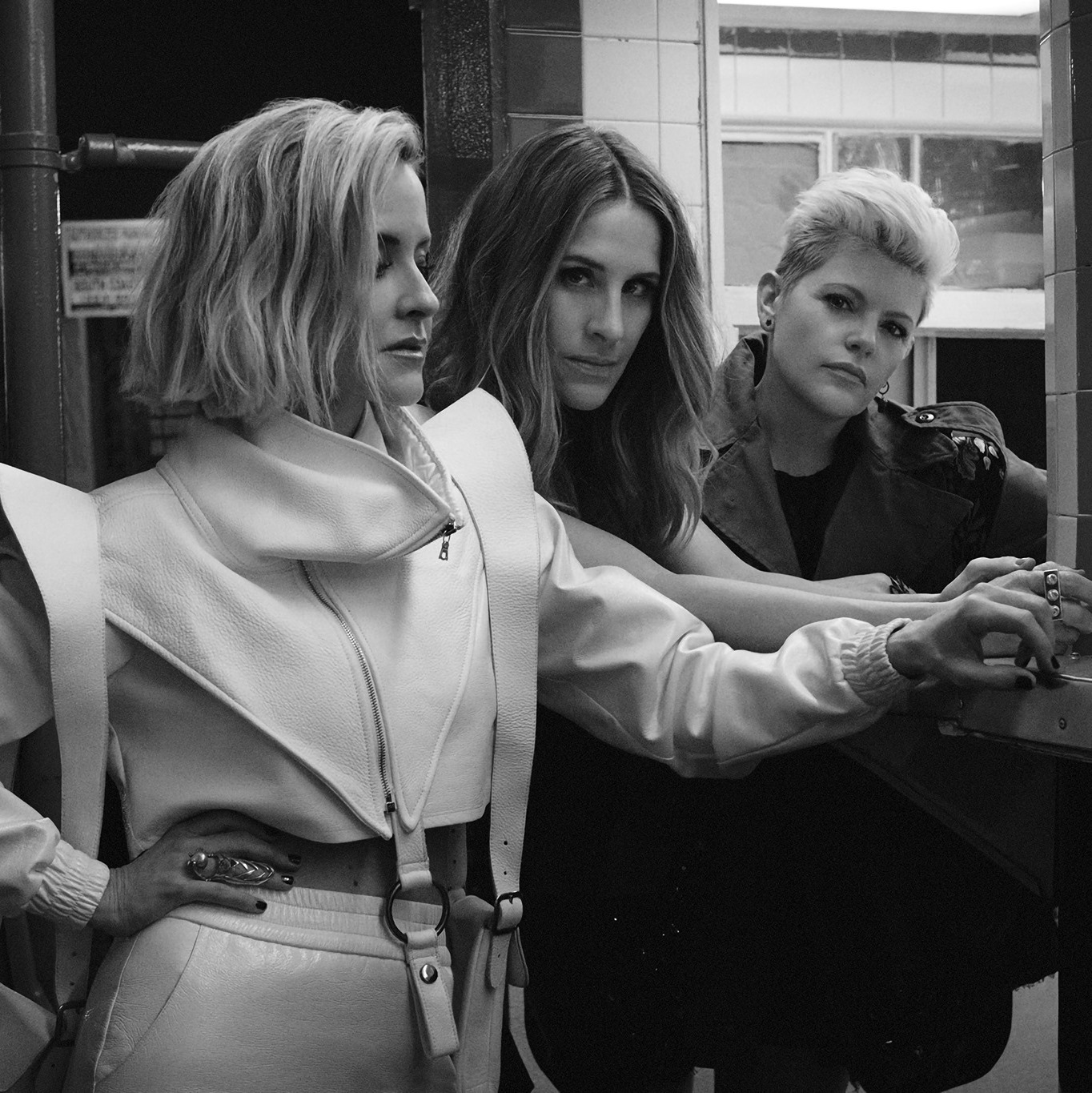
The Chicks: Dixie-Free and Coming Down Under

Multi-Grammy-winning Texan country-pop juggernauts the Chicks will make a triumphant return to Australia in October alongside special guest Elle King.

The band formerly known as the Dixie Chicks, made up of Emily Strayer, Martie Maguire, and Natalie Maines, is making its first appearances in Australia in six years, following sold out 2017 Sydney and Melbourne shows and a headline slot at CMC Rocks in Queensland.

A generous run of arena and winery concerts across Adelaide, Sydney, Brisbane, Melbourne, Geelong, and the Hunter Valley has been lined up, before the group heads to New Zealand.

A recent Guardian review described the Chicks live experience in 2023 as “barn-burning virtuosity and cut-glass vocals”, so come to these concerts ready to party.

“Our fans are fantastic,” Maines told the Houston Chronicle. “It feels awesome to have grandmothers through little kids there. I think we get a little worried at the start of every tour if the crowds are going to be the same, are they going to stand up the whole time and sing every word. And they do.”

Since forming in 1989, the band has had many successes while facing considerable challenges as renegades of country music. The thing that has held them together is the bond the trio has always had, says Maines.

“For me, there’s a comfort and a trust,” she told Elle. “It’s never hard to be around each other. You can really feel free to say, ‘No, that’s not good, but what about this?’ ‘You’re a little out of time.’ ‘Can you re-sing that, you’re a little pitchy?’ Nobody’s getting their egos bruised. You’re never walking on eggshells. That’s what makes working together an easy place to always go back to, and a great place to always go back to.”

The shows will the band’s first in Australia since dropping ‘Dixie’ from its name in 2020. It was a move to extricate themselves of the negative connotations associated with slavery in the former confederate states of America and came in the wake of the killing of George Floyd and the intensification of civil rights movements across the US.

An official press release at the time simply stated, “If your voice held no power, they wouldn’t try to silence you”, while 2020 album ‘Gaslighter’, the band’s most recent and their first in 14 years, was critically acclaimed and commercially successful.

This followed years of being outspoken on political and social issues, including an early-2000s critique of George Bush’s push towards war in Iraq which saw the band caught up in a media backlash and receiving death threats.

However, there was a positive side to many notoriously conservative country music fans turning on the band.

“It set us free,” Maines told the LA Times. “It got us out of this box of country music, which we never wanted to be in and never felt like that’s who we were. We didn’t have to do any of that bullshit anymore.”

They may have been one of the first victims of cancel culture before it was even a thing, but the band has learned to take it all in their stride.

“These days, everybody’s saying anything and everything that crosses their mind and people are getting cancelled left and right,” Maines told iNews. “I’m kind of proud to have been the first.”

For Scenestr

Dan Sultan is Back on Top

With the imminent release of his long-awaited fifth studio album, Dan Sultan is healthy, happy, and creatively firing on all cylinders like never before.


A period of personal turbulence culminating in a much-publicised 2018 fall from grace saw the Melbourne singer-songwriter take time to reflect and recharge. Now, five years sober and with the support of a loving family, the 40-year-old is back doing what he does best.


“Lately I’ve been feeling really fulfilled artistically, which is a really beautiful place to be as a writer and artist,” he says. “I’m not subjecting myself to the same expectations that I might have in the past, so I’m pretty chilled. Feeling fulfilled is a result of the peace [that I’ve found]. That peace is something, for me, that comes along from living your life and finding yourself in a good place. Things go up and things come down but finding that serenity and certainty in life is a good place to get to. I’ve still got ambition; I’m a father and I want my record to do well. It’s nice when I hear good things about it but I’m pretty chilled.”


The self-titled album sees Sultan reflecting on life, love, and sobriety, and was a chance for the songwriter to team up with Joel Quartermain, who shared production, songwriting, and playing duties across 11 tracks.


“It’s my favourite album that I’ve done,” Sultan says. “But that being said, anything that I’m working on at the time is always my favourite. At the same time, I can definitely feel the growth and evolution as a writer and as a person in this record. I’m in a really great spot and I feel really good about things. Feeling like that has allowed me to go to places artistically I haven’t been able to go before. A year or so before I started writing this record, I was really focussed on the more positive side of life, and it’s turned out well.”

Opener ‘Story’ is an intensely personal song with an autobiographical tale about the racism Sultan faced growing up as an Aboriginal person in Australia. It’s a story he has been waiting to tell his whole life.


“I’ve worked with really talented producers and writers in the past who know what that song is about,” Sultan says. “And they’ve told me it’s a great song and I’ve got to record it. It just came along with everything else that was happening in my life. A part of that was sobriety, but it was more than that. Through that comes a lot of self-esteem issues, and, if you’re doing good work, you start to feel better. A lot of it comes down to confidence and bravery. You don’t know how it’s going to go or how it’s going to feel but when you’re feeling brave you just do it.”

Another standout is ‘Fortress’ featuring Julia Stone.


“Julia is a good friend of mine; I’ve known her a long time,” Sultan says. “She’s a really great producer, songwriter, and performer. She asked me to be on a record with her at the end of 2019; a record of her friends doing Australian songs to raise money for the bushfire appeal. We were hoping to write a song for this record. Joel and I had this song [‘Fortress’], and we were doing a bit of show and tell in the studio and Julia was like, ‘Well, I wanna be on that!’. She went away and wrote a bridge that wasn’t there before, and we finished it off in the studio.”


A healthy and happy Dan Sultan, with new songs, a tight band, and support act Wilsn in tow, will be hitting the road to play Brisbane, Sydney, and Melbourne in September and October.


“I’m really proud of all the work I’ve done, and I’ve been able to achieve a lot,” Sultan says. “From where I have been in the past, I’m much happier and much more able to be brave now.”

For Scenestr

Alison Goldfrapp: Going Solo

Since 1999 the name Goldfrapp has been synonymous with the critically lauded, genre-bending electronica of Alison Goldfrapp and Will Gregory.  

But after almost a quarter of a century, seven albums, multiple award nominations, and iconic festival performances, Alison Goldfrapp is stepping out alone with her first full-length album under her own name. 

‘The Love Invention’ is out on 12th May via independent label Skint Records and sees the English vocalist channel a love of disco and house music into what the NME UK calls her “reawakening as a dancefloor priestess”. 

Going solo for the first time at aged 56 “feels very different,” Goldfrapp told The New York Times. “I don’t think maybe I had the confidence to go and do something on my own. Maybe I didn’t think I could.” 

Goldfrapp as a band explored a widely diverse range of genres and territories across multiple releases and Goldfrapp the solo artist seems intent on doing the same, but with more freedom than perhaps ever before. 

“Lockdown forced me to think a bit more independently,” she told DIY Magazine. “In a way that I don’t think I have done for a very, very long time – since I was probably in my twenties. Genres of music are blurred so much now, and I think there’s something really great about that variety. I think it’s so great that [as an artist] you can be extremely fantastical and really over the top, but simultaneously you can sit there playing acoustic guitar. There’s something about the extremities of everything which I think is very healthy.” 

“There’s a certain confidence I’ve gained,” she told Rolling Stone UK. “[Lockdown] forced me to set up a studio in my home and to do things independently, which I hadn’t quite done in that way before. And through that, it gave me a new confidence. ‘Oh, I can experiment a bit more.’ ‘Oh, I can reach out to that person and say, do you fancy doing something.’ I felt like it was a time to try out new things.” 

While complete creative freedom was a very welcome thing, the pressure of releasing a solo album also seemed incomprehensible for Goldfrapp as the collection of tracks came together. Releasing an EP seemed like a more manageable approach. 

“I thought: ‘I can’t do an album, it’s too much pressure, it’s too big, this is just a little plaything,’” she told The Guardian. “[But] it felt like a natural time to do it. [In the past] I’d go off on tour and Will would have another project on the go. He’s always dabbled, and I thought: ‘Well, I’d like to try something else as well.’” 

Skint Records were so impressed with the initial song offerings and contributed to convincing her to take it a step further from an EP to an LP. Collaborating with Röyksopp on their 2022 ‘Profound Mysteries’ album trilogy also motivated Goldfrapp to record a full album, according to Under the Radar. After setting up a studio in her London home, ‘The Love Invention’ started to take shape. 

Goldfrapp knows only too well that the combination of Brexit in the United Kingdom and Covid means it costs “a shitload of money,” to tour, as she told The Guardian. However, the singer is set to play a series of live shows including an already sold-out debut headline slot at Outernet in London and an appearance at Glastonbury. 

While Australian fans are waiting for the tour here to be announced, there’s plenty to enjoy about the new release. Lead single ‘So Hard So Hot’ is a glossy, synth-laden track paired to a retina-searing video featuring swirling AI-generated images. 

The song represents the “instability and hope of transitional states,” the singer said via press release. “I wanted to do something that had that very clubby, acid-y feeling to it. I wanted lightness to come out of the chorus – there’s tension there, as well as euphoric freedom.” 

The second single is ‘NeverStop’; a track that antiMusic describes as “a tantalizing menagerie of staccato synths and a driving four-to-the-floor rhythm” which has been accompanied by a video directed in collaboration with Mat Maitland.  

“’NeverStop’ is about always feeling the wonder,” Goldfrapp said via press release. “[It’s about] committing to connect with each other, nature, and our surroundings while trying to navigate through the contradictions and complexities of life.” 

Collaborations have always been a big part of Goldfrapp’s offering, starting in 1994 when she worked with dance duo Orbital before appearing on albums by Dreadzone and Tricky. ‘The Love Invention’ was executively produced and co-written by Goldfrapp, and features collaborations with producer Richard X (Pet Shop Boys, M.I.A.), James Greenwood (Daniel Avery, Kelly Lee Owens) and Toby Scott (The Gossip, Annie). 

The digital album features additional tracks including the Röyksopp collaboration ‘Impossible’ and previously released Paul Woolford and Claptone club collaborations.  

“When Alison Goldfrapp asked me to collaborate, it was a no brainer for me,” Claptone told Clash. “I’ve always been enchanted by the magic world she created and her stunning voice, so I was really happy that we could merge our trickery to create [the track] ‘Digging Deeper’.” 

“In ‘Digging Deeper’, I’m effortlessly gliding through air, on a gloriously hot breezy night arriving at a blissed-out dancefloor on the island of my dreams,” Goldfrapp added. 

Adam Klein of Goldfrapp’s management company Fascination Management told Music Week: “I am so unbelievably excited for people to hear the world-conquering album. It truly is a return to the dancefloor for this iconic artist who has influenced an entire generation of electronic musicians.” 

Releasing a solo record this deep into a music career may be unnerving to many, but the singer remains undaunted. 

“It feels all sort of very new and fresh to me, which is a great feeling,” she told The New York Times. “And if it should yield a hit single or two, that’s all the better. I mean, hey, who doesn’t want a hit?” 

For Scenestr

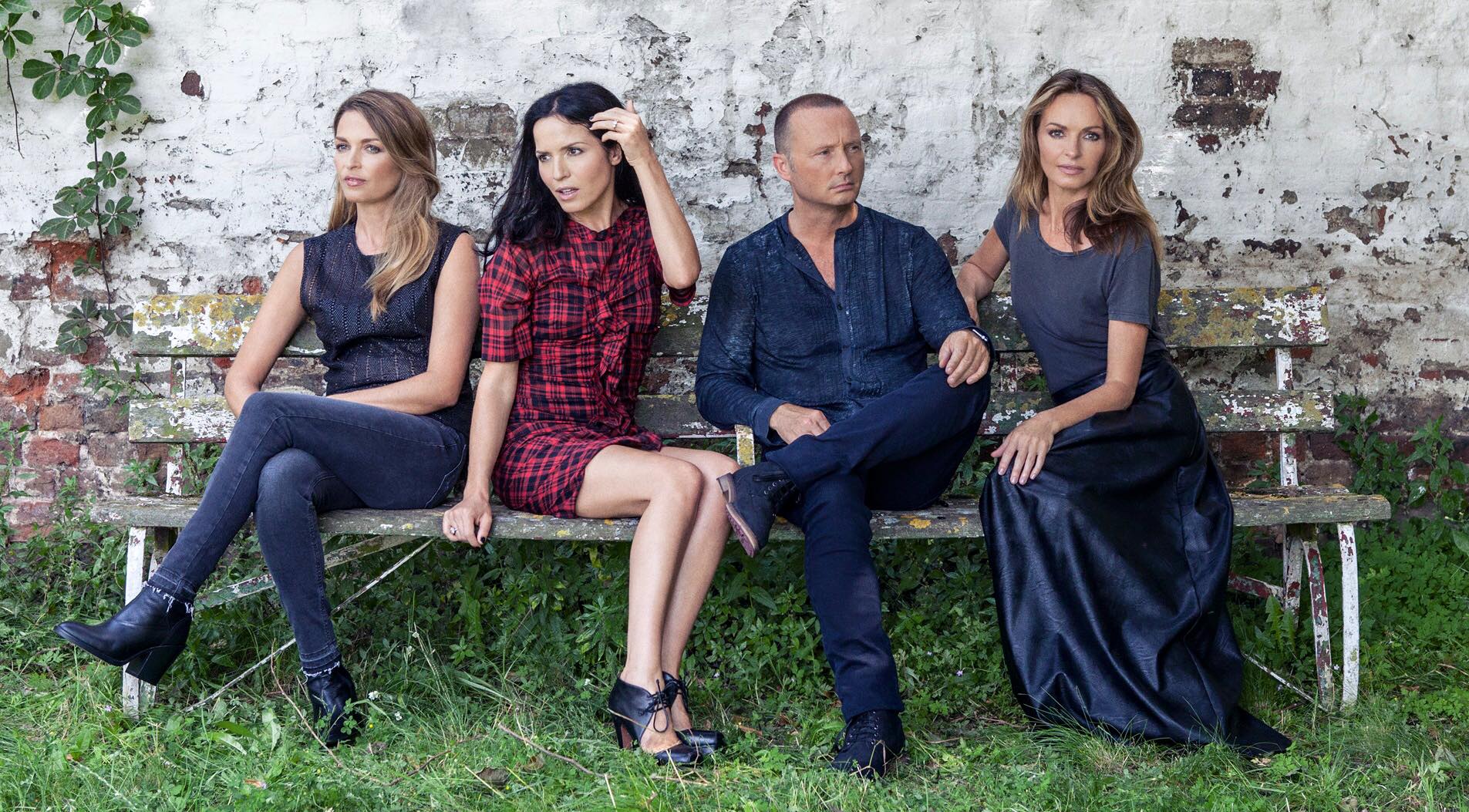
The Corrs Return Down Under

It promises to be a party over 20 years in the making when Irish pop royalty The Corrs return to Australia for the first time since 2001 later this month.

The family quartet and touring band will perform at an exclusive one-night affair at Hope Estate in the Hunter Valley on 26th November, with their only other Australian appearance being a 250-person-capacity Q&A session at Sydney’s Carriageworks the evening prior.

Drummer Caroline Corr speaks of the band’s eagerness to return to one of the first countries outside of its own that took the Dundalk band to its heart from its early days.

“What was brilliant about Australia was it was the first territory where our first record sold and that people actually knew who we were,” she says. “We were still kind of obscure, but, bizarrely, ‘Forgiven, Not Forgotten’ did really well and so when we arrived there, we were wondering how so many people recognised us. Unbeknownst to ourselves, the record had been selling and it was a great feeling, and we had some amazing shows there. It was just so new and great. We’ve always talked about going back to Australia and finally we have an opportunity to go back.”

The multi-platinum selling band has sold over 40 million albums since their 1995 debut but last released an album in 2017, so does the Australian show announcement feel like a comeback?

“I suppose it does,” Corr says. “Although it depends how long we come back for. Maybe there’ll be many comebacks [laughs]. We seem to do a record and a tour, take a long break, then come back together and do something. The pandemic was obviously devastating for the music industry, and we probably postponed about three tours as it was impossible to go anywhere. Once the pandemic was over, we could figure out how to come back together. We’re talking about more touring and it’s just getting the right tour in place. For me, it’s how it feels to do it again. It’s nice to go to places where people haven’t seen us in a long time; it’s new for them and it’s new for us. That’s why Australia feels so nice for us.”

As a family affair the band has a unique musical understanding but that doesn’t mean they don’t still have to work at it.

“When we come back together it clicks, because it has to click,” Corr says. “We all have our own personalities and our little quirks, but we know each other so well. We’ve all obviously grown together and, as family, it wasn’t always easy being on the road together and it wasn’t always easy working together, but we’ve become much better at listening to each other and talking things through. Of course, there’s going to be things that piss you off, but you just move on.”

With 20 years between drinks, the band has set its sights on giving Australian fans – and undoubtedly a multitude of Irish ex-pats – exactly what they want.

“For Australia we are going to play what people really like and what people really know,” Corr says. “Australia has so many Irish ex-pats who have lived there for long periods of time, and it’s nice to connect with your country of origin and hear some Irish music, and we will be playing Irish music, of course. There were also certain songs that were released that did really well in Australia. We’re working on the setlist in our rehearsals in Dublin. Obviously, we’ll be doing ‘Dreams’. We’ll do ‘Breathless’. We’ll do some Irish music. I think it’ll be a good show.”

For Scenestr

Feature: My Kind of Chaos is Ready to Rip it Up

Source: My Kind of Chaos Facebook

Nic Griffiths may have been playing music for decades, but he’s never been as excited by a line-up than the one he’s part of now.

The singer-songwriter fronts Brisbane-Gold Coast heavy rock quartet My Kind of Chaos, and despite a few pandemic-related hurdles of late, Griffiths is as keen as ever to get out on the road and rock.

“We were rehearsing, and everything was going great,” he says. “And then the pandemic hit. We spent a lot of money on film clips and getting the album ready, and everything just fell apart. I nearly gave up, but I thought, ‘You know, I’m not gonna’. I kept going and managed to find the band we have now.”

The solidification of the line-up resulted in the completion of debut album ‘The Monster Stirs’; an eight-track collection of hard-driving rock.

“It started with myself and my friend who I’ve been playing music with for 30-odd years,” Griffith says. “We decided to write an album, and when it was finished, we would put a band together. We had this great drummer who brought his mate Mick [Norris], a bass player, and he came and played one song on the album. From there, Mick said ‘I’m in; I wanna be in the band’, so he stuck with us through thick and thin. Unfortunately, the drummer didn’t quite make it. Then, we found Cameron [Appleton-Seymour], our guitarist.”

The completion of the line-up by drummer Rick Zammit was the icing on the cake for Griffiths, taking the band’s musical chops up several notches.

“Only two months ago we found Rick, who just came off tour and was gig-ready,” he says. “He learnt the songs in four hours. When he came in to audition, it was about halfway through the first song that we realised we weren’t auditioning him anymore, he’s auditioning us. We’re happy to say we passed the test. During our rehearsals, I actually forget to sing because I’m admiring his drumrolls so much. The band that I have now is the band I’ve dreamt about my whole life; they are amazing, incredible musicians.”

With the line-up locked in the band’s manager started booking gigs and now the pandemic pains are in the past for Griffiths.

“We get a second crack at it,” he says. “We did pretty good overseas and that, but now we get to tour the album. The response so far has been amazing. It’s such a solid album as it was produced by double-ARIA-award-winner Anton Hagop. He did a fantastic job. We’re going to be touring all next year, for all those who’ve had their double jab.”

Having reached a level of contentment not experienced in recent times, you’d be forgiven for thinking a punk veteran might have mellowed. Not so; Griffith says there’s always something to be peeved about.

“I’ve come from a traditional punk background,” he says. “I was one of those teenage, pissed-off punks from back in the ‘90s. There’s always a bee in my bonnet about something. A lot of my songs are about life experiences. There’s a song on the album called ‘Making Zombies’, which is about the ice epidemic, which is everywhere. There’s a song on there called ‘Stop Running’, which is about me chasing success. There’s a song on there called ‘Euthanasia’, which is self-explanatory. I try not to write empty lyrics; there’s always a message in there. I think it was one of the things that attracted the other guys.”

Despite restrictions being eased and a new album unleashed into the world, Griffiths is not content to sit still just yet.

“We’ve released the first single off the second album already,” he says. “It’s called ‘Calm Down Karen’. I had a run-in with a ‘Karen’ in a store in Pacific Fair. It was ridiculous. She was just screaming, and I came home and wrote that song in two-and-a-half hours. The lyrics just wrote themselves. In hindsight it turned out really well.”

An upcoming run of shows will see the new line-up and material being simultaneously road-tested.

“We’ve got King Lear’s Throne on 28th November,” Griffith says. “Vinnies on the 10th of December, 13th January we’re at the Zoo, and we’ve just picked up our first festival at Jimna Rocks in April. Everything’s just exploded for us.”

For Scenestr

Feature: Hayden Thorpe is feeling all the Metafeelings on Moondust For My Diamond

Photo: Hayden Thorpe Facebook

Hayden Thorpe isn’t one for pondering the simple things in life.

The 35-year-old Englishman, formerly of the now—defunct Kendal indie darlings Wild Beasts, is much more of a big-picture kind of guy.

As keen to explore the wonders of the minutest chemical reactions in the inner wirings of the mind as he is societal-level shifts in thinking and action, and the vast and unknown wonders of the universe and beyond, the multi-instrumentalist is nothing if not intriguing.

Second album Moondust for My Diamond, a smoothly enchanting 12-track collection of cerebral and propulsive pop featuring production by Nathan Jenkins – aka Bullion – is clear evidence of this. Thorpe’s interests, from science, religion, humanity, the cosmos, sex, temptation, and contemplation of the end of days drip from every pore, filling the record with big questions and the wonder and anxiety of the possibilities of the things we don’t know, poised just out of reach.

It’s enough to make one contemplate several aspects of life and existence, albeit set to a slick soundtrack that builds on the sonic palettes of 2019 debut album Diviner and last year’s Aerial Songs EP.

The tunes are charming and understated but it’s Thorpe’s lyrical themes that prove most beguiling. In Sirens of Titan, Kurt Vonnegut wrote, “Everyone now knows how to find the meaning of life within himself”, and Thorpe seems to have been on a grand Vonnegutian journey during the making of these songs. In fact, it’s not too much of a stretch to imagine him locking himself away in a dank library for months on end, devouring all manner of obscure texts on philosophy, science and theology, before channelling it all into something he can set his countertenor vocals to.

“I’m an obsessive person but I’m also a person who has fads,” he says. “So, if you combine those two things, you get obsessive fads, into which I entirely immerse myself in practice, writing or theory. It becomes almost carnivorous; I need to imbibe it, put it in myself, become it for a while. I think most of the richness of the words come from there. I’m speaking like it’s quite a brutal process, but it is if you go quite deeply.”

Take lead single ‘The Universe is Always Right’. Probably never before or ever again will references to genies escaping bottles, Excalibur being pulled from stone and ‘cosmic arrows’ be made in a pop song. And certainly not one on an album that sounds as necessary as this. It’s clear from almost the get-go that Thorpe’s influences are many and varied, and he has used them to make surely one of the best albums of 2021.

“For this record, I got interested in Eastern mysticism, yoga and alternative practices,” he says. “My other hobby is science and I realised there are a lot of overlaps between the ways Eastern mysticism sees the universe and how science sees the universe. The difference is science medicalises the body and our emotions, but Eastern mysticism doesn’t; it actually incorporates the body, the mind, and the sense of the universe. Perhaps that is what is lacking in our terminology and our language; this sense of something beyond and how to incorporate the beyond into our very being. What goes on in those language spaces are spells; people are casting spells, and I say that in a very functional way. Casting spells is just an alignment of words; it’s just placing things in order. If you put certain words in a certain order, it elicits a chemical response in the body. It’s a very extraordinary thing. I wonder why all our songs are about love and spirit. Well, actually, it’s that invisible matter that stitches everything together; we can’t quantify it, we just know how we build our reality.”

It was exploring this meeting point between science and religion that led Thorpe to investigate the phenomenon of psychedelic therapy and a pioneering project integrating music and psychedelic drugs; an experience which has found its way most clearly into tracks ‘Suspended Animation’ and ‘Metafeeling’.

“Therapists are using this software while someone is in an induced psychedelic state; probably through psilocybin,” he says. “Basically, musicians contributed to a soundscape that the patient is listening to. I sang and contributed vocals and got really interested in both the practice of how I sing for somebody in that state and what would I do and how to contribute. It made me reflect on what singing is and what making music is. I got interested in it through a seminal book by Michael Pollan, ‘How to Change Your Mind’. It’s so interesting because I think you should always judge a civilisation by its drugs. Capitalism is very much the cocaine society, which is really about enlarging the ego. Whereas, in past civilisations the mushroom or other psychedelics have been the central theme of their civilisation. It’s inverse; actually shrinking the ego or dismantling the sense of self. Maybe we’re at a frontier now; we’re realising we’re all going around being encouraged to be warriors in our own way, going forth and it’s a dog-eat-dog-type world. But it’s clear that is creating so much damage, and it’s not sustainable. Secondly, it fucks the natural world when you do that too. Paul Stamets is one of my hero mycologists and he always states that the earth has already provided the operating manual for how we understand the natural world, and he says it’s psilocybin. We think the human point of view is the ultimate point of view, but I really don’t think that’s the case, personally.”

While a cocktail of energies ooze from Moondust for My Diamond, ensuring it sounds like a record put together by an artist with a simple love for the craft of songwriting on one hand, the flip side of Thorpe’s expansive thinking means he’s never far away from tackling the next big topic.

“We’re living through a reckoning,” he says. “There is a grand narrative of our time, where growth, success and aspiration are somehow virtuous qualities, and that is failing us. That is not working, and I’m so excited about what the music sounds like on the other side of that. If you think about it, music has always been co-opted by power; hymns and church music has always been the property of the church and therefore they have the spiritual ownership over peoples’ lives. Now, when big business owns most of music and hedge fund managers are buying up Bob Dylan songs and all the rest of it, you have to ask what is the spiritual value of songs now? I’m so interested in what is the other side of this; what language and what ways can we speak of the world beyond our own inner story. The legend of our time is absolutely our own inner world. We’re all encouraged to broadcast our every emotion. Songwriters especially, we’re meant to wave the flag of our emotions so boldly, and that’s supposed to be our currency. After a while of doing this, I’m thinking I’m getting more interested in the flagpole than the flag. There’s something beyond that’s worth getting it.”

While Thorpe contents himself with pondering many of the existential questions in life, he’s also a realist, and understands that being able to find the time and headspace to write and record new music, never mind release an album, during a global pandemic and in the uncertainty of post-Brexit Britain, is an achievement in itself.

“I think this moment does feel like one of the more extreme frontiers of record-releasing, bearing everything in mind,” he says. “The sheer manpower and force of will to bring music out now is significant, so I’m really proud that the work has emerged as it has. I’m surprised by the album; it’s unlikely. It’s emerged in unexpected ways and brought me unforeseen adventures, and for that I’m grateful. In the UK there’s definitely a kind of crosshair going on with the Brexit situation for musicians and the pandemic; but also, just the cultural landscape; the value system in which music works now. It’s been transformed. The metrics by which people judge value means that it’s nothing other than bold and chaotic to follow your music into that black hole. I believe in songs; their potency, their ability to convert a magical substance within the body. It’s also an extraordinary thing to devote most of your waking hours to obtain a level of beauty. That’s not to be too high-minded; it’s a form of utmost expression and at its fullest realisation, a moment of beauty. The dissonance of a functional human being as well as someone who is entirely entangled with the machinery of making music is probably the challenge, but the more I make music in my life things get even simpler and you don’t need much at all if you have your devotions.”

His live band includes Frank Ocean’s bass player, Ben Reed, drummer Fabian Prynn, and saxophonist Chris Duffin, who, Thorpe says, will allow him to “live out all my Springsteen fantasies”. A tour of Europe and the UK is on the cards for early 2022.

“It’s been four years since I played with a band,” he says. “Our first gig was an extraordinary sensation to feel that music again. I really like the practicality and theoretical way of doing gigs, which is me and a laptop going around, but it doesn’t have that virility that I want. I’m going to go forward with this killer band, which is a fabulous thing to be doing. I really want to live this one out properly.”

If Moondust for My Diamond is any indication, it’s sure to be a hell of a trip.

For PopMatters

Feature: Sara Storer’s Golden Country

Source: Sara Storer Facebook

The past couple of years have been slow for so many musicians, but beloved Australian singer-songwriter Sara Storer has been quietly productive behind the scenes.

The multiple Golden Guitar-winner has been spending the time putting together a wealth of new material before her appearance at Groundwater Country Music Festival.

“I released my new album the year before COVID hit and managed to get a lot of my touring out of the way and get the album out there,” she says. “Then we moved to Darwin early in 2020 and that was the start of COVID, and of all places to have moved to, the territory is pretty damn good when it comes to lockdowns and everything else. While the music industry shut down and there wasn’t much work at all in 2020. But, for me, it was just good timing for me. So, I’ve been writing, and I’ve got enough for a new album. My focus will be on that for next year; to get in and record somewhere and get the new album out.”

The story of the 48-year-old Victorian’s seven albums follows the former teacher’s eventful life, and her next release is progressing steadily.

“Every album is a diary of where I am, how I’m feeling, and what’s going on in my life,” she says. “For this [upcoming] album, I moved back to the Territory, and we leased a little place out at Adelaide River, about an hour away from Darwin. We had a beautiful little cabin there and I did some songwriting out there. So, there are songs about being back in Darwin and what that brings to me personally. Also, just little stories I’ve heard along the way over the past couple of years. If I hear a story I’ll write it down, and that gives me a number of songs. I can write them, sing them, and record them and then not go back to them for a while. So, what I need to do now is look at what I’ve got and look at what works best as a collective, rather than just having bits and pieces here and there.

Storer does what feels natural to her; following a long line of Australian singer-songwriters telling real-life stories of real-life people and places.

“I grew up on a farm, so I have a bit of a soft spot for our people and our country,” she says. “Country music originated from people writing about people out working on the land and their stories, and I do like writing about our characters in the bush and this great country. As an Australian, I grew up listening to John Williamson and what I love about his work was that he sung about Australia with a lot of pride and used everyday Aussie slang from his world and put it into a song. Aussies can be pretty ‘ocker’ but it still sits beautifully to me, as that’s how we talk, that’s how we greet each other, and that’s our characters. So I like to try to be as descriptive as that in my music, about our beautiful place and, of course, singing with an Aussie accent is important, as it would be pretty silly if I was singing about, say Dubbo for example, in an American accent. Listening back to my earlier stuff, I sound very Australian. I do love the Aussie voice in a song and you have to be authentic; it works well with my songs, themes and subjects and it’s how I’ve always sung.”

Storer will play the upcoming Groundwater Country Music Festival, which runs from 12th to 14th November. The 2019 event saw 73,000 people descend on Broadbeach for the free three-day extravaganza of all things country. This year’s festival features 44 acts, including Adam Brand, Natalie Pearson, Troy Cassar-Daly, Caitlyn Shadbolt and many more.

“I’m so looking forward to it,” Storer says. “I got to play at a big event about a month ago, using a full band. It had been a long time since I’d done that, and I was nervous and excited, but gee, it was good to do that. It was so good to be back on stage with a full band, big, beautiful crowd, and everyone is just there to finally hear some music and do the festival thing again. I can only imagine Groundwater will be bigger and better than ever. I’ve got a really good feeling that it’s going to be a big success. I love music and country music and catching up with friends too.”

For Scenestr

Evangie: Deep and Meaningful

After more than a year since her last release, indie-rock up-and-comer Evangie is back and ready to lay it all on the line.

On new single, ‘Deep Down’, the Brisbane-based singer-songwriter, real name Jodie Sanderson, explores themes of loss and abandonment that come with unreciprocated affection.

“I find it easy to write about things that I’m going through and to write very personal lyrics,” she says. “For me, songwriting is a huge expression of my emotions and a really good way to talk about how I’m feeling. I really love honesty in lyrics; talking about deep topics.”

It’s this honesty and openness that, along with the ability to write a climactic rock anthem, has been the vehicle for Evangie to channel her stresses into something positive.

“I’ve struggled with my mental health during the whole pandemic period, so I kind of naturally took a bit of a break,” she says. “I’m still going through certain struggles, but it’s important for me for people to be aware of it and hopefully it encourages other people to speak out about it, even if they don’t want to specifically talk about what they’re struggling with. I’m very open about [mental health] with friends and family. I’ll always talk about it because I believe it’s important to talk about things I’m going through rather than keeping them inside. With my music, I went a bit MIA and it’s important that people know I’m still trying to work towards things and people’s support is really special to me.”

Like debut single ‘Japan’, released last year, ‘Deep Down’ begins as a driving, crisp pop gem before exploding into life with towering vocals and a hard-rocking, anthemic finish.

“I’m excited for it to be released,” she says. “We’ve had that song for a while so it’ll be good to have it out. I’m most proud of the lyrics; they’re my favourite thing about the single. ‘Deep Down’ is one of my favourite songs, lyrically, that I’ve written. I’m really happy about how the production worked out as well; it really captured the essence of the song. I recorded with Cody McWaters at Hunting Ground Studios. We just spent a few days in the studio recording a couple of songs. We worked together to transform it from just the instruments that we used into something with a lot more effects and sounds to make this huge soundscape. I always ask my band for feedback as well, which is really important to me as I want them all to love the song too. I definitely have ideas of what I want it to sounds like, but I’m so open to collaborating with my producer and band to do what’s best for the song.”

With significant milestones already under her belt, including reaching number one on the Triple J Unearthed indie and rock charts and being awarded ‘Best Overall Performance’ in Brisbane City Council’s Qube Effect, Evangie is looking forward to a bright musical future.

“We’re going to be doing some shows to celebrate the release,” she says. “There’s a show at the Tivoli coming up, which won through Qube Effect, and seeing where things go from there. We’re just going to release the single to see how it goes, and keep on writing and perfecting my sound.”

For Scenestr

The Killer Queen Experience: The Show Must Go On

Source: The Killer Queen Experience Facebook page

Calling all Good Old-Fashioned Lover Boys, Fat Bottomed Girls and Invisible Men of Brisbane: get ready to rock like it’s 1985 when The Killer Queen Experience returns to the Tivoli for one night only on Saturday 13th November.

The Queensland-based band, featuring John Blunt in the role of flamboyant frontman Freddie Mercury, has been a mainstay on the Australian and international scenes for two decades, perfecting the knack of celebrating the beloved British band’s legacy in style.

With a wealth of showbusiness experience under his belt, stepping into the yellow jacket came naturally to Blunt.

“I’ve always been a performer,” he says. “I’ve been involved in a lot of cover bands over the years. I worked at Movie World for several years; I performed the role of Roy Orbinson, Freddie Mercury and Elvis. In fact, I was the only male performer there who did three singing roles. From leaving there, I put together a show where myself and my band did a tribute to both Elvis and Queen, calling it ‘The King and Queen Show’. After a few years a lot of people said we did a great Elvis, but everybody does Elvis. So, we dropped Elvis and purely concentrated on doing Queen. We then started a full two-hour show with what we called Killer Queen.”

Getting into the mindset of one of the most admired and missed vocalists of all time has become a process all of its own for Blunt.

“I have a few rituals,” he says. “It’s basically all about getting into the changing room, looking into the mirror, putting on the make-up, realising what a fantastic team of musicians I have around me, and all of us falling into the groove. There’s laughter, there’s guitars. We go through harmonies, go through songs, and before you know it the costumes are on and I’m looking around the room, staring at what looks like Queen circa ’82 to ’85. Then I’m in full character and we’re ready to go on.”

After taking a COVID-related hit to its performing abilities over the past couple of years, the band has enjoyed a run of successful shows recently and is looking forward to rocking audiences all over Australia as soon as possible.

“We’ve been around for almost 20 years now,” Blunt says. “So we’re always getting contacted by promoters, venues and people putting on festivals. We’re always on the radar of people who are trying to put on shows; people who want to keep the industry going, even through the thickest of lockdowns. We’ve always been incredibly grateful for that, and I think that comes from being around for a long time and, without blowing my own trumpet, we definitely deliver the goods.”

The show is full of songs that fans have come to know and love since Queen’s formation in the early seventies, through to the end of the original line-up with Mercury’s death from complications related to AIDS in 1991.

“We used to think we were clever doing songs that were deep cuts,” Blunt says. “But when a paying audience member comes up after the show and says, ‘What was that song about spreading your wings?’ or ‘What was that about too much love will kill you?’, I’d find it interesting that they didn’t know those songs. We’ve now got a motto: stick to the hits. Two hours go by extremely quickly and we add new songs to the show. We don’t announce them on social media; people hear them when they turn up. We like to have little surprises here and there.”

So why see a tribute band playing songs of a group whose original line-up ended 30 years ago? It’s all in the way you approach it, Blunt says.

“These songs are the soundtracks of people’s lives,” Blunt says. “Tribute bands are able to bring back a little bit of that nostalgia. I’ve said this for 20 years: we know we’re not Queen. I don’t call myself Freddie Mercury or anything like that. What I want people to do is to come along and enjoy these wonderful songs that they got married to, celebrated their 21st birthdays to, danced to back in the ‘80s, and watched Queen on film clips and so forth. I want people to walk away thinking that they know that wasn’t Queen, but damn that was close, that was cool, and we enjoyed that. I’m always giving a little wink back to the audience to let them know that we on stage are having just as much fun as you guys are having. There’s only one Freddie Mercury; we’re not trying to replace him, and he doesn’t need our help to let his legacy live on. He’s practically immortal, so we’re just there having some fun with the crowd.”

For Scenestr

Tex Perkins: Up Late for Rock ‘n’ Roll

tex perkins scenestr paul mcbride live music brisbane australia GOMA

Tex Perkins is arguably one of the hardest working people in Australian music, and a true survivor at that.

As a member of Beasts of Bourbon, The Cruel Sea, Tex, Don and Charlie, The Fat Rubber Band and others, as well as a finger in the pies of the acting, writing and presenting worlds, Perkins has been working practically non-stop since the early-’80s. Having had many guises over the years; from hard-drinking rocker, Johnny Cash in his ‘The Man in Black’ show, or member of a bonafide Australian super group, as well as simultaneously juggling family life and personal relationships, Perkins isn’t going to be held back by the roadblocks of recent months.

The enigmatic singer-songwriter will be continuing his decades-long relationship with Australian music-lovers when he appears at the Queensland Gallery of Modern Art’s ‘Up Late’ series on 20th March as Tex Perkins & Friends; an ensemble including Jez Mead, Lucie Thorne and Christian Pyle.

The latest edition of the popular series is part of GOMA’s ‘The Motorcycle: Design, Art, Desire’ exhibition, which examines the ground-breaking designs that shaped one of the most iconic vehicles and features 100 of the greatest motorcycles ever assembled. Included in the outdoor celebration, which runs for two nights at the Maiwar Green at South Bank, are Indigenous rapper and musician JK-47, Brisbane punk/grunge outfit VOIID, and DJs Eamon Sandwith, Paolo and Patience Hodgson. Throw in GOMA’s top-notch bars and food service and you’ve got a veritable smorgasbord of delights.

Added to this, Perkins’ year is looking as busy as ever, with appearances pencilled in at Byron Bay Bluesfest in early April and the Gympie Music Muster in late August, and a string of club shows lined up, among others.

But being a rock ‘n’ roll survivor inevitably takes its toll and doesn’t come without its scars. The past couple of years have seen the loss of some of Perkins’ closest friends in the music world, including the Beasts of Bourbon’s bassists Brian Henry Cooper and guitarist Spencer P. Jones, who both passed away from cancer at the ages of just 55 and 61, respectively, and put an end to the much-loved band forever.

Then came COVID, but, not one to stand still or take time out, Perkins put together ‘The Show’; an online concert series recorded and staged not in the pubs and hotels of urban and rural Australia, but in a shed on his country New South Wales property. With the help of family and friends offering expertise in equipment use and setup, recording and editing, the series kept the ever-busy Perkins from getting restless before the re-introduction of the live music show towards the end of 2020.

Now, fresh from lockdown and with a number of shows with Matt Walker under his belt, including a recent show at Kings Beach Tavern on the Sunshine Coast which a Scenestr reviewer described as “ultra-solid”, Perkins is back in the game. It’s a timely return to a natural habitat for the Fender-toting guitar-slinger.

If quality rock and roll performed by one of Australia’s most experienced and respected industry veterans in a moon-lit urban setting is your thing, this one can’t be missed.

Catch Tex Perkins & Friends at GOMA’s ‘Up Late’, Saturday 20th March at 9pm. Tickets via GOMA.

For Scenestr

Cut Copy Poster Exhibition: A Personal Journey for one of Brisbane’s Finest

Image: Leif Ekstrom

The late ’70s and ’80s was a landmark era for Brisbane’s music and youth cultures; and the creative, subversive and DIY nature of the scene is now on display in an immersive and revealing exhibition at the State Library of Queensland.

‘Cut Copy: Brisbane Music Posters 1977-87’ is a collection of over 350 rare, handmade music posters that came together from attics and half-forgotten storage boxes after an inspired hunt by John Willsteed.

For Willsteed, formerly a member of The Go-Betweens and currently guitarist with Halfway and a Senior Lecturer at QUT, the collection involves not only a journey into the history of Brisbane’s music scene, but of his younger self and legacy.

“I have a lot of first-hand knowledge around these posters,” Willsteed says. “I designed some of them, I printed some of them, and I knew all the other people who designed and printed them. It wasn’t a very big scene and everybody knew everybody else. So, maybe this is the last opportunity to grab information from all these people and stick it onto these objects before we all sail off into the west like the elves.”

After a determined search, items came flooding in from around Queensland and further afield, with some from as far away as Spain.

“I had this idea that I would try and collect as many posters as I could; from people that I knew from the ‘scene’, for want of a better way of describing it,” Willsteed says. “I also realised that these people are in their sixties, their kids are growing up, they’ve been hanging on to stuff for a really long time as it was an important part of their youth. Maybe, though it was time to get rid of it and I really wanted them to get rid of it in a place where people would look after it and people could access it forever instead of stuffing it into a wheelie bin or skip. I put a word out on Facebook and collected about 350 items from maybe 20 people. I then spent a summer getting all the relevant details around it and building a database; who the artists and venues were and things like that. Often, posters don’t have a lot on them; many don’t have the year or month and they’ll just have ‘Friday 16th’ at some hall somewhere.”

While the collection will be a trip down a possibly hazy and fun memory lane for many, it also tells important stories about the political and social landscapes of the time.

“We were all on the dole and it was a really creative, productive time,” Willsteed says. “The political times are reflected really obviously, as some posters have images of Joh Bjelke-Petersen and Russ Hinze. Some of them are fundraising gigs, called dances in those days, for campaigns against nuclear power or for people who were paying fines for being arrested in street marches, which were banned in Queensland at the time. The government was anti-youth and used to bust up these dances a lot. The posters also track the existence of bands and venues of the time. 4ZZZ was a force in the late-’70s and became a really important feature of the live music landscape. They booked a lot of international bands and put local bands on those bills. At the same time, there was not much middle ground [between genres] and there were a lot of independent shows in small halls; some still exist and some don’t.”

With such a variety of items on display, the collection holds treasure for every music fan to find.

“There’s a great XTC poster from the early ’80s advertising them playing at Cloudland,” Willsteed says. “As a band that doesn’t tour internationally any more at a venue that doesn’t exist any more, that’s pretty special. There were a few things of mine that I didn’t have copies of that I was surprised to see again. There’s something about the individual nature of them that’s very soothing.

For Scenestr